
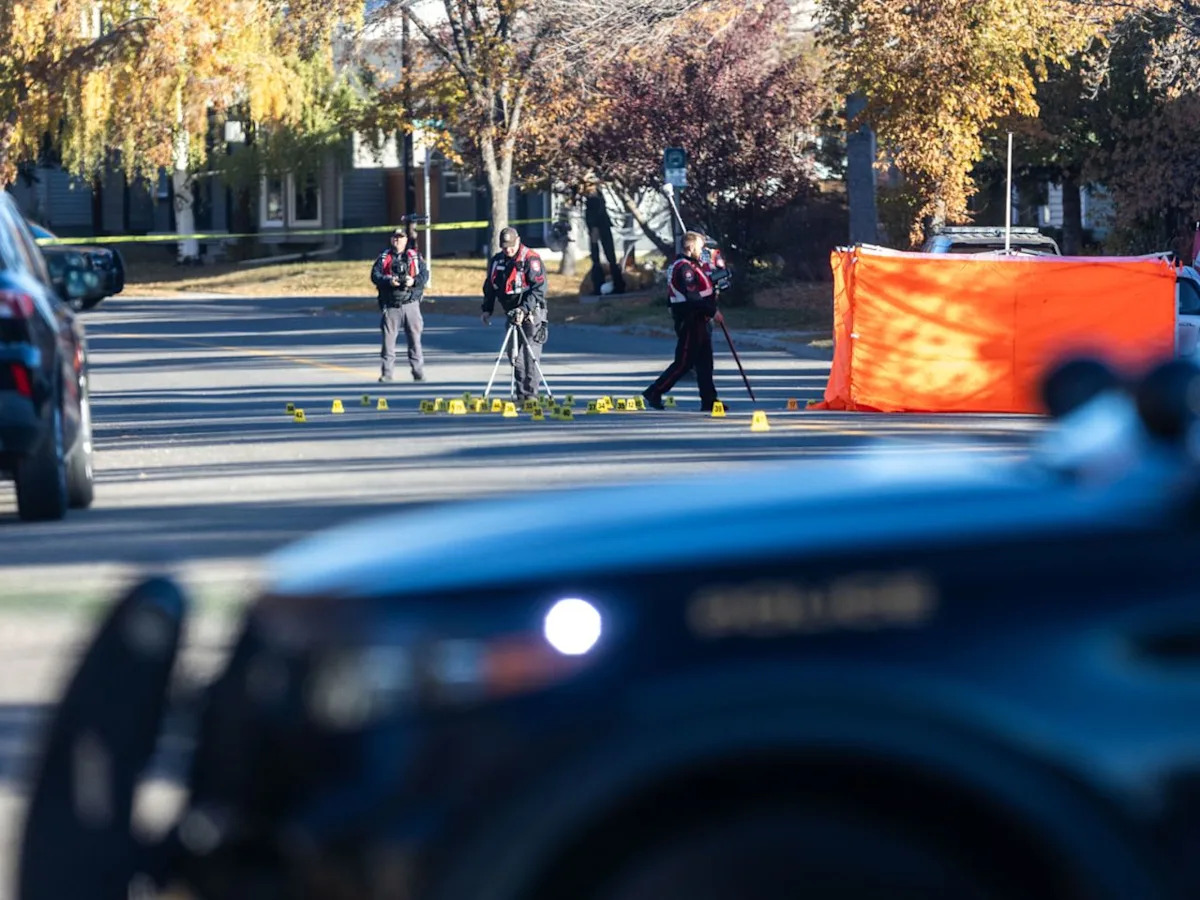
We’re not even three months into the year and Calgary’s roads have proven to be deadly for pedestrians.
This followed an 11-year high for fatal pedestrian crashes and a two-decade high for deadly road collisions overall in 2025.
All the while, Calgary police have continued to urge all road users to exercise caution.
The advice means well, but for those walking, it’s becoming increasingly difficult to follow.
Every time I comment about crashes involving pedestrians, some folks reach out to say how they feel it’s not fair to place more onus on drivers to uphold road safety.
I sympathize to a point. Once in a while, people dart into traffic without checking or cross against a red light.
But in many cases, crashes with pedestrian victims are happening at marked crosswalks where people on two feet undeniably have the right of way.
And whatever the circumstance, the pedestrian will never win in a vehicular crash.
One of the especially tragic incidents in the last few weeks involved a driver who struck and killed a toddler being pushed in a stroller by their parents.
While the full circumstances of the crash have yet to be fully revealed, the victims were in a marked crosswalk at the time and the truck, which was turning left, was observed as having been lifted above standard height.
Pedestrians can’t keep head on a swivel
If an intersection was safe and clear and someone walking has already started crossing the street, anticipating new problems by keeping eye contact with all nearby drivers can be difficult, especially if the threat is coming from behind.
And with lifted trucks, positively seeing the driver might be near-impossible for below-average-height adults and younger children.
By telling road users it’s not safe to cross the street unless they can make eye contact with each other, we’ve unintentionally given a free pass to anyone in a big, tall truck or anyone driving distracted to do whatever they want. I’m sure that was not the intended message but that is the practical effect.
There is no doubt that everyone sharing our roads needs to be actively vigilant and aware of their surroundings so they can all make the best choices and stay safe.
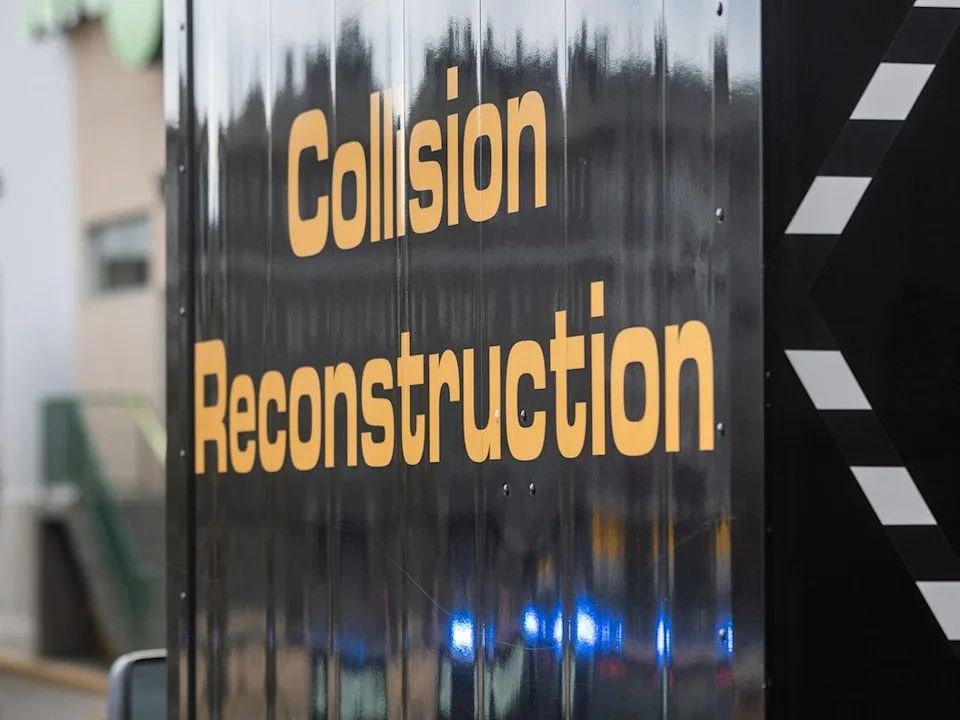
Police investigate a fatal collision involving a pedestrian and semi truck in a grocery store parking lot on Panatella Hill N.W. in Calgary on Monday, Feb. 16, 2026.
That being said, the folks who design our streets can also make changes to help reduce the mental multitasking workload for drivers, cyclists and pedestrians. That way, they can create an atmosphere to reduce the possibility of making mistakes, and diminish the harmful consequences should an error be committed.
I’ve previously argued for the elimination of right turns on red and I will continue to advocate for this. Some drivers stopped at red lights become hyper-focused on making their turn and keep their gaze at oncoming traffic to the left with little care for people who might be crossing the street legally on the right — which is exactly where they will be turning.
It’s also tough for pedestrians to make eye contact with a driver who is actively looking the other way. When walking, I’ve tried the police-encouraged strategy of not crossing the street unless I can get a driver’s acknowledgment, but usually this means I can’t go at all.
Meanwhile, at busy intersections, traffic lights can be programmed to give pedestrians priority, as is already done in some places in downtown Calgary.
Physical intersection changes to improve safety
At some intersections, we should revisit the feasibility of allowing flashing green left turns — or even allowing left turns at all. It might even be faster if drivers made a series of right turns instead of queueing endlessly to make one left turn. This reduces a point of conflict not just for pedestrians but for all traffic. (T-bone crashes due to failed left turns can be devastating.)
Lanes can be painted slightly narrower to discourage speeding.
Crosswalks can be physically raised so pedestrians stay at sidewalk height while drivers get what is essentially a gentle speed hump.
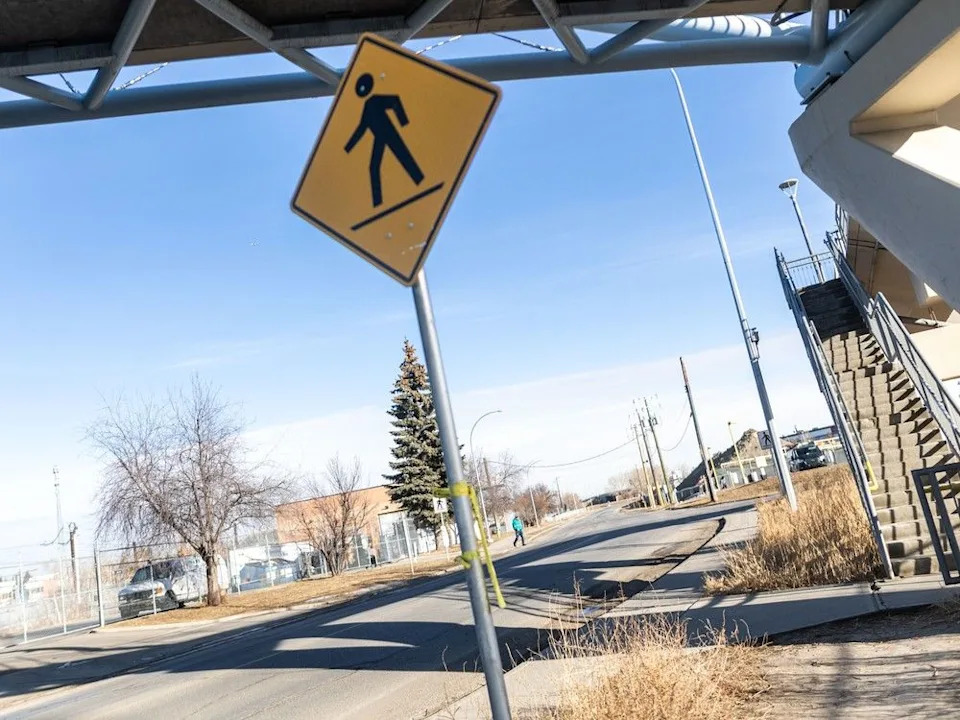
Police tape hangs on a crosswalk sign on Horton Road in Calgary on Monday, Feb. 16, 2026, where a fatal collision claimed the life of a toddler in a stroller the night prior.
No doubt, all of these suggestions will be labelled by some as an inconvenience for drivers.
Too bad.
I walk and I drive, so I can see things from both perspectives.
While motor vehicles are no doubt the biggest and heaviest road users, they shouldn’t get to monopolize our streets — despite a century of discourse telling us otherwise.
Drivers will always be able to go faster than pedestrians and cyclists. Surely, itineraries should be able to withstand an extra minute or two so turns can be safely executed and we can improve the chances of everyone on the streets to stay alive.
If not, perhaps it’s time to re-evaluate how and why we drive.
Connect with Ricky on Bluesky and X.
Related