
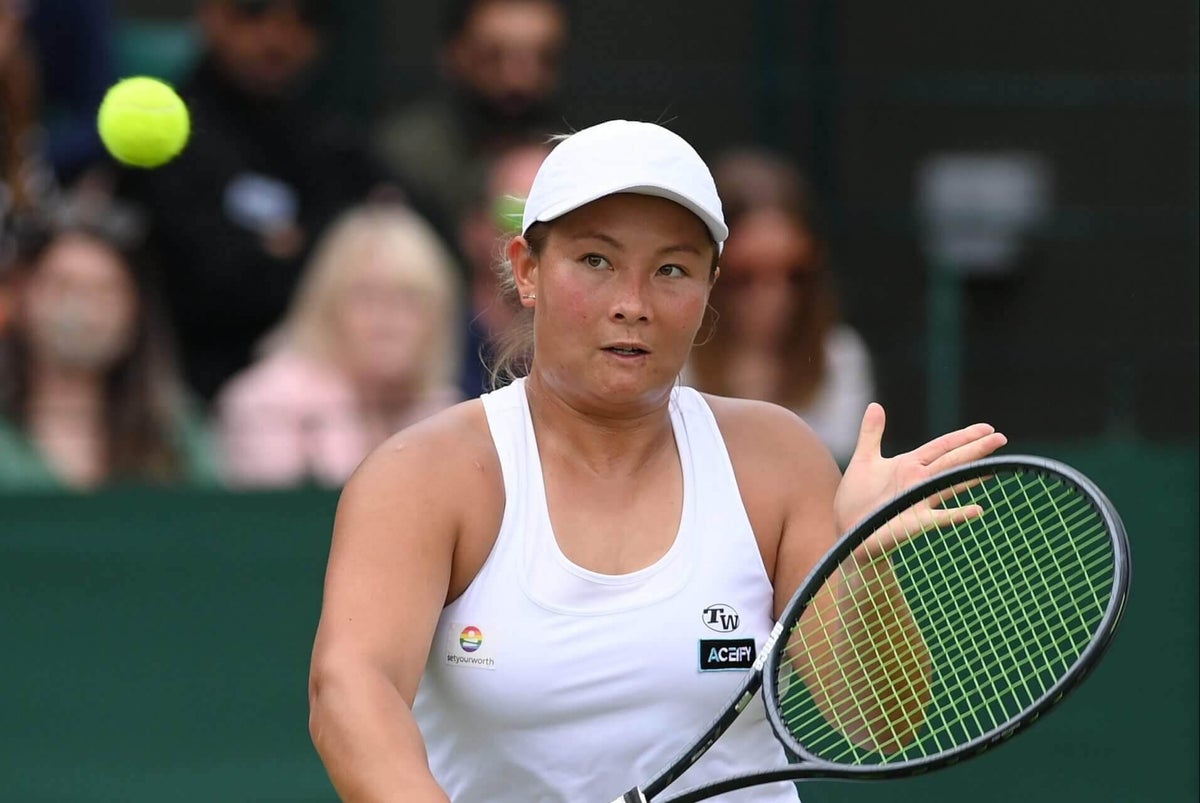
Tara Moore, the former British doubles No. 1 who is serving a four-year doping ban after testing positive for two banned anabolic steroids, is seeking $20 million in damages from the WTA Tour.
Moore claims that she tested positive for boldenone and nandrolone after eating contaminated meat and, in a legal filing against the WTA in a federal district court in New York this month, argues that the organisation “possessed concrete, actionable knowledge of a specific and well-documented danger of contaminated meat in Bogotá, Colombia, yet it chose to remain silent, failing to warn its athletes about that risk.”
The latest filing follows the 33-year-old being given a four-year doping ban last year despite previously being cleared of any wrongdoing. Moore was provisionally suspended in May 2022 after testing positive for the anabolic steroids boldenone and nandrolone following a tournament in Colombia, a month earlier. She argued that the presence of boldenone and nandrolone in her sample must have been caused by the consumption of beef and/or pork during her stay.
An independent tribunal ruled that Moore bore no fault or negligence in December 2023, 19 months later. The International Tennis Integrity Agency, which oversees the sport’s anti-doping programme, then appealed that ruling to the Court of Arbitration for Sport.
CAS confirmed in July that it ruled in the ITIA’s favour, upholding its appeal, dismissing a counter-appeal from Moore, and imposing a four-year ban from the sport on her, minus the time previously served under provisional suspension. Meaning that Moore, who has been ranked as high as No. 77 in doubles and No. 145 in singles, would not be eligible to play again until the beginning of the 2028 season.
“After reviewing the scientific and legal evidence, the majority of the CAS Panel considered that the player did not succeed in proving that the concentration of nandrolone in her sample was consistent with the ingestion of contaminated meat,” CAS said in a media release.
“The panel concluded that Ms. Moore failed to establish that the ADRV (anti-doping rule violation) was not intentional. The appeal by the ITIA is therefore upheld, and the decision rendered by the independent tribunal is set aside. The cross-appeal filed by Ms. Moore was declared inadmissible.”
After CAS’ ruling, Moore said on social media that “the anti-doping system is broken” and called the process “subjective.”
“The last three-and-a-half years have broken me into so many pieces,” she said. “As my family and friends have scrambled to pick up the broken shards of me, they’ve glued me back together in the form of a different person.”
Moore, who is a British national but resides and is domiciled in Indiana, has always denied knowingly taken a banned substance.
Her lawsuit states: “The CAS system presumes the athlete’s guilt and imposes on the accused the near-impossible burden of proving innocence, effectively reversing the neutral fact analysis and evidentiary burdens that are foundational to New York and U.S. civil law. CAS ultimately found that Ms. Moore failed to meet this extraordinary burden.”
Moore appealed last July’s verdict and took the case to arbitration. She is now claiming that the appeal was dismissed in November because the arbitrator adopted CAS’ legal framework.
In response to the latest filing, a WTA spokesperson said at the weekend that: “The arbitration was conducted by a neutral arbitrator, and there is no basis to vacate the arbitrator’s award. We respect the judicial process and will not comment further while the matter is pending.”
CAS did not immediately respond to a request for comment, while the ITIA declined to comment.
At the time of the four-year ban being issued in July, the ITIA’s chief executive Karen Moorhouse said: “Our bar for appealing a first instance decision is high, and the decision is not taken lightly.
“In this case, our independent scientific advice was that the player did not adequately explain the high level of nandrolone present in their sample. Today’s ruling is consistent with this position. We understand that players and their support teams may have questions about this decision, and we will answer these fully once we have reviewed the details of the ruling.”
Contamination from meat continues to be a concern for players, and at this week’s Mexican Open in Acapulco, the tournament will not serve meat in its player restaurant to assuage concerns over doping contamination.