

Listen to this article
Estimated 4 minutes
The audio version of this article is generated by AI-based technology. Mispronunciations can occur. We are working with our partners to continually review and improve the results.
CBC Ottawa’s Creator Network is a place where young digital storytellers from diverse backgrounds can produce original video content to air on CBC and tell stories through their own lens.
Get in touch to pitch your idea, or check out our other Ottawa Creator Network stories at cbc.ca/creatornetworkott.
When Monica Anthony looked around her high school classroom, she didn’t see many other students who looked like her. She doesn’t remember having any teachers who were Black, either.
When she graduated in 2018, she said she felt disappointment at not having connected with more people in the Black community, at least during those crucial years.
“I felt like going into university I was behind,” she said.
For her, it meant she hadn’t felt like she had a friend group, or a community that understood her. Outside of her family, she hadn’t had a role model who looked like her.
“I just felt like I had missed out.”
Now, nearly a decade later, Anthony has been reflecting on that time and its lasting impact on her identity for a podcast she started, The Art of Memories.
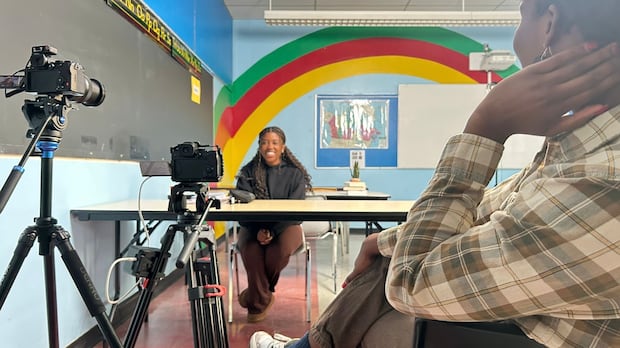
She decided to ask other current and former Black students about their own experiences in a documentary called Black in School for CBC Ottawa’s Creator Network.
WATCH | ‘Was it just me?’ Monica Anthony asks Black students and educators whether they felt isolated — or represented — in high school:
How important is it to see yourself represented in high school?
From not seeing teachers who looked like her to being singled out in class, Monica Anthony says she wishes she had seen more Black representation in her education. She asked other Black students whether they felt a sense of belonging in high school, in a short documentary with CBC Ottawa’s Creator Network. A lack of representation
Anthony attended Carine Wilson Secondary School in Ottawa’s east end in 2014, where she and her sister were part of a small handful of racialized people.
She said she felt singled out when class texts such as To Kill a Mockingbird mentioned the N-word. When school staff called home, they would often mix up Anthony and her older sister.
“It was isolating,” she said.
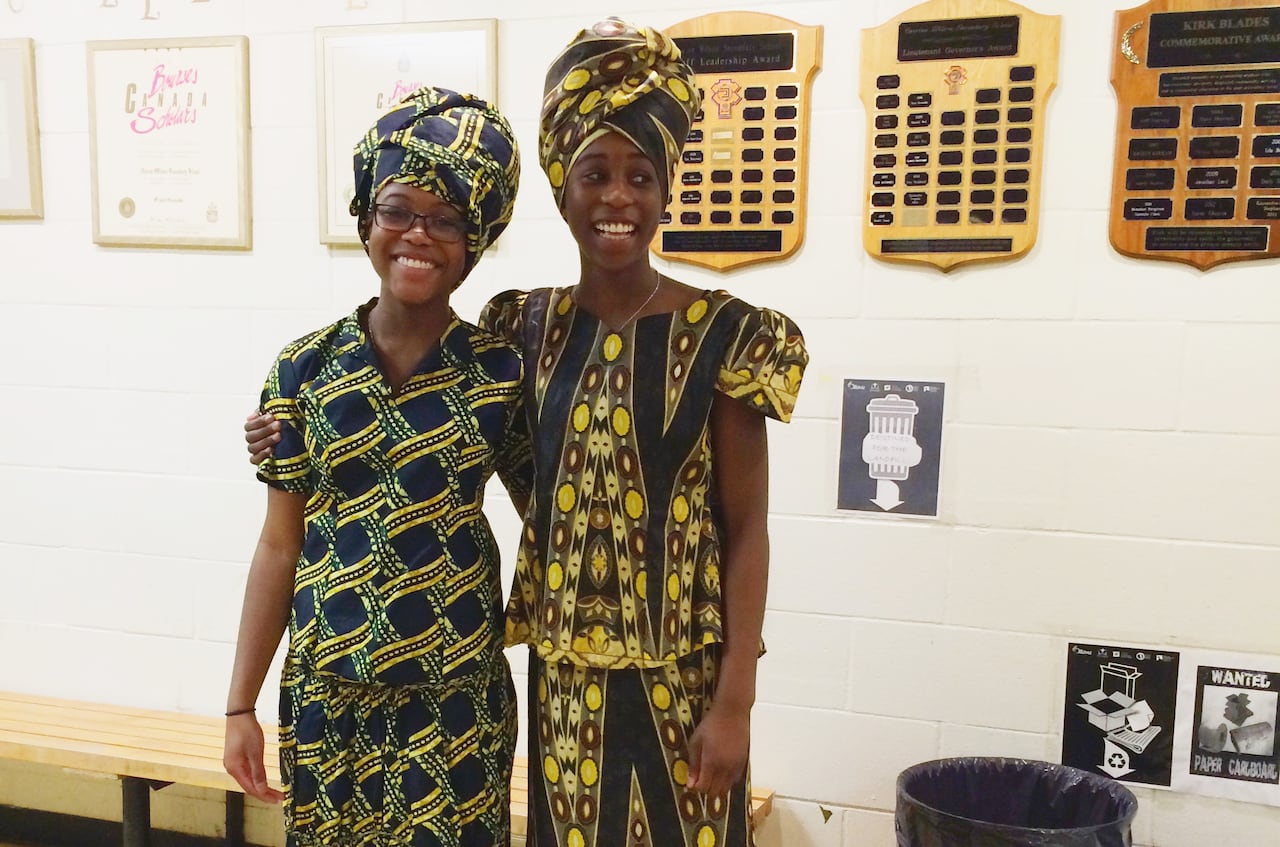 Monica Anthony and her sister Sidney Fondjo at a school ‘multicultural night,’ where they say they were asked to wear bold African patterns and headdresses, despite having Jamaican heritage. (Submitted by Monica Anthony)
In the years since, Anthony has gone on to seek out stronger connections with Black communities, while at school at Carleton University and by attending Black History Month events.
But she says having Black friends and teachers back in high school mattered for developing her sense of self.
“High school is such a pivotal time,” she said. “I think having those people [who looked like me] during those years of transition … truly would have made all the difference for me.”
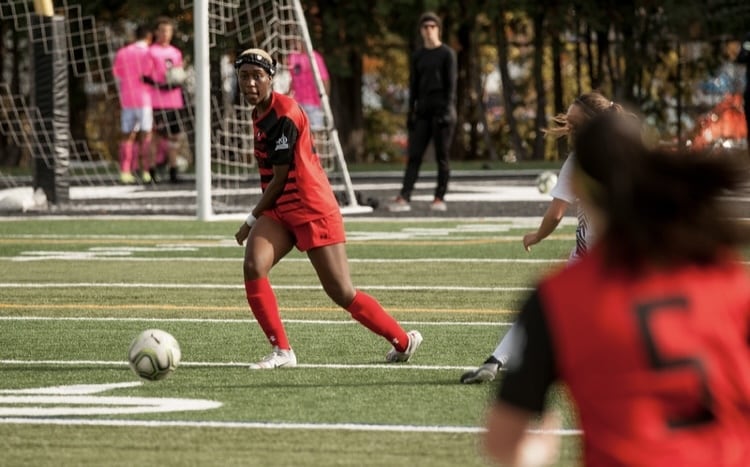 Since graduating high school, Anthony says she’s sought out connections with Black communities. She decided to attend Carleton University because she saw the school’s soccer team as an opportunity to connect with other Black women. (Submitted by Monica Anthony)Looking forward
“Today in high school there’s still not many Black teachers,” said Grade 12 student Jordyn Pemberton in an interview for Anthony’s documentary.
Pemberton said at her school, students took it upon themselves to create a space where they could find connection with their community, starting a Black 365 club. As a member, she and her peers get together to talk about issues that affect them, ranging from afrofuturism to global conflict.
She said the club has been a source of community for her.
“They were like my second family,” she said.
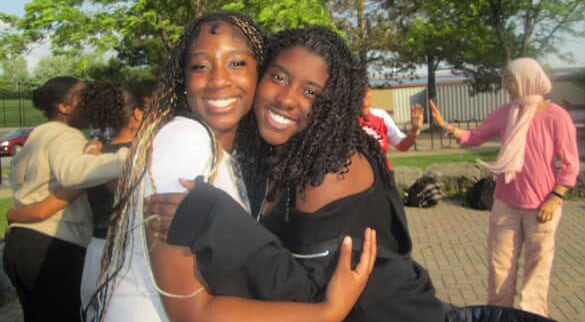 Jolie Campbell-Hill, left, and Jordyn Pemberton, right, students at Sir Wilfrid Laurier Secondary School, attend a barbecue event for the school’s Black 365 club in June 2025. Pemberton said the club has provided her an opportunity to make Black friends. (Submitted by Jordyn Pemberton)
The Ottawa-Carleton District School Board, which oversees Carine Wilson and Sir Wilfrid Laurier secondary schools, said in a written statement that it is “critical that every student feels a true sense of belonging and is supported to achieve their full potential.
“The Ottawa-Carleton District School Board is deeply committed to ensuring an inclusive and supportive environment that prioritizes improving achievement and well-being for Black students. We are focused on creating meaningful, positive change.”
Anthony said she’s looking forward to that change.
“I want to see some Black teachers, I want to see Black administrators,” she said. “I want to see more of my people in places that matter. “
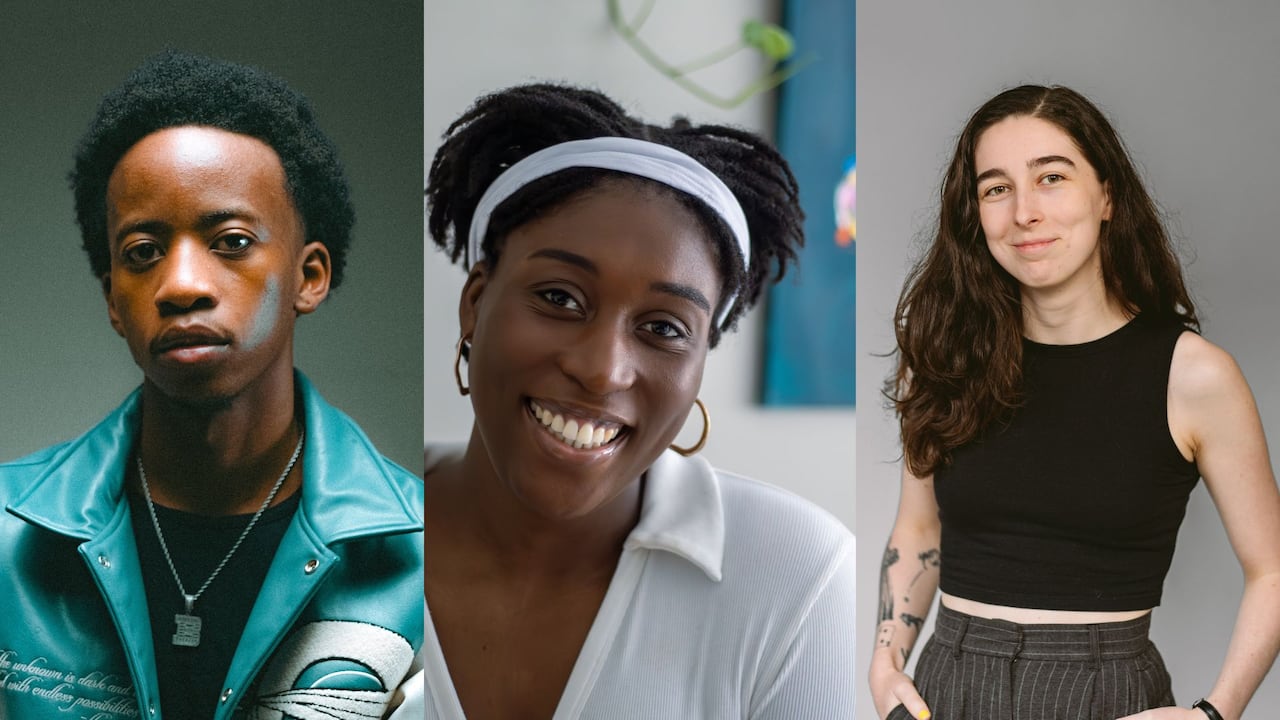 Creators Benjamin Shimwa, Monica Anthony and Ro Sullivan collaborated on Black in School for CBC Ottawa’s Creator Network. (Submitted)