
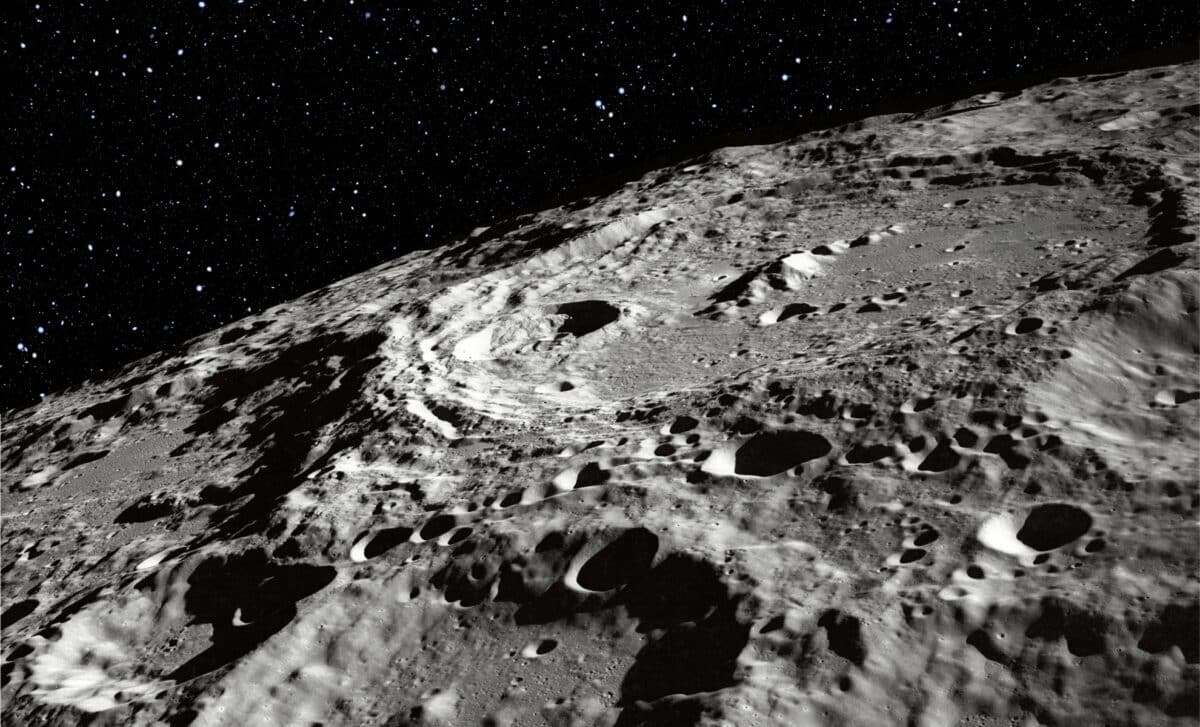
NASA has selected three new lunar experiments designed to probe heat, temperature swings, and radiation directly from the Moon’s surface, without astronauts setting foot on it. By turning commercial robotic landers into scientific scouts, the agency aims to gather data that will shape where humans can safely land, work, and survive.
The instruments will operate on the lunar surface through NASA’s Commercial Lunar Payload Services (CLPS) program, which relies on privately built landers to deliver science payloads. Together, they are meant to transform routine robotic missions into detailed environmental surveys of heat flow, dust behavior, and radiation exposure.
The effort builds on work led by Texas Tech University planetary geophysicist Dr. Seiichi Nagihara, who developed the LISTER probe to drill into lunar soil and measure underground heat. Under CLPS, LISTER now joins two other payloads, EMILIA-3D and SELINE, in a coordinated push to better understand the Moon’s surface and subsurface environment while improving safety for future crews.
Drilling Into the Moon to Trace Its Hidden Heat
At the center of the initiative is LISTER, short for Lunar Instrumentation for Subsurface Thermal Exploration with Rapidity. The probe drills into the lunar ground to measure heat rising from below, offering clues about what the Moon still holds inside.
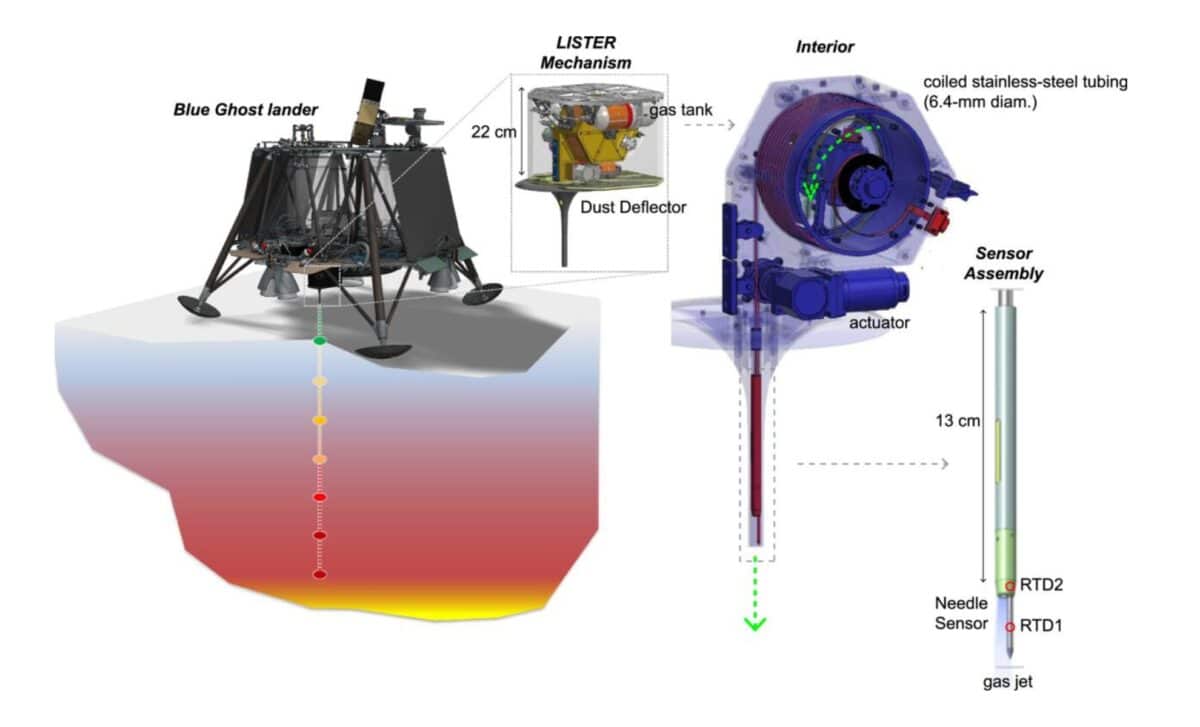 A conceptual drawing of the LISTER deployment mechanism accommodated below the platform of the Blue Ghost lander as it makes thermal measurements at multiple depths into the subsurface (left). Schematic drawings of the interior of LISTER’s deployment mechanism (middle) and sensor assembly (right) are also shown – © The Planetary Science Journal
Pressurized gas clears a narrow hole before the instrument pauses to record temperature and thermal conductivity. In one report, LISTER reached about three feet below the surface and measured temperature at eight different depths. Those readings covered only a small patch of terrain, which means NASA will need measurements from additional sites to build a broader map of underground heat flow.
Heat escaping from the Moon carries a record of how quickly its interior cooled after formation. By comparing temperatures at multiple depths, researchers can estimate the energy rising from deeper rock layers. A reanalysis of Apollo-era data traced much of the uncertainty in earlier heat-flow estimates to difficulties in soil measurements, highlighting why fresh drill data from new terrain remains necessary.
Mapping Extreme Temperatures Across the Lunar Surface
The Moon’s dramatic day-to-night temperature swings pose engineering challenges for landers and future spacesuits. Surface conditions can shift from intense heat to deep cold, forcing hardware to endure repeated stress cycles.
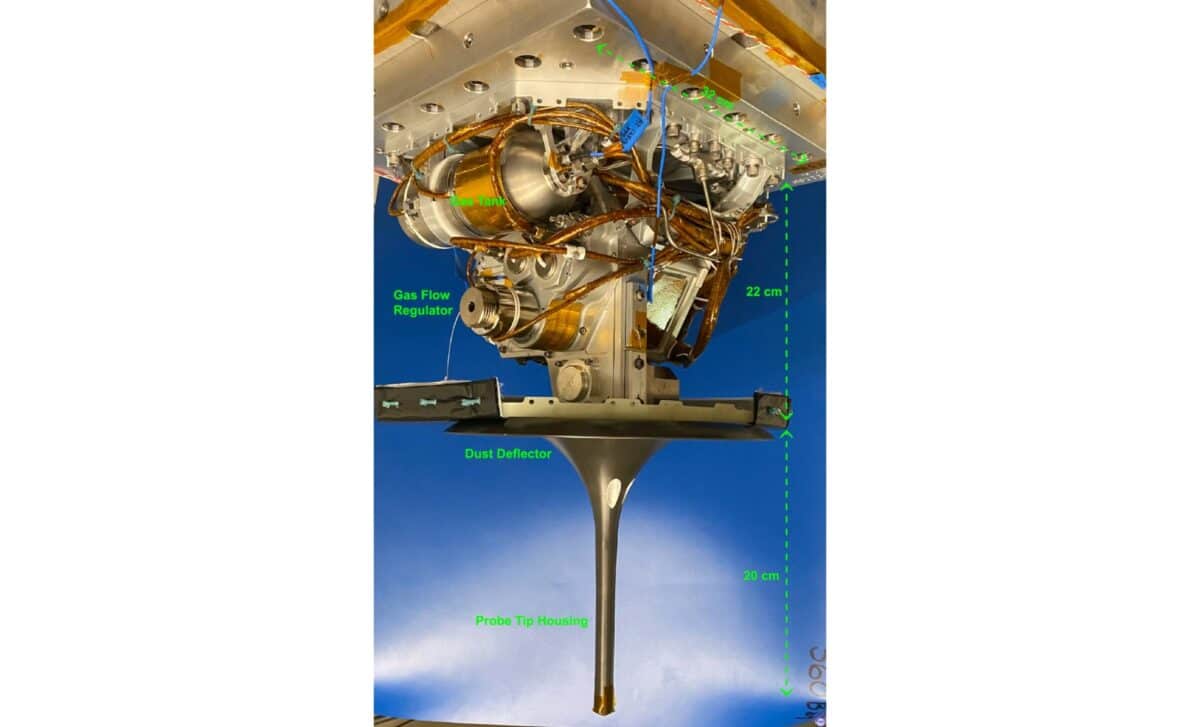 A photograph of the LISTER deployment mechanism with the needle sensor fully stowed – © The Planetary Science Journal
Thermal imaging helps reveal where regolith, the Moon’s loose dust and broken rock, traps heat and where it loses it quickly. When these temperature patterns are combined with three-dimensional terrain models, engineers can identify slopes that may remain unstable or persistently cold.
Yet even detailed maps can miss hazards. A surface charted in sunlight may conceal long shadows and extended nighttime conditions. Crews will still need safety margins to account for unexpected thermal extremes.
Measuring Radiation and Dust in a Harsh Environment
Radiation presents another persistent risk. Without Earth’s magnetic shield, the lunar surface is exposed to galactic cosmic rays, high-energy particles arriving from deep space. When these particles strike the ground, they generate secondary radiation within the soil itself.
SELINE is designed to track both incoming charged particles and neutrons that rebound from the lunar surface. Neutrons, which carry no electric charge, can penetrate shielding and raise radiation doses even behind metal barriers. By separating neutron counts from other particle types, SELINE aims to give mission doctors a clearer picture of what protective suits and structures can block.
Improved radiation data can guide decisions about when crews conduct surface activities, how long they remain outside, and where a lander should position a storm shelter.
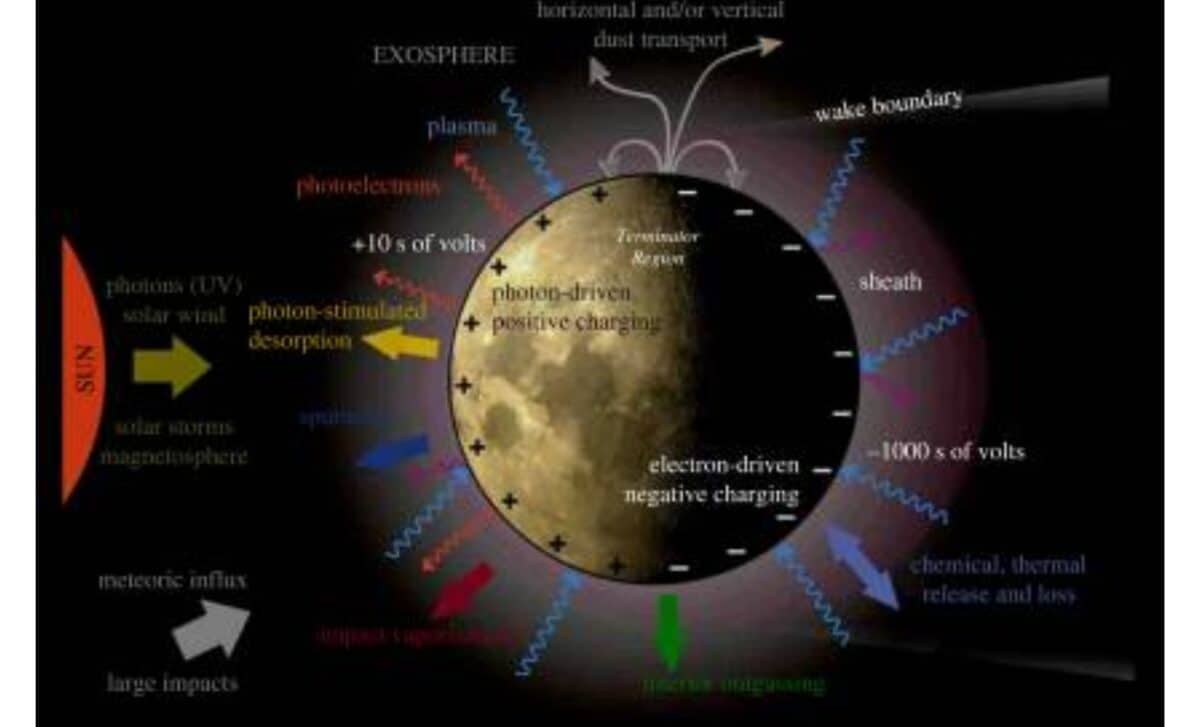 Moon’s environment with the complex interaction between solar radiation, space plasma, meteoritic flux, dust, exosphere and the surface – © Jasper Halekas / The Royal Society
Dust adds yet another complication. Lunar grains are sharp-edged, since the Moon lacks wind and water that would otherwise smooth them. The particles cling to seals and joints, gradually wearing down moving components. Repeated heating and cooling cycles can also push dust into cracks, affecting drills and cameras. By tracking where surfaces warm and cool most rapidly, mission teams can anticipate where dust may loosen and drift during operations.
Under NASA’s PRISM selection process, the instruments were described as site-agnostic, meaning they can operate without a specially targeted landing zone. The same document set 2028 as the earliest possible delivery date, leaving several years for testing and vendor selection.
Each robotic mission under CLPS adds operational experience. Companies build the landers, NASA purchases payload space, and scientists obtain data without funding an entire spacecraft. If a launch slips or a lander fails, another attempt can follow on a subsequent flight rather than waiting years.