
EDITOR’S NOTE: Call to Earth is a CNN editorial series committed to reporting on the environmental challenges facing our planet, together with the solutions. Rolex’s Perpetual Planet Initiative has partnered with CNN to drive awareness and education around key sustainability issues and to inspire positive action.
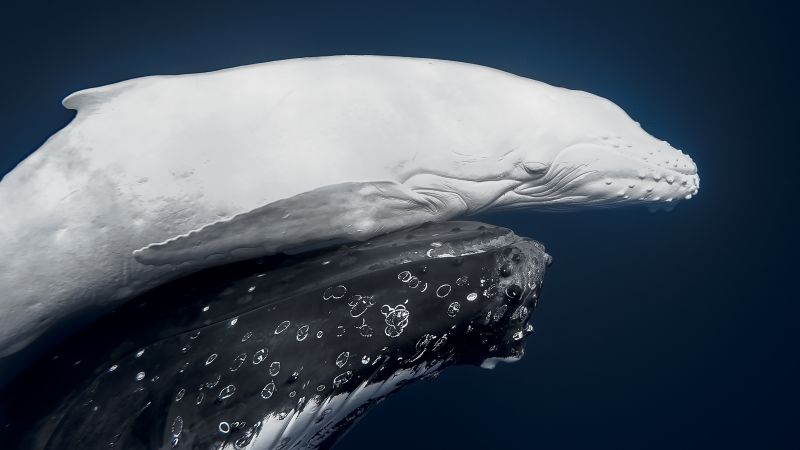
An image of a rare white humpback whale calf and its mother won top prize at the 2026 World Nature Photography Awards.
Taken by Jono Allen, who received a cash prize of $1,000, the Australian described the day he photographed the duo as “a memory that will live with me forever” and “a truly life-changing encounter.”
Albinism among humpback whales is extremely rare, with as few as one in 40,000 born with the condition, which affects skin pigmentation. The calf Allen photographed, called Mãhina, was first spotted in the summer of 2024, in Vava’u, Tonga, where Allen also observed it. The whale’s name means “moon” in Tongan.
Humpback whale populations are increasing according to the most recent assessment by the International Union for Conservation of Nature’s Red List, which describes it as a species of “least concern.” Its recovery is put down to a curbing of commercial whaling in the 20th and 21st century.
Though its population has increased to around 135,000 as of 2018, the humpback whale is experiencing changes, including shifts in its epic migration in the southern hemisphere. Scientists say whales are migrating weeks earlier than in previous decades as a result of a warming Southern Ocean affecting food supplies.
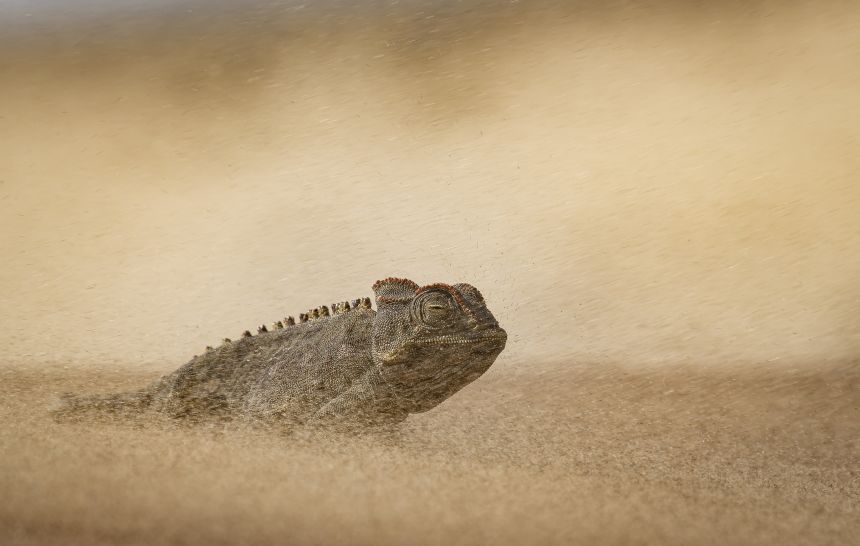
The World Nature Photography Awards received entries from 51 countries. Other category winners included a female gorilla observing a butterfly in Bwindi Impenetrable Forest, Uganda, a Namaqua chameleon weathering a sandstorm in the Namid Desert, Namibia, and a polar bear investigating a pile of e-waste in Manitoba, Canada. Entries for next year’s prize are already being accepted.