
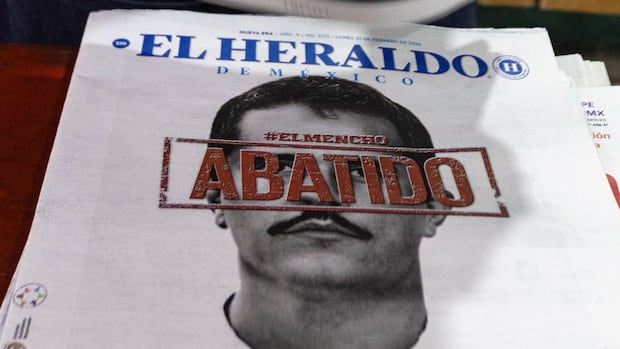
The killing of Nemesio Rubén Oseguera Cervantes in an operation in Mexico’s Jalisco state is likely sending “psychological shockwaves” through the country’s drug cartels, a former high-place U.S. official told CBC News on Monday.
Oseguera Cervantes, also known as “El Mencho,” led the Jalisco New Generation Cartel (CJNG), which has been notorious for drug trafficking and staging brazen attacks against Mexican officials who challenged it. The Jalisco cartel has been one of the most aggressive cartels in its attacks on the military — including on helicopters — and is a pioneer in launching explosives from drones and installing mines. According to Insight Crime, which tracks Latin American organized crime and corruption, CJNG operates in at least 28 of Mexico’s 32 states.
Defence Secretary Ricardo Trevilla said Monday that authorities had followed one of Oseguera Cervantes’s romantic partners to his hideout in Tapalpa.
Mexican Army and National Guard special forces moved in Sunday morning and immediately came under heavy fire. Eight gunmen were killed there. Oseguera Cervantes and two bodyguards fled into a wooded area, where they were seriously wounded in a firefight, Trevilla said. They were flown out, along with a wounded soldier, but the cartel leader and his bodyguards died en route to Mexico City, he said.
Up until his death, Oseguera Cervantes, 59, had operated with an air of invincibility, said Mike Vigil, a former U.S. Drug Enforcement Agency chief of international operations.
“It’s going to have an impact on the flow of fentanyl and methamphetamine coming into the United States, at least temporarily,” Vigil said of Oseguera Cervantes’s death.
WATCH | Ex-DEA official on what this means for the Jalisco cartel: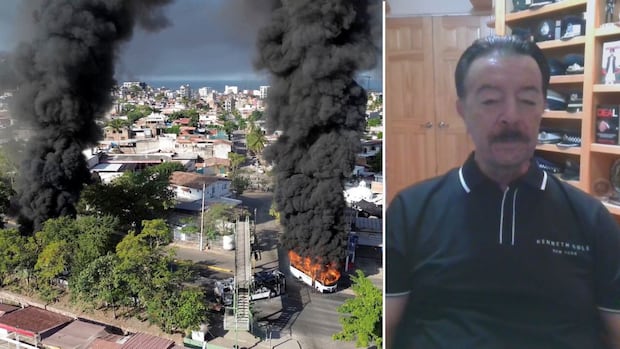
Killing of ‘El Mencho’ sending ‘shockwaves’ through Mexican cartels, says former DEA chief
Mike Vigil, former chief of international operations for the U.S. Drug Enforcement Administration, says the Mexican military operation that killed the cartel leader known as ‘El Mencho’ will disrupt the flow of drugs into the U.S., at least temporarily, but his Jalisco New Generation Cartel is now using to violence to show authorities and rival cartels that they are still powerful. Spent time imprisoned in U.S.
Oseguera Cervantes has been wanted by the U.S., in his current capacity, for at least a decade.
The U.S. government last year offered a $15 million reward for information leading to his capture. Through its various agencies, both Democratic and Republican administrations have also issued callouts regarding the capture of other leaders of the CJNG, which is believed to have been formed around 2009.
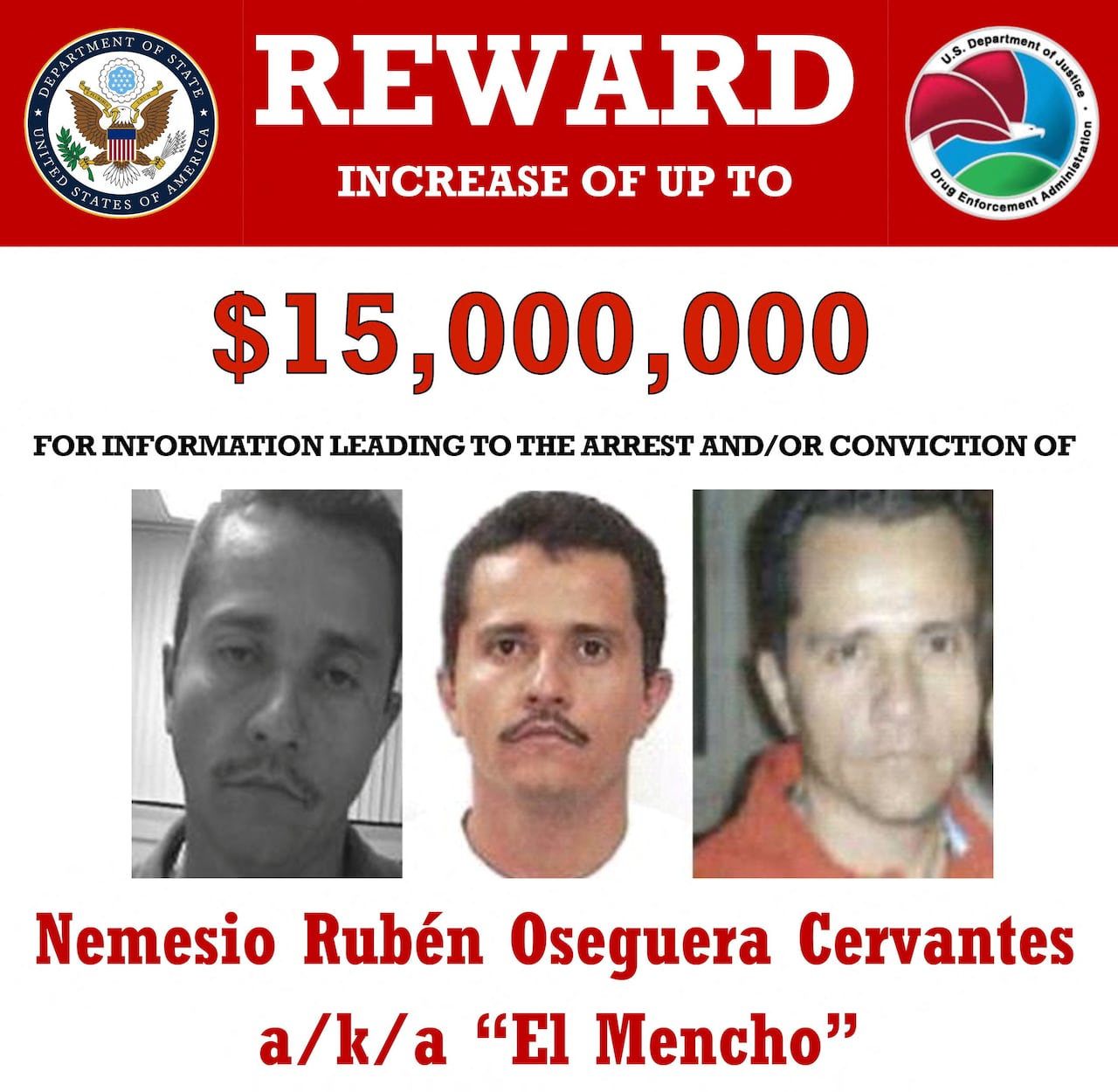 Nemesio Oseguera Cervantes is shown in a series of undated images from a poster on the U.S. Department of State website, in an image enhanced by Reuters. (U.S. State Department/Reuters)
Oseguera Cervantes was believed to have been born in 1966 to a poor, rural family in the state of Michoacán. As a boy, he worked the fields, and later went to seek his fortune in the U.S.
He was in U.S. custody on multiple occasions dating back to 1986 in California as a lower-level offender. He did not have a legal basis for entering the country.
His most notable U.S. arrest occurred in 1992, when Oseguera Cervantes and one of his several brothers were arrested in San Francisco after arranging a heroin transaction with undercover police.
Oseguera Cervantes served a multi-year sentence and was deported to Mexico in the late 1990s.
Back in his home country, Oseguera Cervantes became a police officer in Jalisco for an unspecified period of time, according to Insight. In Mexico, the cartels have often infiltrated local police agencies, as well as parts of the government security apparatus at state and federal levels.
WATCH | Cartel leader died en route to hospital, officials say: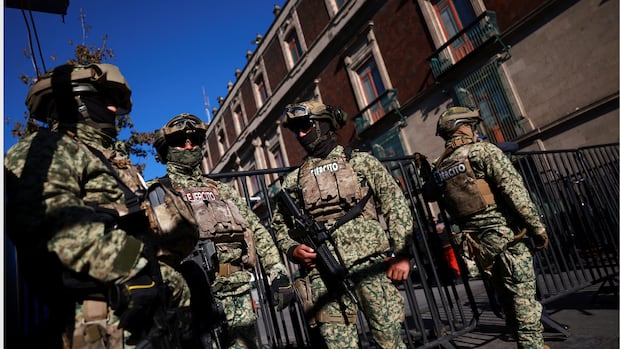
Details of raid that killed Mexican drug lord revealed as Sheinbaum urges calm
Mexican President Claudia Sheinbaum says no blockades remain in her country, the day after widespread retaliatory cartel violence. On Sunday, cartel leader Nemesio Oseguera Cervantes, or ‘El Mencho,’ was killed in a military raid after a romantic partner shared information with authorities, according to Mexico’s defence minister.
Oseguera Certanvates was part of the Milenio Cartel, an organization whose rupture gave rise to the CJNG. In 2015, the U.S. Treasury Department placed Osegeura Cervantes and the organization under its Foreign Narcotics Kingpin Designation Act.
Some drug cartels in Mexico have curried favour amid the air of menace by handing out gifts or bags of food to locals, and CNJG appears not to have been an exception. Mexico’s previous president promised an investigation in late 2024 after videos posted on social media from Coalcomán, Michoacán, showed a sign at a fair thanking Nemesio Oseguera for gifts.
Crime a family affair
Oseguera Cervantes may have been even more furtive than a typical cartel leader, leading to frequent rumours on social media regarding his death over the years.
“Many of his closest associates have never met him. He deals with them mainly through relatives,” the Economist reported in 2020.
Regarding those relatives, a good many have been apprehended on both sides of the U.S.-Mexico border for various offences.
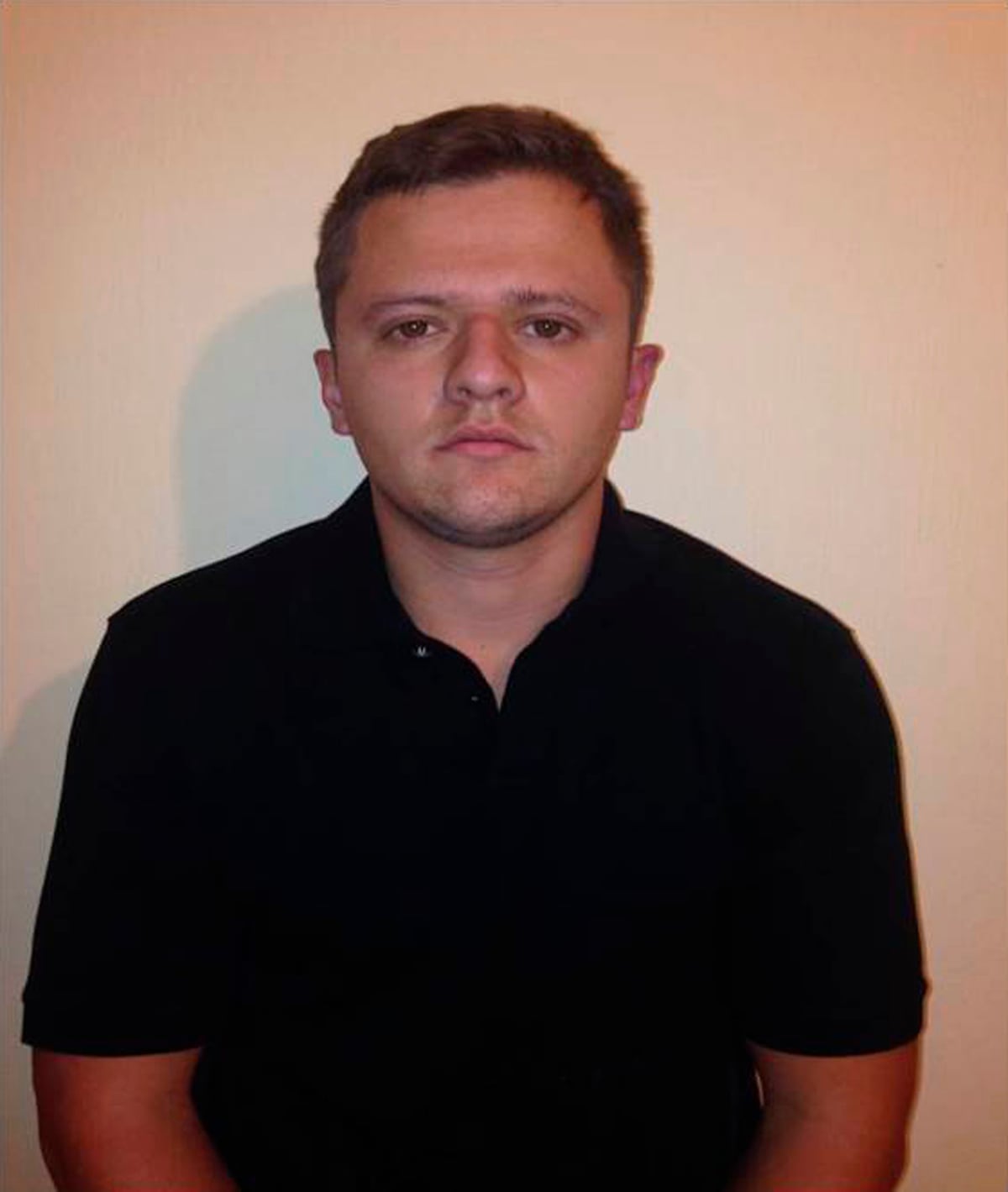 Ruben Oseguera Gonzalez, known as El Menchito, is shown in a 2014 photo released by Mexican officials. He was sentenced to serve life in prison in the U.S. last year. (Mexico Secretaria de Gobernacion/Reuters)
Reports indicate that El Mencho was legally separated from his wife of many years, Rosalinda González Valencia, when she was arrested in a Mexican military operation in 2021. González Valencia was reportedly released last year after serving time on corruption charges.
That same year, El Mencho’s daughter with Rosalinda, Jessica Johanna Oseguera González, was sentenced to 30 months in the U.S. for financial crimes. Born in the U.S., it is not clear if she is still residing there or in Mexico.
More seriously, the cartel leader’s son and one of his sons-in-law were sentenced to significant prison terms in U.S. federal courts in 2025.
Rubén Oseguera González, known as El Menchito, was arrested by Mexican officials and extradited to the U.S. in 2020. The Justice Department said last year upon his sentencing to life in prison that El Menchito was responsible for the deaths of five people over drug debts and helped prevent the capture of his father in 2015 by using a grenade launcher to down a Mexican military helicopter, killing at least nine service members.
In terms of drug trafficking, the 36-year-old son was accused of flooding the U.S. with fake OxyContin pills that contained fentanyl.
Meanwhile, the aforementioned son-in-law of El Mencho was sentenced two months ago to 11 years in a U.S. federal prison; Cristian Fernando Gutierrez Ochoa, 37, was arrested in Southern California the previous year on money laundering and drug trafficking offences.
Gutierrez Ochoa had faked his own death and fled to the U.S. to avoid Mexican authorities after kidnapping two members of the Mexican Navy in 2021. According to the U.S. Justice Department, El Mencho told associates he killed Gutierrez Ochoa for lying, helping the man escape to the U.S. to be with another one of the cartel leader’s daughters, Laisha, who was residing in California.
WATCH | Killing comes as U.S. threatens intervention: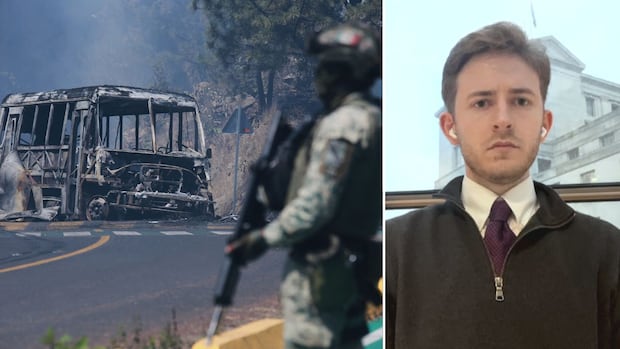
Killing of ‘El Mencho’ likely came under pressure from U.S., says researcher
Mexican President Claudia Sheinbaum campaigned against the ‘kingpin’ strategy of eliminating cartel leaders to deal with her country’s security crisis. But with the killing of the cartel leader known as ‘El Mencho,’ the Mexican government ‘likely bought themselves a bit of time’ from Washington as the Trump administration threatens unilateral intervention in Mexico, says Elijah Glantz, a research fellow for the organized crime and policing team at the Royal United Services Institute in London.
Mexico Security Secretary Omar García Harfuch said Monday that 25 members of the National Guard were left dead in Jalisco in six separate attacks after the killing of El Mencho. And Vigil told CBC News the back-and-forth violence is likely to continue for several days.
Harfuch knows well the brazen actions of CJNG. He was wounded in 2020 while serving as Mexico City’s police chief in a spectacular assassination attempt with grenades and high-powered rifles attributed to the cartel. Two of his bodyguards were killed in the attack.
CJNG became arguably the foremost threat on the radar of U.S. law enforcement after the hobbling of the Sinaloa Cartel, with Joaquin (El Chapo) Guzman and several top officials from that organization either captured or killed.
“Mexico needs to take advantage of this chaos within the cartel to go after its infrastructure; it’s not good enough to kill or capture one of the drug lords,” said Vigil, who is also author of Metal Coffins: The Blood Alliance Cartel.