
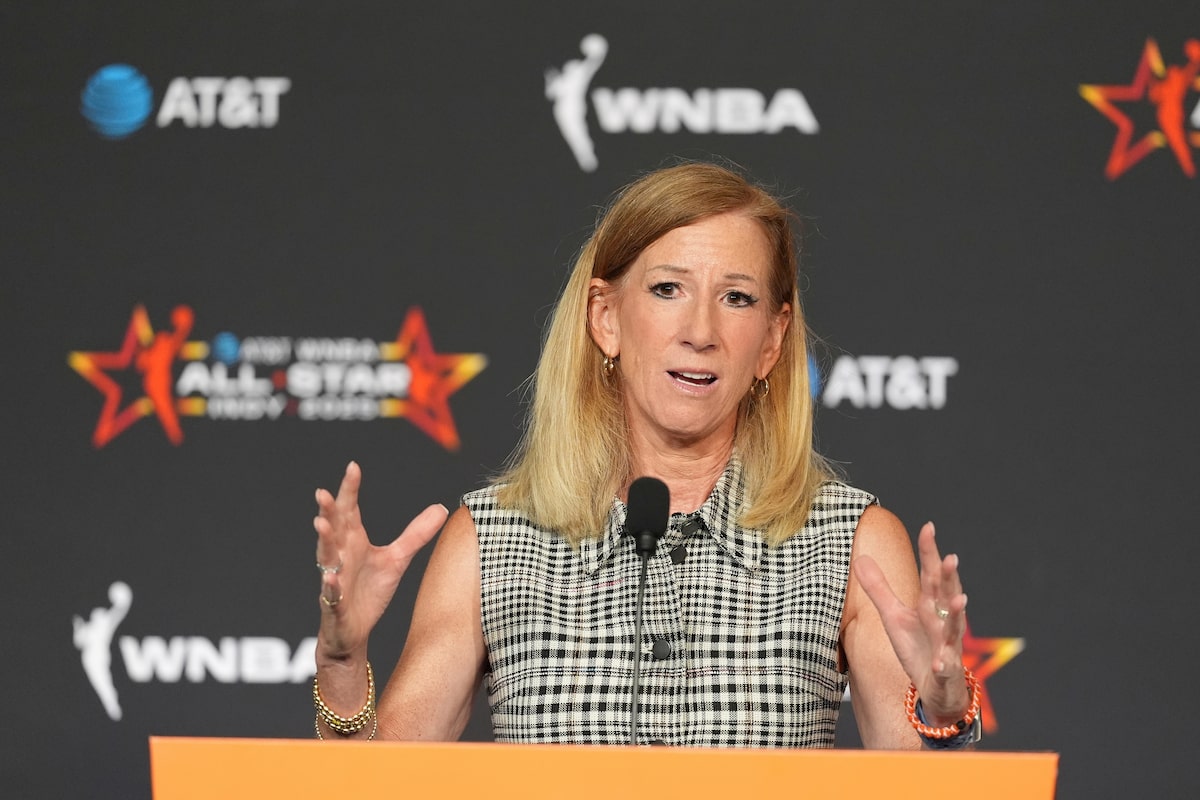
WNBA commissioner Cathy Engelbert speaks during a news conference before the 2025 WNBA All-Star game in Indianapolis.Michael Conroy/The Associated Press
The WNBA told the players’ union that it needs to get a deal in place by March 10 to start the season on time at a virtual collective bargaining agreement negotiating session Monday, a person familiar with the discussions told The Associated Press.
The person spoke to the AP on condition of anonymity because of the sensitive nature of the negotiations.
With an expansion draft for two teams needed to get done, as well as 80 per cent of the league free agents, there’s plenty to get accomplished and little time to do it. A delay would hurt both sides.
The season is supposed to start May 8 and every game missed is lost revenue, sponsorships, television money and fan support. Monday’s meeting was the first between the sides that involved players and the league since they met at the WNBA offices on Feb. 2. Because of the winter storm that hit New York, it was decided to hold the meeting virtually.
Over 50 players were on the call, which lasted nearly two hours, the person said.
The two sides are still far apart on revenue sharing and housing, and the clock is ticking. The league said in the meeting on Monday that it would need to have at least a handshake agreement by March 10 for there not to be a delay to the start of the season.
The league, in its latest proposal that was sent Friday, offered 70 per cent net revenue for the players. That came after the union had asked for an average of 27.5 per cent of the gross revenue over the course of the CBA, beginning with 25 per cent in the first year of the new deal. In its previous offer, the union had asked for an average of more than 30 per cent.
The league at that point said in a statement the revenue sharing percentage remained unrealistic and would cause “hundreds of millions of dollars of losses for our teams.”
Also on Monday, the union confirmed to the AP that the WNBA will give its players US$8-million from revenue sharing from last season as the league generated enough to trigger revenue sharing for the first time in league history. ESPN was the first to report the move.
The Toronto Tempo, with general manager Monica Wright Rogers (left) and team president Teresa Resch (right) are one of two teams entering the WNBA this season. The Tempo needs to hold an expansion draft and the league needs to open its free agency market by March 10, the WNBA says, to avoid a disruption to the 2026 season. The league and its players union have seen their collective bargaining agreement expire.Cole Burston/The Canadian Press
The players will decide how much each player will receive from that distribution. The union has 60 days from Feb. 9, when it was officially notified of the revenue sharing money, to come up with how it will disperse the funds.
That money will be distributed by the teams, which will then be reimbursed by the league. Under the 2020 CBA that has since expired, players received 50 per cent of shared revenue – defined in the CBA as the amount of revenue that’s above a predetermined threshold amount minus 30 per cent for expenses.
Neither the league nor the union would say what that threshold is. The league has had in nearly all of its proposals that it would do away with the threshold needed to be reached for revenue sharing.
In its latest offer, the league said teams would continue to pay for housing for all players this season, another person familiar with the negotiations told the AP on Saturday. The person also spoke on condition of anonymity because of the sensitive nature of the negotiations.
After that, franchises would pay for housing for players on minimum salary contracts, rookies in their first season and the two developmental players teams would be allowed to have.
The union had asked for teams to continue paying for housing for players in the first few years of the new agreement, but in the last two years of the CBA the franchises would no longer have to pay for housing for players who are making near the maximum salary.