
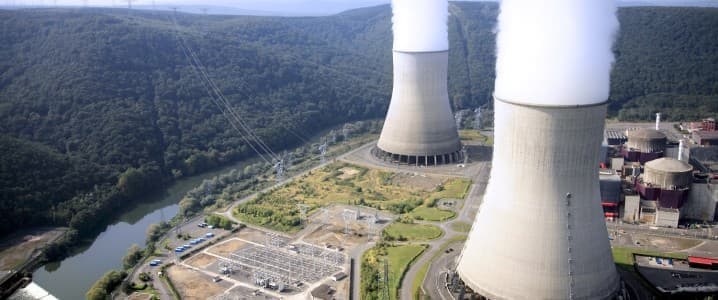
China and France, in February 2026, both addressed the impact of growing renewables penetration in their electric power generation sectors. The Chinese announced that they would retrofit formerly base-load coal-fired power plants to run more intermittently. The government-owned French utility, EDF, announced that it would do the same with much of its nuclear fleet, at considerable expense. The reason? To accommodate the growing penetration of lower-cost renewables in their respective electricity markets. (In the US, we would watch California and Texas, which have a significant percentage of renewables.)
Those announcements prompt a simple question. What does the future look like for our existing base load generation fleet? We think there are three distinct answers for gas, coal, or nuclear generators. The broader point here is that legacy power generation technologies are being forced by dint of economic challenges to respond to increased renewables penetration.
Let’s start with the prospects for gas-fired power generation, since that’s the main focus for new builds in the US. For historical perspective, we looked at US Energy Information Administration (EIA) data for the years 2005-2030. Bottom line? The future looks like the past. From 2005 through 2024, the US added an average of over 9 gws of new gas-fired power generation capacity annually. The 2026-2030 estimates also show additions of new gas-fired capacity of about 9 gws per year. We’ll call this a “business as usual” forecast since it shows us the coal-to-gas transition in US power generation that the industry has planned for decades. Looking at the relative percentages of each power-generating source in this forecast, only solar and wind are expected to increase penetration. Gas (and nuclear) as a percentage of installed power generation are both relatively flat, while coal declines.
California has one of the highest state penetration rates of wind and commercial solar. The state-specific EIA data for the years 2020 through 2025 show that gas-fired power generation produced over 60 billion kwhrs in 2020-2021, declining significantly to about 40 billion kwhrs in 2025. This decline is entirely attributable to increasing reliance on solar plus batteries. And this process of displacement, where cheaper renewables displace more expensive fossil fuels in power generation, is only expected to increase. Think of this as a thought experiment based on a simple question: Will the existing trend of increasing reliance on renewables continue? And if our answer is yes, their displacement of fossil fuels for power generation could have huge implications for future stranded asset exposure and other financial unpleasantness. But the good news is we’re not there yet, nor are we articulating a short-sale thesis.
In a previous article, we used the lengthy transition from telegraph to telephone to describe the situation of fossil fuels versus renewables in power generation. For several decades in the early part of the twentieth century, both the telegraph and telephone industries coexisted, and each experienced growth before the ultimate dominance of telephony became apparent. That’s where we may be in power generation today. All the competing generating technologies should be profitable in periods of very high demand growth, and right now they are. But California, we think, offers us a glimpse at our energy future. Renewables (solar and batteries) continually erode profitability and take market share from fossil-fired power generation. To us, fossil plants built in the next few years are like new telegraph offices opened after 1960.
We find ourselves in a funny position. We are articulating an essentially negative outlook with the caveat that everything should be fine for at least a couple of years. But the main takeaway is simple and straightforward—after this period of extremely high demand growth and new power plant construction subsides—the industry will never be the same. This will mark the end of new fossil-fired, base-load power plant construction because the economics simply won’t justify them. That’s what both the French and Chinese government power modelers are telling us. The formerly base load units are now needed more intermittently and maybe in winter due to displacement by cheaper renewables.
Thus, at some point in the not-too-distant future, new fossil-fired base load power plant construction will essentially cease. And the legacy fossil fuel generation will have to increasingly accommodate the needs of a renewables-focused grid.
Now, let us examine what this implies for coal and nuclear generating technologies as well. Coal usage as a boiler fuel has been declining in the US for decades. Going forward, though, these old, almost fully depreciated assets are likely to both get a reprieve and a financial boost. The federal administration is eliminating air quality regulations and power demand growth is high. Utility managers now have an incentive to run aging coal plants longer if possible. And that’s what they’ve begun to do, postponing plant retirement or shutdown dates. Do we think we’ll see new coal plant construction? Probably not. But the real question is whether the utility industry commits to major capital repairs on coal plants as these old facilities show their age.
As for new nuclear plant construction, we think it’s a different, bleaker story. First, it’s no secret that Plant Vogtle, our most recent nuclear plant, cost its owner, Southern Company, over $35 billion, or about $15,000 per kilowatt of installed generation. A new gas plant today is slightly over $2,000 per kw. Small modular reactors (SMRs) have projected costs that are much higher than gigawatt-scale reactors, making them even less relevant economically. So, from a price competition standpoint, the outlook is bleak. But it gets worse. Much of the value of new nuclear plant construction is based on assumptions about the value of carbon credits. A high value placed on carbon credits greatly increases the value proposition for new nuclear plants. Declaring coal “clean” and ignoring CO2 pollution has the opposite effect. And lastly, new nuclear construction is a very lengthy process, especially when compared with twenty-four-month build times for major solar installations. To put it in plain English, the prospects for new nuclear (both big and small) are deader than the proverbial doornail. We may see, however, a bunch of new reactors and designs in the early 2030s, all assuming that the plants can run at very high capacity factors, but the power markets may need them only 30% of the time, which won’t support their costs. This is one place to expect future financial stresses.
If our thesis about the ultimate triumph of renewables over fossil-fired power generation is correct, it means the end of new base load power plant construction. Notice we said “new.” As renewables continue to expand and reshape daily power supply curves, our existing generating resources of all types, many of which are undergoing life extensions, may be more than adequate for our future electrical resource needs.
By Leonard Hyman and William Tilles for Oilprice.com