

Listen to this article
Estimated 4 minutes
The audio version of this article is generated by AI-based technology. Mispronunciations can occur. We are working with our partners to continually review and improve the results.
A lawsuit by a former vice-president of a prominent Vancouver development company appears to be revealing more details of many of their biggest projects taking a turn for the worse.
In December, Rhiannon Mabberley filed a civil claim against Westbank Project Corp., suing for a breach of contract when she left her role as vice-president of development in the first half of 2025.
Mabberley argued Westbank owed her $1.2 million, based on a previous employment agreement, in her claim.
In its response, Westbank says those payments were “dependent on the profits received by Westbank” on projects she was a part of, and those profits were not met.
The response by Westbank does not go into details as to why those profits were not met.
But an affidavit filed by Mabberley, which was first reported by Bloomberg News, reveals what she says is a text message to her from Westbank founder Ian Gillespie — and provides an intimate and stark commentary on the state of his company.
WATCH | Westbank facing scrutiny: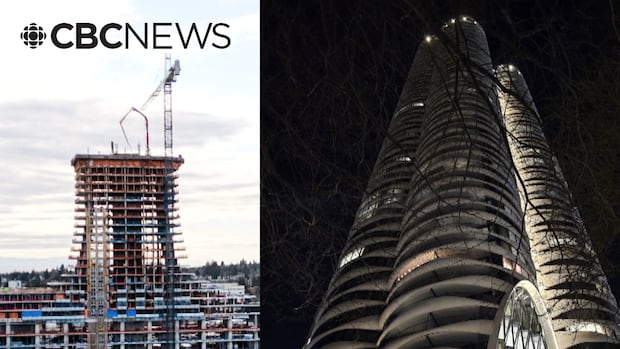
Prominent B.C. developer Westbank facing lawsuit, scrutiny for multiple projects
One of the most prominent developers in British Columbia is in the midst of a lawsuit with its former vice-president for breach of contract. As CBC’s Justin McElroy reports, documents from that lawsuit shed a worrying light on many of Westbank’s biggest projects.
‘Reality of the industry these days’
The alleged text was sent by Gillespie to Mabberley in September, four months after Mabberley left Westbank and three months before she took legal action.
In it, Gillespie references several high-profile development projects in Vancouver that were or formerly under their responsibility, and says that they are not profitable, including:
The Sen̓áḵw complex at the foot of the Burrard Bridge, which was originally a 50/50 partnership with the Squamish Nation before Westbank sold their share to Ontario Pension Trust.
Gillespie texts that “the last minute negotiations resulted in me having to accept a 30% haircut from the original price … which itself was 50% less than we had agreed to last year.”
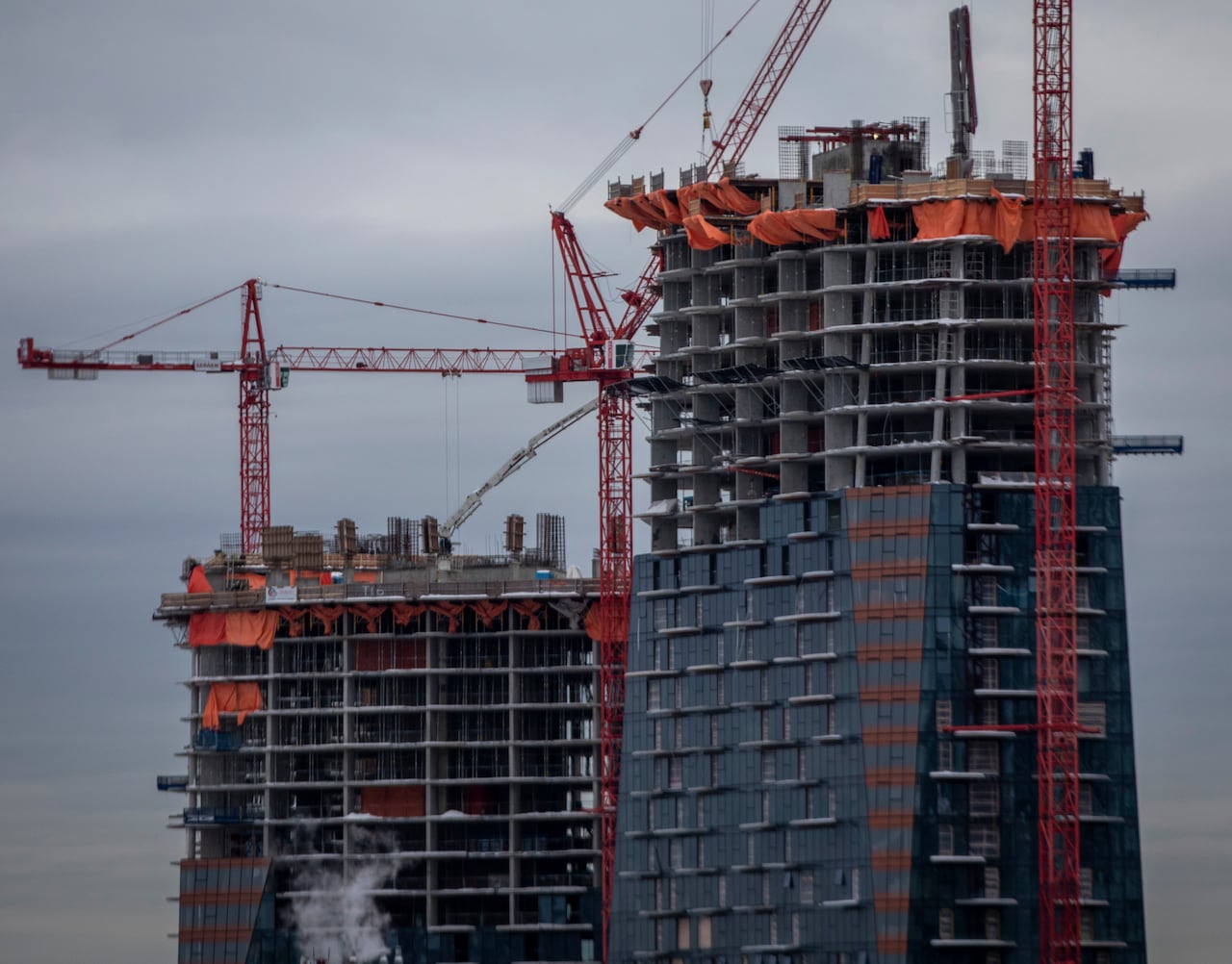 Sen̓áḵw, whose buildings are seen under construction here last year, was originally a 50/50 partnership between Westbank and the Squamish Nation. (Ben Nelms/CBC)
The recently opened Alberni and Butterfly buildings in downtown Vancouver. Gillespie texts that “Alberni still has many unsold units and … Butterfly is well over budget and closings are slow and uncertain.”
The massive Oakridge Park complex, which began in 2019 and has yet to open. Gillespie texts that “Oakridge is way behind schedule.”
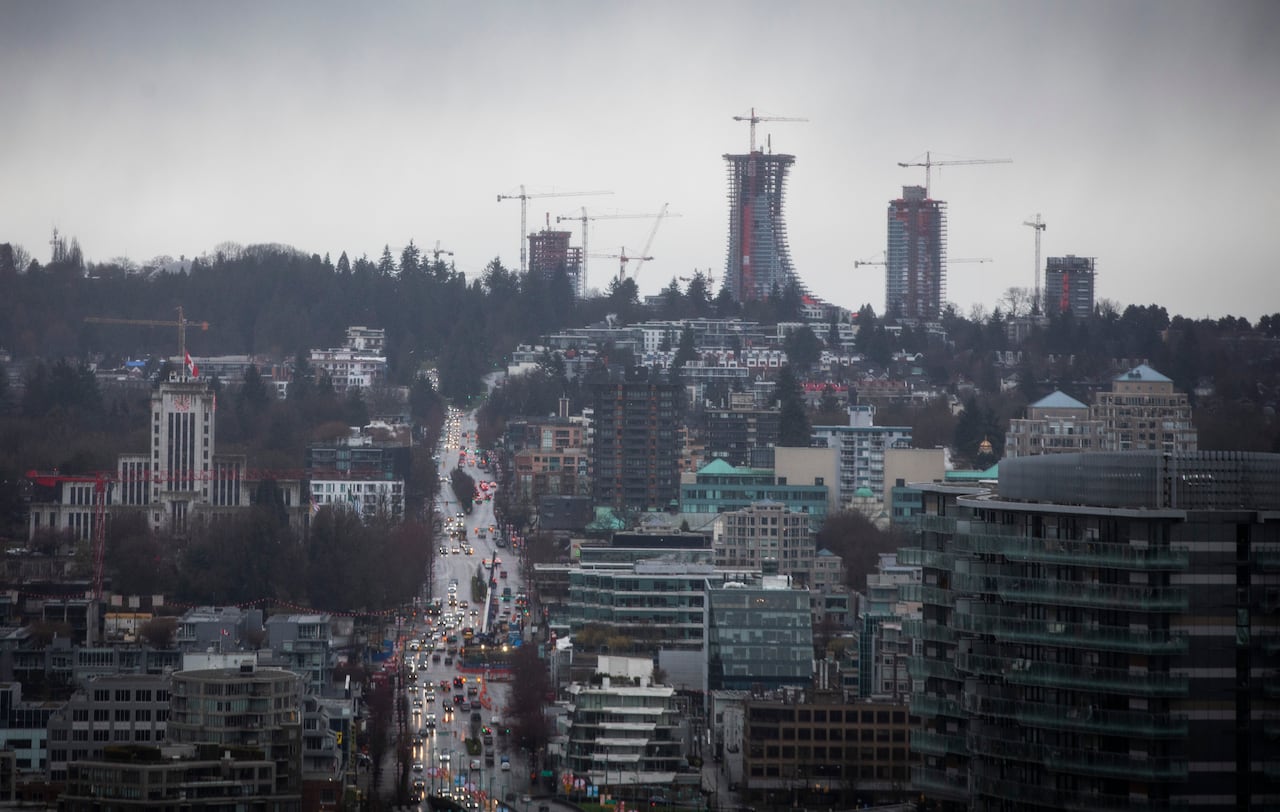 According to the texts contained in Mabberley’s affidavit, the Oakridge development in Vancouver is way behind schedule. (Ben Nelms/CBC)
The text ends with Gillespie saying he would offer Mabberley $200,000 “and then we can both go our separate ways,” adding that “it’s unfortunate but it’s the reality of the industry these days.”
In a statement, Westbank would not comment on the veracity of the text messages, saying it has not been proven in court.
Have we hit rock bottom?
Howard Chai, an independent real estate journalist in Vancouver who has reported on Westbank for many years, says the situation as allegedly outlined by Gillespie isn’t surprising.
“Westbank is a prominent developer, they’ve been around for a long time, they have a lot of high-profile projects so the magnitude is a bit different,” he said.
“But I think the trouble that they’ve had is not really just exclusive to Westbank … pre-sale purchasers not closing out purchases, bills being overdue and not paid, and just the struggle for good liquidity is common.”
A number of developers in Vancouver have faced financial issues in recent years.
But their issues can come without warning to the public because they tend to be privately held, meaning their finances don’t have to be revealed outside of things like lawsuits or bankruptcy proceedings.
Chai said that Westbank’s finances are somewhat more known because they have partnered with a number of publicly-traded real estate investment trusts — but that many are facing the same overarching problems, after years of sales and demands being well below 21st century norms.
“One thing I am kind of focused on and curious about or looking into is just whether or not we really hit rock bottom,” he said.
“Covering insolvencies relatively often, it does seem like the numbers have decreased or slowed down a bit … so I think that’d be something worth monitoring, because once we get to rock bottom, then things generally start getting kind of better.”
WATCH | Condo developers warn of economic turmoil:
Vancouver condo developers warn of economic turmoil as market slumps
Metro Vancouver’s condo development industry is in crisis. There are about 2,500 new units sitting empty — with developers offering a variety of incentives to try to sell them. As Amelia John reports, people who work in the sector say it’s no longer economically viable to build new projects.