
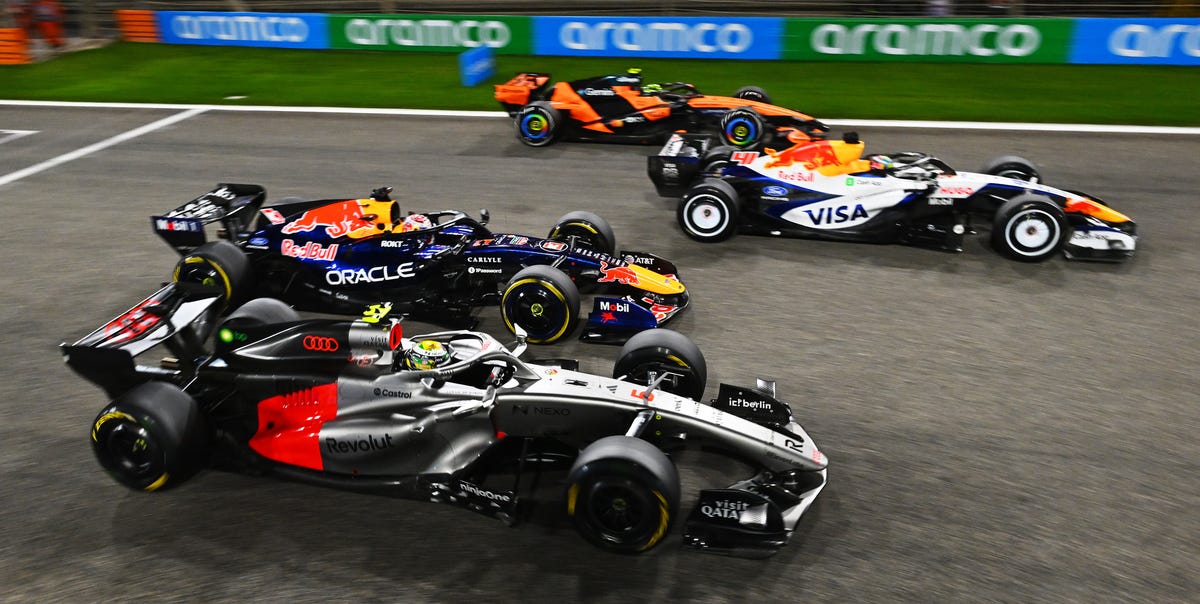
There was a lot for Formula 1 teams and drivers to learn over the three test sessions with their 2026 cars, in terms of how to harvest and deploy energy. Nothing quite caught the imagination as much as starts, however—and how they will impact, at least, the early races of the season.
Whereas in recent years, we’ve grown accustomed to everyone moving off the start line pretty much as one, with a yard or two signaling the difference between a good getaway and a disastrous one, this year we’re set to see a disparity in performance. That became clear after the drivers conducted practice starts in Bahrain, and we witnessed a lot of variability. While the cars of Ferrari and Maranello customer team Haas appeared to fly off the line, others were more sluggish.
Mercedes driver George Russell, widely tipped as a title favorite given the overall strong form of the team’s new W17 in testing, admitted that he is a little concerned. “I think we’ve got a lot of potential beneath us,” the Englishman said in Bahrain. “But to win a race, you’ve also got to get off the line quite well. And I think the two starts I’ve made this week were worse than my worst ever start in F1. Lewis, down in P11, got into P1. So at this stage, I don’t think it matters how quick you are—the thing that’s going to trip you up is going to be that tallest hurdle, and that’s what we’re trying to get our heads around right now. And yeah, we’re stumbling on some at the moment.”
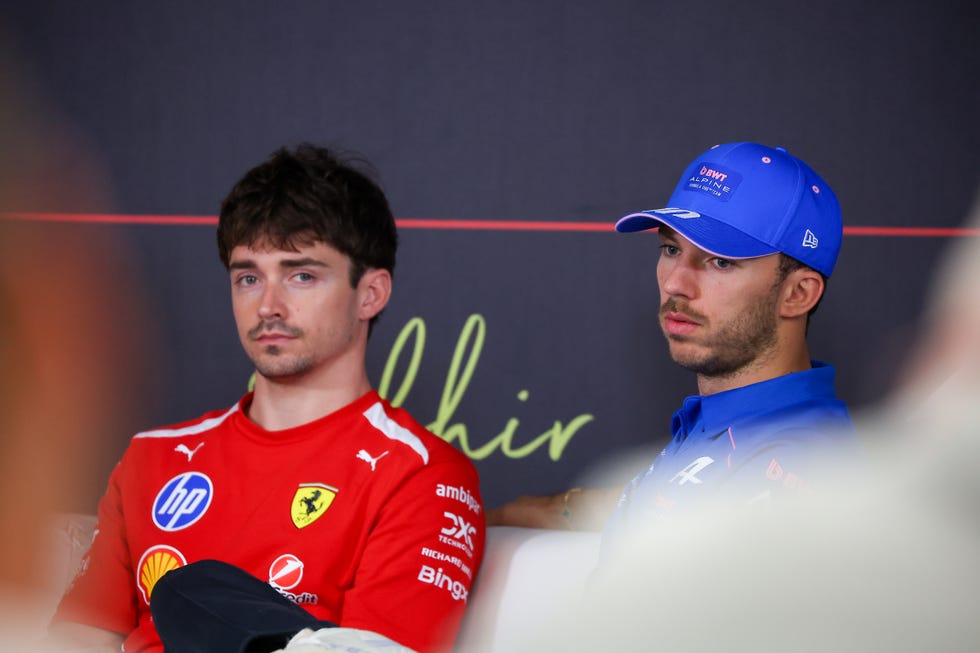
Charles Leclerc downplayed any advantage that Ferrari might have, but admitted that the team is in a good place.“The start is a very important moment of the race,” he said. “And it’s, for sure, something that we kept in our mind with this new regulation—in order to be to be ready for that. So it’s still tricky as it is I think for everybody. Maybe we are a bit on the better side of things on that, and I’m happy that is that way. Because in Australia, as is in every start, it’s a lot of places to be gained or lost if you have a good one or a bad one. And particularly this year it’s going to be very tricky. If anything, I think we should be on the better side of the grid.”
NurPhoto//Getty Images
It was at the first test in Barcelona that drivers found out just how tricky starts are this year, with a different raft of techniques required. With new power units, drivers need to use high revs for a few seconds to get the turbo spinning before can they take off. Having realized some time ago that starts would be an issue, Ferrari chose to design its 2026 power unit around a smaller turbo that would be more effective.
As drivers began to practice starts in testing, it became apparent that the traditional timing of the start procedure didn’t allow for that extra revving. After discussions with the teams the FIA agreed that a change had to be introduced, essentially for safety reasons. Thus, in Bahrain a new five-second high-revving window ahead of the normal start timing was tested, signaled by flashing blue light panels; that is now set to become standard. This, to some degree, canceled out the Ferrari advantage conferred by a choice of a smaller turbo. (The Italian team has accepted the change on safety grounds.)
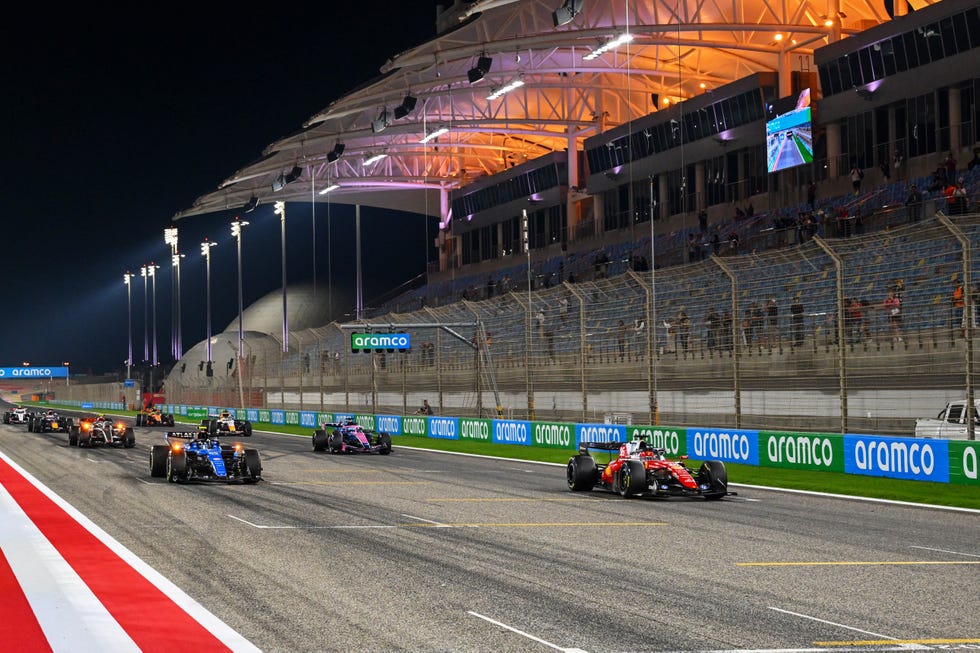
Practice starts were run on the grid at the conclusion of each session in Bahrain, and by the end of the three days, some of those who struggled earlier on were starting to get a handle on it. However, drivers still have concerns, especially about being able to get away well consistently.
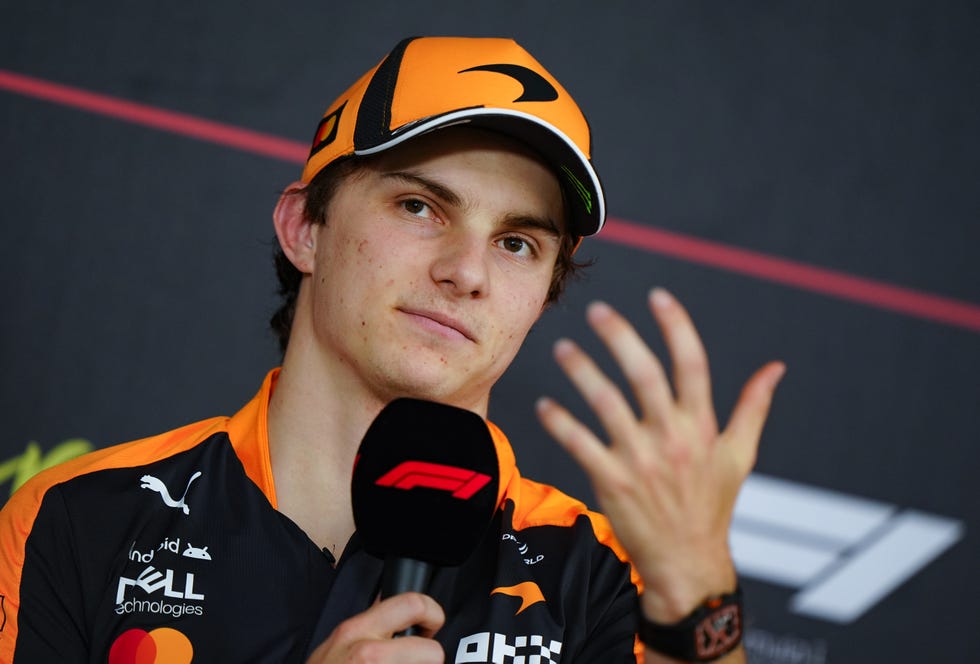
“I think it’s just very random at the moment,” said Oscar Piastri. “And I think we’re all kind of learning what makes a good start, what makes a bad start. There’s some pretty big pitfalls you can find if you get yourself in trouble.”
“Even just managing the power and the procedure is kind of one thing, but also just the way we do starts is much more difficult than last year. You’ve got a lot of power. The MGU-K kicks in at a certain point. So it’s trickier from every single angle. And I think what we’re seeing at the moment is people just getting things rightm and other people getting them very wrong.”
Bradley Collyer – PA Images//Getty Images
“It’s tough,” said Oliver Bearman, who benefited from having a Ferrari power unit. “It’s a bit more complicated than last year, that’s for sure, and the procedure is much longer. But generally, we’ve been managing it quite well. I think there’s still a lot of variability even between a good and a bad start, that the spread is much higher than last year and previous years. But like Oscar was saying, that the step from ICE to when the “K” kicks in—that’s also really important part of the start, and that needs optimization. And we did a big step from last test to this test, but it’s still up and down.”
What will happen in Australia? Every team learned lessons in Bahrain that will be applied when they try further practice starts on Friday and Saturday in Melbourne. It’s also true that the starts in Bahrain were not conducted in optimal conditions, being tacked on to the end of normal running.
“I don’t think what you’re seeing [in Bahrain] is really what’s going to happen,” said Alex Albon. “You’ve got drivers who are finishing long runs going into a practice start, doing high mileage on a tire that’s already hot. So you’re seeing this chaos of some people getting good starts, or bad starts. But, actually, it’s not as bad as that. I think once everyone has the same tires on the car and it’s the same formation lap for everyone, it will look … maybe not as smooth as last year, but it will be really okay.”
Mark Sutton – Formula 1//Getty Images
In other words, Albon believes that everyone’s starts might naturally be better when it really counts in race conditions. We won’t really know for sure until it’s lights out for the season-opening Australian Grand Prix on March 8th.
Related Stories