
What to know
Toronto city council is set to vote on changes to the Private Tree Bylaw, including lowering the protected tree diameter to 20 cm and creating a new “Distinctive Tree” category for large, healthy trees.
The city is proposing new permit fees to recover about 90 per cent of application costs.
The Toronto Environmental Alliance says stronger protections are crucial as rising temperatures and extreme storms make mature trees essential for cooling and flood prevention.
Toronto city councillors are voting this week on strengthening protection for trees located on private land.
On Feb. 25, councillors will consider a review of the city’s Private Tree Bylaw, which will include a series of regulation amendments, operational updates, studies, and stronger protection for trees located in private property.
The Tree Bylaw regulates trees in private land, requiring landowners to request permits to remove or damage trees, and provide tree replacement when necessary.
Some of the proposed changes include:
Update fines for those who violate Private Tree Bylaw;
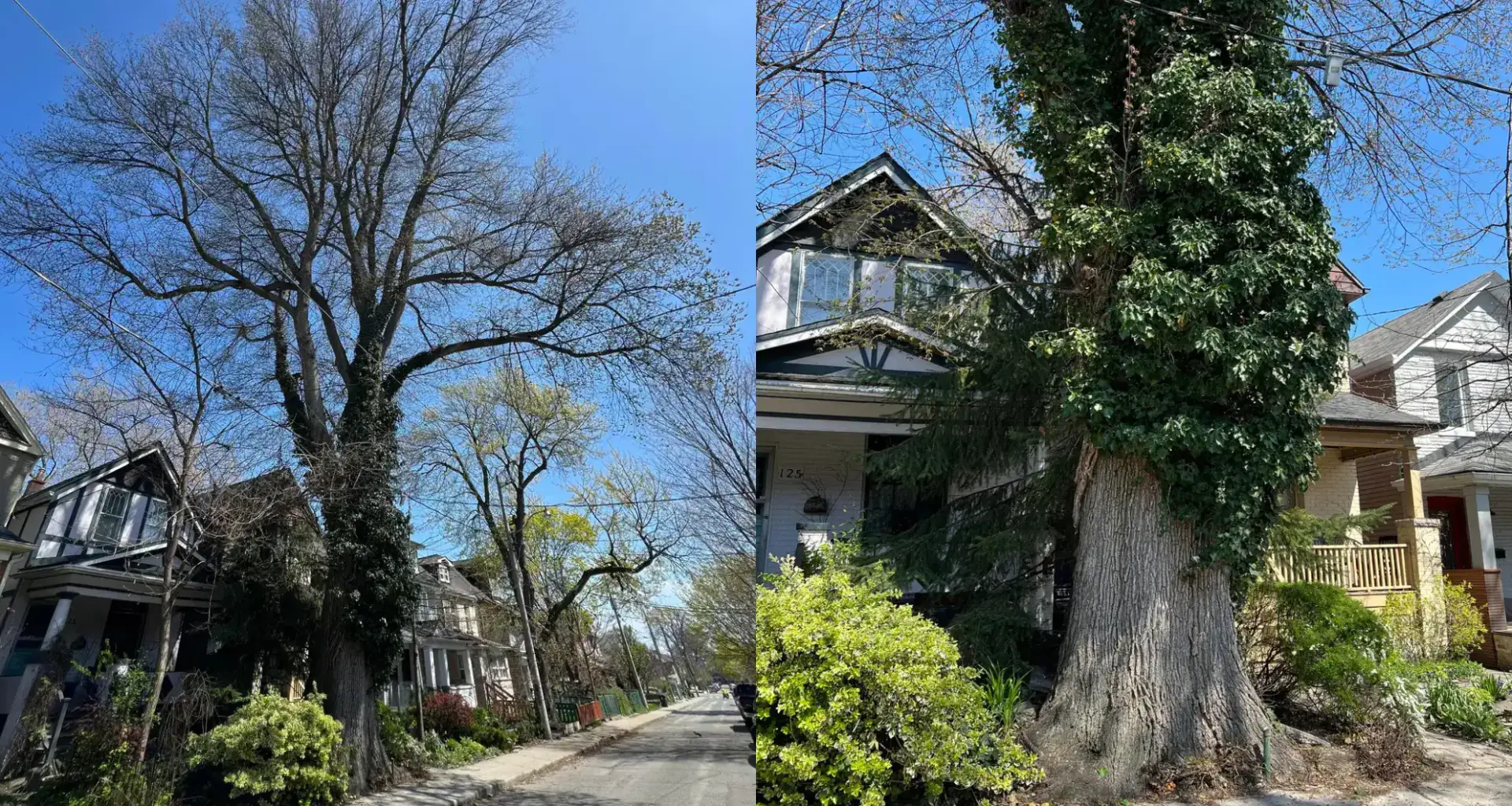
Adding a new “Distinctive Tree” category for healthy trees with at least one stem over 61 cm diameter, which will receive special consideration and protection during permit reviews;
Launching a one-year pilot to provide financial support for maintaining mature trees in private property;
Reduce the minimum diameter of protected trees from 30 cm to 20 cm, which will be considered during permit reviews;
Making Tree Bylaw investigations public through quarterly summaries.
In addition to the bylaw amendments, the city is also proposing the implementation of a permit application fee for those who request permission to remove or damage trees.
Currently, it costs the city nearly $510,000 to provide these permits. Revenue from the new fees will be used to create “a new dedicated cost recovery stream for city services that are currently funded through the tax base.”
“The proposed fee structure is designed to recover approximately 90 per cent of permit service costs as it primarily provides a direct and substantial benefit to the applicant. It is recommended that the remaining 10 per cent of the permit service costs be subsidized through the tax base due to the public benefits resulting from maintaining ravine protected areas,” the city states.
Toronto advocates say more protection is essential for the future
Toronto Environmental Alliance (TEA) Campaigns Director Sarah Buchanan tells Now Toronto that the added protections are needed to protect trees’ role in cooling down environments during hotter months.
For the past few years, Canada has faced record-breaking temperatures during the warmer months, with Environment and Climate Change Canada stating that 2024 was the warmest year ever recorded in the country.
This year, the trend is set to stay in place, with early forecasts indicating that 2026 could be among the warmest in history, comparable to 2023 and 2025.
Read More
According to Buchanan, trees can be important allies when it comes to cooling down urban environments, with a city report indicating they can reduce temperatures by up to 12 C while providing shade and reducing ultraviolet rays.
“We need to plan for the future. We know that we’re no longer in the same Toronto. We know that we’re facing a future that will be much hotter, and we’ll have much more intense rainfall and storms. And one of the biggest ways that we can respond to that is by keeping our trees and growing our tree canopy,” Buchanan said. “It’s by far the cheapest way for us to cool our city.”
The advocate also stresses that most of Toronto’s trees are located on private land, making it essential for the city to regulate and preserve them.
“Because so much of our urban forest is on private land, there’s really no way to increase our urban forest by just cramming it all into city land, it just simply won’t fit. So, there does have to be strong work to make sure that private land also has a good, healthy tree canopy,” she added.
The importance of mature trees
Among the bylaw changes city council will vote on, the review aims to include more protection for bigger and more mature trees.
As pointed out by Buchanan, a study by the University of Hamburg suggests that older trees are capable of absorbing more carbon dioxide from the atmosphere, storing almost 70 per cent of carbon in the last half of their lives.
In addition, their deeper roots also absorb more water from the soil, which can be helpful as the city deals with heavy rainfall or floods.
For that reason, even if mature trees that are cut down or damaged get replaced with new ones, they wouldn’t provide the same relief.
“Usually large trees have root systems that go way down deep into the soil and can suck up gallons and gallons and gallons of water, which is really important when you get a really heavy rainstorm, you get trees working really hard to absorb that quickly and be part of the city’s stormwater response to prevent flooding,” Buchanan said.
“But little trees, obviously, they’re small. Their root systems haven’t developed in the same way yet. So, they can’t do that pumping work that the bigger trees can do.”
Buchanan explains that newly-planted trees also demand more maintenance, as they are more vulnerable to heat and often need more water.
“I think we’re often used to a throwaway culture where we just get new things all the time, and you can’t do that with trees. Trees aren’t an Amazon package that shows up at your door. Trees need decades to grow and thrive and start doing the work that we desperately depend on them to do,” she said.
In anticipation of city council voting on the by-law review on Wednesday, TEA is urging residents to contact their local councillors, the mayor, and Chair of the Infrastructure and Environment Committee Coun. Paula Fletcher urging them to vote in favour of the changes.
Those who wish to do so can send an automated message through the TEA website.