
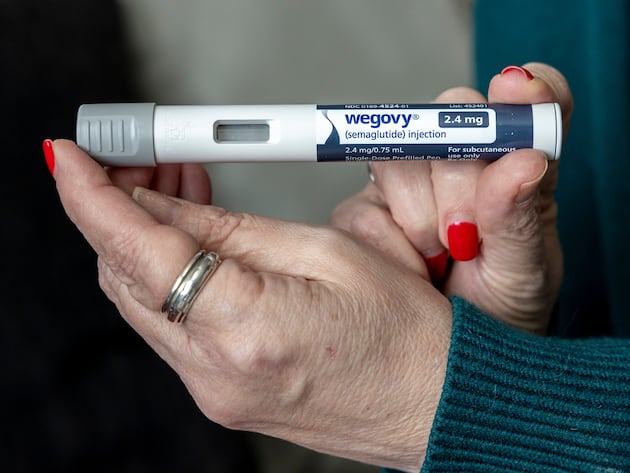
Novo Nordisk to cut prices by about 50% for Ozempic and 35% for Wegovy.Price drops target insured patients who share costs based on drug list prices.Cash-paying patients have already experienced better prices for those medications.
America’s in the middle of a weight-loss frenzy, driven by blockbuster GLP-1 drugs that have proven very effective at helping adults shed excess pounds. Meanwhile, in what could be another sign of a price war, Novo Nordisk has announced plans to drastically reduce the list price of its versions, Wegovy, Ozempic and Rybelsus.
The price change, announced Tuesday, will take effect Jan. 1, 2027 and is aimed to help “patients whose out-of-pocket costs are linked to list price,” the company said in a news release. In other words, those with insurance who bear a share of the cost of the drug, based on list price.
The cost of Wegovy for weight-loss and Ozempic for diabetes, which are both semaglutide injections, and Rybelsus, the company’s tablet form of semaglutide, will drop to $675 a month at any dose level for patients with insurance. Currently, the medications cost between $1,000 and $1,349 a month.
That’s a reduction, per the company, of about 50% for Ozempic and 35% for Wegovy.
The price cuts won’t benefit those who pay cash. But those patients have already seen lower prices as Novo Nordisk lowered the cost of Wegovy and most of its Ozempic doses from just under $500 a month to just under $350. Those cuts apply to patients who get their drugs directly from the manufacturer or its telehealth and retail pharmacy partners.
GLP-1 stands for glucagon-like peptide-1, a class of medication for obesity and type 2 diabetes that acts like the regular hormones that are supposed to regulate blood sugar and tell people when their appetites are sated.
The company said the price drop “reflects Novo Nordisk’s commitment to enhancing affordability for patients and both public and private payers dealing with the complexities of the evolving U.S. health care system.” Jamey Millar, executive vice president of U.S. operations, said in the release that the price change will benefit “individuals with high-deductible health plans or co-insurance benefit designs.”
The company has reported that more than 100 million people in the U.S. live with obesity, while more than 35 million have type 2 diabetes. Millar said the medications are approved by the U.S. Food and Drug Administration for adults who have obesity, type 2 diabetes, and those whose weight or diabetes are complicated as well by chronic kidney disease or related cardiovascular disease.
Intense competition among drug makers
The weight-loss drug field is incredibly competitive at the moment. And drug makers are also facing pressure from the Trump administration to lower prices, as Deseret News has reported.
Per USA Today, “On Feb. 23, Novo Nordisk released late-stage study results showing participants who took its next-generation obesity drug, CagriSema, didn’t lose quite as much weight (23%) as those who took rival Eli Lilly’s Zepbound (25.5%). Novo Nordisk’s shares dropped 16% on Monday after releasing the head-to-head results of weight-loss medications.”
CagriSema was reportedly planned as a next-generation weight-loss drug, following Wegovy.
Eli Lilly, like Novo Nordisk, lowered the price of its Zepbound GLP-1 drug earlier for those who purchase directly from the company. Zepbound is tirzepatide, not semaglutide. Eli Lilly’s Mounjaro is also tirzepatide, but prescribed for diabetes.
USA Today noted that “while employers often cover the cost of diabetes medications such as Ozempic and Lilly’s Mounjaro for their workers, employers are less likely to pick up the tab for weight-loss medications.”
KFF, quoted in the USA Today article, said 43% of larger employers paid for anti-obesity drugs last year.
Besides battling each other for marketshare, the two companies have been in lawsuits with companies that compound versions of their GLP-1 weight-loss drugs. During a shortage last year, the FDA allowed some compounding, but the shortage has resolved and the two drug manufacturers say such compounding violates their exclusive rights to their drugs. Those making the compounded, cheaper version have said the companies own their recipes, but not the ingredients and that their own versions are different enough to allow them to continue.
A price war for GLP-1 drugs?
“Novo’s pricing announcement is the latest in a series of maneuvers after President Donald Trump threw the spotlight on the cost of GLP-1 drugs last year,” according to BioSpace. “In November, both Novo and Lilly struck deals with the White House to offer their GLP-1 medicines through Trump’s direct-to-consumer marketplace for about $350 per month. Novo also agreed at the time to sell oral Wegovy for $150 for the initial doses — a promise it made good on when the pill launched last month.”
The two companies have gone back and forth, each cutting prices in different ways. Per Biospace: “Following the White House deals, Novo said it would offer a self-pay option for Wegovy and Ozempic for $199 per month. Weeks later, Lilly responded, once again cutting the price of its GLP-1 weight loss option, Zepbound, when purchased through the direct-to-consumer platform LillyDirect. The cost for a one-month supply of the drug’s lowest dose (2.5 mg) — recommended only as a starter dose — went from $349 to $299, while the 5 mg dose went from $499 per month to $399. All other doses — 7.5, 10, 12.5 and 15 mg — dropped from $499 to $449 per month.”
MarketWatch reported Tuesday that both Novo Nordisk and Eli Lilly shares fell after plans were announced to further cut the price for Ozempic and Wegovy.