
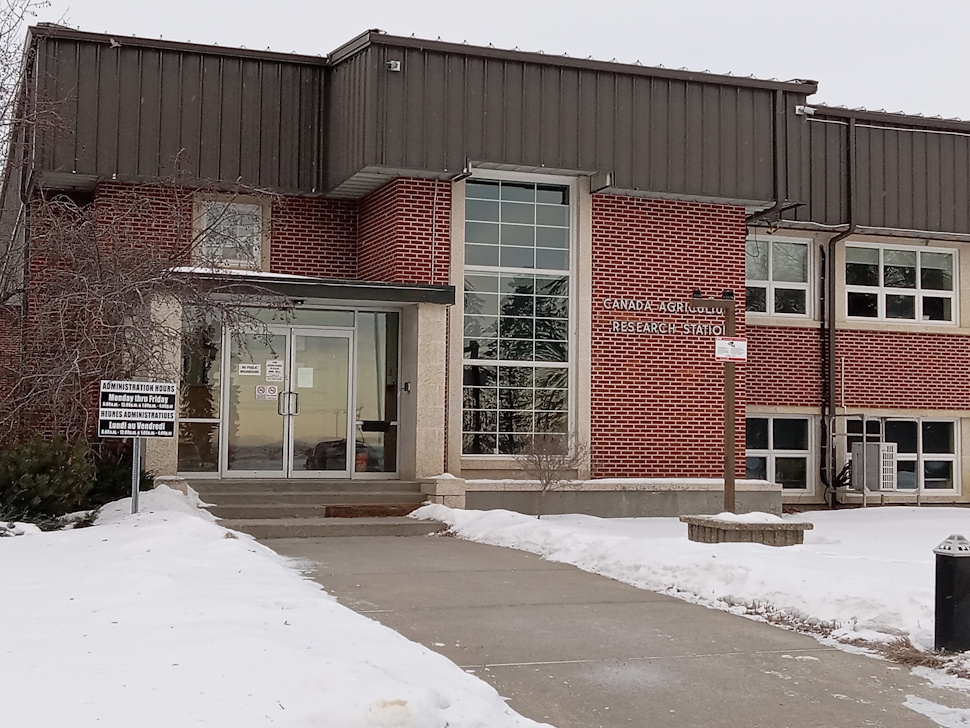
Two Lacombe leaders have been invited to Ottawa to address the impacts of the federal government’s planned closure of the Lacombe Research and Development Centre.
Lacombe Mayor Thalia Hibbs and County Reeve John Ireland have been invited to appear as witnesses before the House of Commons Standing Committee on Agriculture and Agri‑Food, with both leaders representing a joint task force.
The invitation highlights what local leaders describe as the national significance of the centre, long regarded as one of Canada’s key agricultural research facilities. It employs more than 100 staff and has operated for over a century.
Mayor Hibbs said the decision would have far-reaching consequences for both the community and Canada’s research capacity.
“We are grateful for the opportunity to speak directly to federal decision-makers,” she said. “This facility is a huge part of our identity in Lacombe (and) contributes to food security, innovation and the strength of our agricultural sector nationwide. Its loss would be felt far beyond our city.”
Related Stories:
Reeve Ireland echoed those concerns, pointing to the broader erosion of long-term agricultural research infrastructure across the Prairies.
“Producers across the Prairies, Canada and globally rely on the work done here,” he said. “We want to ensure the Standing Committee understands what is at stake for rural communities and the future of Canadian agriculture if they move forward with this closure.”
Joint task force membership
The Lacombe Research and Development Centre Closure Response Task Force includes elected officials and senior administrative leadership from both municipalities.
Members include the Mayor and Deputy Mayor of the City of Lacombe, the Reeve and Deputy Reeve of Lacombe County, along with senior staff and key administrative support from both municipalities.
Key concerns
The task force says the proposed closure comes at a time of global instability, trade pressures and increasing climate-related agricultural challenges — conditions they argue require greater investment in independent, public-interest agricultural research.
They outline several potential impacts:
Economic harm: Loss of more than 100 stable, professional jobs in a small labour market and the erosion of a major regional employment anchor.
Student pipeline loss: Reduced hands-on student placements, mentorship and early-career opportunities critical to Canada’s agri-food workforce.
Research disruption: Termination or relocation of long-term scientific trials that cannot be replicated without permanent data and infrastructure loss.
Ecosystem damage: Undermining the research cluster linking academia, industry and public-sector innovation in Central Alberta.
National capacity risks: Weakening Canada’s independent agricultural research base during a period of heightened global uncertainty.
The task force is urging the federal government to reconsider the decision, pause the planned closure and engage with local governments, agricultural partners and the research community to explore alternatives.
Residents and those interested can learn more on the City of Lacombe and Lacombe County websites.
** With information from Lacombe County.
Sign up to get the latest local news headlines delivered directly to your inbox every afternoon.
Send your news tips, story ideas, pictures, and videos to news@centralalbertaonline.com.
CentralAlbertaOnline encourages you to get your news directly from your trusted source by bookmarking this page and downloading the CentralAlbertaOnline app.