
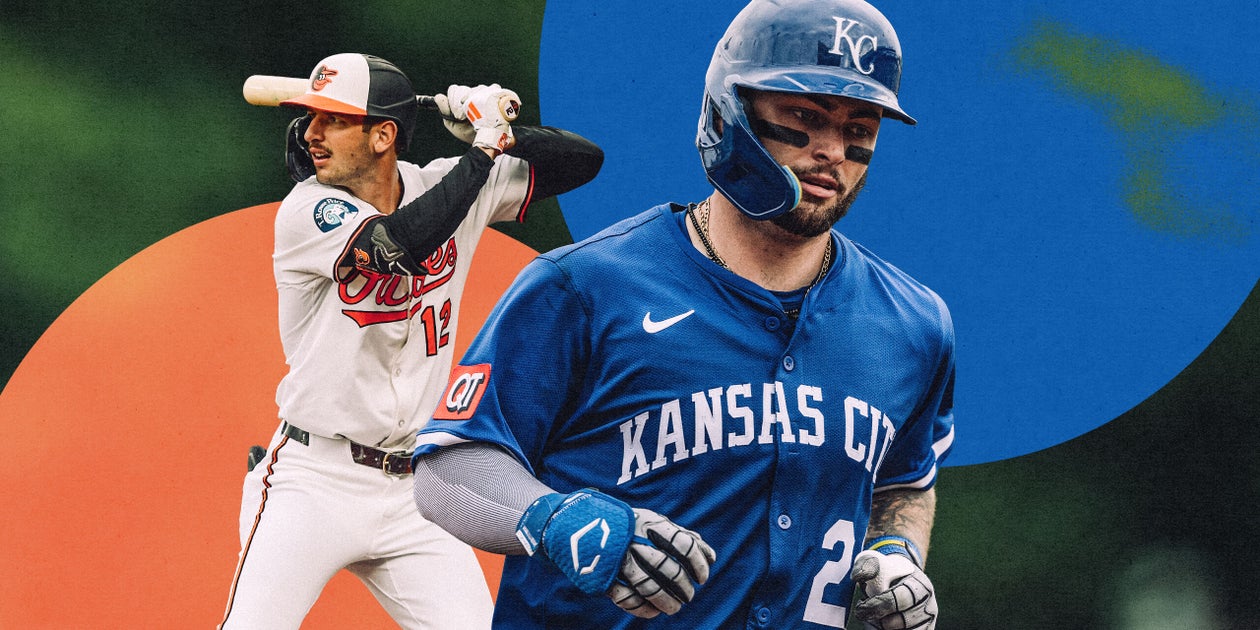
When I rank prospects every offseason here at The Athletic, I’m considering the players’ eventual peaks and their long-term values, which is why you’ll see prospects who were just drafted or have only played in the Rookie-level complex leagues alongside prospects who’ve already made their major-league debuts. For readers more interested in which prospects might have the most MLB impact strictly in the 2026 season, here’s a separate ranking giving you my opinions on the 20 prospects likely to deliver the most value this season. This is as much about playing time as it is about ability — a player who has an everyday job on Opening Day will get about 16 percent more playing time than another player who isn’t up until May 1.
Remember that a prospect’s omission here isn’t a signal that I don’t think a player is good. It more likely indicates that I don’t think he’ll get enough playing time in the big leagues, as is the case for Carson Benge and Colt Emerson. I also see two rotation battles where rookies are fighting for one spot against each other and at least one veteran, so neither pair made the list; in this case, that’s Milwaukee’s Logan Henderson and Brandon Sproat and Boston’s Payton Tolle and Connolly Early. I also do not consider NPB or KBO veterans to be prospects, so while Munetaka Murakami and Kazuma Okamoto are reasonable bets to be American League Rookie of the Year contenders, they’re not on this list.
(Note: Scouting grades are on the traditional 20-80 scale.)
1. Carter Jensen, C, Kansas City Royals
Yes, Salvador Perez is still in K.C., and he caught 92 games last year for the Royals. He was also worth 0.4 bWAR/0.5 fWAR and will turn 36 in May. It’s time to turn this job over to Jensen, who shone in his big-league debut last year, hitting .300/.391/.550 and catching well in the 10 games where he played behind the dish.
Jensen has a long history of getting on base, the power is real and he’s a strong defensive catcher. I understand the desire for loyalty, especially given Perez’s tie to the 2015 World Series winning team, but Jensen should be the Royals’ primary catcher this year, with Perez backing him up and maybe playing some first or DHing if there’s a need. Assuming the Royals go that route, Jensen will be a strong contender for Rookie of the Year.
2. JJ Wetherholt, SS/2B, St. Louis Cardinals
The trade of Brendan Donovan seems to open up a path for Wetherholt to win the Opening Day second-base job, which he should, as the Cardinals’ 2024 first-round pick has hit everywhere so far — and played close to a full season last year, vitiating concerns about his durability after a nagging hamstring injury wrecked his junior year at West Virginia.
He hit .300/.425/.466 in Double A last year, then .314/.416/.562 in Triple A, with a hard-hit rate at the latter stop of 48.4 percent. He’s going to be an above-average or better defender at second, and if nothing else should hit for a high average. The National League Rookie of the Year field is loaded already, but he’s my pick for the favorite right now.
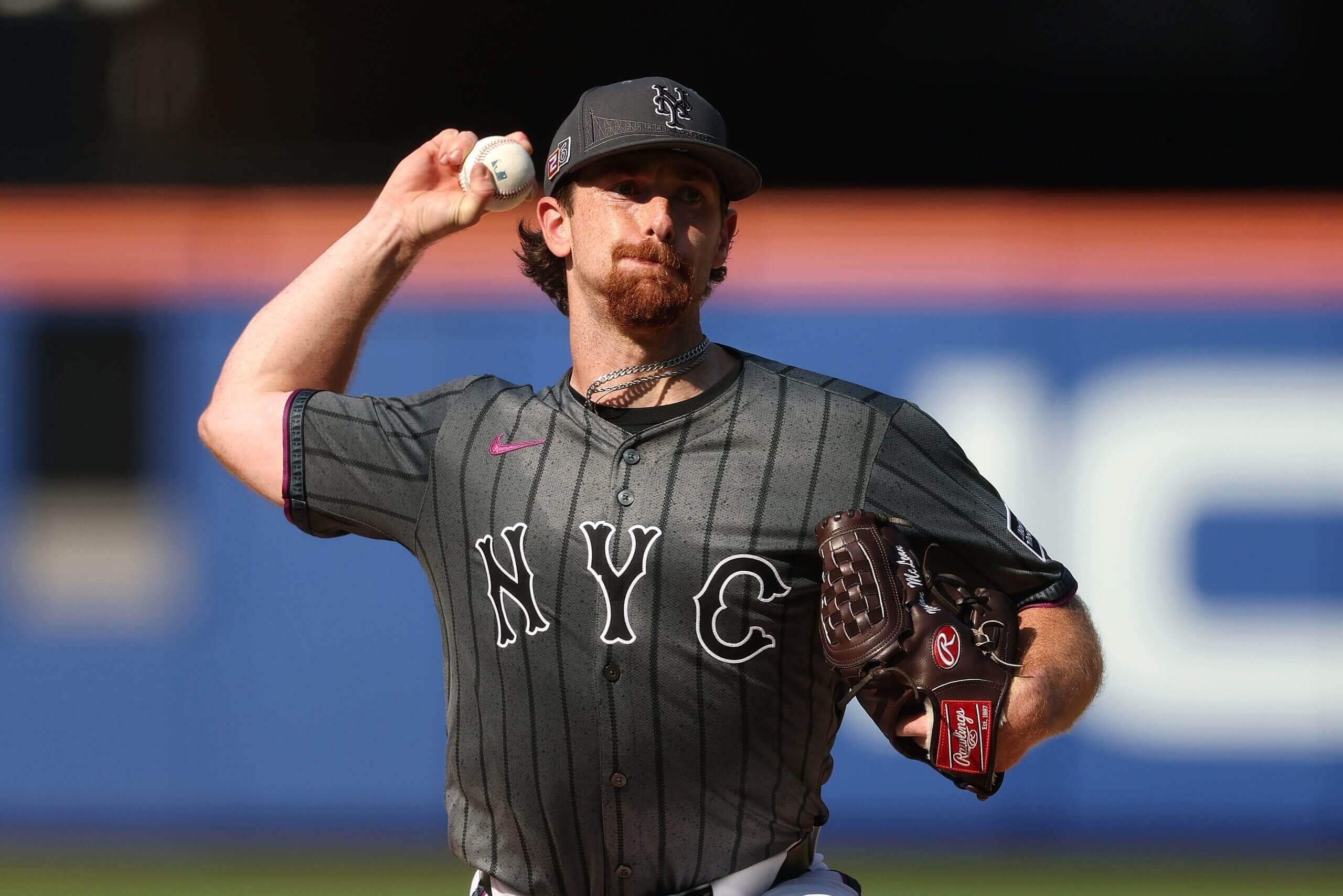
Pitchers historically have lagged behind position players in the Rookie of the Year voting, but Nolan McLean should be extremely valuable to the Mets this season regardless of whether he wins the award. (Al Bello / Getty Images)
3. Nolan McLean, RHP, New York Mets
I think McLean is the popular pick for NL Rookie of the Year at the moment, and the main reason he’s not mine is that he’s a pitcher, and pitchers have always been at a disadvantage for this award. Only 26 percent of Rookies of the Year have been pitchers, and that’s including that two-way guy the Angels used to have. In the last 25 years, it’s been 30 percent. I think the historical bias was towards the counting stats of hitters and the belief that even a good starting pitcher couldn’t be as valuable as a good hitter (which was wrong), but the present bias is that pitchers, especially young’uns, don’t pitch enough to put up WAR or other total-value stats comparable to that of the best hitters.
That’s also my way of getting around the conundrum of thinking very, very highly of McLean for this year — I think the projection systems are all too bearish — while also arguing that he’s not the favorite for Rookie of the Year. Barring injury, I think he’ll throw 160+ innings with an ERA under 3.50 and I’ll be 0 percent surprised if he’s the Mets’ most valuable pitcher in 2026.
4. Konnor Griffin, SS, Pittsburgh Pirates
I have heard that the Pirates plan to give Griffin, the No. 1 prospect in baseball, every chance to win the shortstop job out of spring training; their depth chart has a glaring lack of actual shortstops, so it certainly appears that this is their Plan A and Plan B. Whether this works, and makes Griffin a high-impact rookie this year, depends on whether he is — or continues to be, really — an extreme outlier. If he makes their Opening Day roster, he’ll do so before he turns 20, and he’d be in line to be the youngest player to qualify for the batting title in over 30 years. (I’m going off birthdates, but not accounting for shifting opening/ending dates for the seasons.)
We just don’t see guys who are ready to hit major-league pitching this quickly, and in Griffin’s case it would be with only 98 plate appearances above A-ball. He kept improving over the course of 2025, though, with his best hitting coming after that late promotion to Double A, and he’s more than shown he can play plus defense at shortstop. It would be extremely unusual for him to make the leap to the majors and produce at his age/experience-level, but I think he’s an extremely unusual talent.
5. Dylan Beavers, OF, Baltimore Orioles
Beavers has a chance to win a job in spring training, and while he has some competition, he’s probably the second-best option among all of the outfielders they have in camp, behind only Taylor Ward. He hits lefties better than Colton Cowser does, hits righties and defends much better than Tyler O’Neill does, and offers more of everything in total than any of their other options. Whether he will win a job is another matter. O’Neill is in the second year of a three-year deal, and my assumption is that they wouldn’t keep Beavers around if he’s not going to play every day — although that’s just my guess. They could platoon Cowser and O’Neill, moving Beavers and Cowser between center and right, and then carry Blaze Alexander as a super-utility guy.
That said, there are enough paths to getting Beavers 450-500 AB this year that I’m confident saying he’ll be one of the top five rookies in the AL this year, with 15-20 homers and a solid batting average/OBP.
6. Chase DeLauter, OF, Cleveland Guardians
If DeLauter can stay healthy for most of the season, he’s a Rookie of the Year favorite, maybe the frontrunner. He’s also never stayed healthy for most of any season in pro ball, or even in college, where he played 50 games total in 2021-22 for James Madison due to injuries. Since the Guardians took him in the first round in the 2022 draft, he has yet to play in 60 regular-season games in any calendar year.
What he has done when he’s played, however, is produced, usually with some combination of walks and power, as his ugly swing still results in very high exit velocities and gets him to pull the ball in the air. I worry he won’t hold up if they play him in center, which is a possibility, and he’s going to have to make a major adjustment to big-league breaking stuff from lefties — given his swing path, that’s the most obvious way to attack him. But he’s 24, has hit well in Triple A, and plays for a team whose owner wouldn’t sign Willie Mays if he cost more than $1.5 million, so he’s got a clear path to playing time as long as he can stay on the field.
7. Trey Yesavage, RHP, Toronto Blue Jays
Yes, Yesavage had a tremendous October, and he has a job going into the season in the Jays’ rotation, which is a major factor in these rankings because it gives him a shot at a full year’s worth of MLB playing time. That said, there are some red flags in his 2025 performance and scouting report that make me more bearish than you might expect if you only knew of him from his major-league time.
He doesn’t actually pitch in the zone that much, relying heavily on hitters chasing his pitches — especially that wipeout splitter — out of the zone, and his fastball and slider were both hit fairly hard in Triple A and the majors. The splitter will miss a lot of bats, and you could see he’s still far from a finished product even in his postseason outings, so I’m optimistic about his long-term outlook. I just wouldn’t put him over some of the position players who also have jobs and are more advanced right now when forecasting 2026 production.
8. Sal Stewart, 1B, Cincinnati Reds
Yes, the Reds have Gold Glove finalist first baseman in Spencer Steer, but Steer is 28 and was barely above replacement level last year. He is not the future, while Stewart is, and the young player who could be their first baseman for the next six years should get the majority of reps over there. Stewart can handle third base, with first a much better option for him, and his bat should play there his propensity for making a lot of hard contact and had a big increase in power last year. He hit 25 homers total in 552 PA between Double A, Triple A, and the majors, and still struck out just 92 times in total across all those stops.
He seemed to have a job locked down somewhere until the Reds signed Eugenio Suárez, which gives them three players for the two spots at first base and DH, assuming Ke’Bryan Hayes is the everyday third baseman. Suárez’s deal was a bargain at $15 million for one year, given his 3.6 WAR output in 2025, but he was a cipher in the second half (.196/.267/.463) and could go off the cliff at any point, so I don’t think his signing precludes a big year for Stewart.
9. Kevin McGonigle, SS, Detroit Tigers
I don’t think McGonigle’s going to make the team out of spring training, but if I’m right, it probably won’t be too long until we do see him in Detroit.
The No. 2 prospect in baseball has raked everywhere in the minors, only slowed by injuries in the two years since the Tigers took him with their second pick in the 2023 draft. He isn’t blocked by a real shortstop in Detroit — the Javier Báez comeback didn’t last, as he hit .223/.230/.318 in the second half with one (1) walk and 46 strikeouts in 153 PA. McGonigle’s not a great shortstop defensively, but he’ll be passable for now, and his bat should more than make up for his lack of plus range.
10. Bubba Chandler, RHP, Pittsburgh Pirates
Chandler should be the Pirates’ No. 3 starter this year, behind Paul Skenes and Mitch Keller, although if you want to say he’s their No. 4 starter it doesn’t really matter. He made his MLB debut last season in late August and clearly liked getting away from the ABS in Triple A. He walked more batters in his final start in the minors (five) than he did in seven outings in the majors (four).
He has an elite fastball and a plus changeup, and with that delivery he shouldn’t be walking as many as he did in the minors, but I wouldn’t be surprised if the control comes gradually over the next few years and thus that in 2026 he’s inconsistent, with some lights-out games where he looks like an ace and some games where he walks six in 2 2/3 innings.
11. Samuel Basallo, C/1B/DH, Baltimore Orioles
Jordan Westburg’s injury seems to give Coby Mayo a better shot to play third base, if he makes the team at all, which in turn takes him away from the first base/DH rotation and opens up some more potential at-bats for Basallo. The Orioles do have a catcher in Adley Rutschman, yet he’s tapered off from his best years, in part because of the wear and tear of the position, so the Orioles could cycle him and Basallo through the catcher and DH spots, maybe letting Basallo play first base and DHing Pete Alonso (who is a bad defender at first), although that might just be my optimism at play. Also, I don’t know why Ryan Mountcastle is still an Oriole.
12. Owen Caissie, OF, Miami Marlins
Caissie came to Miami in the Edward Cabrera trade with the Cubs and his odds of getting 500 PA this year went up exponentially, as no one is blocking him in right field with the Marlins. Caissie has too much swing and miss in his game and he has never hit lefties, but he has prodigious power and he can play right field well enough to stick out there.
It’s not a wildly different profile from Kyle Stowers, another left-handed-hitting outfielder the Marlins picked up in a trade who had a huge breakout once he got regular playing time — even though he also strikes out too often for me to buy it long-term. Caissie should hit 20-plus homers if he’s even just the strong side of a right-field platoon this year.
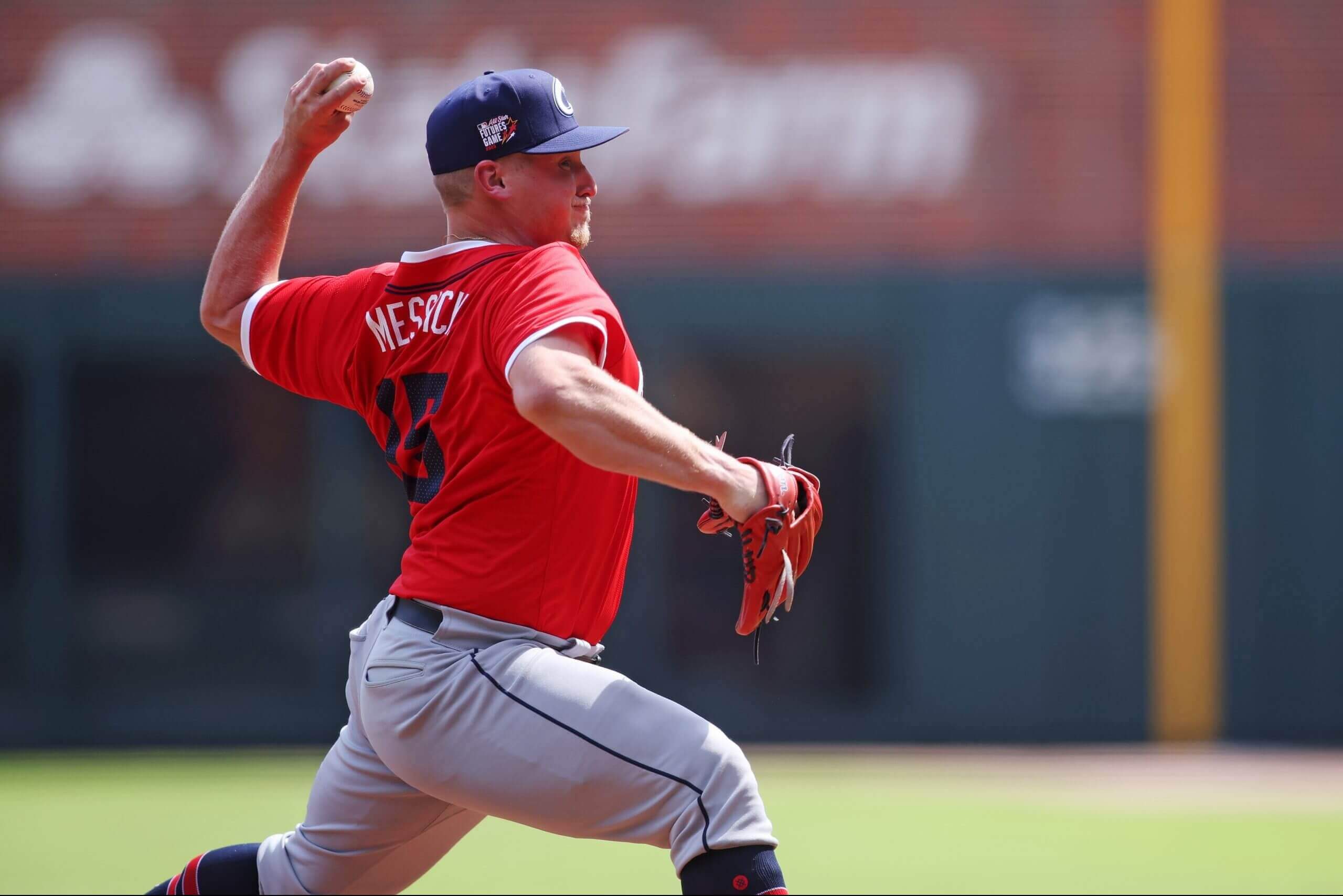
Parker Messick looks ready for a regular spot in the Guardians’ rotation. (Brett Davis / Imagn Images)
13. Parker Messick, LHP, Cleveland Guardians
Messick should be the fifth starter for Cleveland to start the year, and I wouldn’t be shocked if he was their No. 3 starter by season’s end. He has always had good deception and feel to pitch, and last year his stuff ticked up across the board and he was more than solid in his brief MLB debut. I think mid-rotation starter is about his ceiling, but unlike most rookies he doesn’t have a lot of projection or development ahead of him — he’s pretty close to a finished product.
14. Justin Crawford, OF, Philadelphia Phillies
It sounds like the Phillies want Crawford to win the center-field job, and they gave a lesser player that runway a few years ago in Johan Rojas, so there’s precedent. Crawford is an 80 runner and an easy plus defender in center. Unlike Rojas, Crawford has adequate present strength to hit major-league pitching enough to be an everyday player. His current swing puts the ball on the ground a ton, so I don’t expect much impact at the plate beyond a lot of singles. That, plus his speed and defense, could still make him a dark-horse NL Rookie of the Year candidate, more so if he ends up with 50-plus stolen bases.
15. Moisés Ballesteros, DH, Cubs
I’m listing Ballesteros as a DH — although he is nominally a catcher and can play first base — because he’s not good enough at the former position and not about to dislodge Michael Busch at the latter one. I also think he’s the most likely candidate to be the Cubs’ primary DH this year, even with some competition at the spot from returning players and some of their offseason additions. He’s hit everywhere, including in 20 games in the majors, and he’ll be one of their best pure hitters (bat only, that is) this year if they give him the job.
16. Bryce Eldridge, 1B/DH, San Francisco Giants
Right now, there appears to be a spot for Eldridge to win out of spring training, either as the Giants’ DH or first baseman, with Rafael Devers in the other role. That said, Eldridge has not hit nearly well enough in Triple A yet to project him to have impact with the bat in the majors this year, and there’s a decent chance that the Giants will see Luis Arraez’s defense at second base and realize they’ve made a huge mistake, moving Arraez to first base/DH and possibly pushing Eldridge to Triple-A Sacramento.
17. Andrew Painter, RHP, Philadelphia Phillies
With Zack Wheeler still recovering from surgery to address thoracic outlet syndrome, Painter has a chance to win the fifth spot in the rotation this spring, and I think the front office very much wants him to do so. He had a disappointing year in Triple A in 2025, his first time pitching in the regular season since the end of 2022 after he missed two years with an elbow injury and then the recovery from Tommy John surgery. Despite the results, his stuff was there — he still worked in the mid-90s, flashed the plus curveball, showed good feel for a changeup and threw a lot of sliders with very inconsistent results.
His impact this year depends a lot on that last pitch: does it improve enough to be the weapon the Phillies want it to be? Can he command it and land it for strikes? And if that doesn’t happen early, can he go back to the curveball that was his out pitch before his elbow injury? I still believe in the upside, more for the long term than for 2026.
18. Jacob Melton, OF, Tampa Bay Rays
Melton is the best defensive center fielder on the Rays’ 40-man roster, better than their most likely Opening Day center fielder, Cedric Mullins, or extra outfielder Jonny DeLuca. Mullins is an above-average defender out there, no longer plus as he was in 2021-22, and his arm makes him better suited to left field. Melton has never hit lefties well and has contact issues against righties, but he could add plenty of value this year with his glove and his power even if he ends up spending most of the year as the strong side of a center-field platoon.
19. Tyler Bremner, RHP, Los Angeles Angels
I feel like it would be malpractice to omit the Angels’ first-round pick from the prior year, given that their last three first-rounders all reached the majors inside of 12 months from their draft day. There’s a good chance Bremner will be one of the five best starters in the system before we see June, just given normal attrition rates for pitchers and the names on the Angels’ depth chart. While I have concerns about Bremner’s breaking ball, he’s going to throw a lot of strikes and his plus changeup could help him post gaudy numbers in Double A, where I expect him to start — if he doesn’t just make the Angels outright.
20. Joe Mack, C, Miami Marlins
I believe Mack should be Miami’s Opening Day catcher, but I don’t get the sense right now that that’s their plan. He can catch, he has power, he hits enough and the Marlins are calling pitches from the dugout, so while I don’t love that idea it does mean there’s one fewer thing for Mack to work on as he transitions to the majors.
Other potential impact rookies I considered: Noah Schultz, LHP, White Sox, Hagen Smith, LHP, White Sox, Walker Jenkins, OF, Minnesota Twins, Gunnar Hoglund, RHP, Athletics, Yunior Tur, RHP, Athletics, AJ Blubaugh, RHP, Astros, Chase Shores, RHP, Angels, Ryan Johnson, RHP, Angels, Everybody Else with the Angels, Harry Ford, C, Nationals, Abimelec Ortiz, 1B, Nationals, Rhett Lowder, RHP, Reds, Robert Gasser, LHP, Brewers, Jett Williams, IF/OF, Brewers, Welinton Herrera, LHP, Rockies, Alex Freeland, IF, Dodgers, Garrett Hawkins, RHP, Padres.