
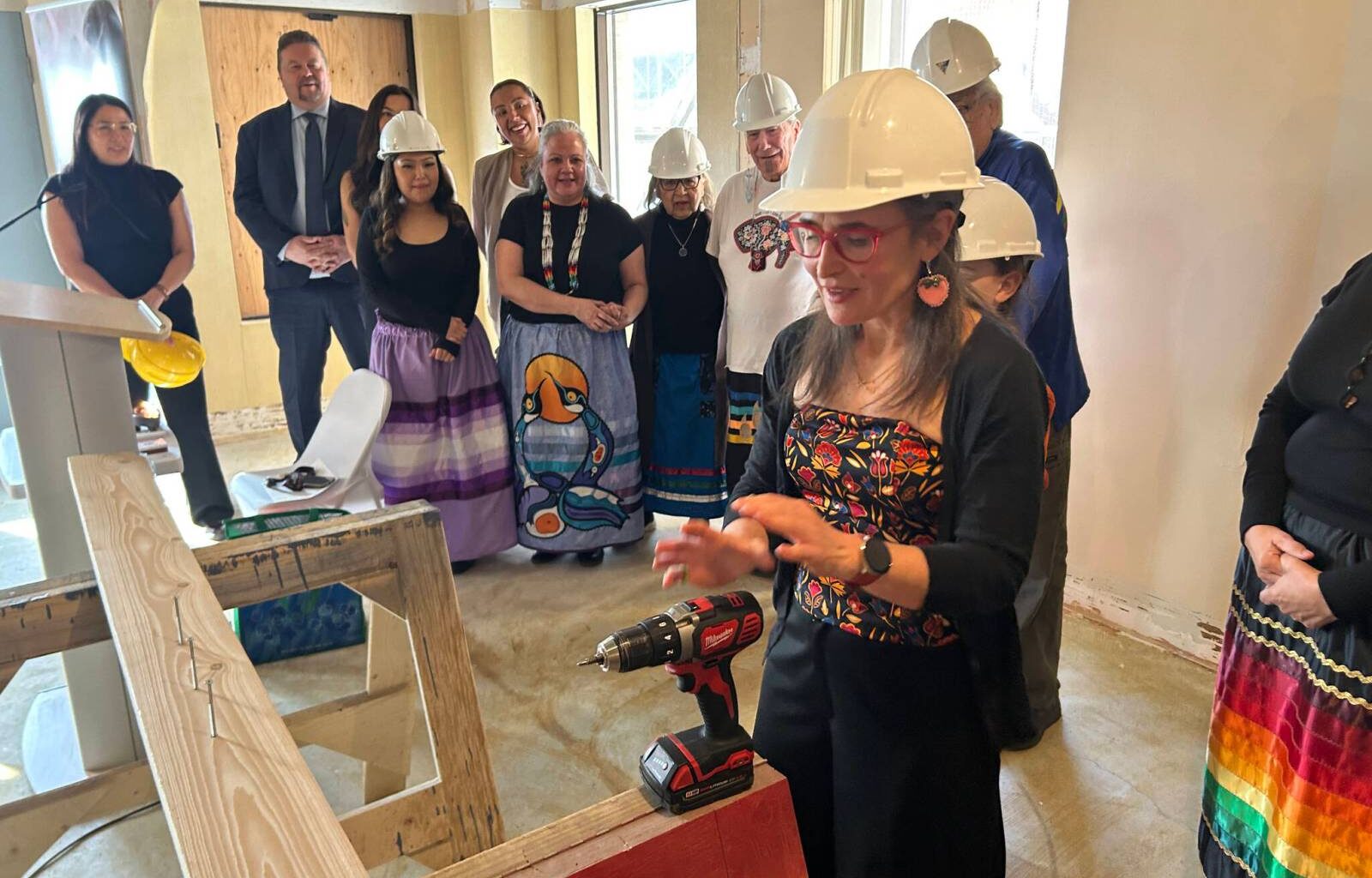
After more than a decade of fighting for reconciliation, a Métis doctor has led the charge to create a new cultural space for Indigenous kids seeking care at Children’s Hospital.
“For too long, our Indigenous families come to these doors and feel like strangers. They come in moments of grief and fear in the worst time of their lives and they are asked to leave themselves at the door,” said Dr. Melanie Morris, a pediatric surgeon and the leader of Indigenous health at the HSC facility.
“We are going to go and create something that is really reconciliation. It’s saying, ‘Enough.’ We are not just going to stand by anymore and watch those inequities continue to climb, we are going to create a place where they can heal, and be strong and proud.”
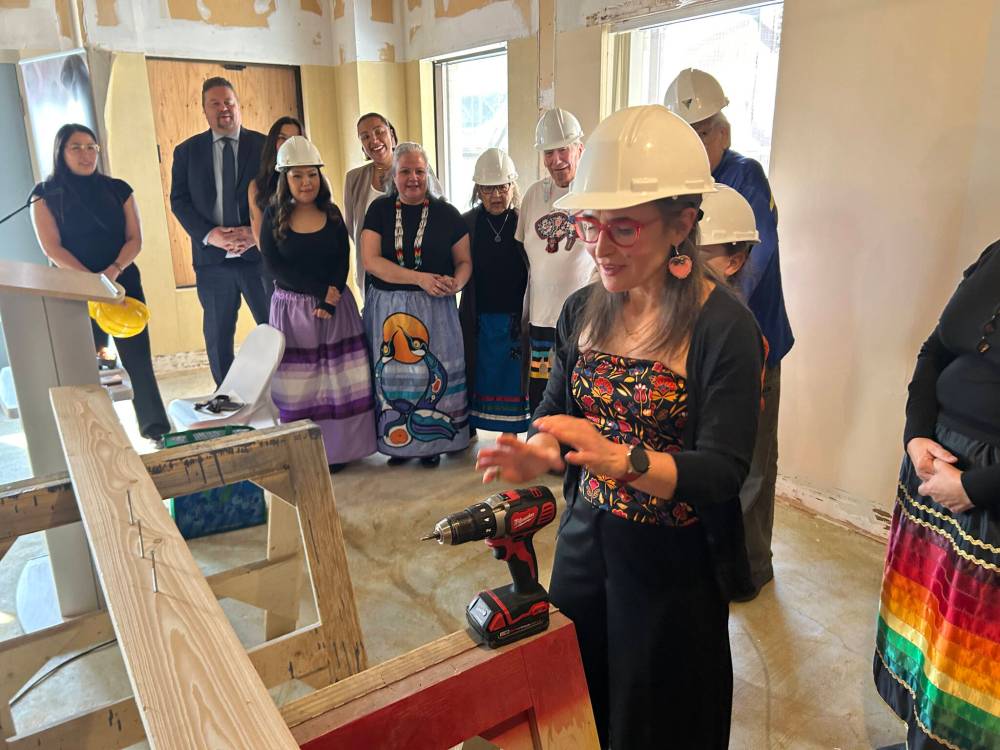
TYLER SEARLE / FREE PRESS
Dr. Melanie Morris, a pediatric surgeon and the leader of Indigenous health at the Health Sciences Centre Children’s Hospital at the start of construction for the Indigenous Community Healing Space on Tuesday.
“For too long, our Indigenous families come to these doors and feel like strangers.”
Dozens of Indigenous dignitaries, hospital administrators and stakeholders gathered inside an active construction site on the second floor of the hospital Tuesday, which will soon be home to the Indigenous Community Healing Space.
The hospital has carved out a 2,000-square-foot room, which will be reserved for Indigenous children and families accessing health care.
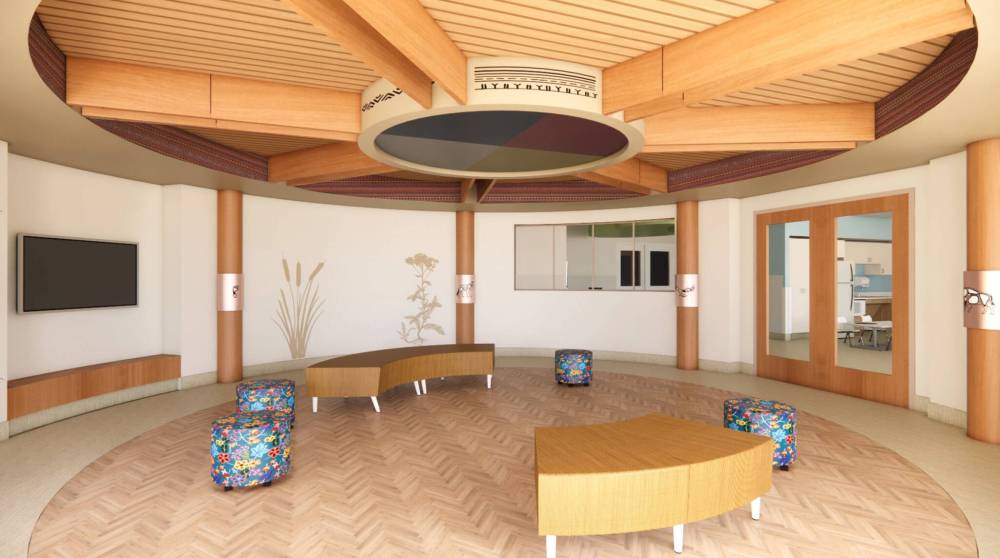
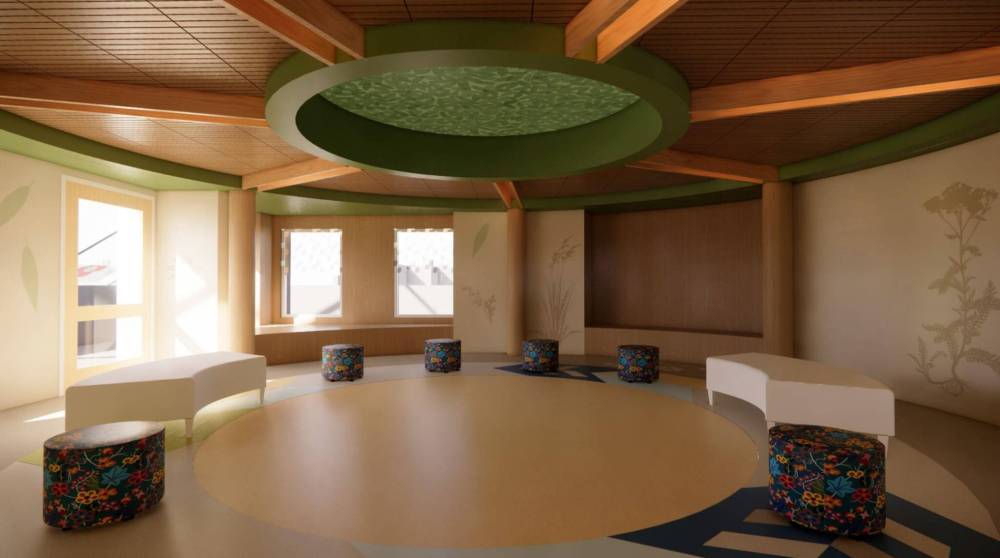
It will feature art and design elements reflective of Indigenous culture, including a space for traditional ceremonies. Plans include a library stocked with Indigenous-language books, a section for breastfeeding mothers and a private area where families can have important or difficult conversations, Morris said.
The goal is to create a space that feels familiar and welcoming to Indigenous families, and one that can serve as a cultural touchstone for those who travel far from their homes for health care, she said.
STANTEC
A rendering of the gathering circle at the Indigenous Community Healing Space at the Health Sciences Centre Children’s Hospital.
Janessa Dumas-Colomb, 17, a former patient who spent much of her youth at the hospital, said she wishes such a space existed when she was a child.
The teenager began experiencing kidney issues when she was just six years old, and was forced to move to Winnipeg from her home in Mathias Colomb Cree Nation as she waited for an organ transplant.
The community is located about 700 kilometres northwest of Winnipeg, near the Saskatchewan border.
“There are some amazing people here at Children’s… but I still felt really far away from home. I missed being out on the land, around my community,” she said.
“For me and my younger siblings, this would have been a place for us to be together after my treatments.”
STANTEC
A rendering of a gathering space within the healing centre. The healing space is set to feature art and design elements reflective of Indigenous culture.
Morris conceived the idea around 2015 and prepared the design plans in consultation with a panel of Indigenous elders, community leaders and kids. She pitched it to hospital leadership, but the project encountered repeated delays.
“It didn’t take 10 years for nothing. The institutional barriers that our families face, this project faced, too. We certainly had to fight a lot of the time, because space is a critical essence in hospitals,” she said.
“The institutional barriers that our families face, this project faced, too.”
“At a certain point, I had to stand up to leadership and say, ‘You know what? We can create more of the same rooms where they don’t feel safe, or we can actually commit to… the care of Indigenous peoples in the way that they see healing — with access to their medicines, their ceremonies, their elders.”
In January, the Manitoba government announced it would donate $4 million in proceeds from the sale of U.S. alcohol to local charities, including $1 million to the Children’s Hospital Foundation.
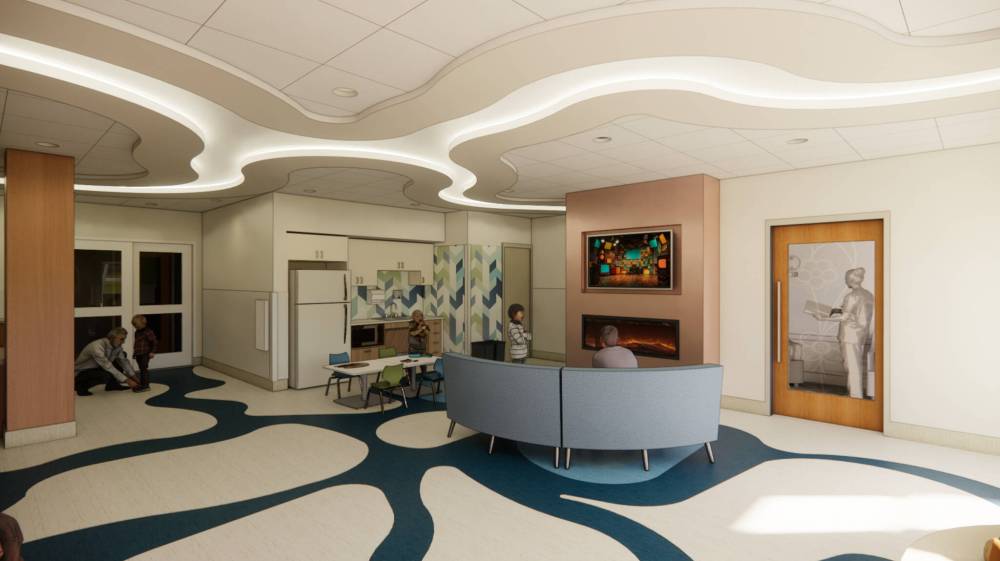
STANTEC
A rendering of the kitchen at the Indigenous Community Healing Space.
Stefano Grande, the foundation’s president and CEO, said half of those funds went directly toward supporting the healing space. Getting the project off the ground was critical because up to 60 per cent of the children who need care at the hospital are Indigenous.
“This is not just about culture or capacity. It reflects the ongoing impacts of colonialism, the systemic inequalities and barriers to preventative care that Indigenous families continue to face,” he said.
“When we all see those numbers, we are called to respond…. This is so much more than a capital project. It is a powerful act of reconciliation and a commitment to building a better future for kids.”
A construction services tender has been issued and contract submissions are under review. It is expected to cost about $2.2 million in total. The foundation is still seeking about $1.2 million in donor support to help cover additional expenses, including furnishings for the space and developing cultural programming, Grande said.
Health Minister Uzoma Asagwara said the province was pleased to see the project come to fruition, noting it reflects “years of advocacy and partnership with Indigenous leaders and community members.”
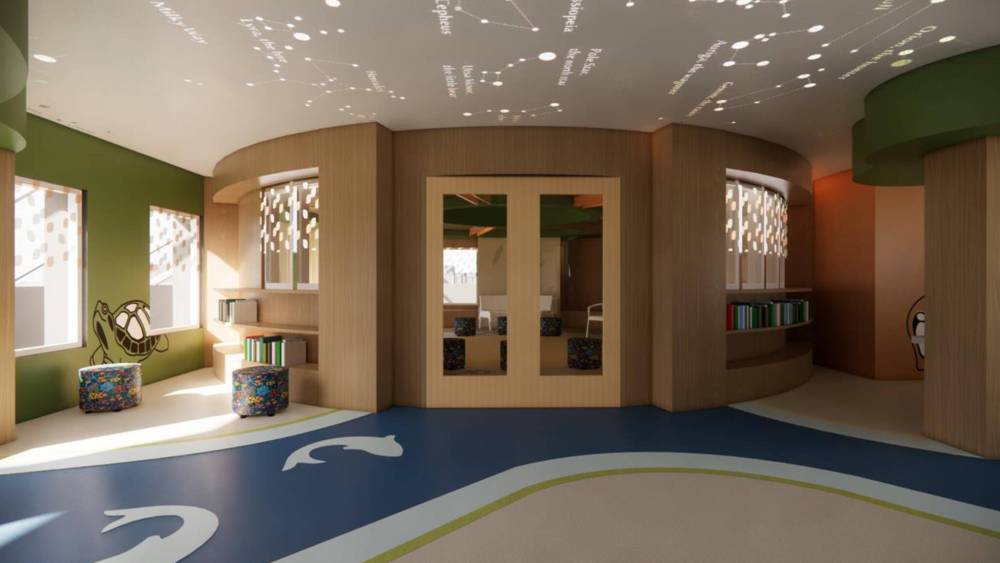
STANTEC
A rendering of the library within the Indigenous Community Healing Space.
”Healing looks different for everyone, and our health system needs to reflect that,” the minister said in a statement.
Winnipeg Free Press | Newsletter

“When a child is in hospital, care should support them not only physically, but emotionally and culturally. For Indigenous children and families, that includes access to ceremony, connection to elders and space for cultural practices that are part of healing.”
The Assembly of Manitoba Chiefs has also endorsed the project.
“I’m just so grateful that this is happening,” Grand Chief Kyra Wilson said. “This means so much to our families, to our children, and I know this space is going to mean so much to our community.”
Morris estimated construction could be completed within a year and said she hopes it will pave the way for other health-care facilities to introduce similar spaces that are Indigenous-led and designed.
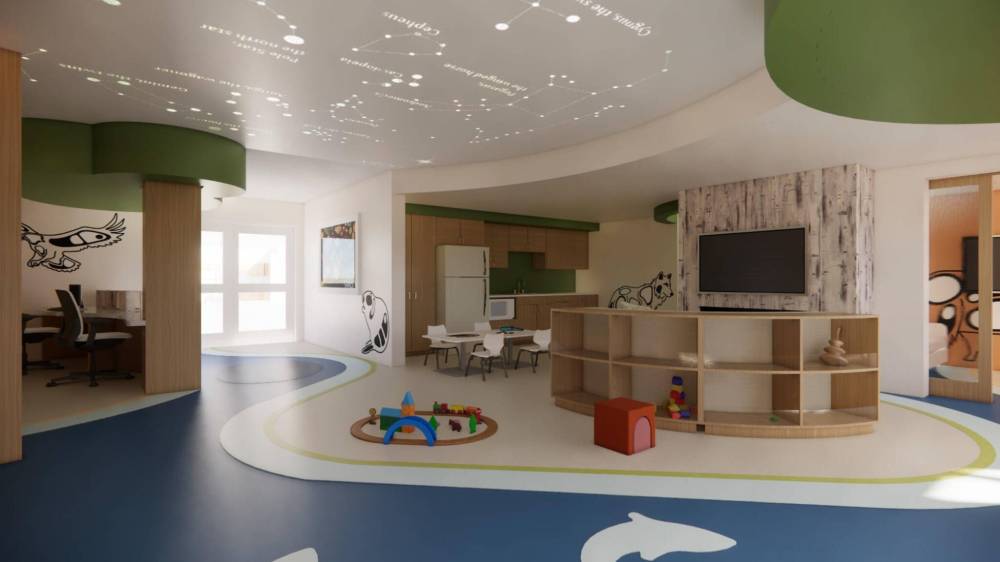
STANTEC
A rendering of the play area.
tyler.searle@freepress.mb.ca

Tyler Searle is a multimedia producer who writes for the Free Press’s city desk. A graduate of Red River College Polytechnic’s creative communications program, he wrote for the Stonewall Teulon Tribune, Selkirk Record and Express Weekly News before joining the paper in 2022. Read more about Tyler.
Every piece of reporting Tyler produces is reviewed by an editing team before it is posted online or published in print — part of the Free Press‘s tradition, since 1872, of producing reliable independent journalism. Read more about Free Press’s history and mandate, and learn how our newsroom operates.
Our newsroom depends on a growing audience of readers to power our journalism. If you are not a paid reader, please consider becoming a subscriber.
Our newsroom depends on its audience of readers to power our journalism. Thank you for your support.