
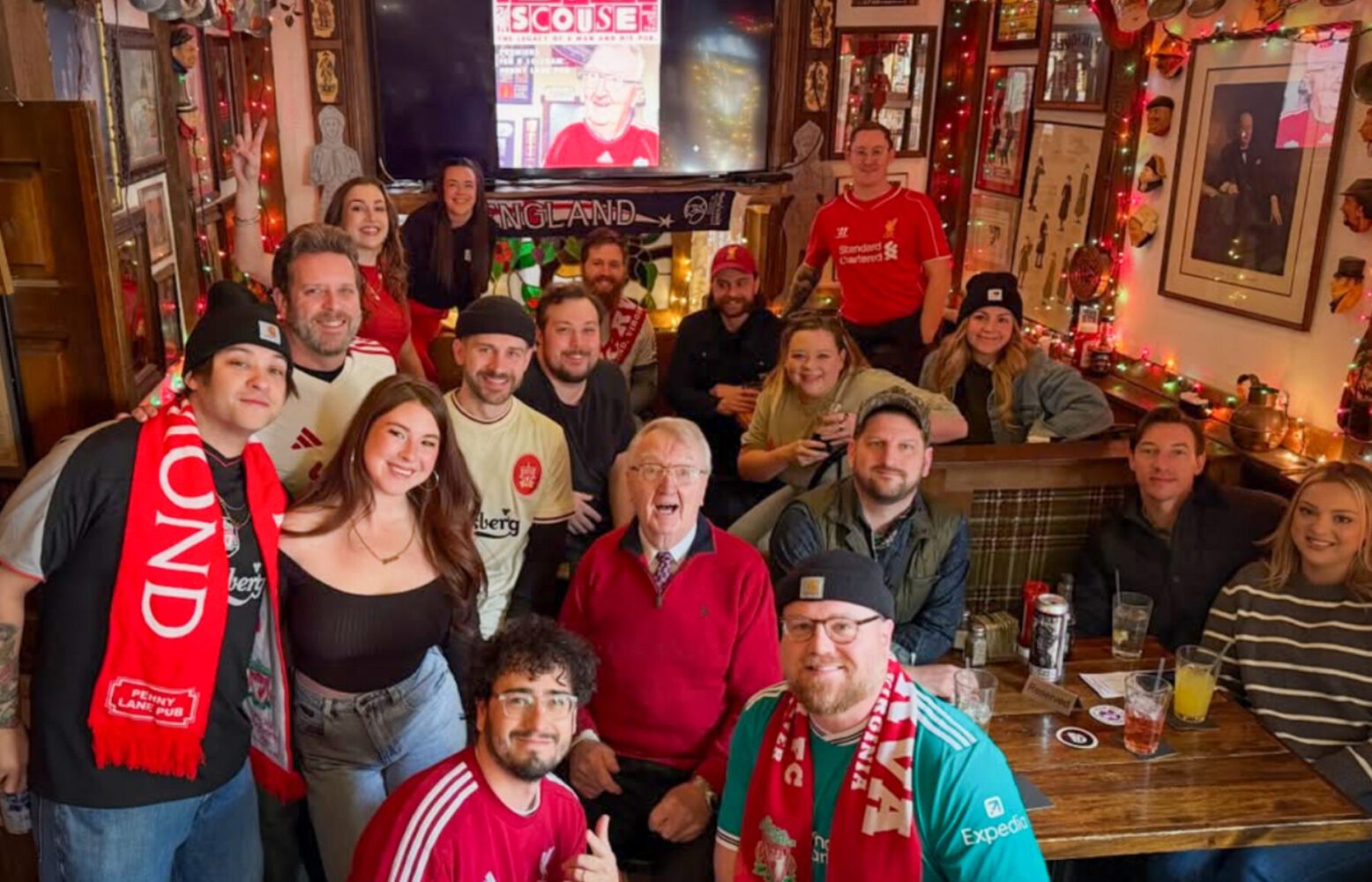
If you walk into Penny Lane Pub early on certain mornings, you can usually tell how Liverpool is doing before you even glance at the screen. The mood gives it away. Some days the room is loud and loose, other days the tension settles in and conversations tighten. Pints are in hand long before most of Richmond has had its coffee, and by halftime strangers are leaning into each other like old friends. Many have been sharing these mornings for years. Others return to tap back into that familiar current. And for visitors passing through from abroad, the place can feel unexpectedly like home.
That steady rhythm, somewhere between ritual and release, is what has made Penny Lane more than a bar and, over time, a Richmond institution.
That atmosphere forms the backbone of Big Scouse, a new documentary from local soccer supporters and filmmakers Pete Rango and Kevin Carroll of Dead Set FC. The film begins as a portrait of Penny Lane’s founder, Liverpool-born Terry O’Neil, but gradually widens its lens, tracing how a pub just blocks from the State Capitol grew into one of the city’s most consistent gathering spots, where sport, community, and proximity to power naturally overlap.
O’Neil, known affectionately as “Big Scouse,” brought more than memorabilia and match broadcasts when he opened Penny Lane. He brought a way of watching the game that feels lived-in. Scarves hang from the ceiling, club shirts line the walls, and the early kickoffs are treated less like an inconvenience and more like a ritual. Over time, the place settled into Richmond’s routine without losing its accent.
Its location has always mattered. Sitting just blocks from the Capitol, Penny Lane draws more than soccer supporters. During the Virginia General Assembly session and throughout the year, once the matches wrap up, lawmakers drift in, staffers arrive after long days, and reporters tuck into corners where the hum of the televisions makes it easier to talk without feeling exposed. Conversations that start with back lines and formations can ease into committee votes and the shape of the next session. It rarely feels transactional. It feels like people relying on a room they trust, helped along by a staff that has been as steady as the regulars who stop in for a drink after work.
Rango and Carroll lean into that layer of the story. In the film, they interview local journalists and media figures who have used Penny Lane as a kind of unofficial meeting ground over the years. Not a newsroom, just a place where information tends to move more freely because the setting lowers everyone’s guard a little. In a capital city like Richmond, that sort of space becomes part of the civic ecosystem whether anyone plans it that way or not.
 More information HERE
At the center of it all is O’Neil, moving between tables, greeting regulars, watching the match and the room at the same time. The film doesn’t overstate his role. It just shows how his steady presence shaped the culture inside those walls. For Liverpool supporters especially, Penny Lane feels less like a themed bar and more like an extension of something they already knew.
What gives Big Scouse its weight is the sense that this story isn’t confined to Richmond. Rango and Carroll see it as the first chapter in a broader effort to document soccer fandom around the world, to explore how identity and loyalty travel with people and take root in new cities. Richmond happens to be where they started, but the questions stretch much further. What does it mean to carry a club across an ocean? How does a pub become a bridge between where you’re from and where you live now?
Penny Lane answers those questions quietly. On match days, longtime regulars stand next to newcomers who wandered in out of curiosity and never quite left. The game provides the excuse. The community does the rest.
That’s the thread Big Scouse follows from Liverpool to Richmond, from the Mersey to the James, without needing to make a speech about it.
 Pete, Kevin, Terry and I at the premiere.
One more thing, I appreciate Pete and Kevin including me in the film. And a nod to the crew at Penny Lane — Taylor, Phil, Jessie, Ann, and everyone else behind the bar, or working the floor, who’ve helped make the place what it is.
Support RVA Magazine. Support Independent Media in Richmond.
At a time when media ownership is increasingly concentrated among corporations and the uber wealthy, RVA Magazine has remained one of Richmond’s few independent voices.
Since 2005, the magazine has provided grassroots coverage of the city’s artists, musicians, and communities, documenting the culture that defines Richmond beyond the headlines.
But we can’t do this without you. A small donation, even as little as $2, one-time or recurring, helps us continue to produce honest, local coverage free from outside interference. Every dollar makes a difference. Your support keeps us going and keeps RVA’s creative spirit alive.
Thank you for standing with independent media. DONATE HERE.
We’ve got merch HERE
Subscribe to the Substack HERE
And Reddit HERE
And YouTube HERE

In 2005, I created RVA Magazine, and I’m still at the helm as its publisher. From day one, it’s been about pushing the “RVA” identity, celebrating the raw creativity and grit of this city. Along the way, we’ve hosted events, published stacks of issues, and, most importantly, connected with a hell of a lot of remarkable people who make this place what it is.
Catch me at @majormajor____