
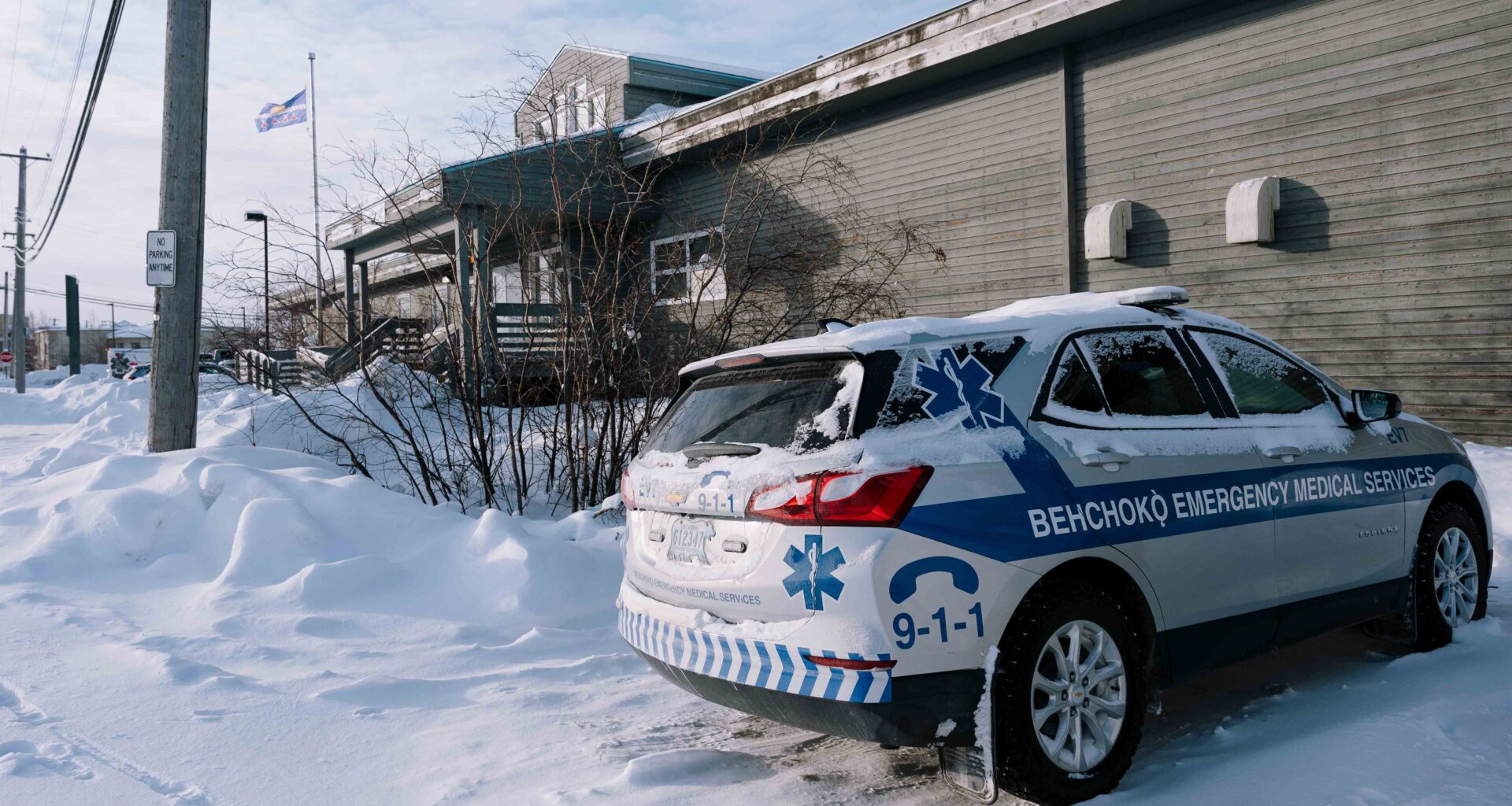
Shauna Morgan is questioning the role of private paramedics in small community health centres, saying the approach amounts to plugging nursing vacancies with workers who lack the training for primary care.
The Yellowknife North MLA expressed concern about what she said was the GNWT’s push to give paramedics expanded roles as cover for nurse vacancies – and a broader shift toward privatization of core healthcare functions.
“Paramedics specialize in acute care and transport. So why would we turn to them for the everyday care people need in small community health centres, everything from health promotion and screenings to pre and postnatal care to chronic disease management?” Morgan said.
Morgan acknowledged paramedics do difficult, important work. In the NWT, she said, they have primarily worked for municipalities in ambulance services, for mines, with firefighting crews, or for private companies running medevacs.
But she questioned why the alternative to having paramedics in health centres appeared to be having nobody at all, rather than intensifying efforts to recruit more community health nurses.
Advertisement.
Advertisement.
“The shift toward filling gaps with private paramedics seems more like a short-sighted move of desperation than a long-term strategy we should pour more resources into,” she said.
Health minister Lesa Semmler pushed back, saying paramedics working in community health centres are brought in under an existing contract for wildfire season.
If communities are evacuated, she said, community health nurses and other staff leave with residents, meaning paramedics are sent in to support emergency responders who remain behind.
Semmler said with that contract already in existence, the department had been making use of those paramedics during summer months when keeping health centres fully staffed with community health nurses – or CHNs – is particularly difficult.
Advertisement.
Advertisement.
“The primary objective right now is for them to maintain operations at a minimum, avoiding closures during those months,” Semmler said. “Paramedics have different scopes than CHNs and they only work within their scope.”
Asked whether paramedics are supervised by a health authority employee at all times, Semmler said they are “overseen at all times and are part of the collaborative team.” When a paramedic is the only resource in a health centre during an emergency, she said, they consult with a physician and operate under physician orders.
Morgan pressed further, noting the minister has previously said paramedics could take night shifts so community health nurses can rest. She asked who would be responsible if a paramedic made a decision about a patient in the middle of the night that had serious negative consequences.
Semmler said the nurse in charge remains involved in calls and said the purpose of having a paramedic available overnight is to triage calls, potentially reducing the number of times a nurse needs to be woken up.
She said the community health nurse model of care “hasn’t changed” throughout her own career in nursing, and added the department wants to explore how licensed practical nurses and paramedics could be incorporated to support nurses, not replace them.
“We know that the CHN model of care is the best model. However, what we want to do is we want to enhance that model,” Semmler said.
Recruitment unit ‘smashing targets’
The question of how paramedics fit into community health centres is not new.
In December 2025, the Department of Health and Social Services told MLAs it was analyzing the use of licensed practical nurses and paramedics as part of a plan to improve healthcare access in small communities.
Advertisement.
Advertisement.
Sara Chorostkowski, the department’s assistant deputy minister of programs, said at the time that the use of these roles in the territory’s healthcare system was “inconsistent” and needed to be standardized.
The idea of bringing paramedics into community health centres had previously been discussed in 2022, when then-health minister Julie Green announced the territory would contract paramedics from northern companies to provide acute care support in smaller communities.
Green described the approach as borrowing from Nunavut, which had deployed up to 80 paramedics at a time, but acknowledged it was “an experiment.”
Morgan’s questions this week came as finance minister Caroline Wawzonek said her department’s broader health recruitment unit was meeting and exceeding hiring targets.
Wawzonek said the unit, created in 2020, has a mandate to increase indeterminately staffed health positions by five percent annually. Since its creation, she said, 728 indeterminate staff and 215 term employees have been hired.
As of December 31, 2025, Wawzonek said, the unit had recruited 60 registered nurses, three nurse practitioners, 11 licensed practical nurses, 14 social service workers and 16 allied health professionals such as audiologists, speech language pathologists, occupational therapists and medical lab technicians.
The unit also manages a database of more than 700 registered nurses interested in casual employment and hired 239 casual nurses during this fiscal year, she said.
“Based on current projections, the unit anticipates a 12.1-percent increase in indeterminate staff this fiscal year alone, excluding turnover,” Wawzonek said. “This projected increase exceeds the unit’s annual target.”
Advertisement.
Advertisement.
Morgan, in her comments, noted the apparent contradiction.
“We have a health recruitment unit. Reportedly, it’s doing great, smashing its targets in hiring both indeterminate and casual RNs and community health nurses,” she said.
“Are they all leaving so soon?”
Morgan said she would “have more to say in the coming days” about her concerns with the increasing privatization of primary care through paramedics.
On Wednesday, after this article was first published, she homed in on the lack of a regulatory body in the NWT for paramedics – and the absence of national training standards.
Semmler said paramedics working in health authority facilities must follow health authority guidelines and policies corresponding to their scope of practice, though she acknowledged paramedics are regulated through the jurisdiction in which they trained, not the NWT.
The health minister said a position proposed in the GNWT’s draft budget would spend time analyzing whether and how paramedics can be formally integrated into the territorial health system.
Child advocate motion planned
Separately on Tuesday, Range Lake MLA Kieron Testart said he will introduce a motion later this week calling for the establishment of an independent Office of the Child and Youth Advocate.
Advertisement.
Advertisement.
Testart has raised the issue multiple times in recent weeks.
“The child and family services system holds extraordinary power over children in care with no real independent oversight,” he said earlier this month.
He wants an office to be created with legislated authority to “investigate complaints, initiate systemic reviews, make recommendations, and report directly to the Legislative Assembly.”
That motion is set to be debated on Thursday.
Related Articles