
Hello, welcome to Politics Insider. Let’s look at what happened today.
Canada’s Justice Minister is warning of possible legislation if OpenAI doesn’t make changes after the chat history of the Tumbler Ridge shooter raised red flags.
Marie Woolf reports that Sean Fraser indicated today that legislative changes on regulating artificial intelligence could be brought in to prevent reporting failures to police, unless OpenAI makes swift improvements to its protocols.
The company did not alert law enforcement about alarming posts by the Tumbler Ridge shooter.
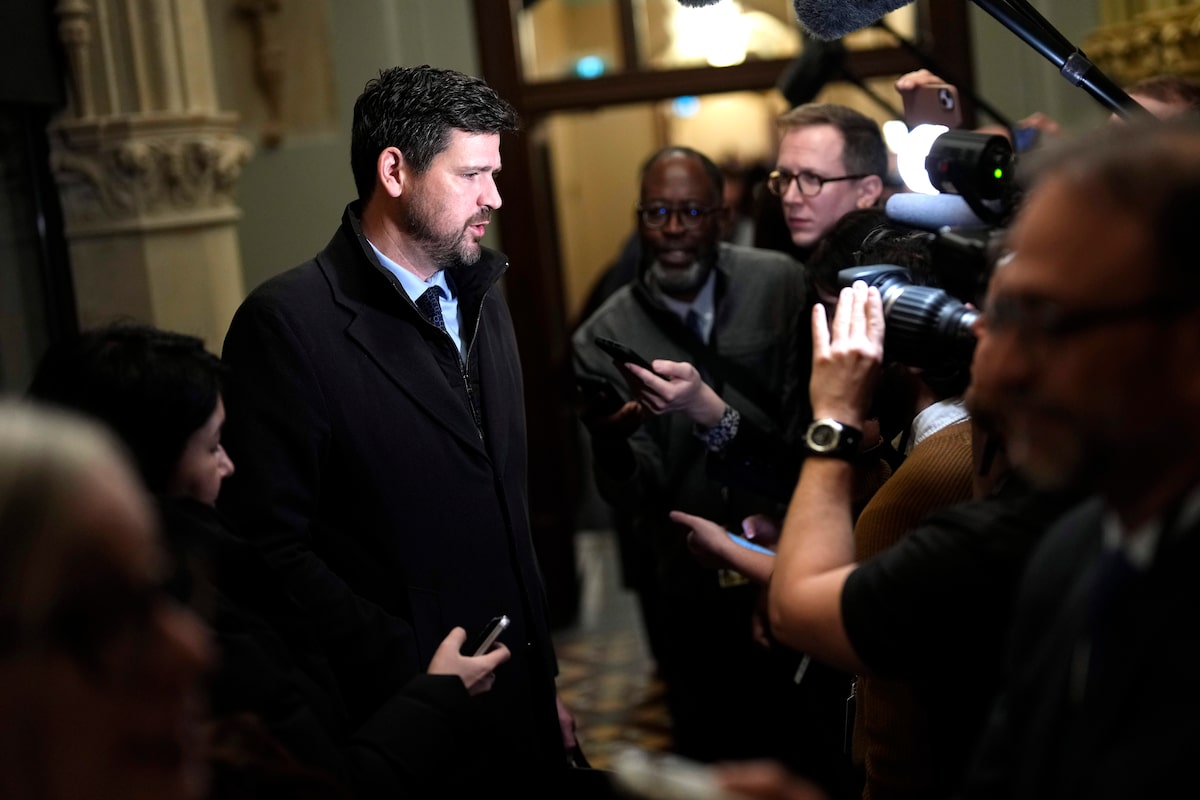
Speaking to reporters in Ottawa, Fraser, who was among the ministers to meet with executives from OpenAI, which operates the AI chatbot ChatGPT, said the government wants to see rapid proposals for improvements.
“The message that we delivered, in no uncertain terms, was that we have an expectation that there are going to be changes implemented, and if they’re not forthcoming very quickly, the government’s going to be making changes,” he said.
OpenAI came under scrutiny after the Wall Street Journal reported last week that employees at the company wanted to warn law enforcement about the shooter’s interactions with ChatGPT, including descriptions of scenarios involving gun violence, but that they were rebuffed.
Earlier this month, Prime Minister Mark Carney visited Tumbler Ridge, B.C., where an 18-year-old killed five children and an educator at her former secondary school, as well as her mother and half-brother, before killing herself.
Mr. Carney said today that he had sat with families and first responders and “saw the horrors of what happened.”
“Obviously, anything that anyone could have done to prevent that tragedy or future tragedies, must be done,” he told reporters in Ottawa today.
In other news today, Canada is sending $8-million in food aid to Cuba, where a U.S. oil blockade has triggered a humanitarian crisis.
Foreign Affairs Minister Anita Anand and MP Randeep Sarai, secretary of state for international development, said today that the funding is meant to address urgent needs.
The money will be delivered through United Nations agencies instead of the Cuban government.
“The humanitarian situation in Cuba is becoming quite grave,” Sarai told reporters.
Minister of Justice Sean Fraser responds to questions as he arrives for a meeting of the federal cabinet on Tuesday.Justin Tang/The Canadian Press
This is the daily Politics Insider newsletter, curated by Ian Bailey. It is available exclusively to our digital subscribers. You can sign up for more than 20 other newsletters on our signup page.What else is going on
Canada must accept higher tariffs, open markets to secure U.S. deal, says Trump’s trade chief: United States Trade Representative Jamieson Greer told CBC News’s Katie Simpson that “if Canada wants to come in and participate in this type of reshoring we are trying to do, we are happy to have those discussions.”
Housing affordability crisis spreading to cities such as Montreal and Halifax, CMHC says: A new analysis from the Canada Mortgage and Housing Corp. shows housing affordability challenges have eased in recent years but still remain at historic highs, and have even spread to other major cities.
Canadian movies are tanking at the box office, but there’s a twist that could save our cinema: Homegrown films accounted for just 1.7 per cent of all the titles consumed by Canadian moviegoers over the past year, making 2025 the third-worst year for Canadian film in a decade, only behind the pandemic-afflicted 2020 and 2022.
Federal Tories move to limit use of party data in B.C. Conservative leadership race: The action follows the discovery that a federal riding association appeared to be using its mailing list to promote a candidate.
Former Ontario MPP Giorgio Mammoliti dies: The former Toronto city councillor and member of the Ontario legislature was 64.
On our radar
Prime Minister’s Day: Mark Carney attended the Liberal caucus meeting on Parliament Hill.
Party Leaders: Bloc Québécois Leader Yves-François Blanchet held a news conference on Parliament Hill. Green Party Leader Elizabeth May attended Parliament and was scheduled to attend the parliamentary Ramadan Iftar dinner held by the Canadian Muslim Public Affairs Council. Interim NDP Leader Don Davies attended the NDP caucus meeting. No schedule released for Conservative Leader Pierre Poilievre.
Another premier on Carney trip: Yesterday’s politics newsletter said that Saskatchewan Premier Scott Moe would be joining Mark Carney for part of the Prime Minister’s pending trip to India, Australia and Japan. But he won’t be the only premier on the trip. New Brunswick’s Susan Holt will be along for a Mumbai stop on the India leg, which also includes a stop in New Delhi. Moe will make stops in both cities.
Quotes of the Day
“I honestly have no bad words to say about people on the other side of the aisle. You know, many of them are friends and deep friends, and a lot of them continue to text me. You know, I hope to remain friends.” – MP Matt Jeneroux, who left the Conservative caucus to join the Liberals, speaks to journalists after a Liberal caucus meeting.
“I’m not sure I would refer to trade missions as junkets” – Saskatchewan Premier Scott Moe, during a news conference in Regina today, rejects a journalists’ description of the trip to India this week.
Question period
What was Order-in-Council PC 1486 announced on this day in 1942 by then-prime minister Mackenzie King?
Scroll to the bottom of this newsletter for the answer.
PerspectivesLet’s just buy the F-35s and not cut off our nose to spite our face:
Canadian anger toward U.S. President Donald Trump is understandable, but there is a real risk that this leads to poor policy choices. A case in point is the growing pressure to revisit the decision to buy a fleet of American F-35 fighter jets.
— Christopher Worswick is a professor of economics at Carleton University and a research fellow at the C.D. Howe Institute.
Canada’s relationship with India is set to evolve
Prime Minister Mark Carney’s visit to India is intended to close one of the most acrimonious diplomatic chapters between two major democracies in recent memory and inaugurate a more pragmatic, interest-driven partnership for an age of geopolitical uncertainty.
— Brahma Chellaney is a geostrategist and the author of nine books, including the award-winning Water: Asia’s New Battleground.
Ford can’t ignore the plight of poor students. But some middle-class parents deserve a kick in the pants
A distinction must be drawn between low-income students in need of grants and upper-middle-class kids with parents who have the financial means to pay for their postsecondary education. The latter should not be relying on OSAP.
— Rita Trichur, Senior Business Writer and ColumnistGo deeper
Got a news tip that you’d like us to look into? E-mail us at tips@globeandmail.com. Need to share documents securely? Reach out via SecureDrop.
The answer to today’s question: That order initiated a program to move more than 21,000 Japanese Canadians living within 160 kilometres of the Pacific Coast to inland locations over concerns about safeguarding coastal defences. By 1949, all restrictions on Japanese Canadians were lifted. In 1988, then-prime minister Brian Mulroney apologized to Japanese-Canadian survivors and their families and announced a $300-million compensation package.