
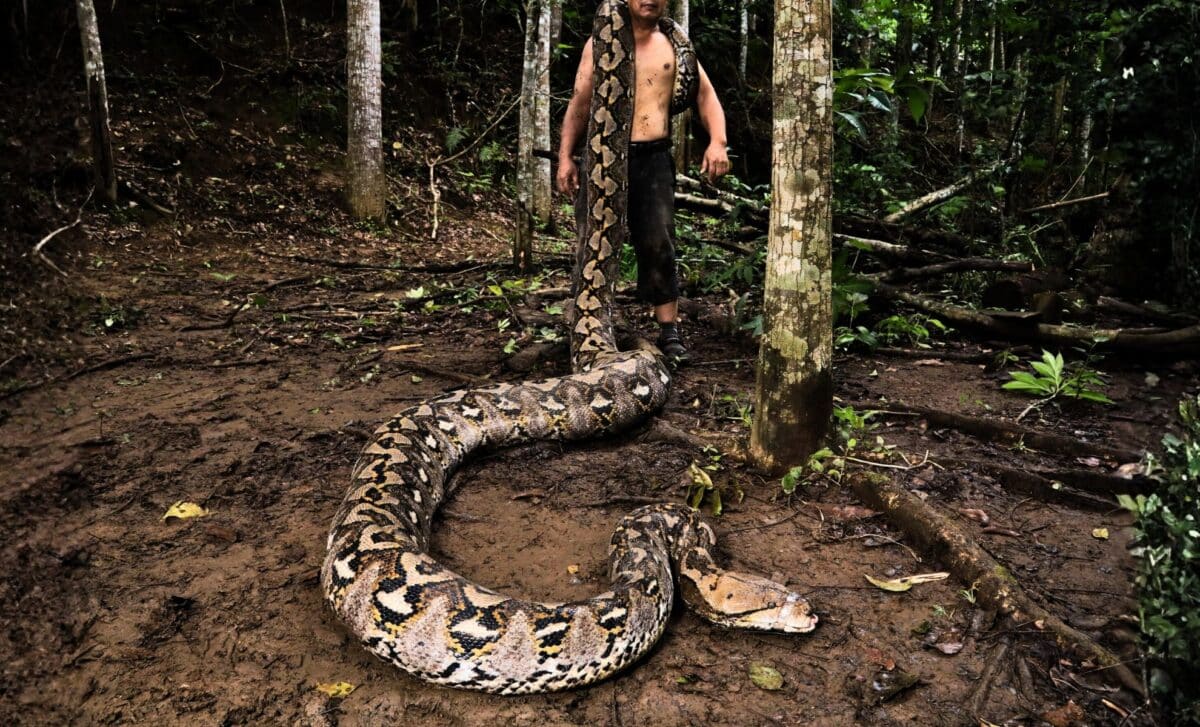
A reticulated python discovered in South Sulawesi, Indonesia, late last year has been formally confirmed as the longest wild snake ever measured, following verification by Guinness World Records.
The female snake, named Ibu Baron, Indonesian for “the Baroness”, measured 7.22 metres (23 feet 8 inches) from head to tail tip during a documented assessment on 18 January 2026. Weighing 96.5 kilograms (213 pounds) on scales typically used for weighing rice, the specimen had not recently fed, meaning its weight would ordinarily exceed 100 kilograms.
The confirmation, published by Guinness World Records, places Ibu Baron among an exceptional class of serpents. Reticulated pythons (Malayopython reticulatus) are on average the longest snake species, typically reaching between three and six metres, with females generally growing larger than males.
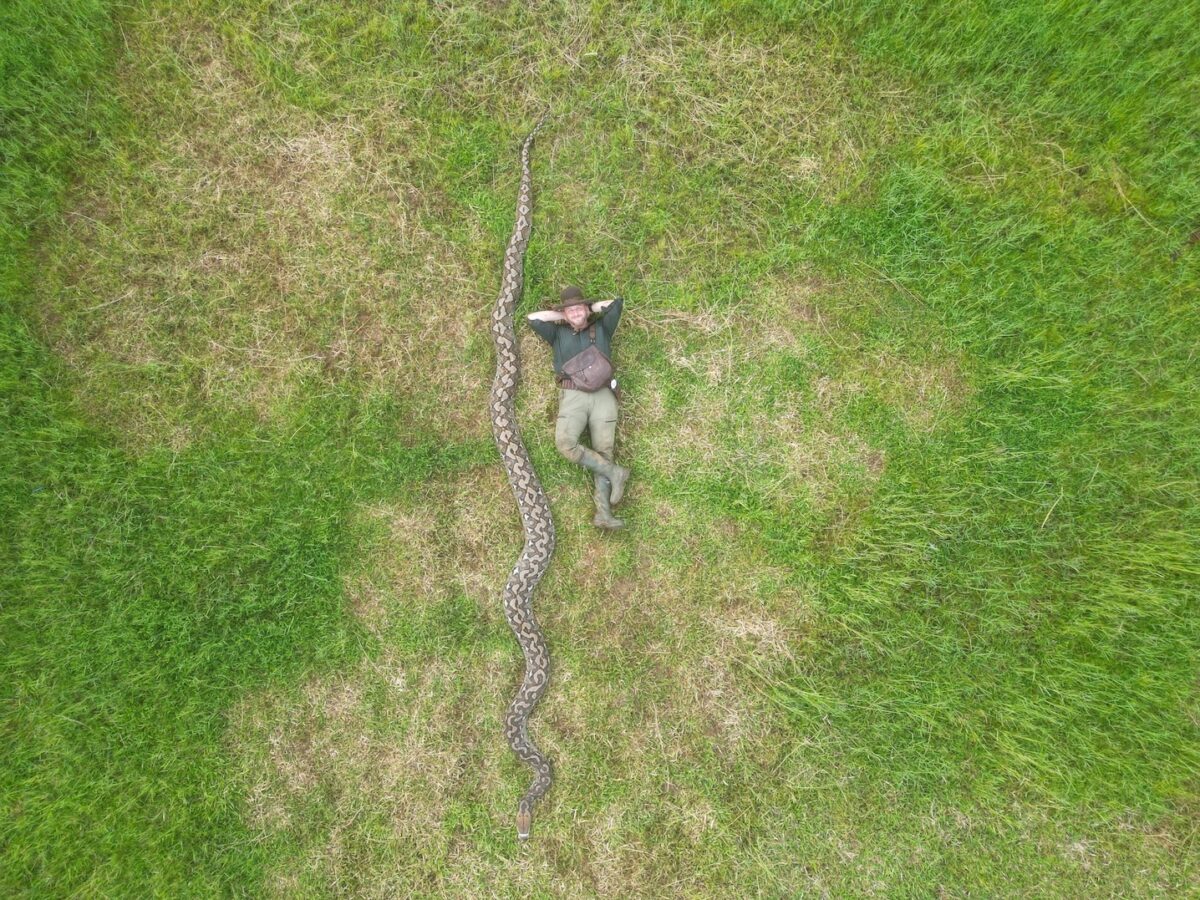 Photographer Radu Frentiu documented, weighed and measured the giant snake Ibu Baron. For this photo of himself with Ibu Baron, he used a drone for better perspective due to the snake’s enormous size. Credit: Radu Frentiu, Diaz Nugraha
What distinguishes this record is the documentation. Historical accounts of longer snakes exist, including a 10-metre specimen reportedly killed in Sulawesi in 1912, but lack verifiable measurement evidence. The 18 January assessment, conducted by wildlife guide Diaz Nugraha and photographer Radu Frentiu, was photographed and filmed to ensure transparency.
The Race to Save Her from Slaughter
The snake’s survival is unusual. Giant pythons discovered near human settlements in Indonesia are typically killed, either from fear of attacks on livestock and humans, or hunted for bushmeat and the illegal wildlife trade.
Budi Purwanto, a local conservationist, acquired Ibu Baron from those who found her in the Maros region of South Sulawesi in December 2025. He has since housed her in a purpose-built enclosure on his property alongside other rescued snakes, preventing the fate that meets most such discoveries.
“A python this large would likely be attracted to a village,” Frentiu told National Geographic. “And if it goes there, it will almost certainly be killed.”
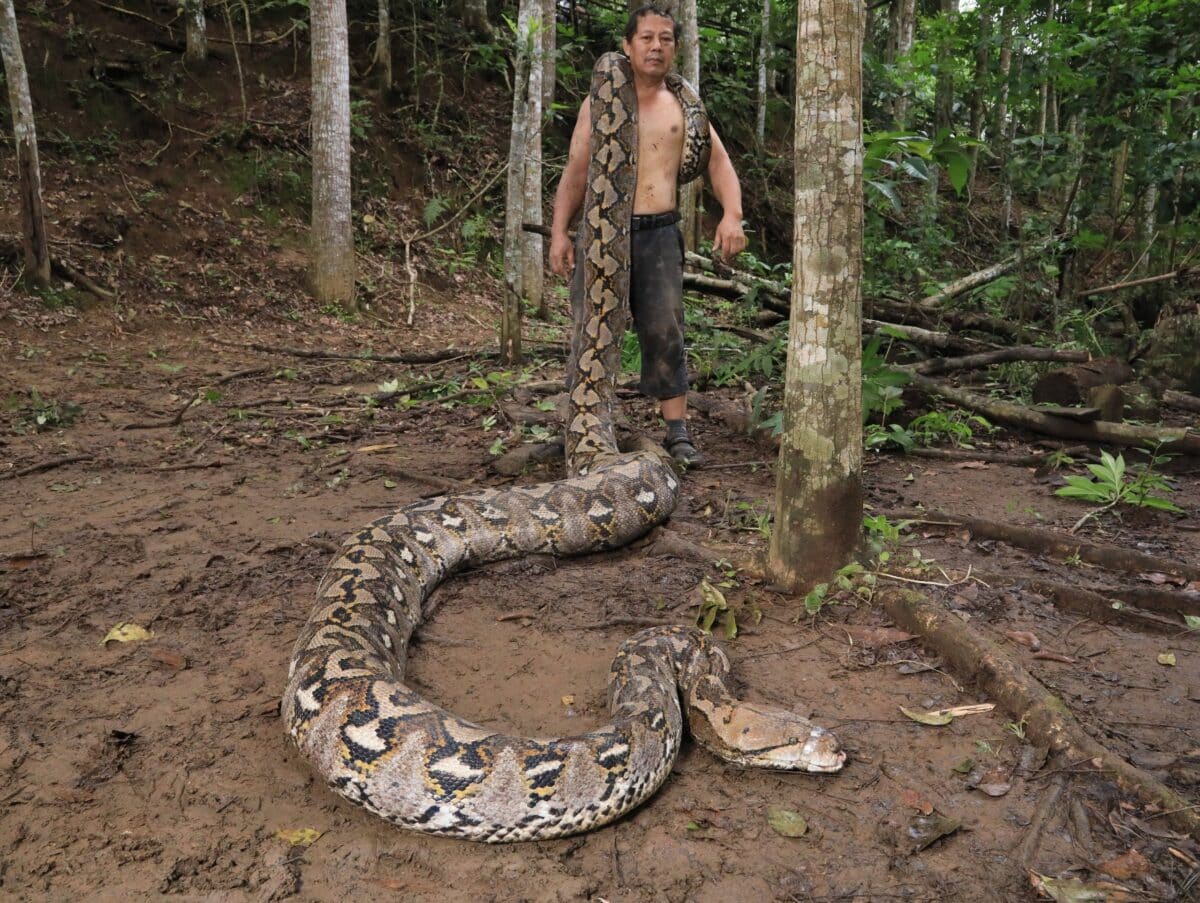 Snake rescuer Budi Purwanto runs a shelter for rescued pythons. He saved the record-breaking snake Ibu Baron, a name which means “The Baroness,” and is currently caring for her. Credit: Radu Frentiu, Diaz Nugraha
The tension between humans and large snakes in Indonesia has intensified as habitat shrinks. Nugraha told Guinness World Records that appearances of giant snakes are increasing “because their habitats are reducing and availability of the snake’s natural food is decreasing likely as the result of poaching, meaning pythons are coming into contact with people more often than in the past.”
Why She Might Be Even Longer than Advertised
The 7.22-metre measurement was taken using a surveyor’s tape following the snake’s natural curves while awake. Under anaesthesia, snake muscles fully relax, potentially adding length. Guinness World Records notes that Ibu Baron could measure at least 10 per cent longer under such conditions, approximately 7.9 metres, but states that animals should only be anaesthetised for safety reasons or necessary medical procedures, not for measurement verification.
The previous scientifically measured wild reticulated python of notable size was a 6.95-metre female found in East Kalimantan, Borneo, in August 1999, documented in the Raffles Bulletin of Zoology in 2005 after it consumed a sun bear fitted with a tracking device.
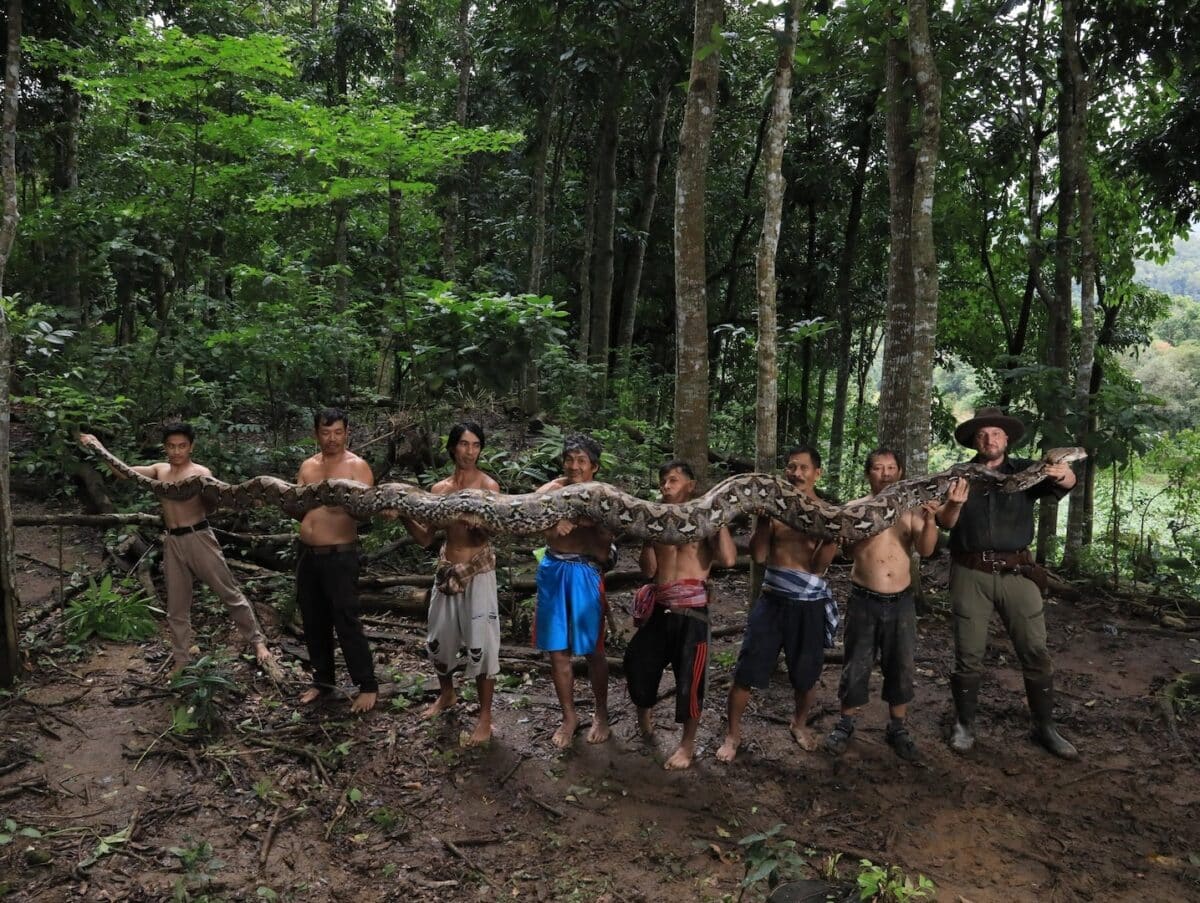 Radu Frentiu, Budi Purwanto and villagers from south Sulawesi, Indonesia, lift “The Baroness” for a group photo after her measurements were taken. At least eight people were needed to safely handle the snake at any one time. Credit: Radu Frentiu, Diaz Nugraha
Captive snakes have reached greater lengths, benefiting from regular feeding and veterinary care. Medusa, a reticulated python housed in Kansas City, Missouri, measured 7.67 metres in October 2011, holding the record for longest snake in captivity. A Columbus Zoo specimen named Fluffy measured at least 7.3 metres in September 2009.
What a Record-Breaking Snake Means for Local Villages
The documentation team hopes Ibu Baron’s record status may shift local perceptions. Frentiu said the intention is for pythons “to no longer be seen as vermin, but rather as a symbol of the islands and necessary animals to the ecosystem.” He suggested herpetological tourism, “herping” expeditions to observe reptiles, could generate revenue for local communities.
Nugraha advocates for stronger legal protections. “My opinion is more towards stricter safeguarding, accompanied by strong laws for preserving the forest which is the habitat of the snake, as well as a ban on killing snakes in protected areas,” he told Guinness World Records.
Whether larger wild snakes exist remains an open question. Asked if bigger specimens are likely, Nugraha responded: “I think so, yes. How big? It is quite realistic to expect snakes of 9 metres or even larger exist somewhere, quite possibly again in Indonesia, if not in the Amazon Basin.”
The prehistoric record far exceeds modern specimens. Fossil species Titanoboa cerrejonensis from 58, 60 million years ago reached an estimated 15 metres, while Vasuki indicus, described from Indian fossils in April 2024, is estimated at 10.9 to 15.2 metres.