
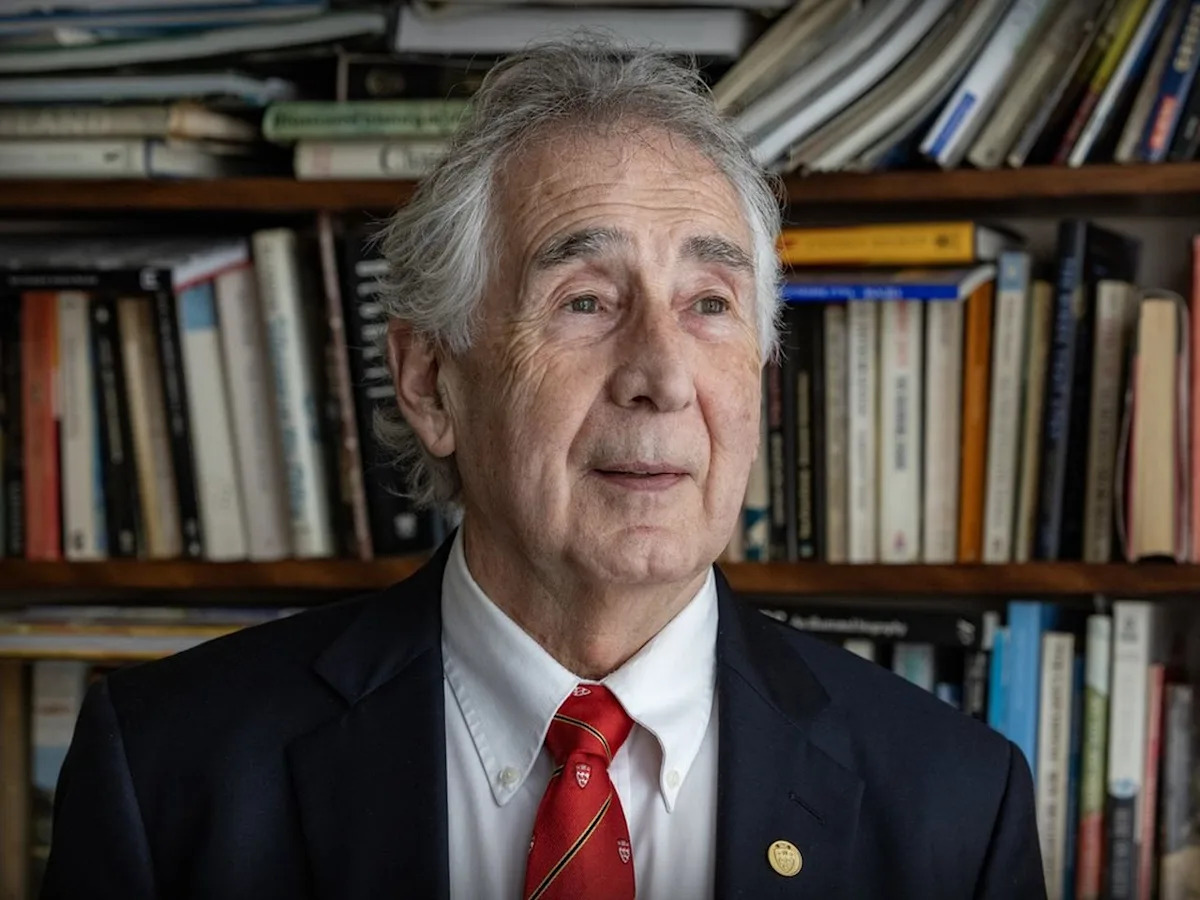
In a memoir published as he retires from a long and distinguished career caring for patients, mentoring medical students and shaping the field of whole-person care, Montreal physician and scholar Tom Hutchinson shares deeply personal details from his own experience: wounding treatment he received from his mother as a child in Ireland; feelings of inadequacy that plagued him at times during his medical training and, later, the distressing experience of burnout; his father’s drinking problems and Hutchinson’s own experiences with Al-Anon.
Why share so fully?
“This was me revealing how my vulnerabilities were unexpected gifts for my practice of whole-person care,” Hutchinson said in a recent interview. “I wanted to make it obvious that doctors have all these struggles that everyone else has.”
“It fits with the message we give medical students, that your own experiences in your family, particularly difficult experiences — including with illness and death — will be your greatest treasures in learning to relate compassionately to your patients.”
He acknowledges that not everyone will benefit from facing their own death. “But everyone is open to being treated with kindness and respect as a valuable and vulnerable human being,” he said. “And when doctors are fully aware of the vulnerable and mortal nature of each patient, this is what follows.”
Hutchison, 78, wrote The Craft of Medicine during a recent sabbatical in his native Ireland. It grew from a wish to reflect on his own path and to explore a more personal kind of writing, he said. Writing in the third person “gave me a little distance.”
He trained and practised for years as a nephrologist, a kidney specialist. For all that was good about it, he realized at a certain point that he was unhappy in his work. He undertook activities ranging from home brewing to running a marathon to doing a course in family therapy but, underlying it all “there was a deep distress because he did not know where he was or what his life was really about.”
He had volunteered for a month on the palliative care unit and spent lunchtimes with Dr. Balfour Mount, the director of the unit, “discussing medicine, life, palliative care and anything else that came up.” Mount, who died last year, had set up North America’s first comprehensive palliative care unit in Montreal and was deeply influential in the establishment of palliative care in Canada and beyond.
Hutchinson moved from nephrology to palliative care in 2002 — and found a new sense of purpose.
“He gave his all to individual patients and their families,” he writes. “Something about this process brought him down to Earth and connected him in a powerful way to the world around him.”
He also joined Mount in developing the McGill Programs in Whole Person Care, instituted in 1999 on Mount’s initiative and that of Abraham Fuks, then-dean of McGill’s Faculty of Medicine and Health Sciences. The programs were “based on the premise that in situations in which treatment is unable to change the disease outcome, it may be possible to create a space in which healing can occur.”
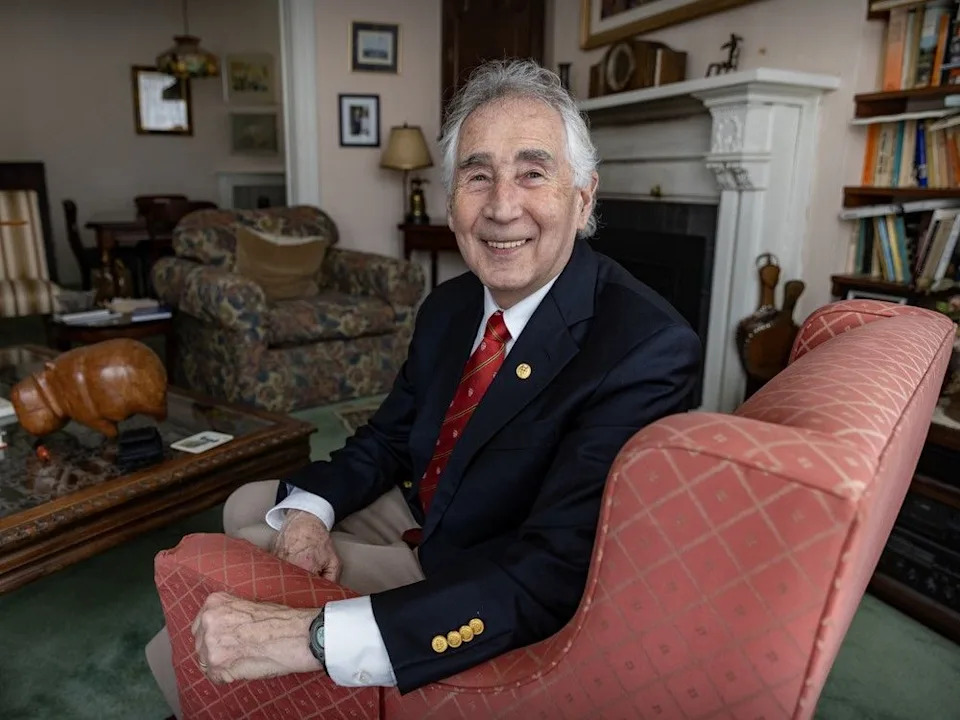
Dr. Tom Hutchinson has published three books on whole-person care. Writing the most recent, The Craft of Medicine, in the third person “gave me a little distance,” he says.
“Bal Mount wanted to bring the best of palliative care to the rest of medicine,” Hutchinson said. “His vision was that ‘we need to take this healing aspect to the rest of medicine.’”
“I think that society in general, and medicine included, is scared of death and people want to avoid facing it. Part of the healing in palliative care is acknowledging that people die — and it’s OK that they die,” he said. “Everybody will die. Something about accepting that has both a calming and an energizing effect. We need to face that — to bring more of ourselves to medicine and to life.”
For medical students and for doctors, their experience with death is “a treasure you need to bring to medicine. You need not to push it away,” Hutchinson said. “What we find when we teach students is that when we acknowledge it, others acknowledge it.”
The problem with this approach to humanistic medicine in medical schools is that it is often taught as an elective rather than an integral part of the curriculum, said Hutchinson, who has published three books on whole-person care. At McGill, the subject of healing in medicine has been taught since 2005 to all medical school undergraduates throughout their four-year program.
Initially, “students don’t see it as what medicine is about, but after taking the course, almost all say it is the best course in the curriculum,” he said.
With patients often dissatisfied with care they receive and burnout among physicians in Canada alarmingly high, with roughly 46 per cent of Canadian doctors reporting high levels of burnout in 2025, Hutchinson says his book is a plea for whole-person care.
During his tenure as director of McGill’s programs in whole-person care, from 2004 to 2024, activities included a congress every two years, seminar series, film series and the publication of books. “A lot of that depended on having a coordinator who was fully employed. That is now gone,” he said. Were McGill to devote more resources to whole-person care, “it would make a difference.”
A McGill spokesperson said this week: “While whole-person care has never been an official program at the Faculty of Medicine and Health Sciences, it remains a diverse set of ongoing research and other scholarly activities aimed at promoting holistic health and well-being. The majority of funding for these activities is sourced externally. The faculty, with humanism as one of its core values, also continues to incorporate a healer content expert role in the undergraduate medical curriculum.”
One reason Hutchison wrote The Craft of Medicine, published in December, the month he retired, is to highlight that “we need to stand for a humanistic kind of medicine that won’t be crushed by the machine-like system that we have, which comes from the top, which is focused on numbers and efficiency.
“When the system is overly focused on measurement and outcome, there is not enough space for the human interaction that needs to happen.”
Medicine, Hutchinson said, “has become too bureaucratic, too top down: Doctors need to say ‘No’ to more of that. Doctors need to take more power to say how the system should be and what they need to do their work … to say, ‘Here is what we need to practise the craft of our profession.’”
Bill 2, passed in October, would have imposed strict, government-defined performance targets on compensation and tied pay to performance, mandated high patient volumes and threatened heavy fines for non-compliance. It enraged doctors; following intense backlash, the government delayed its implementation to the end of February and agreed in principle to remove some of the most contested penalties.
For all its faults, “the system we have is amazing,” Hutchinson said. “We have to find a way for people to have the time and space to practise the way they want to.
“A crucial aspect of what it means to be a doctor is our human relationship with ourselves and with those for whom we care.”
Related