
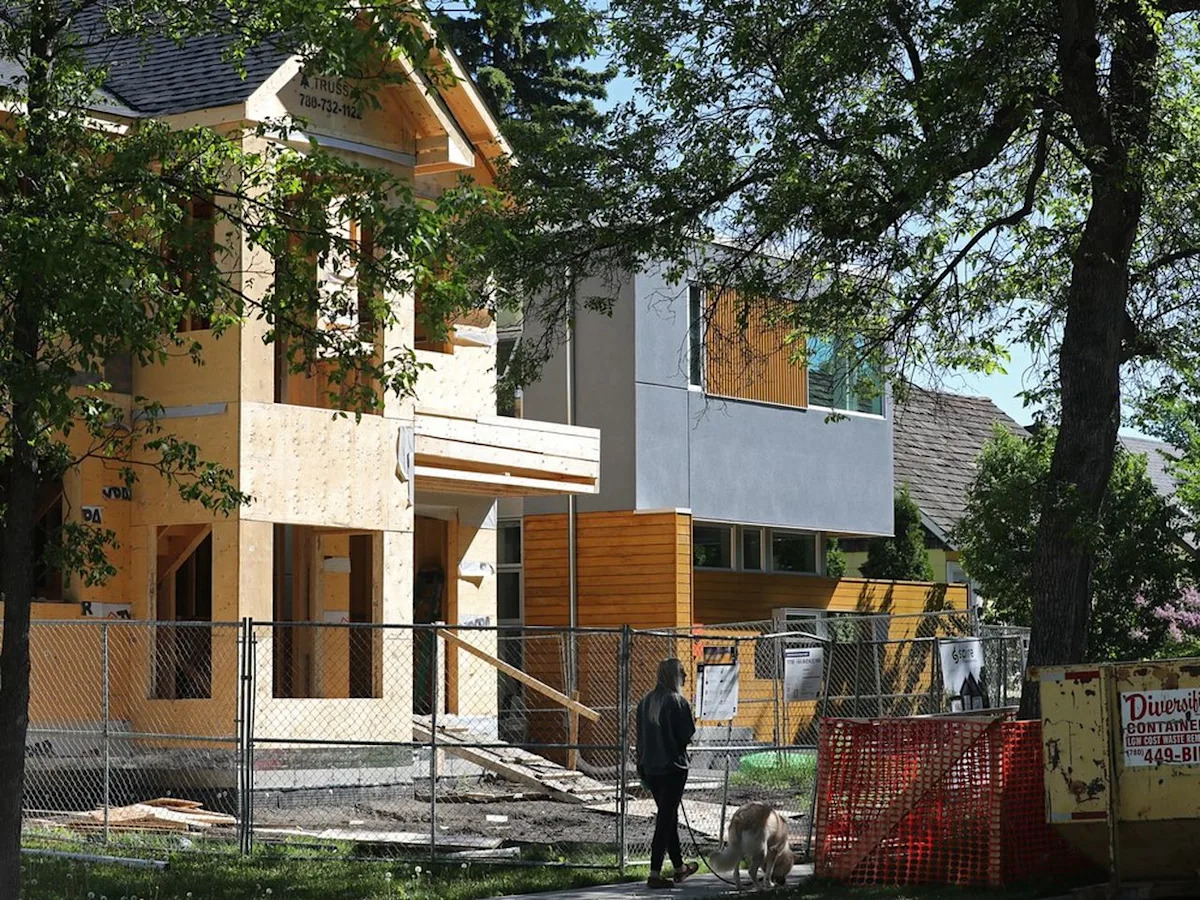
On the surface, Edmonton city council’s decision last week to stay the course on infill density limits could be seen as a broken promise from Mayor Andrew Knack and a couple of other council members.
After all, Knack, Michael Janz and Ashley Salvador last year all supported six-plexes over eight-plexes as the maximum for interior lots in mature communities, and Knack even made that vow one of his campaign planks.
So when Coun. Karen Principe made a motion last week to do just that — following the recommendations of city administration and even lukewarm support from some developers — it wasn’t the best look for Knack, Janz and Salvador to vote against it. You can probably understand if some homeowners and communities felt a bit betrayed.
However, if we dive a little deeper, it’s also possible to see the decision as an appropriate response to new and valuable information.
There is a frequent tension in politics between the need to make good on campaign promises and the pressure to pivot when confronted with relevant evidence or changing circumstances. Both are important, but the best ideas should ideally win out.
Due to its lack of formal partisanship, city hall is better suited to achieve that outcome than other orders of government. The principle of open debate is designed for council members to keep an open mind and to change their positions after hearing the arguments of colleagues, administrators and the public.
In this case, council heard from a lot of public speakers that unit maximums are not necessarily the most relevant issue. Instead, more people focused on the overall building size and shape, also known as the “massing” of developments.
They also heard that most infill lots in the city are already too small to accommodate eight-plexes under the current rules, and that there is likely to be a slowdown in the infill construction market anyway after all the activity of the past couple of years.
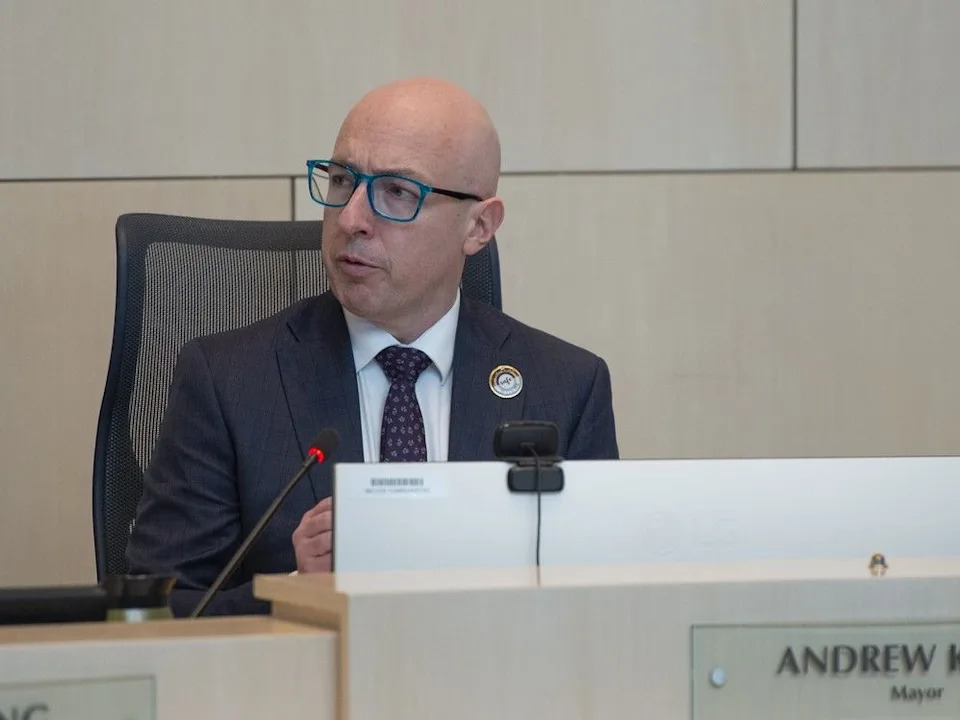
Edmonton Mayor Andrew Knack sits in council chambers on Jan. 27.
Sustaining momentum
Perhaps most importantly, concerns were raised that a drop in the unit maximum could hurt the viability of future projects and chase away even more development activity, undermining the successes Edmonton has started to achieve in housing choice and affordability.
Confronted with this information, council decided to leave the dwelling limit at eight, and will instead look at reducing the maximum height of projects from 10.5 metres to 9.5 metres, and will also consider a new bylaw to protect trees during construction. A public hearing is tentatively set for April.
That potential drop in height, combined with changes council made last summer to building length and aesthetics, should help to mitigate at least some of the issues experienced by neighbouring residents.
Yes, many of those residents will feel the changes don’t go far enough — some opponents won’t be happy until no more than a duplex is allowed next door — while others will be frustrated at the constant tweaking of the rules.
I have sympathy for some of those feelings, but it’s important to remember that the zoning reform process was always meant to have ongoing revisions as new and better information came to light. Last week’s decision is not the end of the journey, but just another step.
(As examples, the city still has to deal with street parking, waste bins, better enforcement of zoning rules, and encouraging more development in nodes and corridors and near transit lines, among other issues).
While messy at times, this is an example of how civic governance is supposed to work, in which council continually strives to find the right balance of being fair to existing homeowners while keeping focus on the big picture of sustainability and affordability.
If anything, we can perhaps criticize Knack and others for prematurely pushing toward six units ahead of last fall’s election when it seemed politically expedient.
Maybe they shouldn’t have made that vow, or maybe time will reveal that they should’ve held to it. But at this point I am loathe to criticize anyone for evolving their positions when the best evidence available suggests that they should.
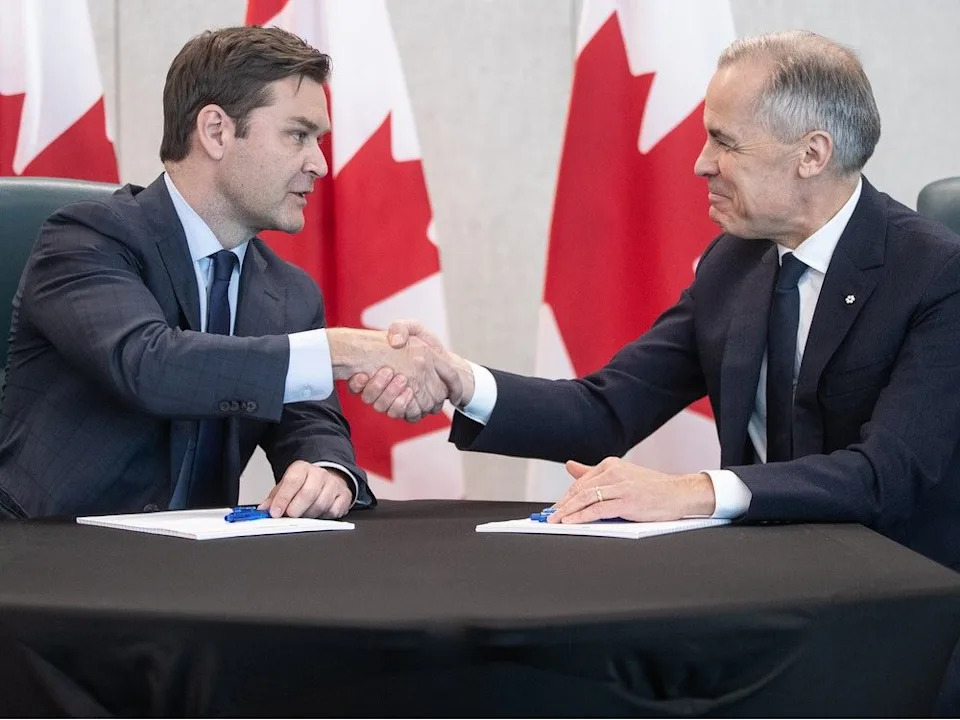
MP Matt Jeneroux, left, Prime Minister Mark Carney meet in Edmonton after Jeneroux crossed the floor to the Liberals on Feb. 18.
Switching sides
As to another local political switcheroo, my feelings are a little different when it comes to Edmonton Riverbend MP Matt Jeneroux’s recent move from the blue team to the red team.
To be clear, I think floor-crossings are a legitimate part of our parliamentary system. And when these moments happen, a lot of the indignation we hear is weakened by the obvious hypocrisy of people who would otherwise cheer a defection if it benefitted their side. In this case, Jeneroux does not deserve the extreme hatred he is receiving, especially from those casually using the word “traitor” while they simultaneously work to break up the country.
Most who know Jeneroux would also likely characterize his views as generally akin to that of a progressive conservative or red Tory. That strikes me as more-or-less reflective of where Edmontonians stand these days, and it has made Jeneroux an increasingly awkward fit with Pierre Poilievre’s Conservatives and a better match with Mark Carney’s Liberals.
So from a political standpoint, a move like this makes sense.
Likewise, I can understand if Jeneroux might want to spend at least a few of his MP years with a place at the decision-making table doing meaningful work rather than forever shouting at the clouds from the opposition benches. It could be beneficial for Edmonton to have a second Liberal MP in caucus.
All that said, my defence of Jeneroux’s choice goes only so far.
Switching partisan teams is a big deal, especially less than a year after an election, and even more for an MP who has represented the riding as a Conservative for more than a decade.
To me, that means constituents deserve some form of meaningful consultation before the change is made, like city council did with its infill framework — and perhaps Jeneroux did make some behind-the-scenes attempts at this — but the most respectful way to accomplish that is to put the move up to the test of a byelection.
A dozen years ago, our now-premier and several of her Wildrose Party MLAs failed the consultation test when they abruptly crossed to the Progressive Conservatives — and they were soon sent into political purgatory for the transgression.
Danielle Smith was eventually forgiven, and perhaps the same fate awaits Jeneroux, but that tends to be more the exception than the rule.
If he hopes to beat the odds, he’ll need to spend the next few years demonstrating to constituents that he made the right choice, since he didn’t give them any choice at all.
Related
Bookmark our website and support our journalism: Don’t miss the news you need to know — add EdmontonJournal.com and EdmontonSun.com to your bookmarks and sign up for our newsletters here.
You can also support our journalism by becoming a digital subscriber. Subscribers gain unlimited access to The Edmonton Journal, Edmonton Sun, National Post and 13 other Canadian news sites. Support us by subscribing today: The Edmonton Journal | The Edmonton Sun.