
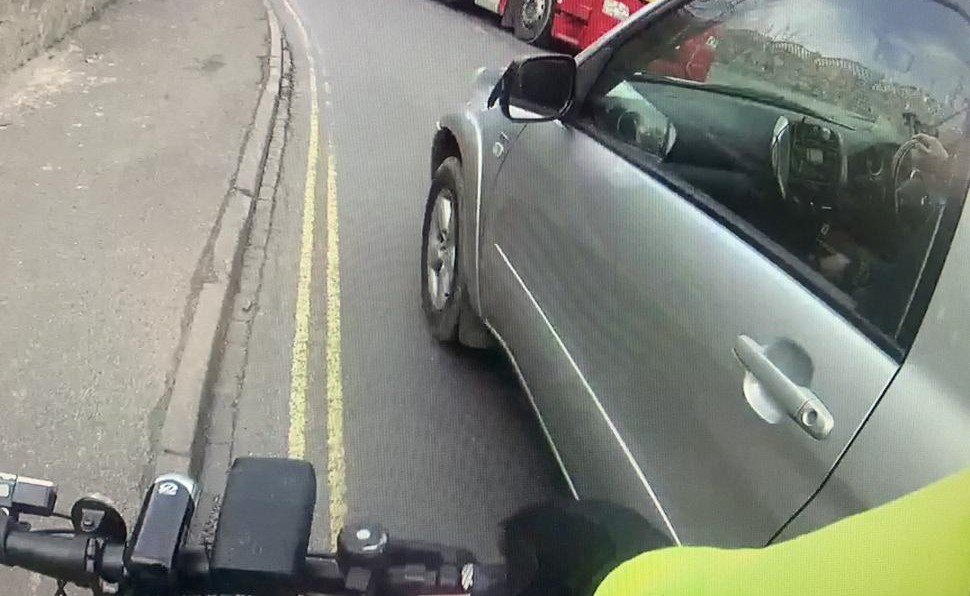
Motorists in New Zealand could face fines of up to $3,000 (around £1,300) for close passing cyclists, according to a raft of new road safety rules proposed by the country’s National Party-led government.
However, the government’s proposed minimum passing distance of one metre at speeds of up to 59kph (37mph) – and 1.5m if driving faster – has been criticised by opponents, who have called for 1.5m to be introduced as the minimum safe passing distance, arguing it would “reduce the dangerous impact of slipstream effects”.
Like the UK’s Highway Code, New Zealand’s road code recommends that motorists should leave at least 1.5m of space when overtaking cyclists, though there is currently no specific ‘close passing’ offence in both countries.
But, unlike in the UK, that passing distance recommendation applies to all speeds, whereas the Highway Code says drivers should leave even more space when travelling at over 30mph.
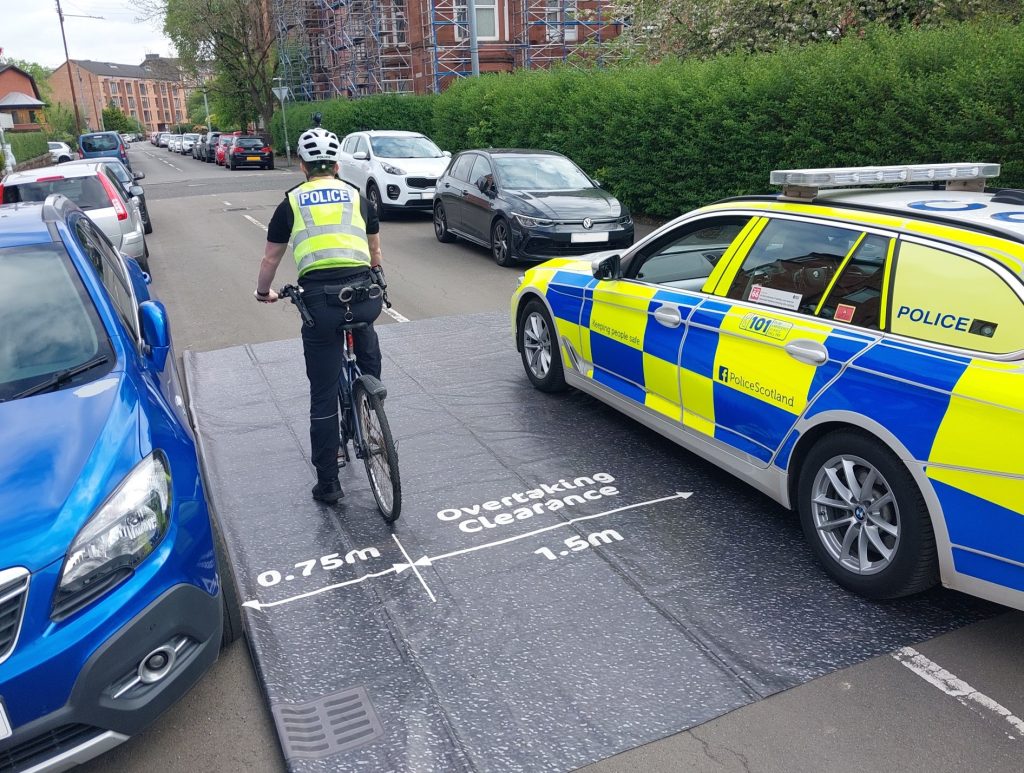 Close pass operation (Police Scotland Greater Glasgow)
This week, New Zealand’s government announced a package of transport policy changes, which if passed would allow children under 12 to cycle on the pavement (currently banned in New Zealand), permit e-scooter users to ride in bike lanes, and make it clear that bus drivers have priority when pulling out of stops.
The proposed road safety overhaul would also introduce a maximum $3,000 penalty for motorists found guilty of close passing people on bikes or horse riders, based on a mandatory passing gap of one to 1.5m depending on speed.
Transport Minister Chris Bishop announced on Wednesday that a public consultation had opened on the changes, made under the Land Transport Rules Reform programme, which he claimed would help “fix the basics” of New Zealand’s transport system.
Bishop said the changes would address common areas of confusion, including “a parent unsure whether their 10-year-old is allowed to ride their bike on the footpath, a driver not clear how much space to give a cyclist, an e-scooter rider not sure if they can use the cycle lane, a bus stuck waiting to pull back into traffic, or a truck operator tied up in paperwork just to move an empty trailer between depots”.
However, the decision to make one metre the minimum distance for overtakes committed at up to 59kph has been criticised by New Zealand’s Green Party, who argue that 1.5m should the absolute minimum safe passing distance.
According to data from New Zealand’s Ministry of Transport, the survival rate for cyclists involved in crashes at 50kph is 55 per cent. This rises to 95 per cent if the motorist involved is driving at 32kph.
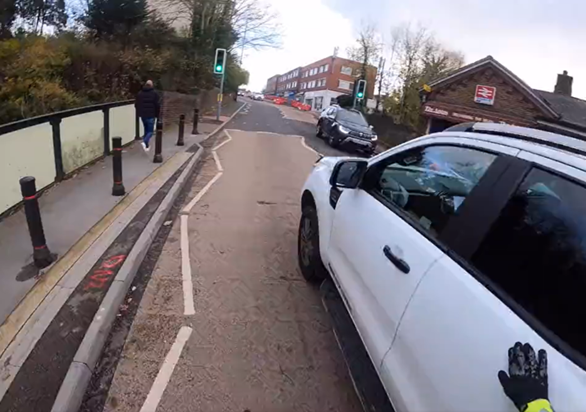 Pickup driver chases cyclist after close pass (Jay McSerk, Twitter)
“Anyone who thinks that one metre is suitable has never been on a bike that’s been overtaken by a logging truck,” Green Party transport spokesperson Julie Anne Genter said in response to the proposals.
“1.5 metres reduces the dangerous impact of slipstream effects and takes into account the fact that bikes often wobble when they’re being overtaken by much bigger, intimidating vehicles.”
Speaking to The Post, a spokesperson for Bishop insisted that the government’s proposed rule balanced safety with “the efficient use of the roads”.
“These minimum passing distances were considered most appropriate because they account for the safety of other road users but also seek to enable passing where it is safe and practical to do so,” the spokesperson said.
“Transport officials advise that the 1 metre and 1.5 metre distances are informed by survey data collected in previous research around rider comfort, as well as safe distance from the lateral pull force of air from a vehicle passing (predicted to be one metre in a 50kph).
“While greater minimum passing distances were looked at, the Ministry of Transport considered these options to be impractical and to have a negative impact on the efficient use of roads.”
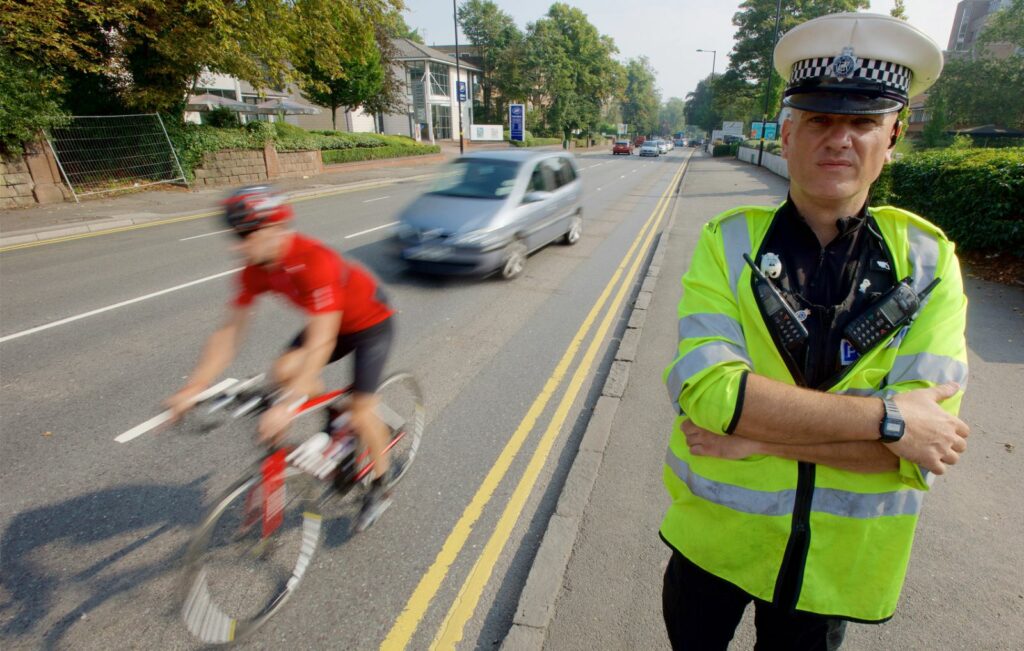 West Midlands Police close pass operation Mark Hodson and Steve Hudson (Image Credit: West Midlands Police)
The spokesperson added that the rules were now subject to a public consultation and that the government was open to changes.
“We are fixing the basics by making sure the rules are clear, practical, and reflect how people actually use our roads every day,” they said.
“This is about safer school rides, smoother bus trips, clearer guidance for drivers, and fewer compliance headaches for truck operators.”
While close passes aren’t, in their own right, a criminal offence in the UK (the Highway Code states that drivers ‘should’, not ‘must’, leave at least 1.5m when overtaking at speeds of up to 30mph), drivers who pass cyclists too closely can be found guilty of careless or dangerous driving.
In 2024, this legal ambiguity was highlighted when Gloucestershire Constabulary’s non-crime unit head – announcing that the force was adopting the Operation Snap portal – was criticised by cyclists after claiming that “a lot” of people who ride bikes “don’t realise that… a close pass itself isn’t an offence”.
The officer also said that the police “need to try and find a way of educating” people who submit footage to Operation Snap that the clips need “to show that the driver or rider is being inconvenienced in some way”, while bizarrely adding that “in the Highway Code you have something called a close pass, where you should allow cyclists 1.5m width”.
The muddled messaging from Gloucestershire Constabulary was widely criticised on social media by cyclists, who have argued that the officer has failed to realise that close passes often constitute an example of careless driving.
Some campaigners also claimed that the officer’s comments misrepresent cyclists’ concerns about road safety and highlight “the mess in which we find ourselves as we seek to lower road crime against cyclists and encourage more people to cycle”.