
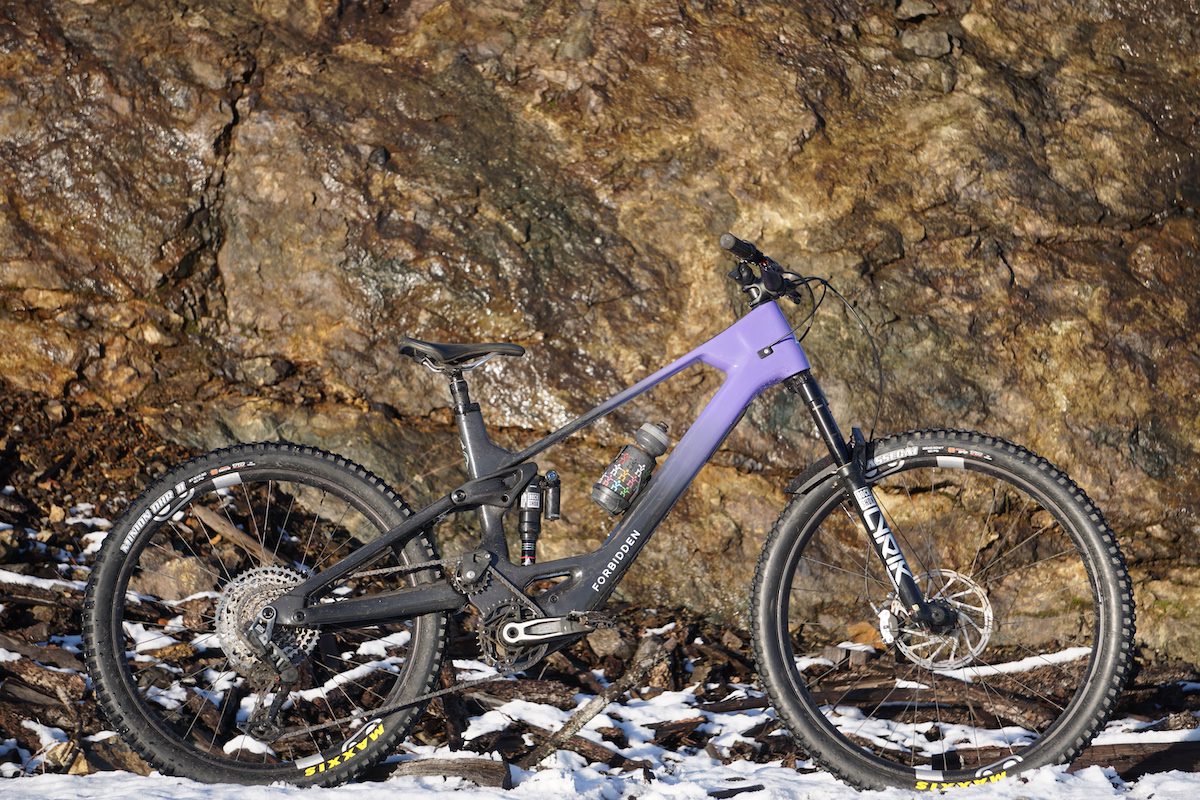
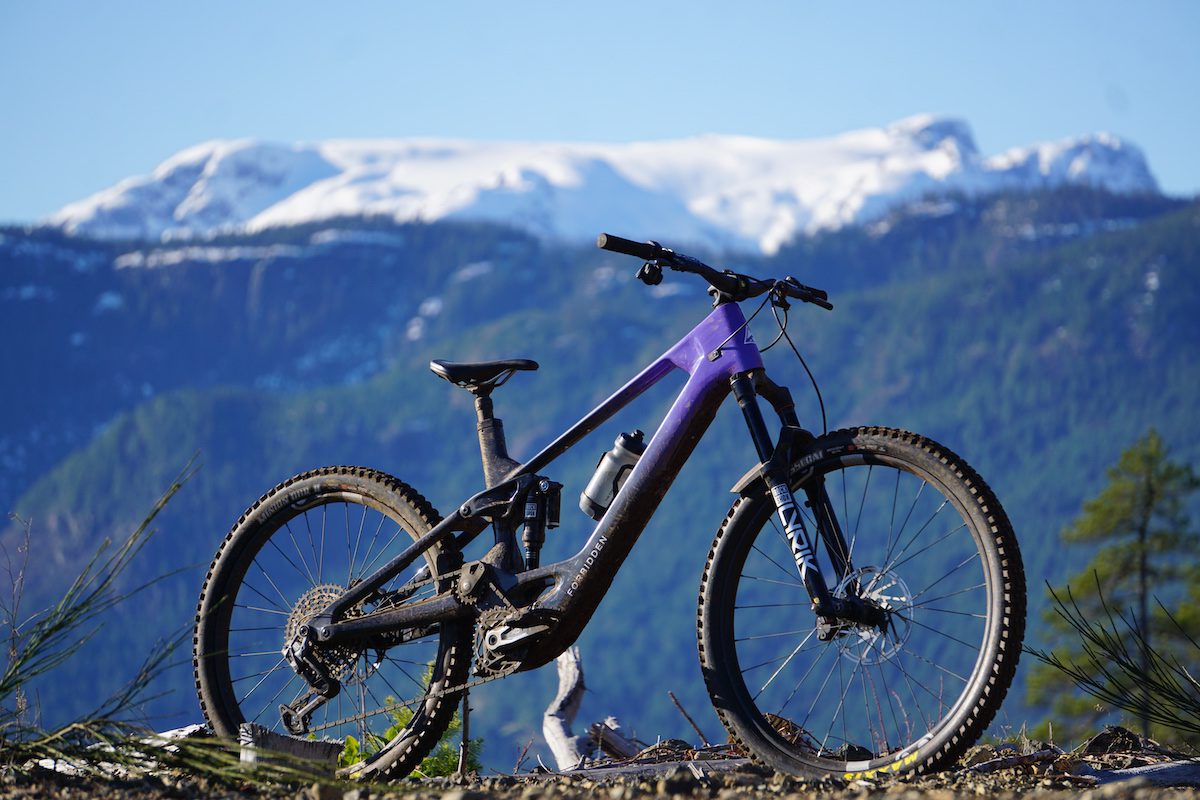
When Forbidden Bike Co. decided to release an eMTB, the Vancouver Island brand didn’t just slap a much-hyped motor system into its existing platform and call it a day. Instead, the Druid was completely re-designed around two different travel eMTBs. The Druid LitE, tested here, is the shorter-travel lighter model and partner to the burlier Druid CorE.
When I say re-designed, I really mean re-designed not just tweaked. Forbidden fully changed up its geometry philosophy for the electric version of its Druid. I certainly had some reservations about the re-think going into this test. So it was interesting to learn more about the intention behind the design and to see how it played out on trail.
Druid vs. Druid LitE: eMTB specific geometry?
If you’re interested in the Druid LitE because you liked the look of the Druid, there is good news and there is bad news. The bad news is, on paper, the LitE is totally different than the OG Druid. The good news? The changes are intended to deliver a similar experience, at least part of the time, while accounting for the changes required to make it electric. And this mostly works.
Before we get into that, there are two other important notes. First, Forbidden changes the Druid layout to have a longer, straighter seat tube to give more room for longer-travel dropper posts. Second, Forbidden uses proportional geometry, including size-specific rear centres and seat angles. That makes the e-Druid’s two of the very few eMTB’s to have proportional geometry. And, if you ride one of the outlier sizes, that makes a big difference to how a bike feels on trail.
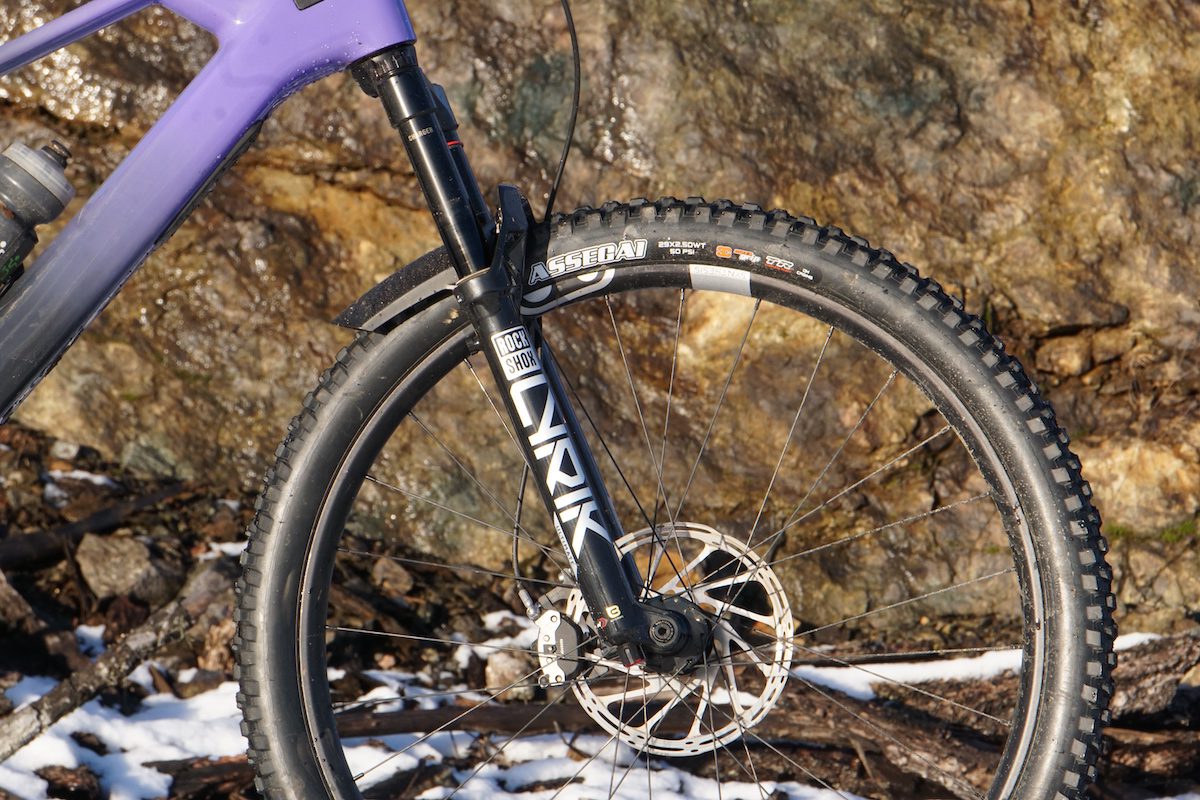
Beyond that, the Druid LitE uses a carbon fibre frame for its 140mm rear wheel travel, with a 150mm Lyric up front. That’s on the shorter end of travel for eMTB’s but, like with the original wizard, this bike does a lot with that travel.
Challenging the status quo on geo
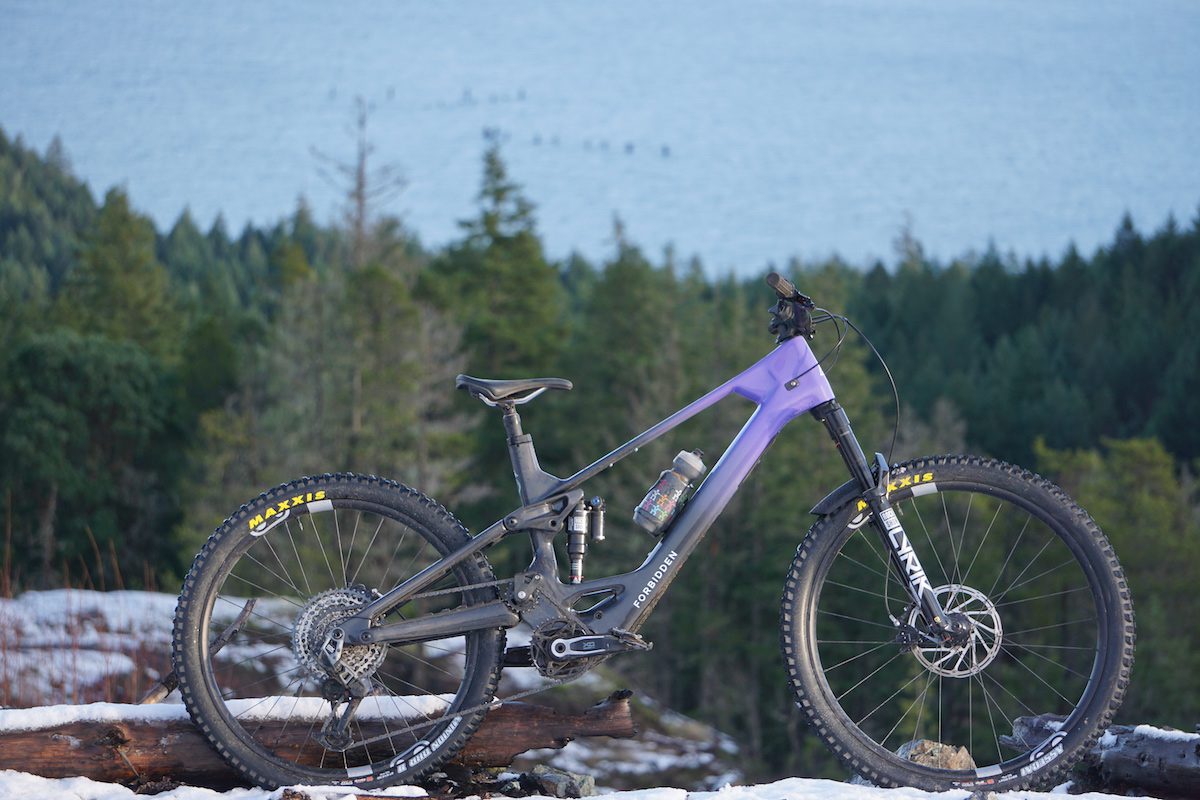
Back to the eMTB geometry. Forbidden goes into a lot of detail about the changes here. The basic idea is to keep the rider’s weight more naturally balanced between the wheels. Specifically, while descending. Forbidden does so by going for a MX wheel as the standard configuration and adding significantly to the stack. That substantial increase in stack means that, while this bike’s reach looks quite short on paper, the brand says that what you could call its “effective” reach is in line with the Druid it electrifies.
Launching an eMTB, or two, isn’t an inexpensive endeavour. Especially when it’s a brand’s first eMTB. I asked Matthew Tirrell, marketing manager at Forbidden, if there was any hesitation to introducing a geo change that might raise eyebrows on paper when so much was at stake with this launch.
“We’ve never been afraid to break the mould. We tried it and it works, so we went for it,” Tirrell says. “You get more grip and control. Our bikes tend to steer through the feet a bit more, so this works well. You can get the feeling of going fast with other designs. But this is actually fast, not just the perception of fast.”
It should be noted that the bike itself isn’t shorter. My S4 has a 1,344mm wheelbase which is slightly longer than a MX Druid. Still, I was skeptical of this going into the first ride.
Electric Wizard on the descents
My reach skepticism lasted about 30-60 seconds after pointing the Druid LitE downhill. The steeper the trail got, the more comfortable the Druid felt. It just felt like it was easier to have more control, making it easier to let go of the brakes and to commit to hitting turns faster and to carrying more speed.
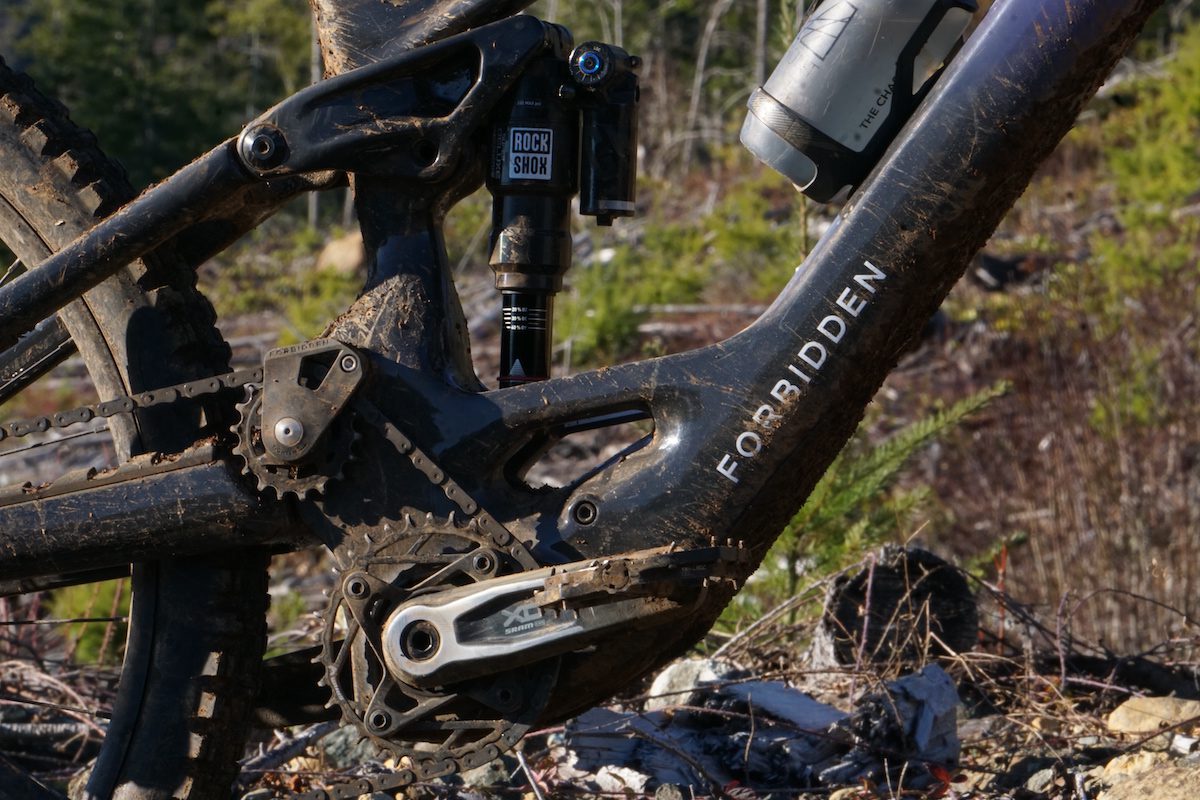
Forbidden’s high-pivot suspension works as well on the electric side as it does with the Druid, giving the LitE a potent combo of traction through an active initial stroke and calm over chunder and big hits via a solid ramp-up at the end of the shock’s stroke. After dialling in the suspension, the Druid felt supportive enough that you could charge pretty darn hard on it without feeling the bike bottom out without feeling harsh.
Within a couple runs, I was comfortable enough on the LitE that I was pulling up for little gaps I’d never tried on steep sections of trail that usually have me holding back or hesitating, not pushing harder. Forbidden’s argument that its more stack/less reach (or more effective reach) approach keeps weight better balanced makes sense on the trail. It just felt like I stayed in that sweet spot between the wheels with less effort. And, while this bike is reasonably long for a 140mm bike, the combo of stack and MX wheels makes the Druid LitE is still surprisingly nimble and calm in corners.
Other than descending
The only time the eMTB-specific geo isn’t a total home run is on flat, or really low angle trails. Not that it’s necessarily bad, it just required a different strategy and technique than I’m used to when riding without a motor.
I’ve said a few times that the geo is designed for descending and Forbidden doesn’t shy away from that bias. But it’s also quite comfortable and adept climbing, putting you in a relaxed and upright position to help direct the motor’s power. A bit more on that below, but, in combination with the high pivot design that lets the suspension stay active even when the motor is doing its thing, you can climb some ridiculous steep and technical things on the Druid LitE. Or just climb normal things very comfortably.
Hitching a ride on the Avinox hype train
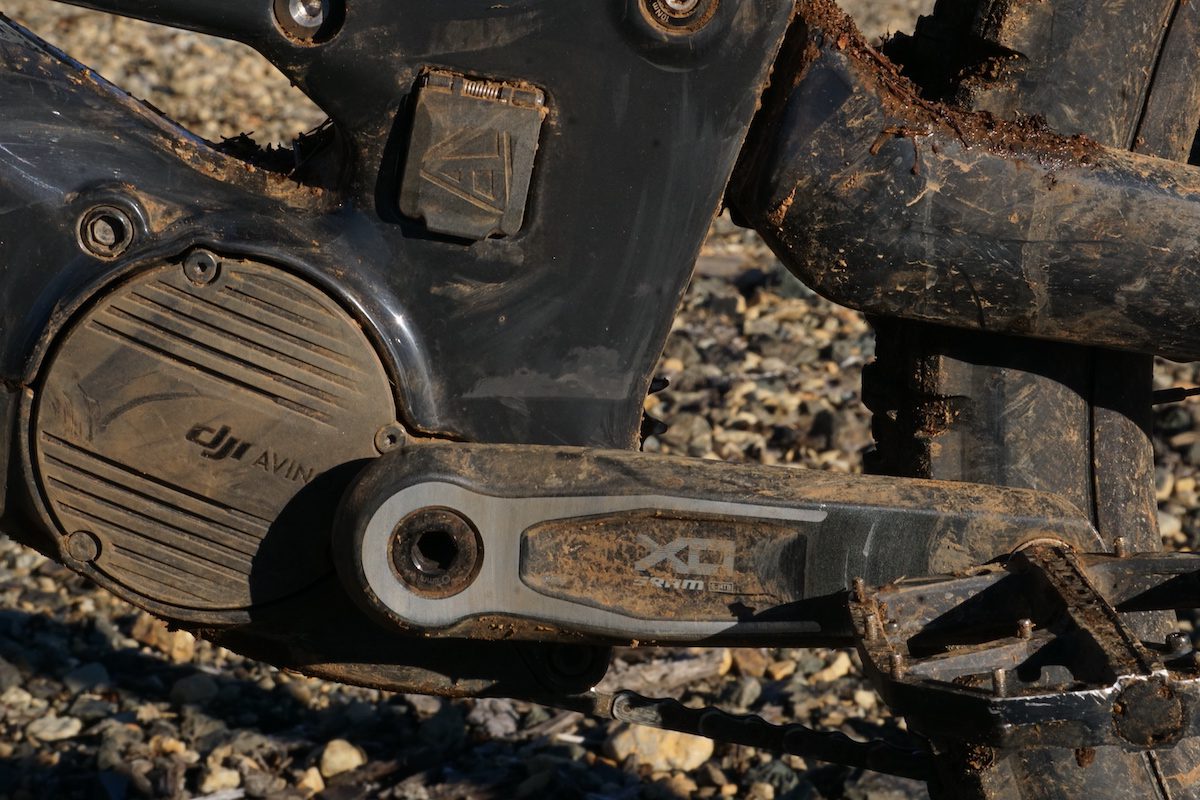
Forbidden had the good timing to launch their pair of electric wizards just as DJI / Avinox shook the eMTB world with its M1 motor unit. Other motors had been considered, apparently, but Forbidden managed to time the E-Druid’s very shortly after Avinox launched the M1. That made the Vancouver Island brand one of the first, globally, to have a bike built around the wildly powerful and surprisingly small system. For the LitE model, it’s powered by a 600Wh battery. For the CorE, a bigger 800Wh unit eeks out some more elevation and miles. With so much power on tap, range is varies wildly depending on how you use it.
Avinox packs a staggering 105Nm of continuous torque into the M1’s compact and comparatively light 2.25kg package. It packs a whopping 1,000 W peak power, which is currently limited to 30 second bursts to keep Avinox system within the confines of a Class 1 bike (or within the grey areas). It also has a fast charge option or standard charge, with the latter supposedly being easier on the system.
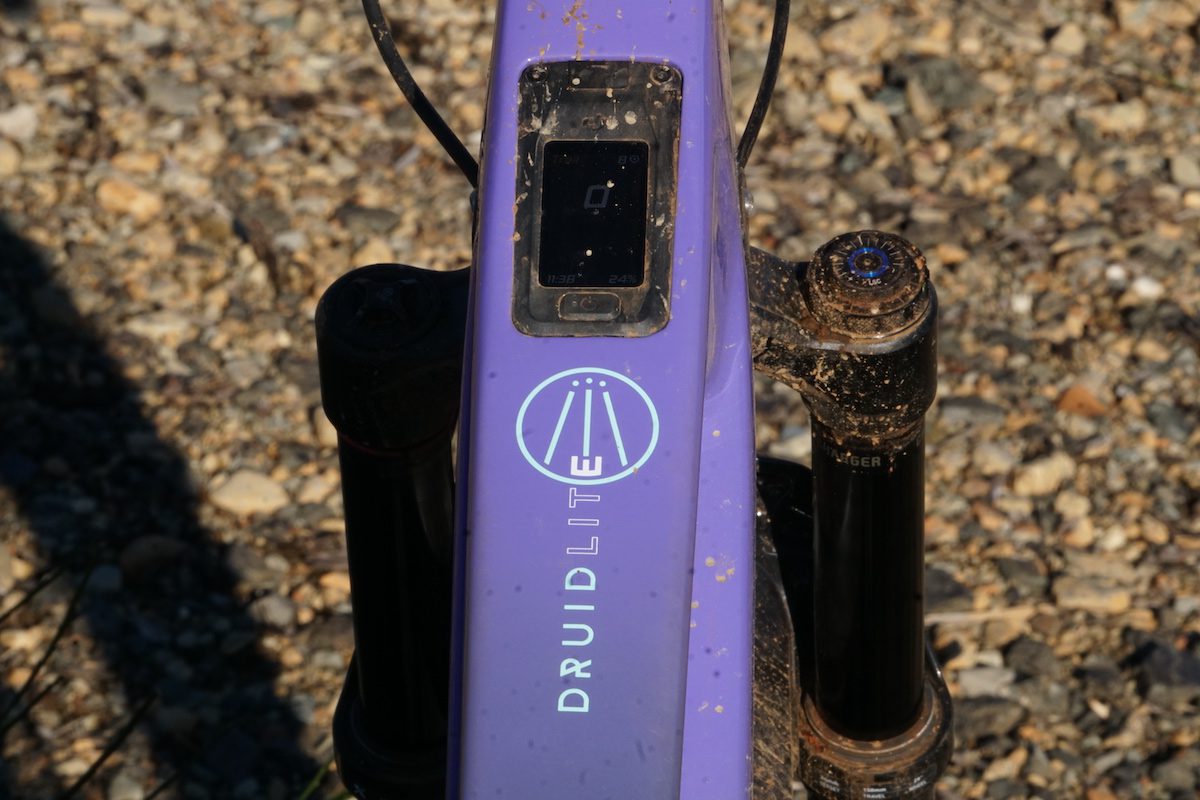
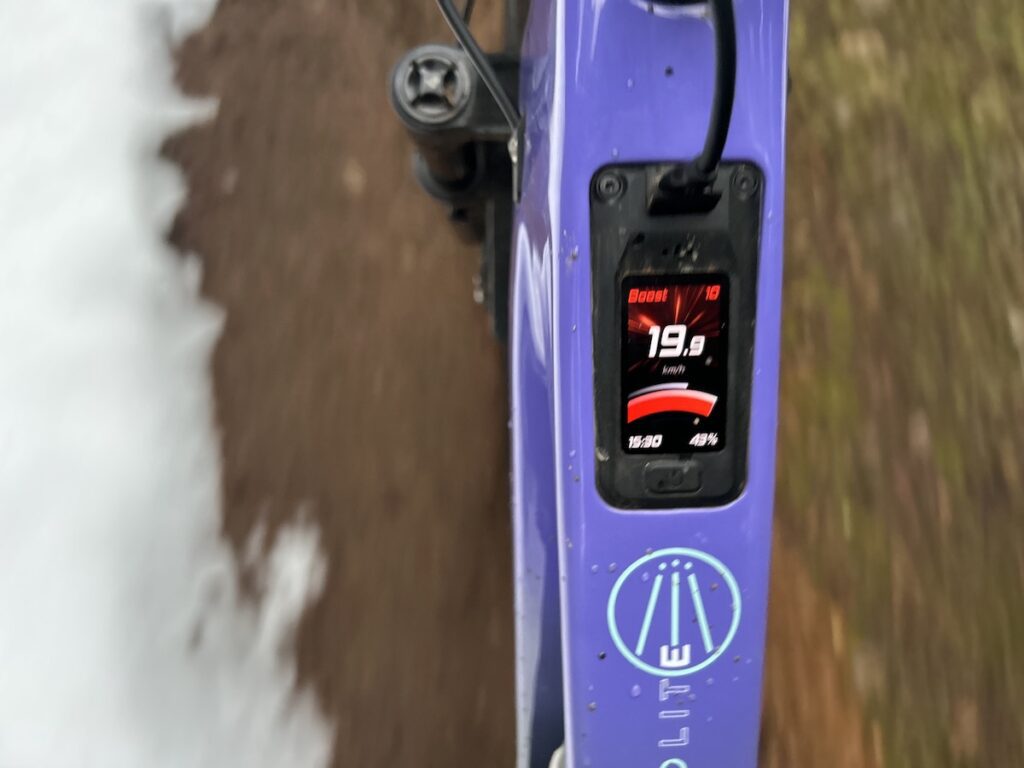 Avinox adds a USB port so you can run lights off the main battery. Or charge your phone.
 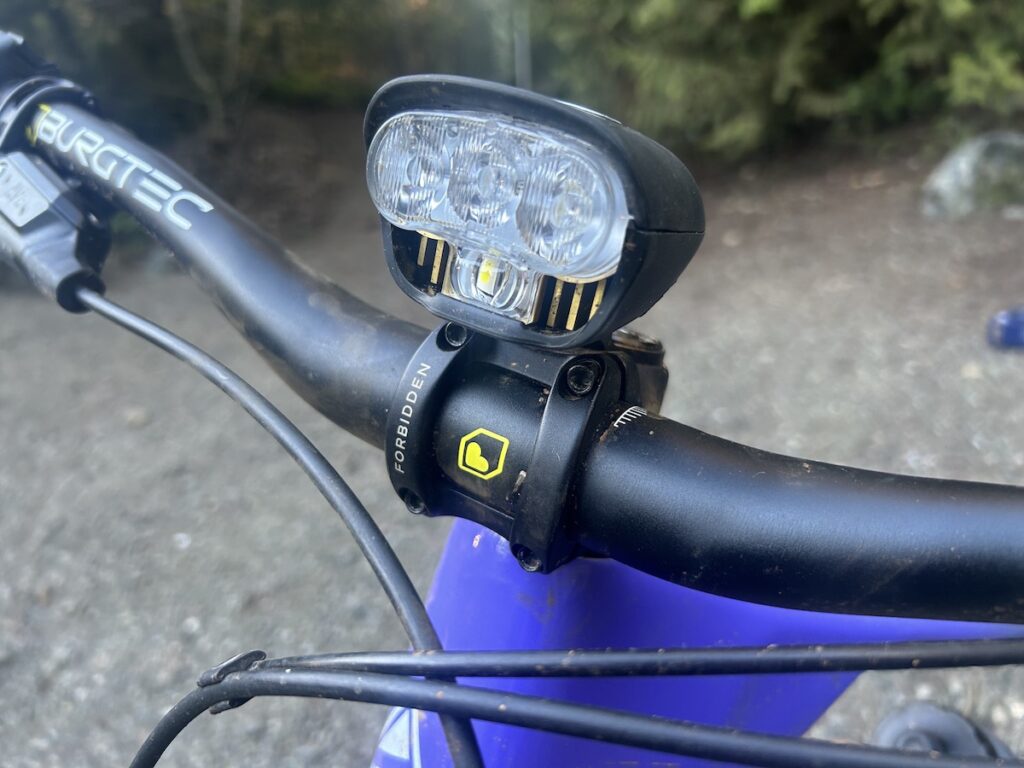 I borrowed a Full On Lighting MB6 kit, which comes with a stem cap mount that fits well with the Avinox USB port
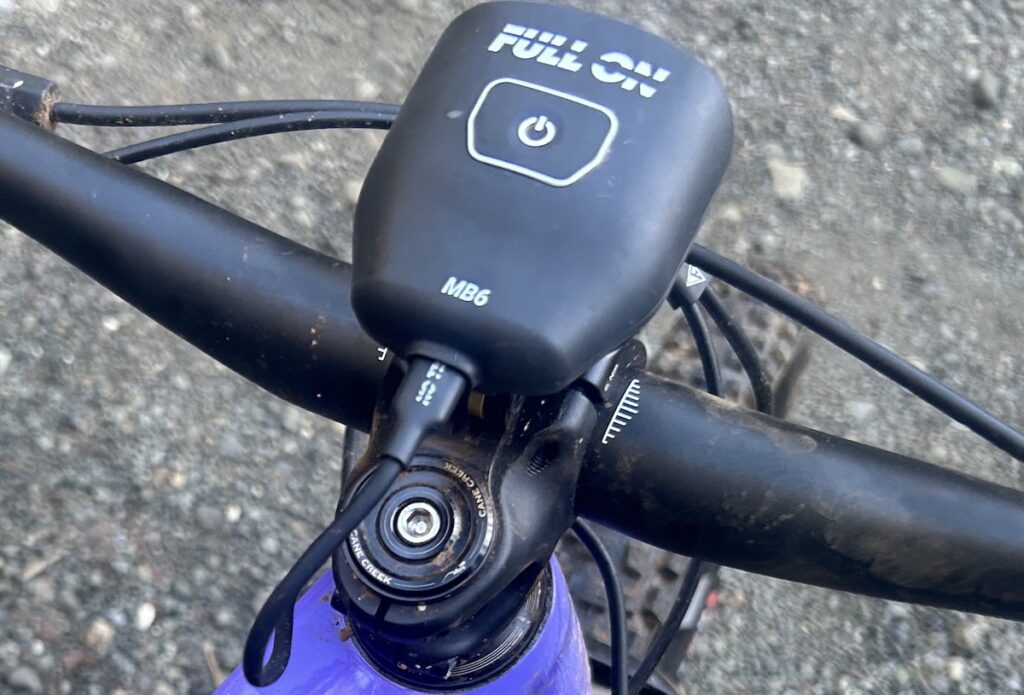 Secure and weather proof for some January riding from the Vancouver Island-based brand(s)
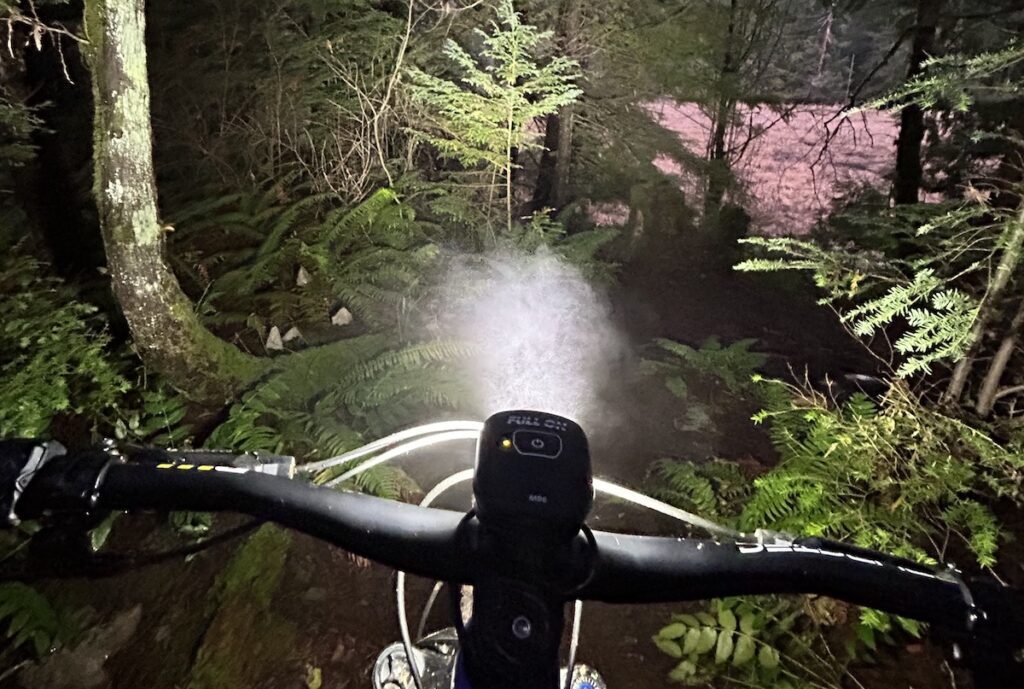 Full On Lighting’s MB6 is as powerful as the Avinox system powering it
There is actually quite a lot going on with the Avinox system. Despite being new, powerful, and trendy, Avinox drops in with a bunch of refined features, too. Like smooth shift, which lets you shift while coasting, say, into a hill. Or pairing with DJI cation cam to remote operate it via the bike’s remote. Same with lights, like the MB6 kit we borrowed from Vancouver Island’s Full On Lighting, so they can run off the motor battery. Or you can charge your phone. Add in all the usual tweaks possible in the app and the hype around this motor system starts to look like it might be more than about just power. Maybe.
M1 delivers mach speeds on the trails
An initial ride with the Avinox system on a different bike showed this system is more than just brawn. Getting more time on the much lighter Druid LitE showed that there really are few limits to the system and what you can ride with it. Especially when combined with Forbidden’s high-pivot suspension design, which allows the Avinox to continue delivering power even as the suspension moves, the Druid has near magical traction while climbing. Avinox delivers its power with significantly more finesse than any other system I’ve tried. It feels much more responsive, both to more pedal inputs and when you back off the power. There’s also just a lot more power.
The end results of all this is the same. The Druid LitE is impossibly easy to climb. The high pivot lets the wheel keep moving through its travel while still delivering power. Add a more upright climbing position from that short-tall geo, and a light feel on the pedals, and you have a potent combo that gives this bike monster truck traction so that power does something useful, not just burnouts (mostly).
If you’re all for the high-power arms race in eMTBs, Avinox sets itself a part. Even if you’re one of the rare few with the restraint to not just hit boost mode all the time, the M1’s refined power delivery beats other systems in Eco or Trail mode. If you’re totally opposed to high-powered eMTB well, I’m not sure why you’ve read this far?
Build and spec: Forbidden Druid LitE 1/2
Our test bike arrived with a mix of the top two tier Druid LitE parts. That meant Ultimate level suspension from RockShox and, from the LitE 2 build, alloy wheels and a GX drivetrain. The Druid LitE 1 comes with Ultimate suspension but carbon fibre Crank Bro.’s Synthesis e-bike carbon wheels, SRAM XO AXS T-Type shifting, SRAM Maven Ultimate brakes and a carbon OneUp bar. The LitE 2 comes with Select+ suspension, GX AXS T-Type shifting, Maven Silver brakes, Synthesis e-bike alloy wheels and an alloy OneUp bar. Those differences drop the LitE 2 from $15,000 to $12,500.
Beyond that, the two builds feature many of the same parts. Namely, the Avinox M1 motor unit with a 600Wh battery and carbon fibre Druid LitE frame.
A third build comes with mechanical SRAM Eagle 90 T-Type shifting, Maven brakes, Race Face wheels and more house-brand parts, but still RockShox Select+ suspension. The Druid LitE 3 is $11,500.
All of these builds are pretty expensive, to be sure. Not as astronomical as some eMTB brands, but they are all still hitting five figures in Canadian dollars. But you do get features like the high pivot, carbon frame and, most distinctively, proportional geometry that isn’t that common at any price.
Final review: Forbidden Druid LitE
As I’ve mentioned a couple times, I was a bit apprehensive going into this test. I really liked the Druid and I was both not sure how the extra weight of taking it E would translate on trail and dubious of the geo that went directly up against the trends. Long, low, slack are cliché at this point, but it’s also a good part of what’s made bikes so much better over the last while.
Forbidden’s done its homework, of course. And just like its mentor, the LitE delivers performance that makes the invocation of the dark arts seem less like good branding and more like the staff rides might involve the occasional sacrifice along with the sends. This bike does a whole lot with just 140mm travel and the balanced ride helps the LitE handle lighter than it’s weight on a scale.
Forbidden really delivers with its first two eMTBs. The Druid LitE is an absolute riot to ride, preserving a lot of what makes the OG Druid so much fun while adding a massive boost in power. It does push the Druid more towards Forbidden’s gravity leanings, meaning it might not be the best option if you’re only ever riding rolling trails. But the approach to geo makes this bike comfortable to climb and very fun any time it is pointed downhill, no matter what the trail looks like in front of you.