
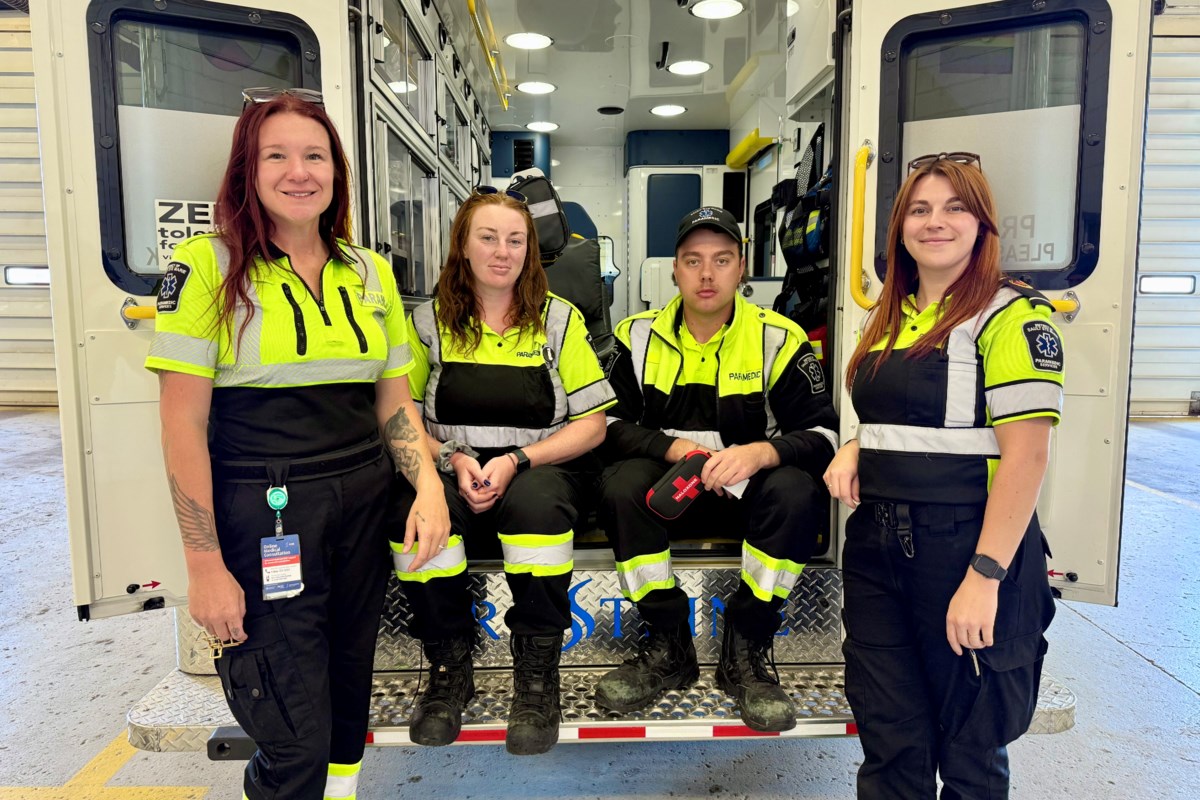
Sault College is launching a new two-year Primary Care Paramedic diploma program that aims to strengthen emergency health staffing across the Algoma region
NEWS RELEASE
SAULT COLLEGE
*************************
Sault College, in collaboration with the Sault Ste. Marie District Social Services Administration Board (SSMDSSAB) and with support from the Algoma District Services Administration Board (ADSAB), is launching a new two-year Primary Care Paramedic diploma program designed to strengthen the emergency health workforce across the Algoma region.
The initiative reflects a shared commitment to expanding local training opportunities and addressing the ongoing shortage of qualified paramedics in Northern Ontario communities.
As Sherri Smith, interim president of Sault College, explained, “Ontario continues to experience strong demand for paramedics, particularly in rural and Northern regions. Through this partnership, students will be able to train close to home while helping communities build a sustainable pipeline of highly skilled professionals.”
Building local capacity in health care
Paramedics play an essential and evolving role in Ontario’s health care system serving as the first point of contact in emergencies, while also contributing to community health, chronic disease management, and mental health response. By developing this new program locally, the partners aim to equip graduates with the knowledge and skills needed to serve rural and Northern communities effectively.
“Investing in local education is a critical step toward strengthening emergency services across our communities,” said Katie Kirkham, chief, paramedic services, SSMDSSAB.
“Our collaboration with Sault College will allow students to train in the same region where they are most needed, supporting both strong learning outcomes and stronger communities.”
The program directly responds to verified workforce pressures across Northern Ontario and beyond. Current data estimate that the North will need roughly 450 new paramedics within three years. Kirkham added that the expansion of community paramedicine has made local training programs even more critical, as “students educated here bring valuable regional insight to their practice, strengthening care across the continuum.”
Jeff Pulvermacher, chief/director, ADSAB, emphasized that the initiative highlights what can be achieved through regional partnership.
“This program is a great example of how Northern partners can work together to address shared workforce challenges and improve access to care,” he said. “By investing collectively in education and practical experience, we’re ensuring that communities are better served for years to come.”
Program overview
Launching in Fall 2026, the new Ontario College diploma will include classroom and laboratory instruction, simulation-based training, and supervised clinical and field placements with local paramedic services. The curriculum is being developed in close collaboration with regional employers to ensure alignment with provincial standards and Northern practice environments.
Eligible students may also apply for Ontario’s Learn and Stay Grant, a provincial program that helps address health care workforce shortages by covering tuition, books, and other educational costs in exchange for a post-graduation commitment to work in the region.
Smith noted that partnerships like this are central to Sault College’s focus on regional workforce development. “By training students for critical roles within the communities where they live, we not only support Northern Ontario’s health system but create lasting pathways for employment and economic growth,” she said.
Applications for the Paramedic program are open with full admission details posted on the Sault College website. Graduates will be prepared to pursue provincial certification and employment opportunities within Ontario’s paramedic services.
By developing this program collaboratively and offering training locally, Sault College and its partners are helping ensure that Northern Ontario communities have timely access to skilled, compassionate paramedics; now and into the future.
*************************