
The new provincial budget addresses the City of Edmonton’s seven-year itch.
For the first time since 2019, the province will pay in full when it comes to grants in place of taxes.
City Hall and the legislature have been squabbling over these grants for seven years, since they were cut by the province. In 2019-20, they were reduced by a quarter, then another quarter came off the next year. So, by 2021, the grants were only half of that to 2019 and before.
In 2024, then-mayor Amarjeet Sohi launched a campaign asking the province to restore the full grant funding on buildings it owns within the city limits. At the time, Sohi said the reduction in the grants had cost the city $80 million.
That’s about $16 million in revenue per year.
Finance Minister Nate Horner said even though the province is running a deficit budget, restoring the grants to 100 per cent was a non-negotiable for Premier Danielle Smith.
“It was very important to the premier,” said Horner. “She’s been in consultation with, obviously, the large city mayors, but also municipalities across the province. And it was something that was important to her.
“She felt that it was unfair the way we’d gone about in the past, and wanted to rectify it.”
When asked about the cuts to these grants at a 2024 conference of municipal leaders, Smith reminded the crowd that she wasn’t premier when the cut was made. Jason Kenney was the newly elected premier when the initial cut was officially made part of the 2019-20 budget, even though it was functionally part of the province’s operations in the months before that.
“I wasn’t part of the decision-making around that,” she said in 2024. “We’re committed to looking at that.”
Alberta Municipalities passed a resolution in 2024, pressuring the province to restore the funding, stating that it was essentially passing on tax hikes to residents who had to make up for the grant shortfall.
“This change in funding has effectively downloaded costs to the ratepayers within the municipalities,” read the resolution. “This gap in provincial funding points to the need for the province to recognize the essential role that the day-to-day municipal services play in supporting provincial building and properties.”
Edmonton mayor Andrew Knack said Thursday he appreciated the province’s efforts to bring the funding back to 100 per cent, and the premier going to bat for municipalities on this issue.
“I think, at the end of the day, this is something that municipalities have been clear about, the need for this. It’s the fact that everyone else is paying their full share in the province,” said Knack.
“So, to the Premier’s credit, when this was first raised, in fact, by my predecessor Mayor Sohi, she acknowledged that unfairness that existed, and made a commitment to addressing it. So I’m very glad to see that she’s continued to deliver on that, and that she recognizes how important that is. Because if that (funding) didn’t come back, at the end of the day, what that would mean is municipalities would have to raise property taxes to offset that funding, so everyone else would have to essentially pay more.”
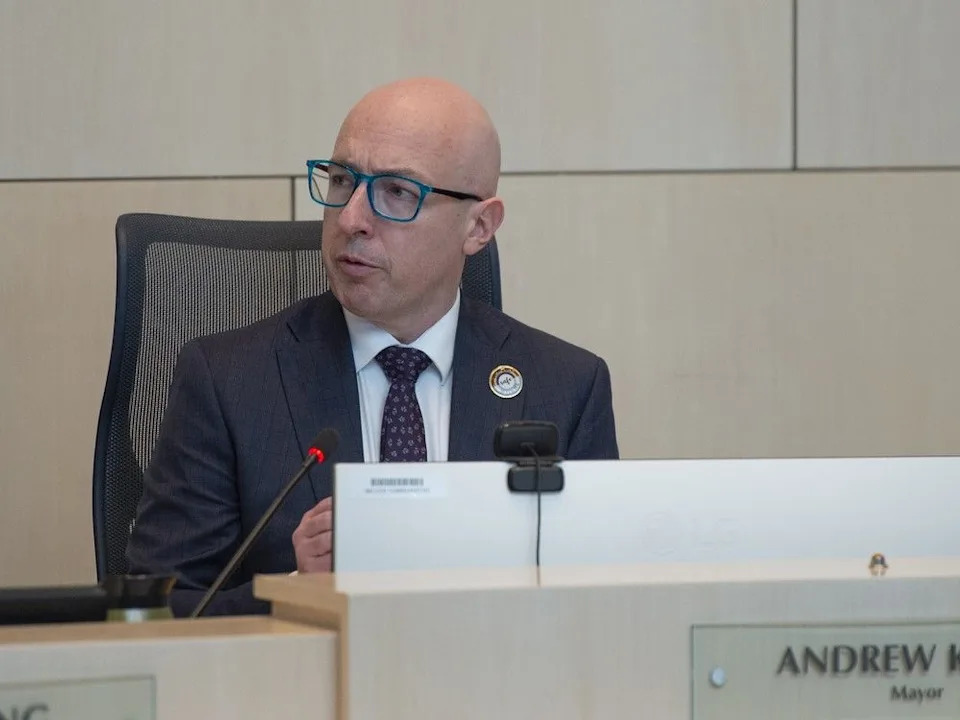
Edmonton Mayor Andrew Knack in council chambers on Tuesday, January 27, 2026.
What are grants in place of taxes, anyway?
But, how do they work? The provincial government is exempt from paying municipal property taxes. The Municipal Government Act makes it clear that the cities answer to the province, so the province paying taxes to cities would be like parents paying taxes to their kids.
To make cities whole, Alberta’s government has a program in place to provide grants to cities that make up for those tax exemptions.
When it comes to these grants, Edmonton has more skin in the game than any other place in Alberta. As the provincial capital, it has the lion’s share of the province’s buildings.
So, the 2019 halving in grants hit Edmonton the hardest.
In the previous year’s budget, the grants were bumped up from 50 to 75 per cent.
While Knack was grateful to see the grants restored to their full, pre-2019 levels, he said the city is still struggling with a major infrastructure deficit, and funding to cities has been in a steady decline for 15 years. He said cities have suffered from funding cuts from both NDP and Conservative governments.
“I’m not interested in nice-to-haves,” said Knack. “I’m interested in making sure we can maintain and fix all of the infrastructure that we have. We have a large infrastructure deficit that has existed for a number of years. This exists in part due to the cuts that we’ve seen over the last 15 years. So this isn’t due to any one provincial government. This is due to multiple consecutive provincial governments.”
But, he said, this restoration of the grant funds may be part of a new era of co-operation between the city and the province. Since becoming mayor, Knack has been enthused by the meetings he’s had with members of other levels of government.
“It’s been about four months, and I’ve had some incredible conversations with the premier and a number of ministers. I felt it’s been very constructive. I’ve seen a lot of great opportunities where we can work together, not only with them, but with the federal government. There really seems to be this genuine opportunity for all three orders of government to be sort of singing from the same song sheet, working on some of the same critical issues. And so I’m very encouraged about where this relationship is.”
Related
Bookmark our website and support our journalism: Don’t miss the news you need to know — add EdmontonJournal.com and EdmontonSun.com to your bookmarks and sign up for our newsletters here.
You can also support our journalism by becoming a digital subscriber. Subscribers gain unlimited access to The Edmonton Journal, Edmonton Sun, National Post and 13 other Canadian news sites. Support us by subscribing today: The Edmonton Journal | The Edmonton Sun.