
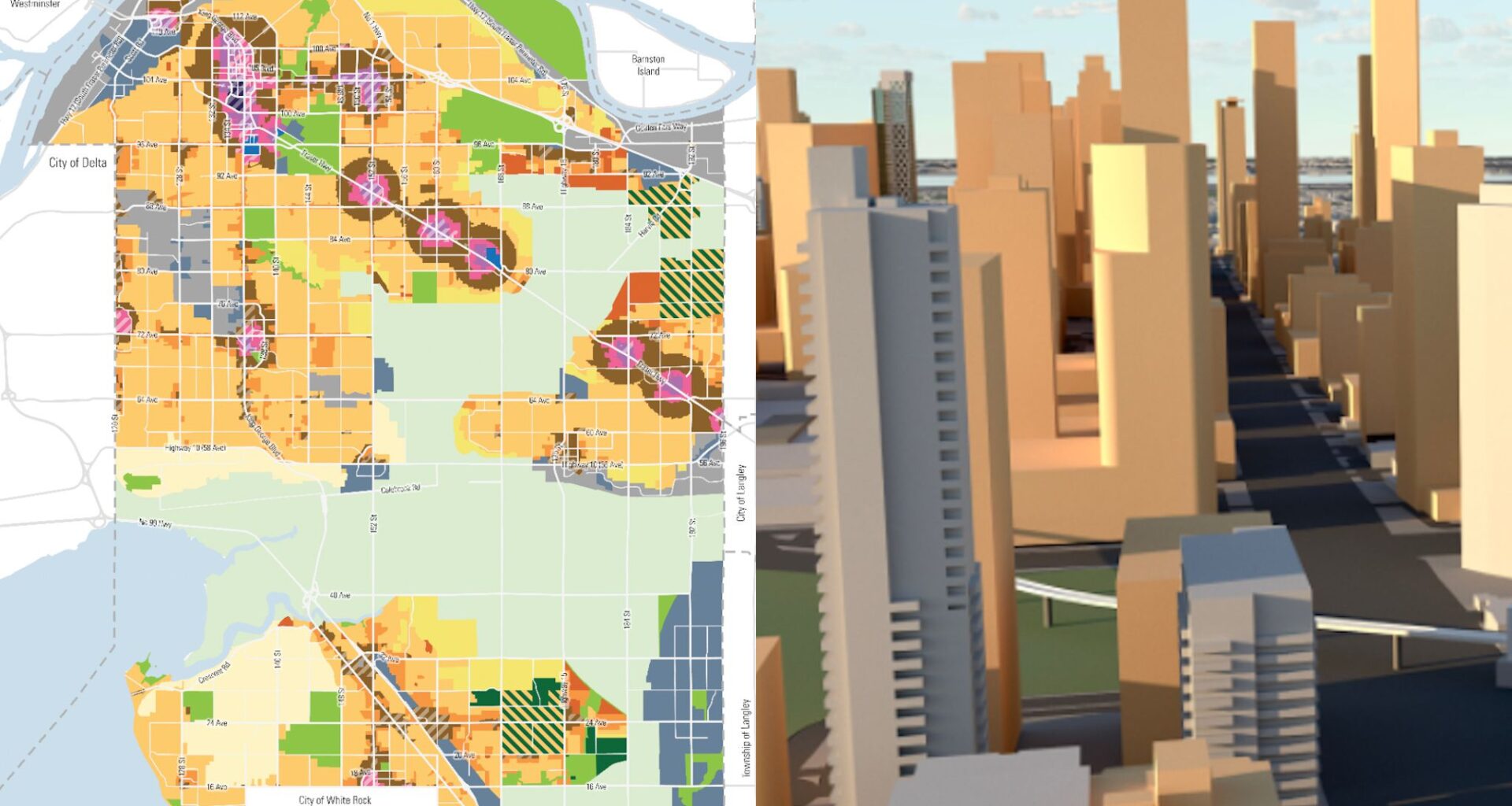
The City of Surrey has released the draft of its new Official Community Plan (OCP), a sweeping blueprint aimed at accommodating and managing growth over the coming decades as the city approaches a population of one million residents by 2050.
Dubbed “Surrey 2050,” the draft Surrey OCP lays out a long-term vision for housing and job space, community amenities and facilities, schools, transportation, infrastructure, and utilities, replacing the current “PlanSurrey 2013” framework approved more than a decade ago.
Surrey City Council is expected to approve the new OCP over the coming months as it is required by the provincial government’s legislation, which requires British Columbia’s municipal governments to update their OCPs every five years to better account for changing housing needs and align with the provincial government’s range of housing-related legislation adopted in recent years, such as transit-oriented areas and small-scale, multi-family housing.
“This is a major milestone in planning for the future of Surrey,” said Surrey Mayor Brenda Locke in a statement today.
“Surrey 2050 reflects the dynamic nature of our growing city as it approaches one million residents, supporting more affordable homes, stronger infrastructure, and responsible growth for all. We take pride in putting forward a plan that respects Surrey’s past, acknowledges the realities of the present, and looks to a vibrant and bright future.”
Over the last few months, jurisdictions such as the City of Burnaby and City of Port Moody also passed their new OCPs.
In March 2026, in a public hearing, Vancouver City Council is expected to approve the new interim Vancouver Official Development Plan (ODP) — essentially replicating the details of the 2022-approved Vancouver Plan — ahead of the provincial government’s legislated deadline to do so by June 2026, with a permanent ODP required by 2030.
The ODP has greater authority and is more comprehensive than the OCP, with the City of Vancouver able to pursue an ODP under its separate Vancouver Charter, whereas all other cities, such as the City of Surrey, fall under the B.C. Local Government Act.
Both the OCP and ODP documents are legally binding. As well, under provincial legislation, moving forward, municipal governments are unable to hold a public hearing for a rezoning application if a proposal already largely aligns with the OCP or ODP.
Surrey’s municipal government highlights that its new OCP modernizes and simplifies planning rules by reducing the number of City policies from more than 600 to roughly 200 and streamlines land-use designations to limit the need for future bylaw amendments.
According to the draft Surrey 2050 plan, Surrey is projected to reach one million residents by 2050 — up from its current estimated population of about 700,000. With its vast land area and densification practices driven by sustained rapid population growth, Surrey could become B.C.’s most populated city sometime over the coming decades, exceeding Vancouver.
The number of homes within Surrey could rise from about 195,000 in 2021 to 333,000 by 2050, and the number of jobs could grow from 212,000 to 381,000 over the same period.
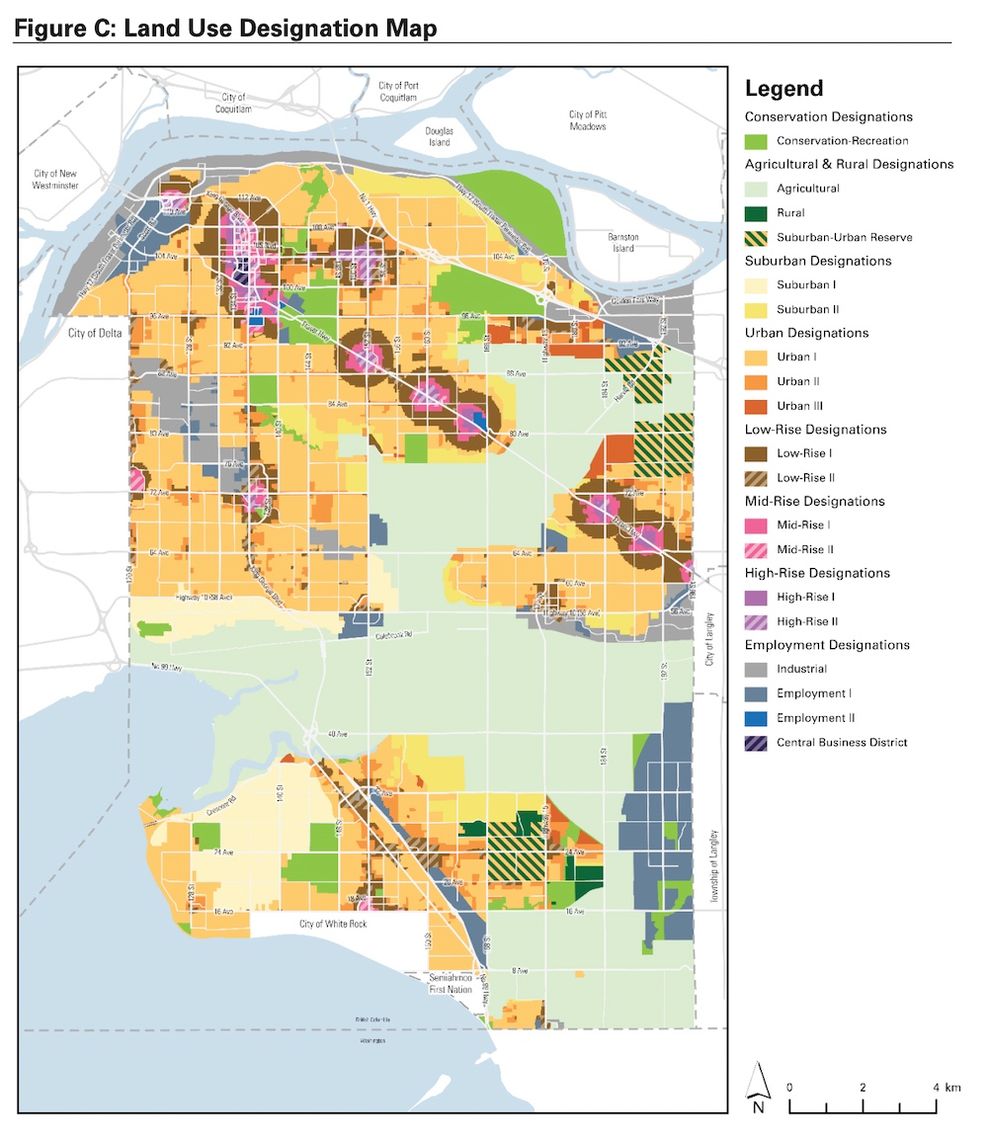
Surrey 2050, OCP. (City of Surrey)
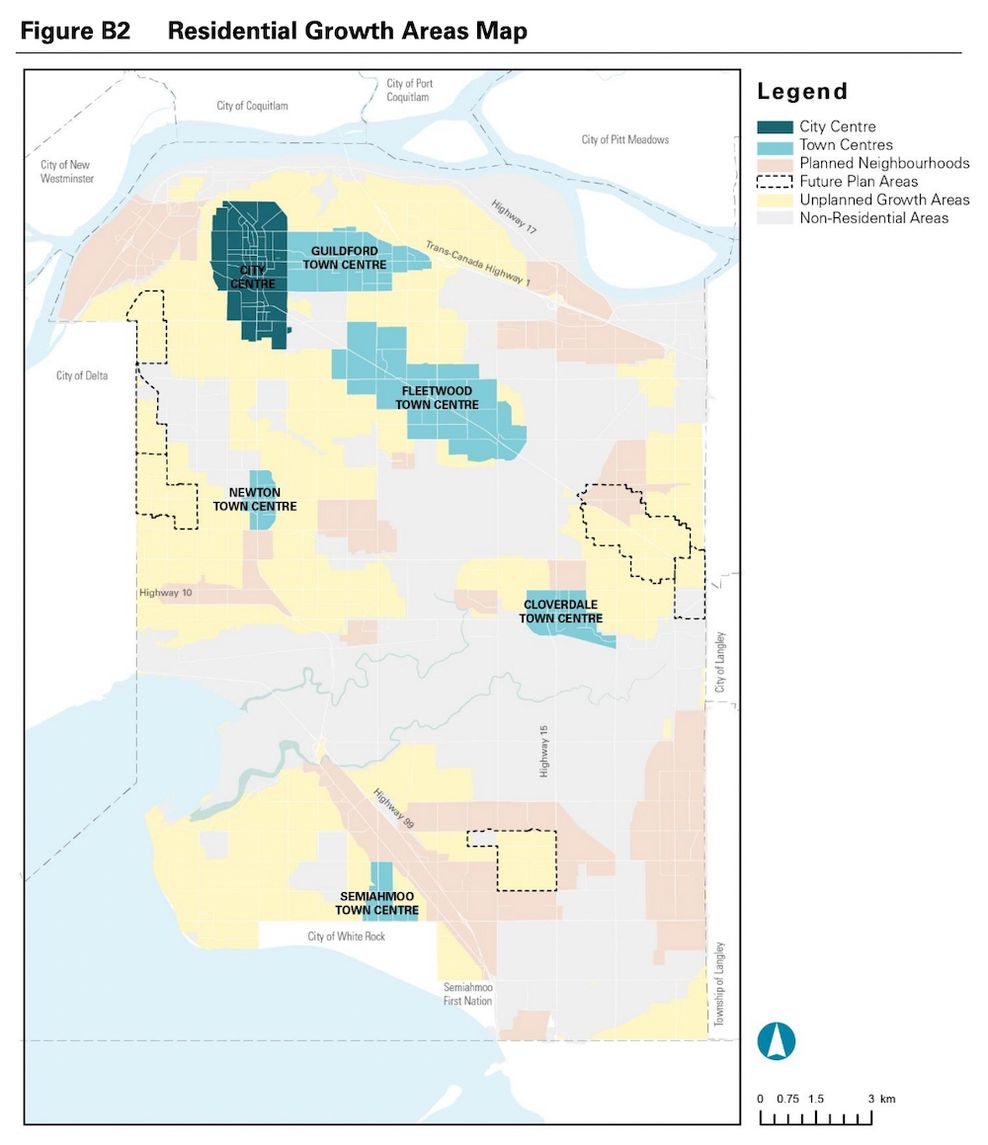
Surrey 2050, OCP. (City of Surrey)
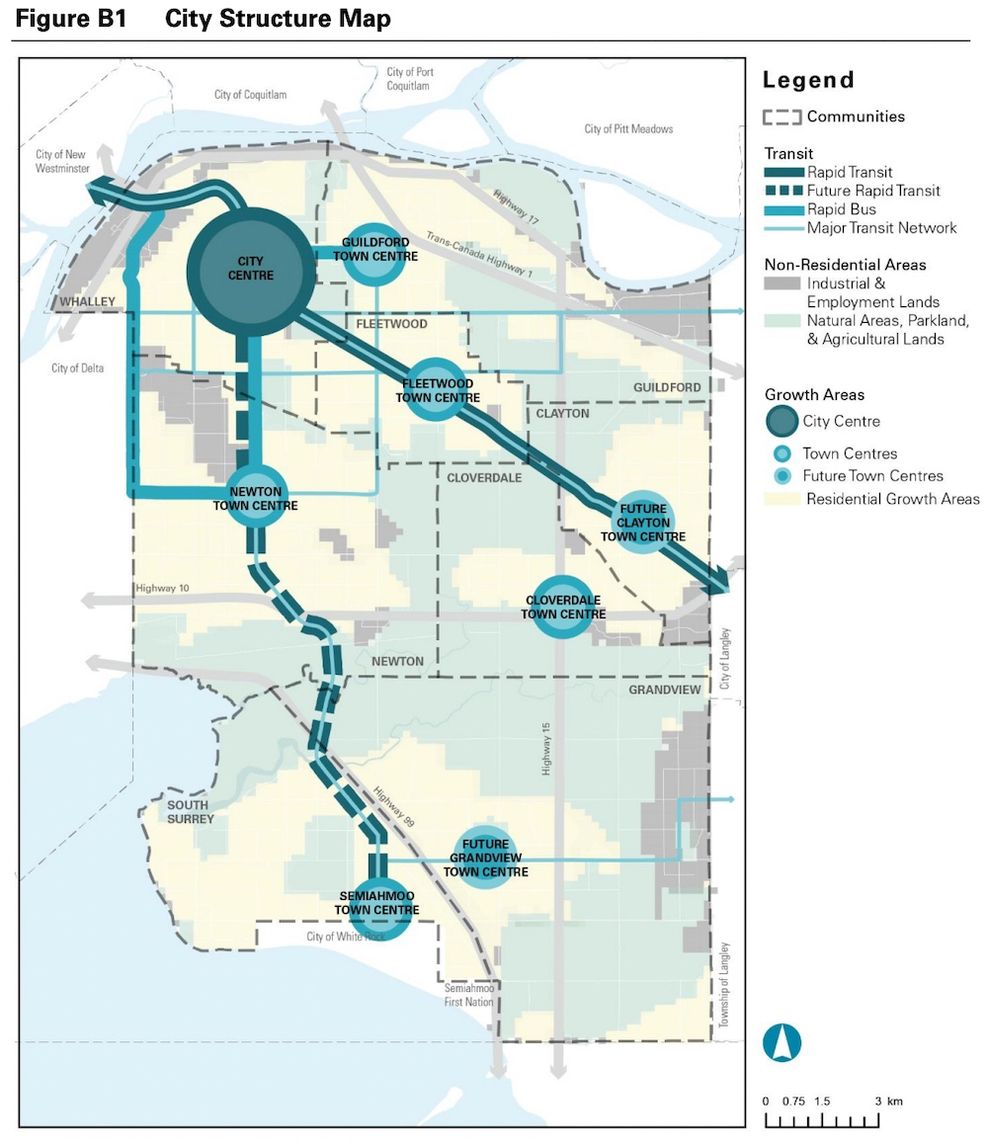
Surrey 2050, OCP. (City of Surrey)
Surrey 2050, OCP. (City of Surrey)
Surrey 2050, OCP. (City of Surrey)
The plan describes this as a “pivotal moment” for the city, highlighting opportunities to attract major employers, expand post-secondary institutions, and strengthen cultural and health-care infrastructure. This comes against a backdrop of longstanding concerns that new public investment — by both the municipal and provincial governments — in Surrey has fallen far short of adequately expanding purpose-built capacity for public schools and hospitals, as well as community and recreational facilities, utilities, and transportation infrastructure.
The overarching vision is to shape “a thriving, green, inclusive city for one million people,” guided by three core community values identified through previous public consultations: livability, affordability, and safety. From those values, the City has identified five priorities: housing for all, a thriving and diverse economy, a vibrant downtown, livable, equitable, connected neighbourhoods, and climate resilience and a healthy natural environment.
New and expanded policy areas address housing affordability, climate change, infrastructure capacity and economic pressures — all issues that have intensified since the last citywide plan was adopted.
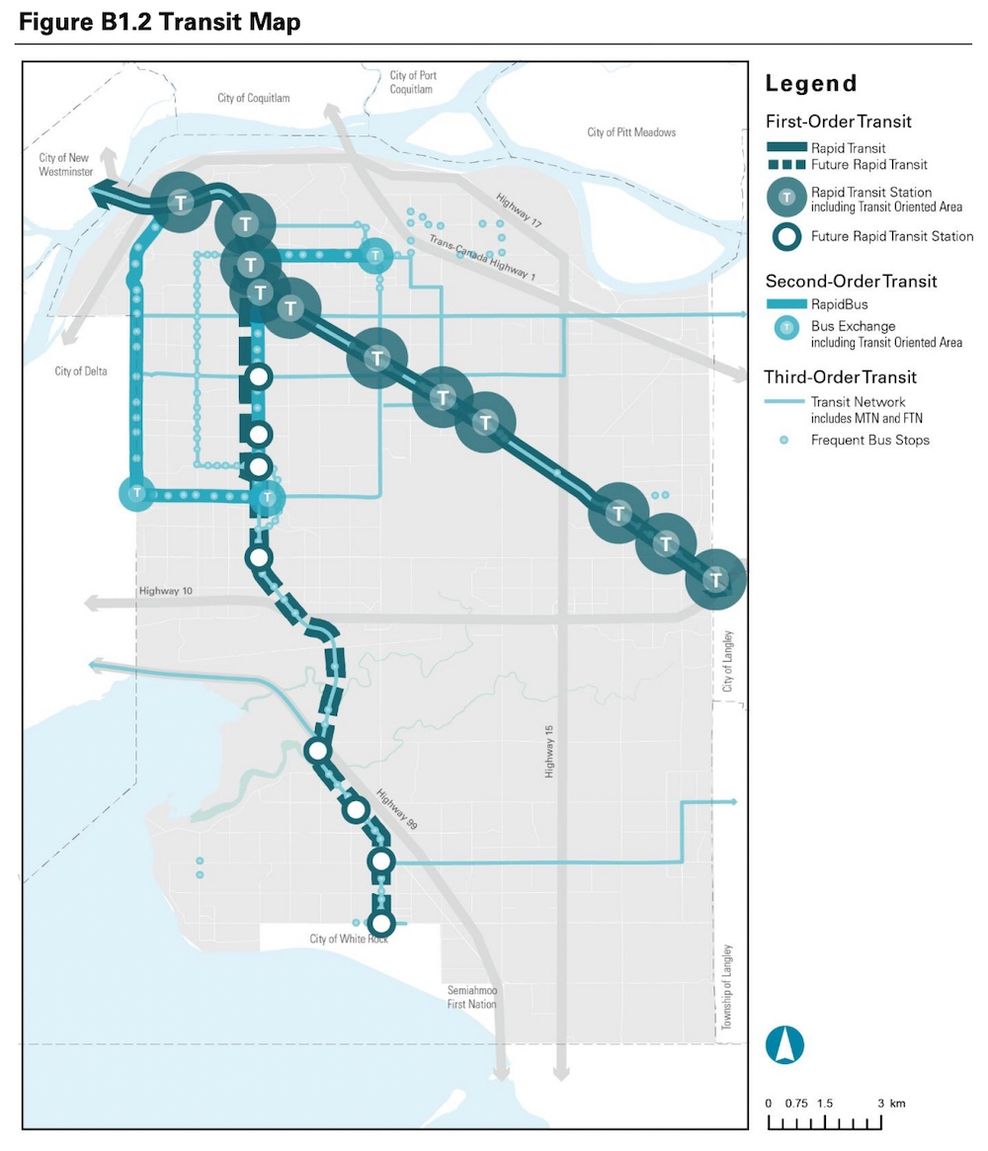
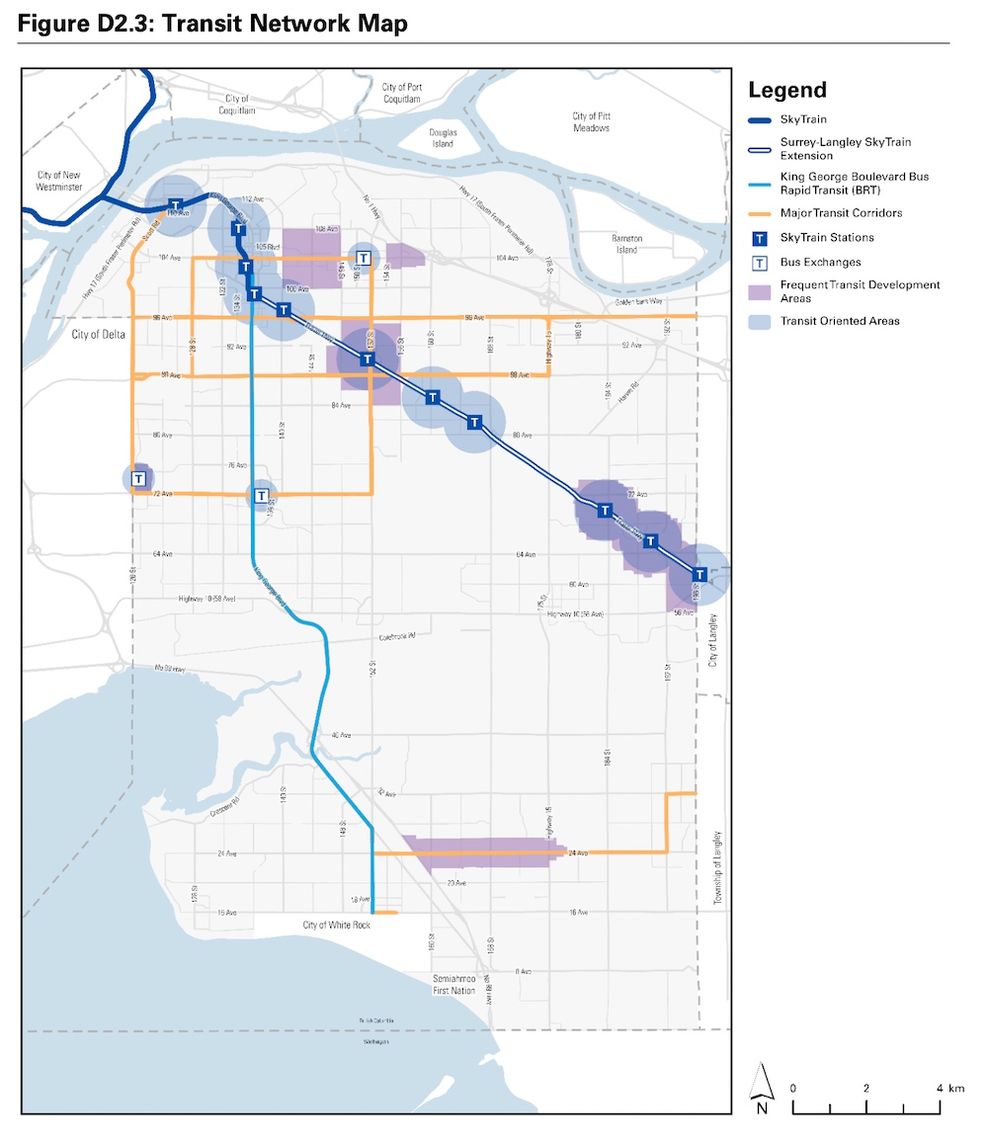
Generally, the greatest densities are located where they can be expected. The growth strategy outlined in the OCP focuses on concentrating residential and commercial uses near public transit, including areas within the City’s jurisdiction that are around seven new stations on SkyTrain’s Expo Line Surrey-Langley extension, opening in 2029. Areas near major bus public transit services will also see more density, such as the Scott Road-72 Avenue corridor served by TransLink’s R6 RapidBus service and the future King George Boulevard Bus Rapid Transit (BRT) line between Surrey City Centre and Semiahmoo Town Centre/White Rock Town Centre.
The plan emphasizes directing growth toward areas already served by SkyTrain and other major public transit, while planning for future public transit expansions. By focusing density near public transit hubs, the City aims to reduce Surrey’s traditional car dependence for getting around.
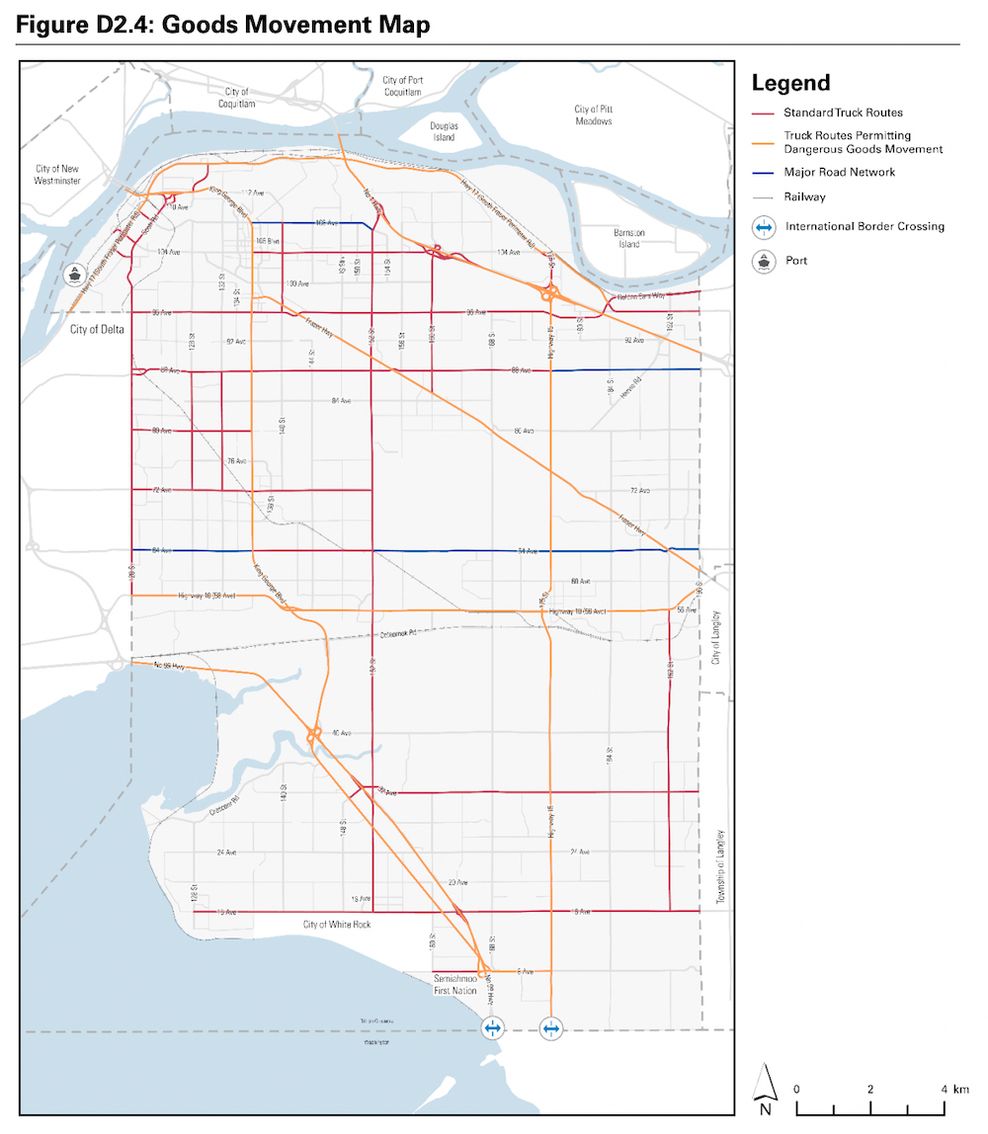
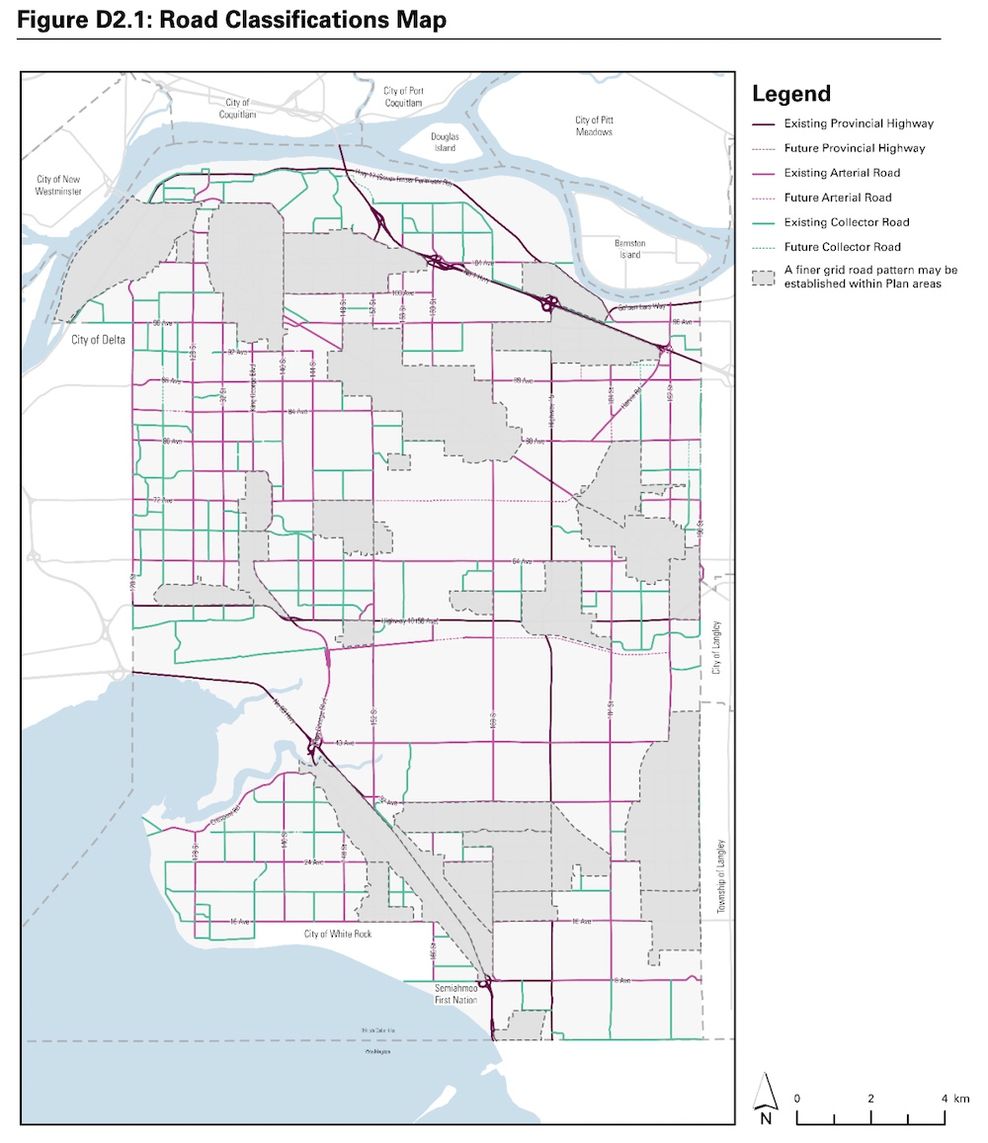
It also identifies potential future locations for new roads, bike routes/bike lanes, public schools, community and recreational centres, and parks.
Surrey 2050, OCP. (City of Surrey)
Surrey 2050, OCP. (City of Surrey)
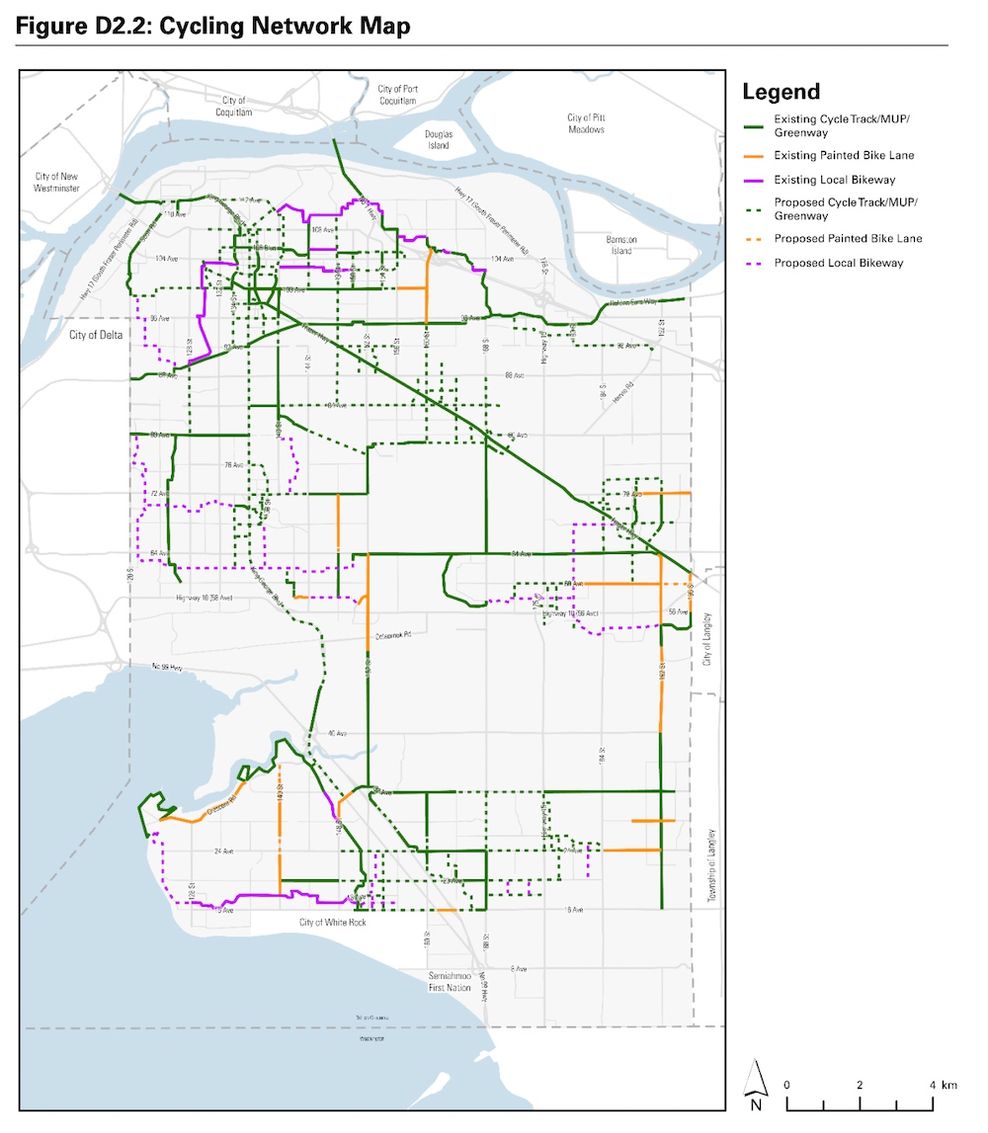
Surrey 2050, OCP. (City of Surrey)
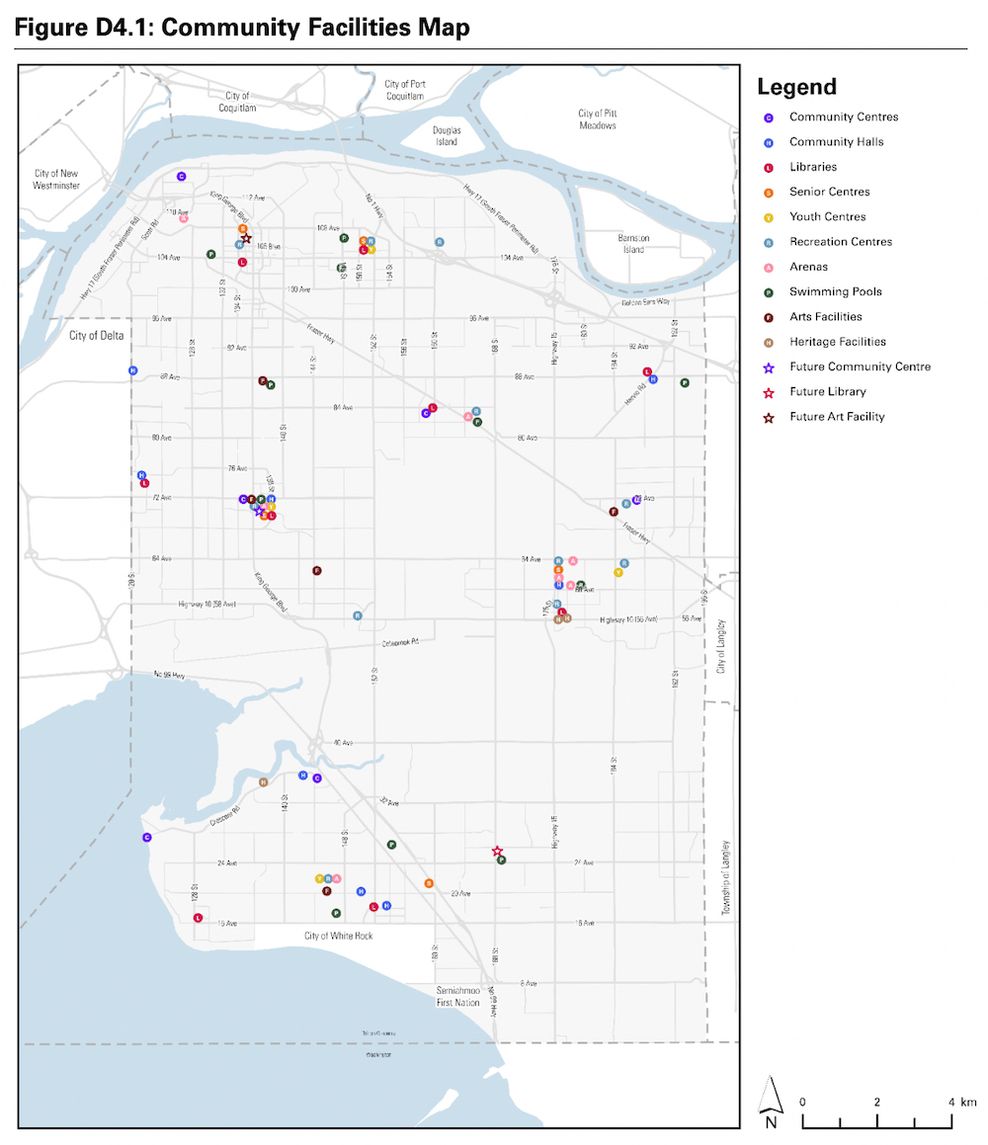
Surrey 2050, OCP. (City of Surrey)
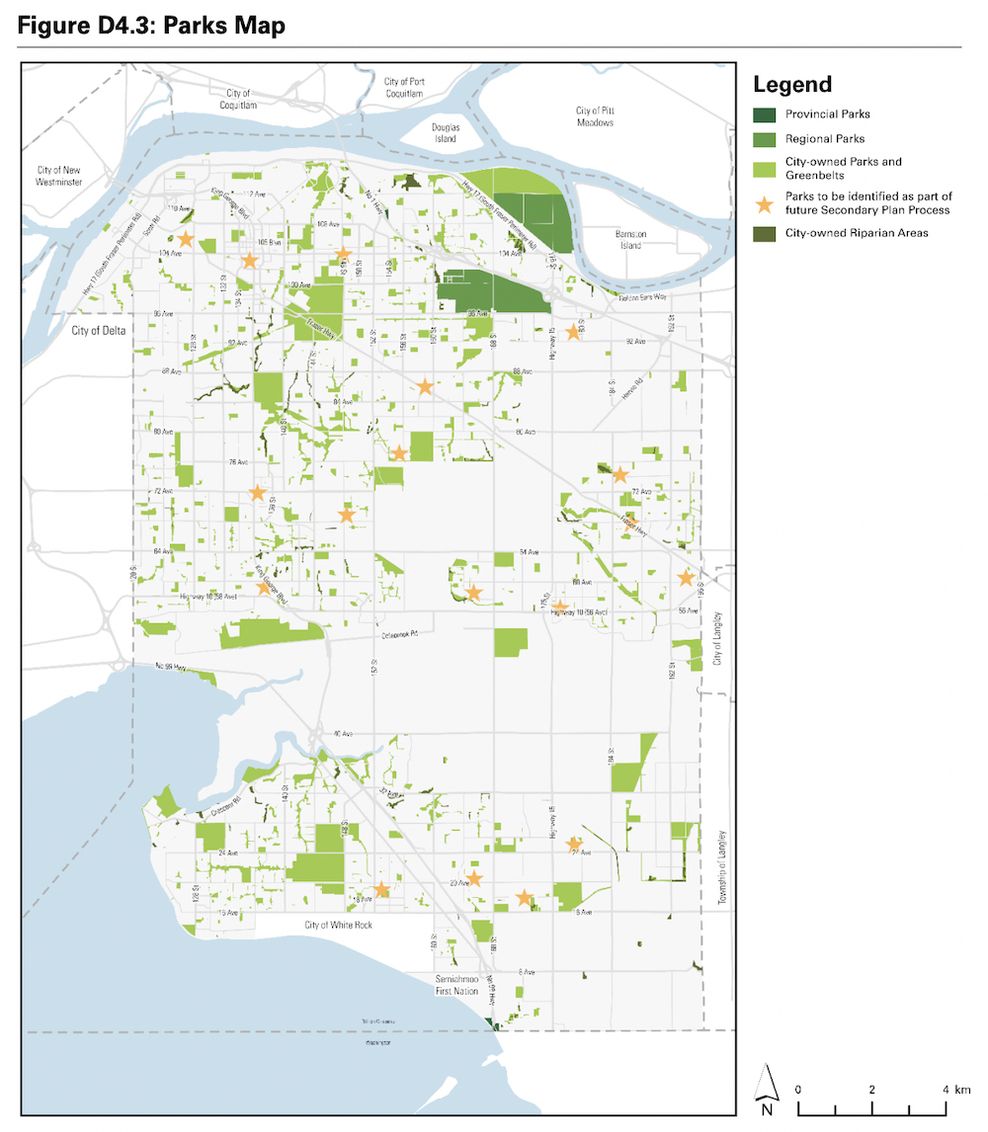
Surrey 2050, OCP. (City of Surrey)
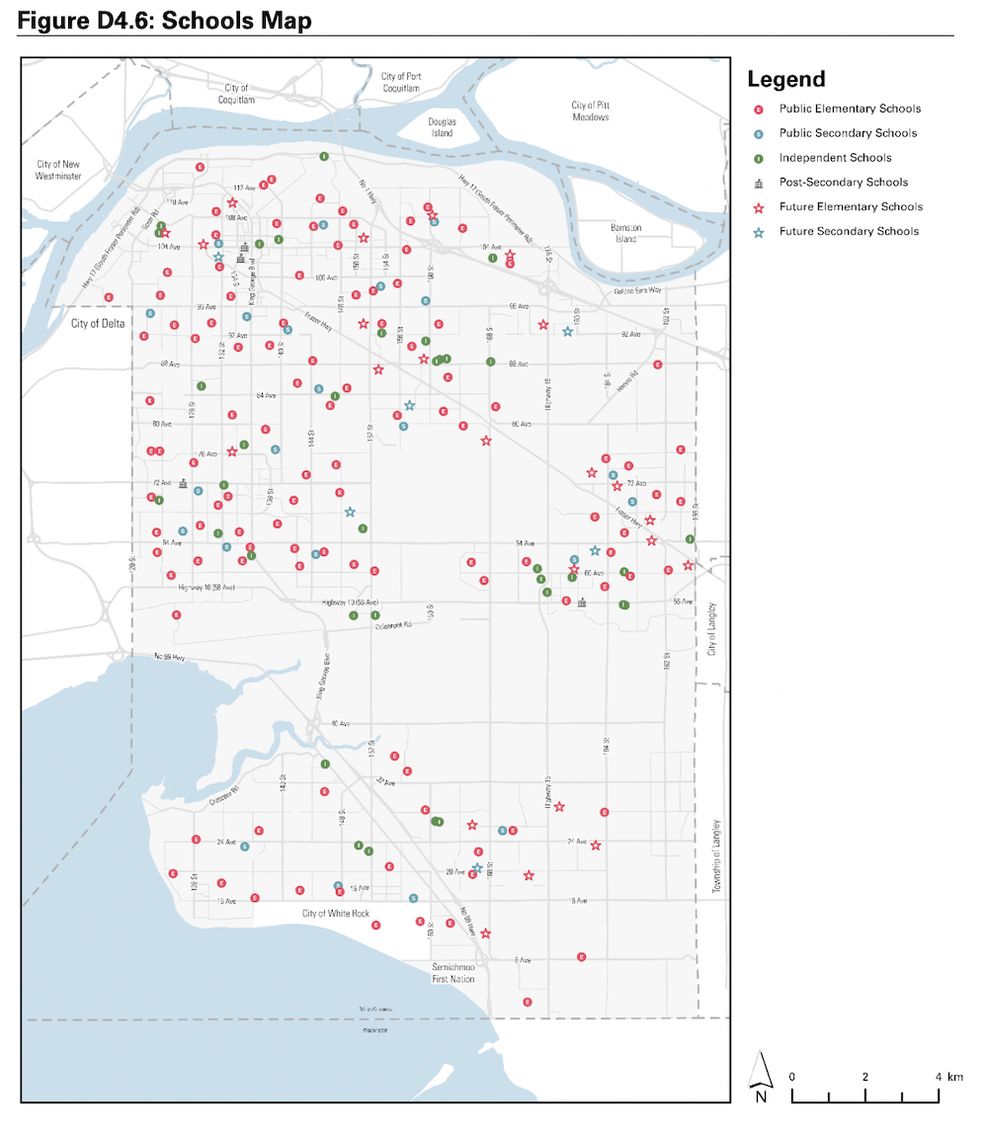
Surrey 2050, OCP. (City of Surrey)
The new OCP also takes into account recent area-specific plans, like the Fleetwood Plan, and strengthens town centres, intensifies employment lands, and protects natural areas and the Agricultural Land Reserve (ALR).
Surrey’s eight community hubs — including Surrey City Centre/Whalley, Guildford, Fleetwood, Newton, Cloverdale, Clayton, Grandview, and Semiahmoo — will continue to anchor planning decisions, where housing, amenities, and services are expected to be concentrated.
The plan reinforces Surrey City Centre as a regional downtown and Central Business District, while supporting urban-style office development in town centres and protecting industrial lands. Surrey currently holds the largest share of industrial land in Metro Vancouver, and the plan highlights its importance to the regional economy. At the same time, more than one-third of Surrey’s land base lies within the ALR.
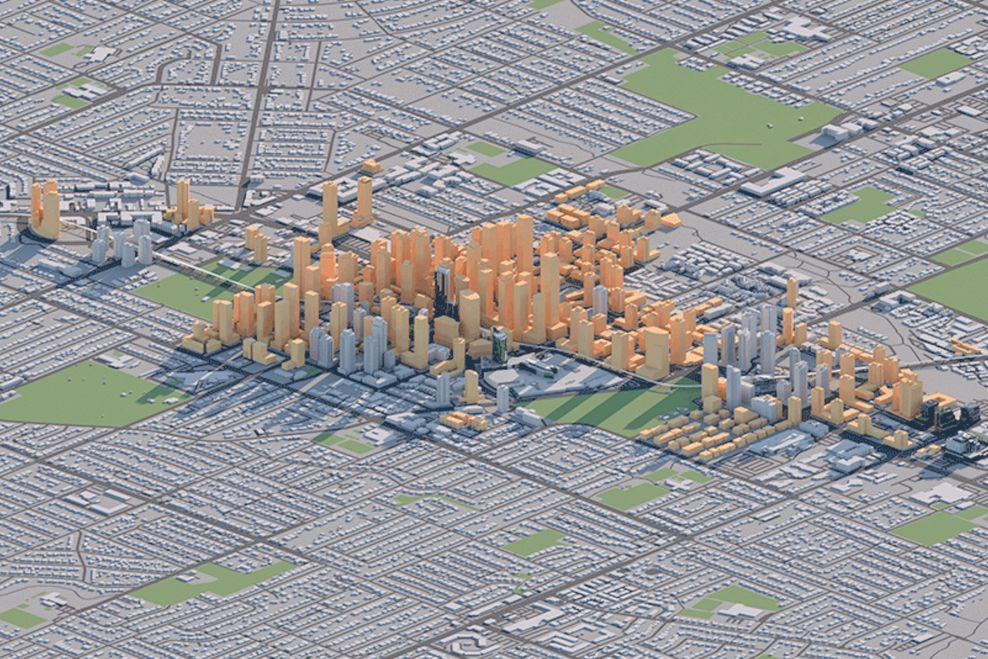
Long-term future skyline of Surrey City Centre. (Invest Surrey/Downtown Surrey BIA)