

Listen to this article
Estimated 3 minutes
The audio version of this article is generated by AI-based technology. Mispronunciations can occur. We are working with our partners to continually review and improve the results.
Formed by activists and politicians, Québec Solidaire was labelled a grassroots movement focused on social justice, feminism and the environment when it entered the province’s political arena in 2006.
It rejected formal leaders in favour of two co-spokespeople — one woman and one man. The party carried that progressive approach right into Quebec’s National Assembly, quickly gaining devoted followers and voters largely in the Montreal region.
But 20 years later and with an election now months away, that momentum has stalled.
In 2008, voters elected Amir Khadir as the party’s first member of the National Assembly. Today, he still remembers the excitement — it was if the party had won a majority, he told CBC News.
In 2012, the party added a second MNA, co-spokesperson Françoise David. In 2014, Manon Massé won a third seat.
Massé later became co-spokesperson alongside Gabriel Nadeau-Dubois, one of the faces of the 2012 student strike. He joined the party in 2017 and won a byelection in Gouin.
WATCH | Québec Solidaire faces uncertainty after 2 decades: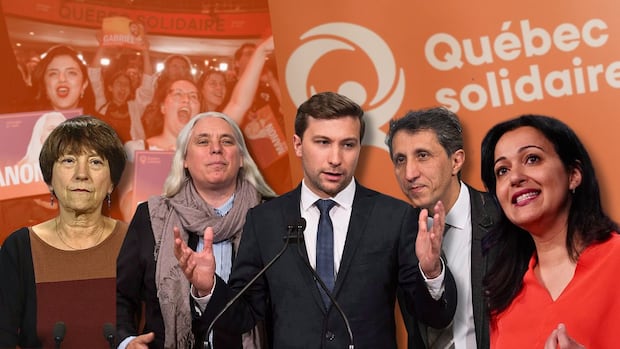
After 20 years, is Québec Solidaire still relevant in the province’s politics?
Two decades since its creation, Québec Solidaire has had several landmark moments. But the progressive party’s support seems to have stalled in recent years. Climate change worries fuel momentum
At the same time, the party benefited from rising concern about climate change.
“Almost 500,000 people gathered in the streets of Montreal to support the action of Greta Thunberg and environmental issues and climate change,” said Khadir.
Jean-François Daoust, a political science professor at the Université de Sherbrooke, said the party is perceived to be the party best able to handle environmental issues and said climate concerns contributed to the party’s rise in 2018.
In the 2018 election, the party expanded its base in Montreal and Quebec City, winning 10 seats and becoming the third-largest party in the legislature.
In 2022, the party won 11 seats and finished second in the popular vote, but now Québec Solidaire is facing a new reality.
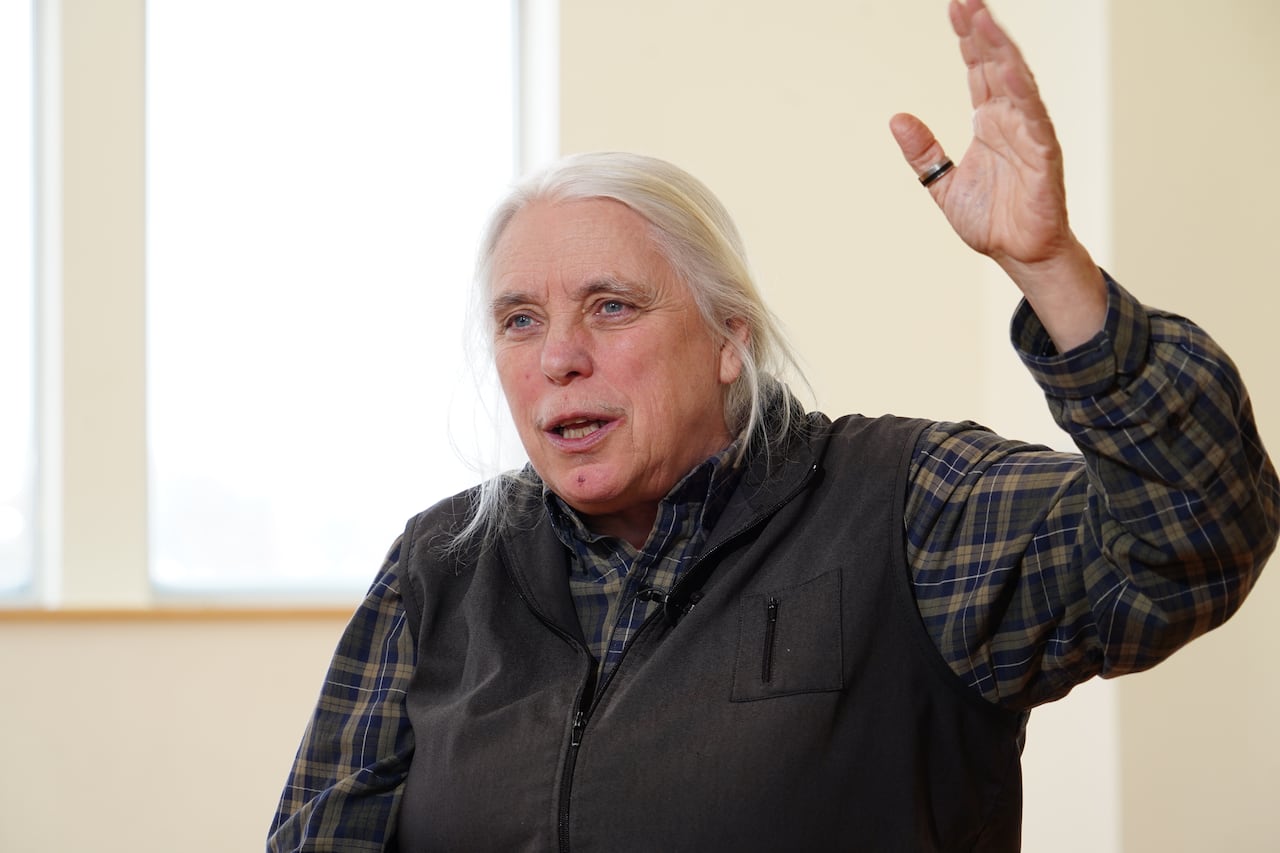 Longtime MNA and former co-spokesperson Manon Massé urges supporters to keep fighting, insisting the party’s vision for Quebec is still viable. (Charles Contant/CBC)Ruba Ghazal looks ahead
Early 2026 polls suggest the party would win only a handful of seats if an election were held today.
Ruba Ghazal, Québec Solidaire’s current co-spokesperson, admits there are challenges ahead.
“We always had challenges in 2006, in 2016 and also today,” she said, saying that’s par for the course as a left-wing party.
Ghazal said the party’s values and convictions “are more important than ever today.” To that, Khadir adds the party is more relevant than ever because of the rising ultra-right movement.
Massé said the upcoming election won’t be easy, but it is not time for the party to drop its guard.
“We can do it,” she said. “We have to choose it and that’s why I’m fine. I’m still fighting with Québec Solidaire.”