
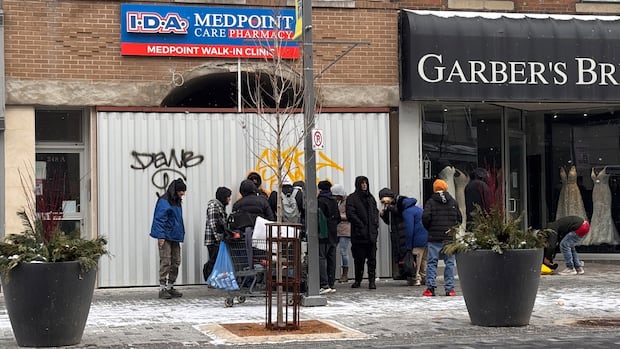
A London city councillor is calling on Ontario regulators to take a look at the operations of New Dawn Medical, an addictions clinic that’s partnered with five pharmacies in the city to distribute medication, including pharmaceutical opiates, to patients with addictions.
In a letter to Ontario’s College of Physicians and Surgeons and its College of Pharmacists on Thursday, Coun. David Ferreira is calling for a “regulatory review” of New Dawn Medical, which has dozens of locations across Ontario.
Ferreira said the pharmacies affiliated with New Dawn Medical, in particular the Medpoint Care Pharmacy at 248 Dundas St., have become problem spots triggering regular complaints to his office about problems such as open drug use, property damage, sanitation issues and safety concerns.
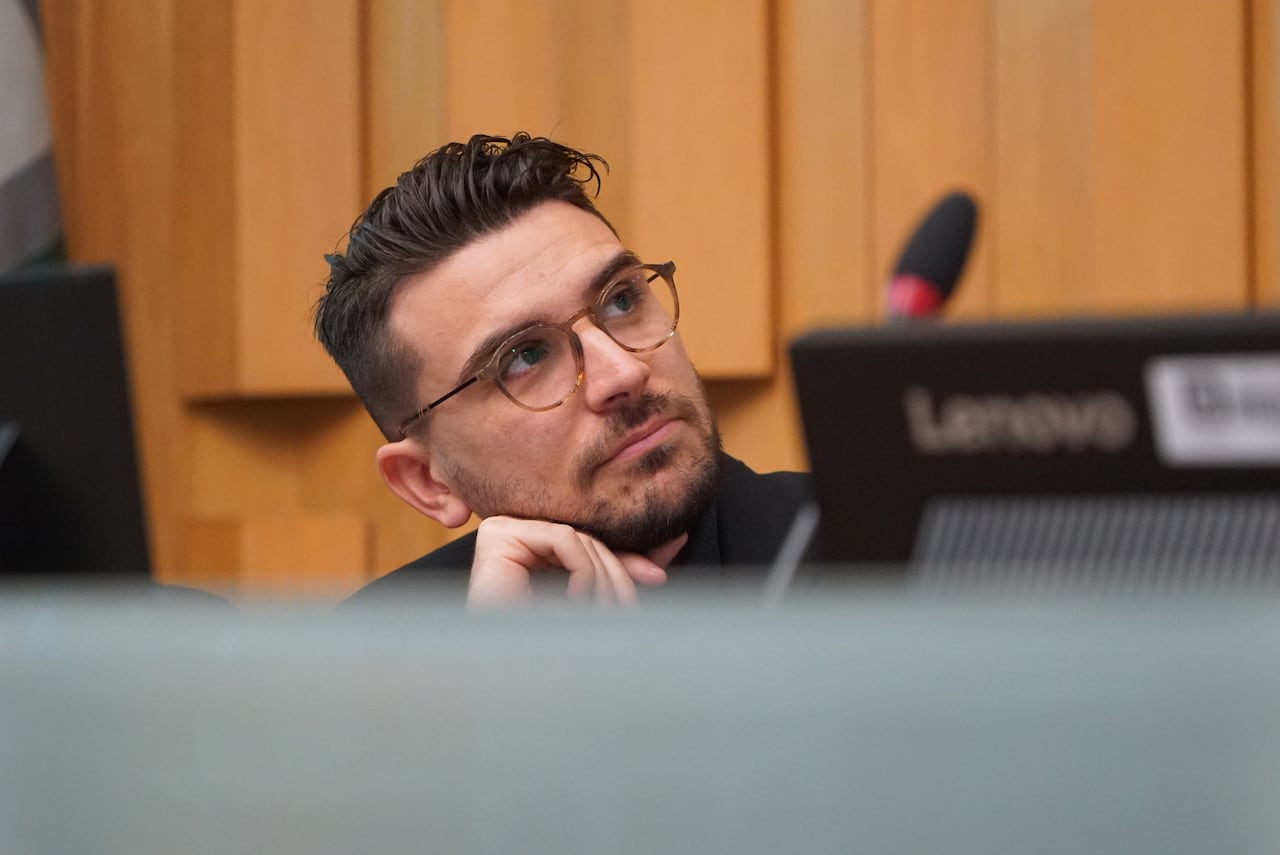 David Ferreira is calling for provincial regulators to look at the operations of clinics and pharmacies that regularly dispense medication to treat addiction. He said many use a high-volume model with a focus on dispensing rather than providing aftercare. (Colin Butler/CBC News)
Ferreira said the pharmacies use a for-profit “variety store” business model, with a focus on “volume, speed, and prescribing activity over continuity, integrated supports, and long-term stabilization.”
He said patients often receive prescriptions after virtual “appointments” in which doctors connect with them via video link inside the pharmacy. He said more supports are needed beyond simply prescribing and dispensing.
“These clinics and pharmacies don’t provide the proper aftercare that’s required to support this high-risk, vulnerable population,” said Ferreira. “These patients are prescribed opioids but they leave the clinic without a clear supportive path. The gap in care doesn’t just affect them, it spills over into the neighbourhood.”
Ferreira said he supports the safe supply approach to addiction treatment. Under that model, patients receive doctors’ prescriptions for pharmaceutical-grade drugs, such as hydromorphone and methadone. It’s an approach designed to help patients avoid the often toxic street supply of illegal opiates, including fentanyl. The synthetic opioid is a driver of fatal overdoses in an ongoing opioid crisis that is linked to 2,200 deaths in Ontario last year alone.
Medpoint Care Pharmacy moved to Dundas Street, directly across from the Central Library’s main entrance, after its tenancy inside Citi Plaza ended, in part due to security problems.
In a statement to CBC News, Downtown London interim executive director Vicki Smith said Medpoint Care Pharmacy is “negatively impacting nearby businesses” and reducing the sense of safety among “customers, employees and neighbouring businesses.”
“Our members are approaching this with compassion, recognizing the complexities connected to services such as these pharmacies and the role they play in the community,” said Smith, who added that Downtown London is working with London police and city officials to address the issues.
New Dawn clinics are affiliated with dozens of pharmacies across the province. The company has a focus on helping patients with opioid addiction and chronic pain. The five Dundas pharmacy locations are listed on New Dawn’s website. However, in a statement to CBC News, a spokesperson said New Dawn clinics operate as separate “independent operations” inside the pharmacies in which they’re located.
How the pharmacies work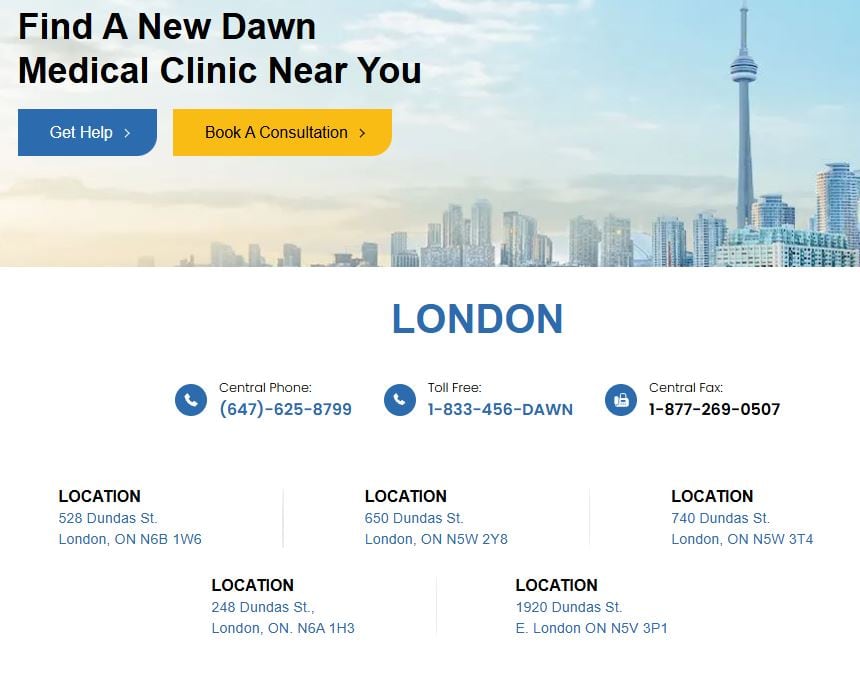 A page on New Dawn Medical’s website shows five partner pharmacies in London, each located on Dundas Street. (New Dawn Medical)
Dr. Warda Farooq, who works with New Dawn, told CBC News that patients aren’t simply issued prescriptions automatically, but take part in a rigorous, monitored program to carefully treat their addiction. She said patients are assessed and must provide regular urine tests to confirm they’re taking the medications as prescribed.
“We don’t want them using fentanyl, and this is a way to manage their addiction.”
Farooq said some of the appointments are virtual because the patient group doesn’t do well with set appointment dates. She said typically patients are required to take some of the medication in front of staff before leaving with the rest of the medication. Many have to come back to the clinic every day.
“That’s why they’re going to be there every morning, because it’s a daily witness, daily dispense program,” she said. “Our pharmacists are witnessing these patients taking their medication by mouth, and then they’re dispensed the rest of that day’s prescription.”
What the pharmacists say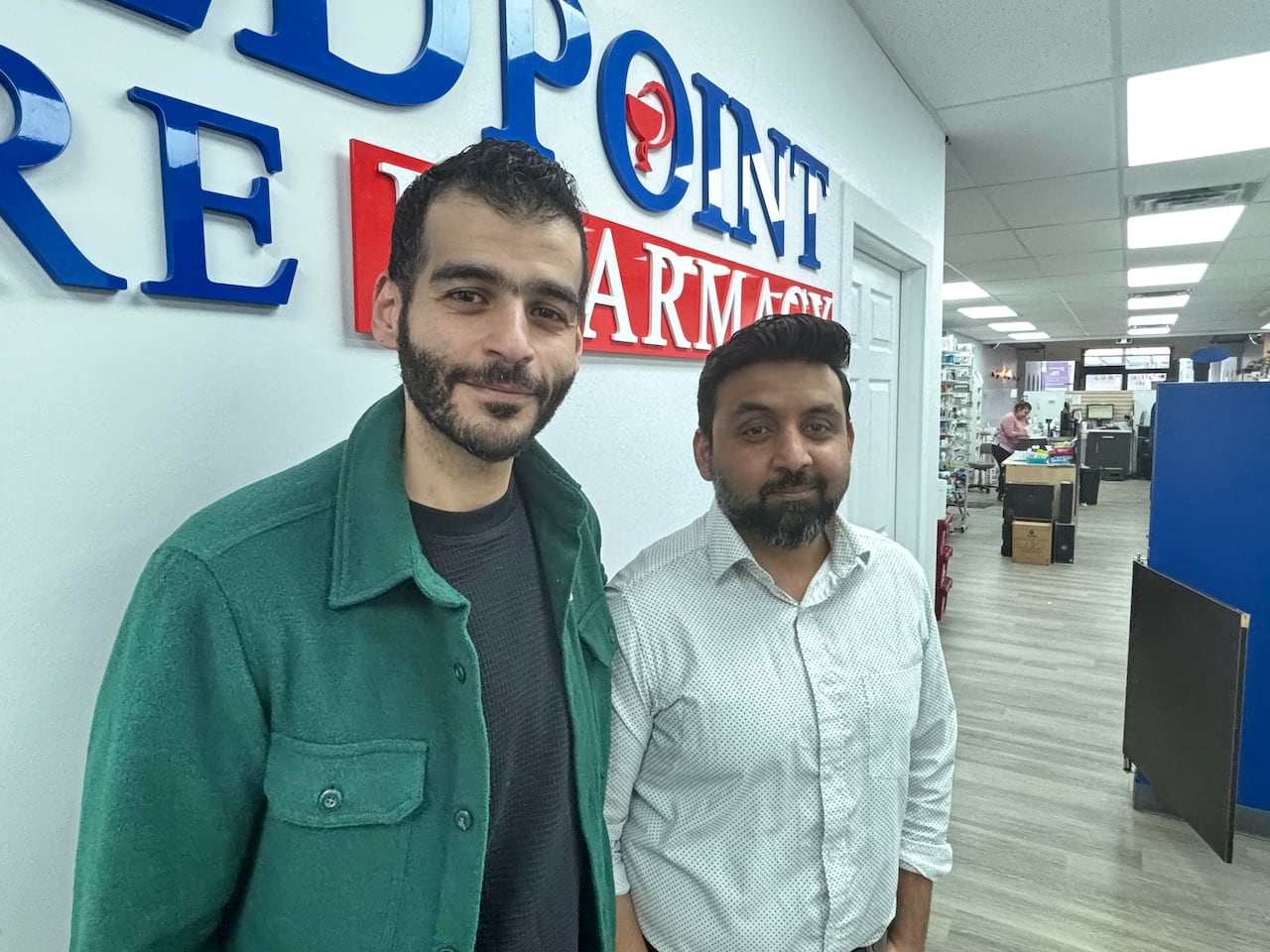 The pharmacists who co-own Medpoint Care Pharmacy on Dundas Street: Nauman Shaikh, right, and Karim Ragheb. Both say they’re providing an essential health care service to a drug-using population in London’s downtown. (Andrew Lupton/CBC news)
Pharmacists Nauman Shaikh and Karim Ragheb own Medpoint Care Pharmacy together, and describe it as a full-service pharmacy with a dedicated space inside for New Dawn to operate. They estimate patients with addiction represent about 10 per cent of their dispensing business. The Dundas Street location also operates as a walk-in clinic with doctors on site, helping patients with a full range of medical conditions.
Ragheb sees the pharmacy as part of the solution to London’s challenges with drug use in the downtown core.
“If we can get them on a program that gets them off of addiction, then we are doing a small part of what we need to do to get downtown London back to its glory days,” he said. “The problem was here before; it’s not just a Dundas and Clarence problem. Having proper health care is part of the solution.”
LISTEN | Is Dundas Place the right place for a safe supply pharmacy?:
London Morning7:17Is a downtown pharmacy feeding the city’s street drug trade?
Complaints are mounting about a pharmacy that dispenses opiates in downtown London. The CBC’s Andrew Lupton looked into the issue and told London Morning what is driving it and what is being done to curb it.
Ragheb and Shaikh said they often see their clients get better and eventually taper off using opioids. As for the problem of diversion — when dispensed drugs are resold — the pair say they regularly patrol outside the store and report any misuse of the medication to New Dawn. Clients who don’t use the medication as prescribed are quickly removed from the program, said Ragheb.
Both Ragheb and Shaikh said Ferreira is welcome to talk to them about their business. Also, both say they agree with him that current levels of support for London’s drug-using population fall short of the need.
Ferreira hopes his letter will spark a discussion about creating a new model of care and support for Londoners with opioid addiction. He admits it may be the case that New Dawn and the pharmacies where they’re located are operating in compliance with provincial rules.
However, he said “clustering” the clinics in five different pharmacies, all on Dundas Street, is a problem.
“It’s a model not incentivized to provide long-term stabilization and treatment and recovery. We’re not really seeing any improvements.”
Ferreira isn’t the first Ontario politician to flag New Dawn’s business model as problematic.
In Ottawa, a local MPP and city councillor called for a similar review in December, saying a New Dawn clinic there is sowing “chaos” in the city’s Chinatown neighbourhood.
Coun. Ferreira’s letter: