
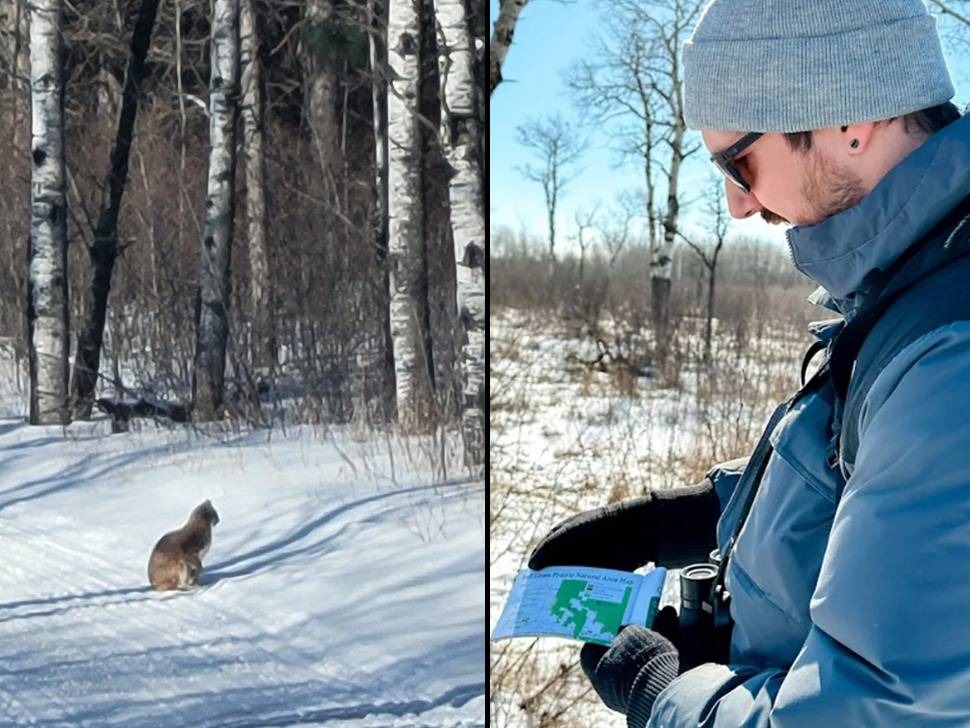
A recent lynx sighting in southeastern Manitoba is a reminder that wild cats continue to live quietly across the region, even if most residents never see them.
Nature interpreter Norm Gregoire with Shared Legacy says he recently encountered one of the elusive animals in Sandilands Provincial Forest, a rare experience despite decades spent outdoors studying wildlife.
“And I’ve only ever seen five lynx in my entire life,” he said.
Gregoire spotted the animal just days before speaking publicly about Manitoba’s wild cats, underscoring how uncommon sightings remain even for experienced naturalists.
Wild cats at home in Manitoba
Wild cats are often associated with distant wilderness or tropical environments, but Manitoba is home to several species, including lynx, bobcat and cougar. All three can be found within the province, and southeastern Manitoba sits in a unique overlap zone where multiple species may pass through the same landscapes.
Related Stories:
“We don’t think about them in Manitoba so much because we just don’t see them, right? We don’t see the cats that we have here,” Gregoire said.
Across the tallgrass prairie and surrounding forests, suitable habitat exists wherever there are wooded areas, prey animals and limited human activity. While residents may rarely encounter the animals themselves, signs of their presence can sometimes be found by those who know what to look for.
Lynx most common but rarely seen
Gregoire says lynx are likely the most common wildcat in southeastern Manitoba, particularly in wooded areas connected to the tallgrass prairie ecosystem. Even so, sightings remain rare.
Lynx prefer forested habitat where their primary prey, the snowshoe hare, is abundant. The two species are closely connected through population cycles that rise and fall together.
“For any sort of naturalist that looks up a little bit about lynx or even snowshoe hares in general, they’ll find that these two species are really connected,” he said.
He explains that lynx and snowshoe hare populations follow a boom-and-bust cycle lasting roughly seven to eleven years. When hare populations decline due to disease or environmental changes, lynx expand their hunting territory and may move into more open areas searching for food.
In some regions, snowshoe hares can make up more than 90 per cent of a lynx’s diet, though the animals will also hunt birds and smaller mammals when necessary.
Bobcats share the region
Bobcats also inhabit southeastern Manitoba but are harder to identify without a clear view. Gregoire says the species’ geographic range provides an important clue.
Generally, lynx are more common farther north in boreal forest regions, while bobcats are associated with areas closer to the Canada-U.S. border. Southeastern Manitoba lies within a transition zone where both species can occur.
Tracks can also create confusion. Lynx have large, snowshoe-like paws that leave prints similar in size to wolf tracks. Unlike wolves, however, cats retract their claws, meaning claw marks are usually absent in tracks left in snow or mud.
Understanding wildcat behaviour
Despite their presence, wildcats rarely interact with people and typically avoid human contact.
“When they see you, if they let you see them, they’re just going to go their own way,” Gregoire said.
Lynx and bobcats usually weigh between 30 and 40 pounds and are not considered a significant danger to humans.
Related Stories:
Cougars, also known as mountain lions or pumas, are much larger animals. Adult males can exceed 200 pounds, though attacks across North America remain extremely rare.
Gregoire says people who encounter a cougar should avoid running, stand their ground and make themselves appear larger while maintaining eye contact.
“These attacks… are few and far between,” he said.
Cougar sightings increasing
Reports of cougars in southeastern Manitoba appear to be increasing, something Gregoire attributes partly to the growing use of trail cameras by hunters and wildlife enthusiasts.
Currently, provincial officials do not recognize cougars as an established breeding species in Manitoba because there is no confirmed evidence of kittens being raised in the province.
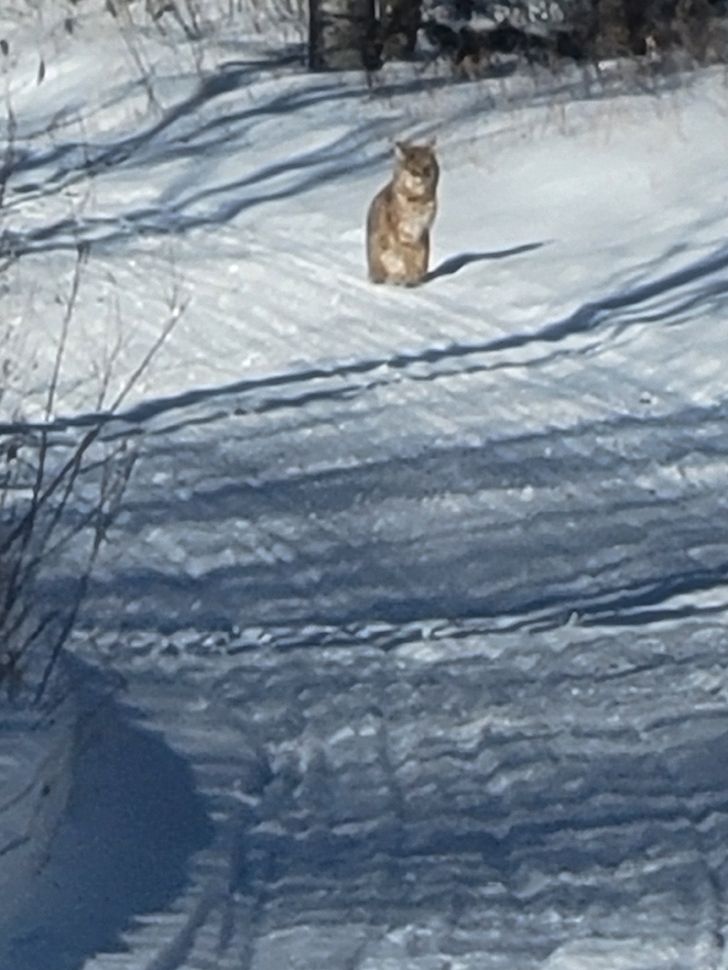 A lynx is spotted in Sandilands Provincial Forest in February 2026. (Photo Credit: Norm Gregoire)
So technically, the mountain lion’s range doesn’t exist in Manitoba, he said, noting confirmation of a breeding population may simply require more documented evidence.
Unlike lynx, cougars are highly adaptable and can survive in forests, grasslands, deserts and mountainous regions, allowing the species to expand into new territories over time.
Learning more about Manitoba’s wild cats
Gregoire will share more about lynx, bobcats and cougars during an upcoming Adventures with Nature Norm event this Saturday at the Weston Family Interpretive Centre in the Tallgrass Prairie Preserve near Stuartburn. Participants will explore outdoor trails, conditions permitting, before moving indoors for a presentation about the wild cats that share the region’s landscape.
“We’ll try to spend some time out on the trail learning a little bit about the life cycles of these cats,” he said.

-Written with files from Carly Koop.