
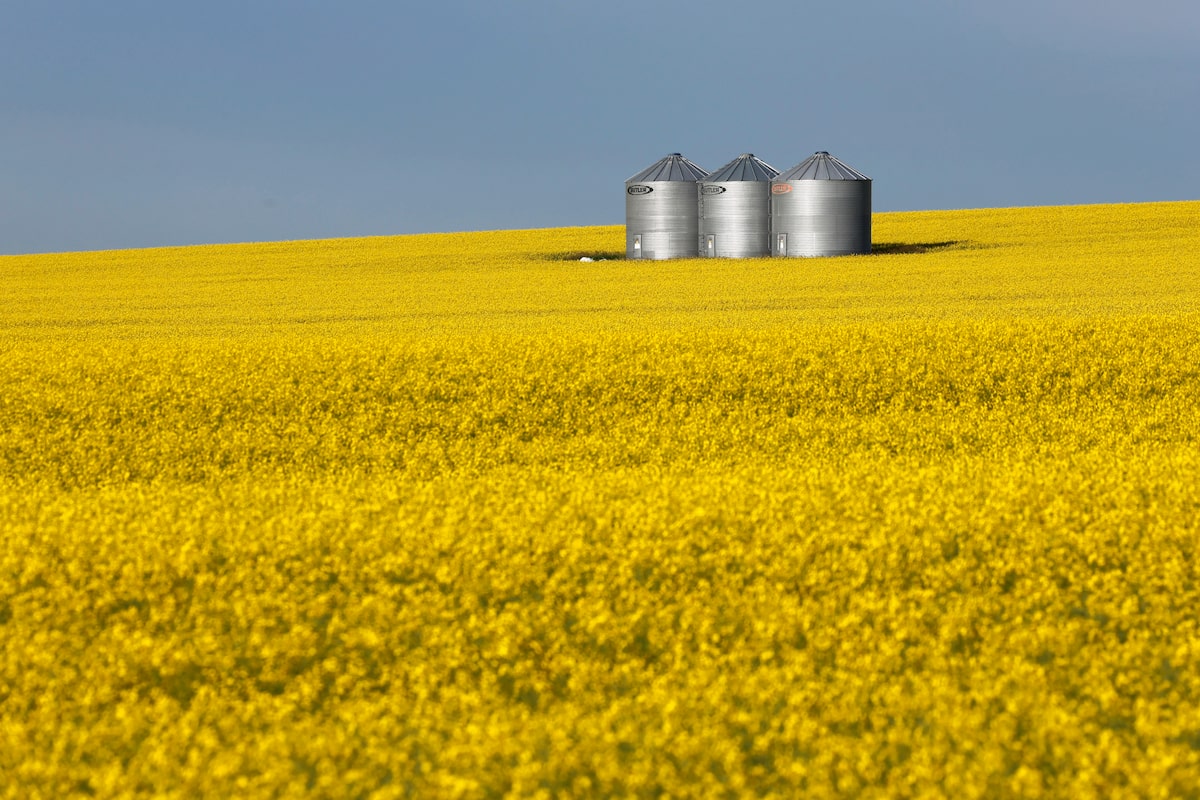
China’s Finance Ministry said Friday it would suspend tariffs on canola meal, peas, lobster and crab imports from March 1, but made no mention of canola seed tariffs.LARRY MACDOUGAL/The Canadian Press
Thousands of tonnes of canola seed are heading from Canada to China in anticipation of Beijing lifting its duties Sunday, but an announcement from China about reductions on other agricultural tariffs on Friday did not mention the key export.
A statement from China’s Finance Ministry said it would suspend tariffs on canola meal, peas, lobster and crab imports from March 1 to the end of 2026. The announcement marked an official break to a trade spat that had begun in the spring of 2025.
The news of a tariff reprieve on agricultural products came first in mid-January, announced by Prime Minister Mark Carney and a result of his trade mission to the Asian state.
But Beijing’s announcement did not mention the highest-stake part of this negotiation: a 75.8-per-cent tariff on canola seed announced in August would be reduced to 15 per cent. The Chinese market for canola seed is worth $4-billion.
Food producers greet Chinese tariff reductions with a cautious welcome
However, exports are nonetheless surging ahead even without an official announcement from Beijing.
China’s duties on canola had significantly curtailed exports heading into 2026. Total exports from before Mr. Carney’s announcement were around two million tonnes less between August and mid-January than they were for the same period in 2024/2025, despite the most recent harvest being much larger.
But, according to weekly data published by the Canadian Grains Commission, canola shipments finally matched levels from the previous year in the Jan. 12-18 week. Mr. Carney’s announcement of the deal with Beijing came Jan. 16.
In the last two weeks of February, these shipments far surpassed shipments for the same time period in 2025. It takes approximately 20 to 21 days for a Panamax-sized vessel to cross the Pacific Ocean from the Port of Vancouver and arrive in ports in China. The most recent − and most drastic − spike is therefore “clearly a flowing to China,” said Marlene Boersch, a former grain trader and co-founder of Mercantile Consulting Venture.
“I’d be absolutely astonished if they shut it off now,” Ms. Boersch said. “From a market point of view it just doesn’t make sense.”
But timing is important when it comes to supply chains, and exporters are anxiously awaiting an official announcement from Beijing.
While no news from Beijing on seed is “stirring some uncertainty,” a delay in the announcement from Beijing makes sense, said Kevin Price, senior export merchant at Parrish & Heimbecker.
What to know about the Canada-China tariff deal on EVs and canola
China’s tariffs on agricultural products were separate. Beijing announced 100-per-cent tariffs on canola oil and meal alongside other agricultural commodities in March as a direct retaliation for Ottawa’s 100-per-cent tariffs on Chinese-made electric vehicles, a move made at the behest of the Biden administration in the United States in 2024.
The August duties on canola seed were tied to an anti-dumping investigation and, while Beijing would later explicitly tie its seed duties to Ottawa’s EV tariffs – the two policies fall under separate agreements.
Canadian officials are expecting China to lower its duties by March 1 as “these commitments are on track as officials work on implementation details,” said Erin Quevillon, press secretary to Minister of International Trade Maninder Sidhu, in a statement.
However, any remaining uncertainty is costly for supply chains, said Darryl Markle, vice-president of terminals and global execution at Parrish and Heimbecker.
For example, a shipper is given a certain number of days to unload. After that they will incur penalty rates of around US$20,000 to US$22,000 a day.
“We are allegedly on track,” Mr. Markle said. “No diversions yet and we hope everything is resolved and moving tomorrow.”