
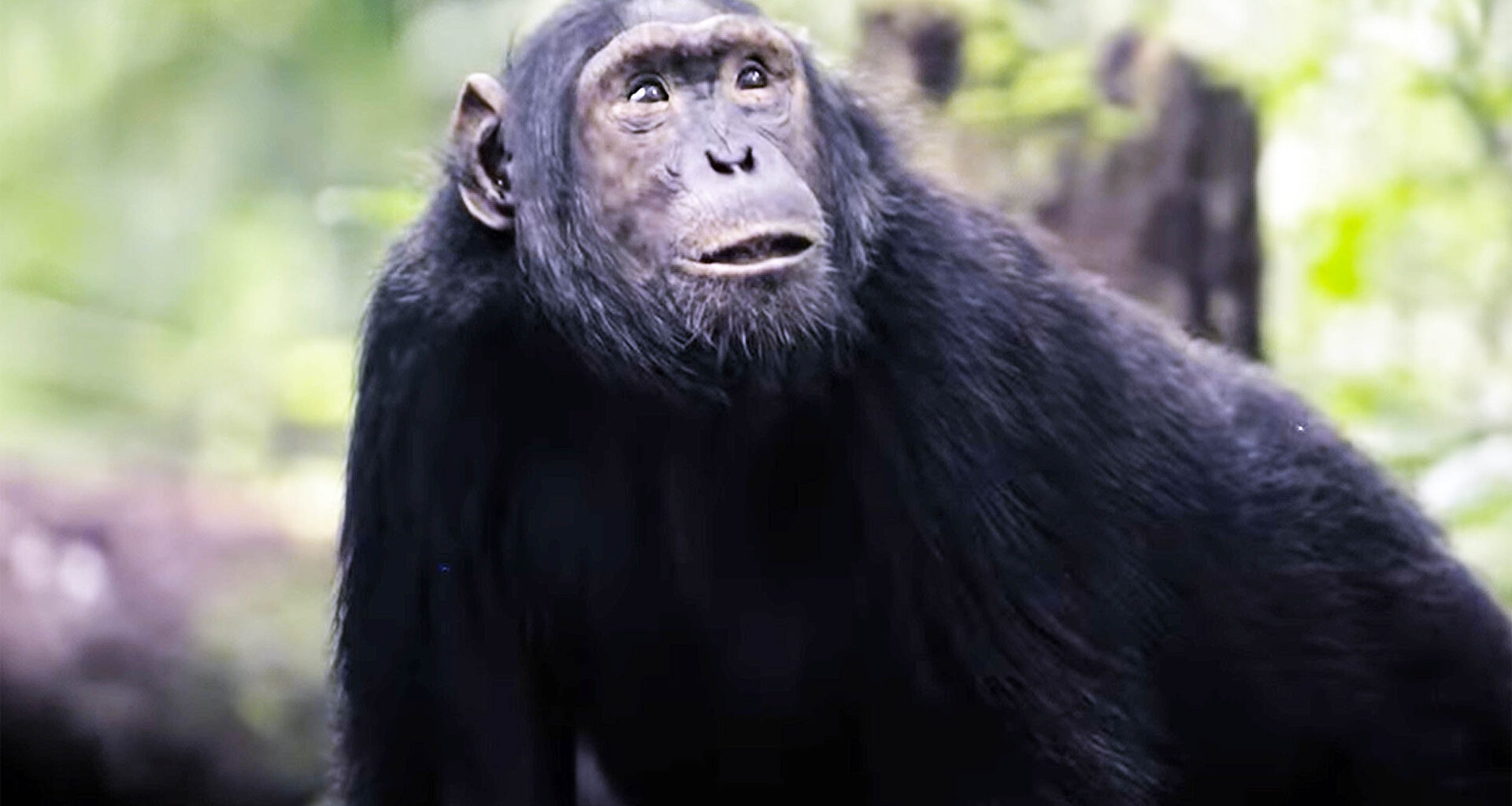
Deep inside Uganda’s rainforest, scientists have found strong evidence that wild chimpanzees can really get a buzz from fruit.
A team from UC Berkeley traveled to Uganda to Uganda to find out whether chimpanzees consume enough naturally fermented fruit to take in meaningful amounts of alcohol. The answer came from an unusual source: chimpanzee urine.
Studying chimpanzees in Uganda

Aleksey Maro, a graduate student at UC Berkeley, spent time in Kibale National Park in Uganda. He worked in an area called Ngogo, where many chimpanzees live.
His adviser, Professor Robert Dudley of UC Berkeley, has long studied what he calls the “drunken monkey” hypothesis.
This idea suggests that fruit-eating animals, including human ancestors, regularly consumed small amounts of alcohol from fermented fruit.
Chimpanzees get alcohol from fermented fruit
Fruit begins to ferment when yeast breaks down sugar and produces ethanol, the same type of alcohol found in beer and wine.
Chimpanzees eat several pounds of fruit each day. If some of that fruit ferments, alcohol becomes part of their diet.
Last year, Maro and Professor Dudley reported that wild chimpanzees may consume about 14 grams of alcohol per day from fruit. That amount equals about two standard drinks for a human.
However, scientists needed stronger proof. Measuring alcohol in a chimpanzee’s breath is not practical in a rainforest, so urine testing offered a better solution.
Collecting chimpanzee urine
Collecting chimpanzee urine is not easy. Maro trained with Sharifah Namaganda, a graduate student at the University of Michigan who had experience working at Ngogo.
With her help, he created tools from forked branches and plastic bags.
These tools acted like shallow bowls attached to long handles. The long handles helped him avoid getting too close.
Where chimps leave clues
Chimpanzees often urinate before leaving a feeding tree. Maro waited under trees and watched carefully. Sometimes he collected urine directly, and other times he gathered it from leaves or small puddles on the forest floor.
Chimpanzees sometimes stand over small logs, defecating on one side and urinating on the other. These behaviors helped him know where to look.
During an 11-day trip in August 2025, Maro collected 20 urine samples from 19 chimpanzees. Staff at Ngogo helped identify each animal, allowing the team to compare males, females, and younger chimps.
Clear evidence of alcohol intake
The research team tested the urine using special strips called immunoassays. These strips work like pregnancy tests. They detect ethyl glucuronide, a substance the liver produces after the body processes alcohol.
The results were striking. Seventeen out of 20 samples tested positive for alcohol byproducts at a level of 300 nanograms per milliliter or higher.
Ten out of 11 samples tested with a stricter 500-nanograms-per-milliliter cutoff were also positive. In humans, 500 nanograms per milliliter usually appears after light drinking within the past 24 hours.
The drunk monkey hypothesis
“We find widespread physiological evidence of the consumption of alcohol by chimpanzees,” Maro said.
“If there’s any doubt about the drunken monkey hypothesis – that there’s enough alcohol in the environment for animals to experience alcohol in a way analogous to humans – it’s been cleared up.”
“It corroborates the inferred ingestion rates that Aleksey derived previously,” Dudley added.
He also explained that these levels are high compared to some clinical and legal thresholds used for humans. This finding suggests that chimpanzees regularly consume meaningful amounts of alcohol from fruit.
Measuring alcohol in fruit
During this study, chimpanzees ate large amounts of African star apple fruit, also called Gambeya albida. This fruit was especially abundant during a masting year, when trees produce heavy crops.
Tests on fruit collected from the ground showed about 0.09 percent ethanol by weight. Earlier studies found an average of 0.32 percent ethanol in other fruits at Ngogo.
Chimpanzees may prefer riper fruit still hanging in trees, which could contain more alcohol than fruit on the ground.
Daily fruit means daily alcohol
Chimpanzees eat about 4.5 kilograms (about 10 pounds) of fruit per day. Even low percentages of alcohol can add up when intake is that high.
The urine results suggest that animals were indeed consuming significant amounts.
Researchers also noticed patterns. Both males and females tested positive, but negative results appeared more often in females in estrus and in younger chimpanzees. One idea is that adult males may guard or consume fruit with higher alcohol content.
Links to human evolution
This research connects closely to human history. Humans share a common ancestor with chimpanzees and bonobos. If chimpanzees regularly consume fermented fruit, human ancestors likely did the same.
“Food and alcohol evolutionarily are, as it turns out, very much connected, especially in the lives of chimpanzees,” Maro said.
“It all comes back to the human side: Have we evolved predisposed to the consumption of alcohol, based on this ancestral lineage? And how did that predispose us to the domestication of alcohol via brewer’s yeast and the subsequent abuse of alcohol.”
Do chimpanzees prefer alcohol?
Professor Dudley believes one final step remains. Scientists must show that chimpanzees actively choose fruit with higher alcohol content.
“The final link here with the drunken monkey hypothesis remains to be shown: that the chimps are selectively consuming fruits with higher ethanol content,” Dudley said.
“That hasn’t really been demonstrated for any taxon in the wild. So that would be the next future direction on this – to definitively prove the universal hypothesis of attraction to alcohol.”
Alcohol in other animals
Chimpanzees are not the only fruit eaters in the wild. Maro set up camera traps and recorded many other animals eating the same fruits. Monkeys, birds, hogs, deer, and squirrels all visited the trees.
Professor Dudley has encouraged other researchers to use the same urine test strips in places like Madagascar to study fruit bats.
This research suggests that alcohol in nature is not rare or unusual. For fruit-eating animals, including early human ancestors, small amounts of alcohol may have been part of daily life for millions of years.
The study is published in the journal Biology Letters.
—–
Like what you read? Subscribe to our newsletter for engaging articles, exclusive content, and the latest updates.
Check us out on EarthSnap, a free app brought to you by Eric Ralls and Earth.com.
—–