
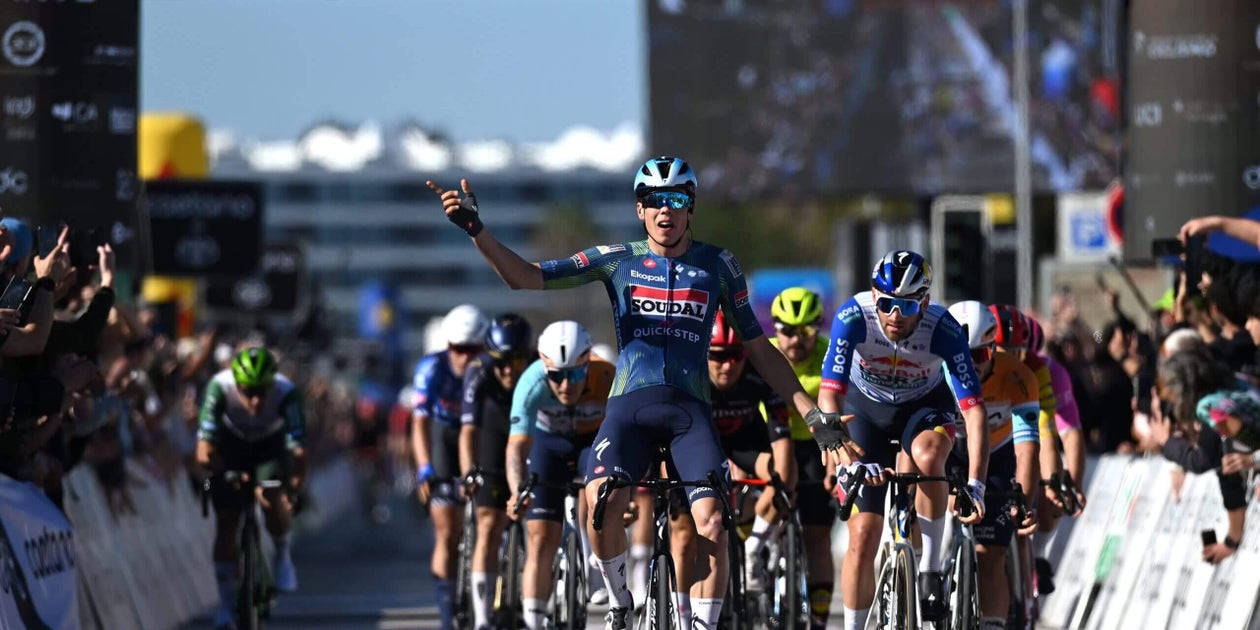
“Big crash, big crash,” the race radio in the Soudal–Quick-Step team car crackles in the finale of stage four of the 2026 Volta ao Algarve.
The bunch is just out of view. If Soudal–Quick-Step’s raw, prolific bunch sprinter Paul Magnier has been ensnarled in this fall with 10 kilometres to go, his chances are surely over.
“Who needs a bike?” director Tom Steels says into his two-way radio to the riders, urgency in his voice.
It’s anyone’s guess. After a tense wait for a few seconds, a message comes back from a rider: no one. They have all dodged the fall — the win is still on.
Barely skipping a beat, Steels has some final words of encouragement: “Clear your mind. Once the moment is there, no hesitation and go. Stick like glue to each other,” he says. “Full concentration, boys, let’s nail this one.”
It is down to Magnier to finish off the job — and The Athletic is along for the ride.
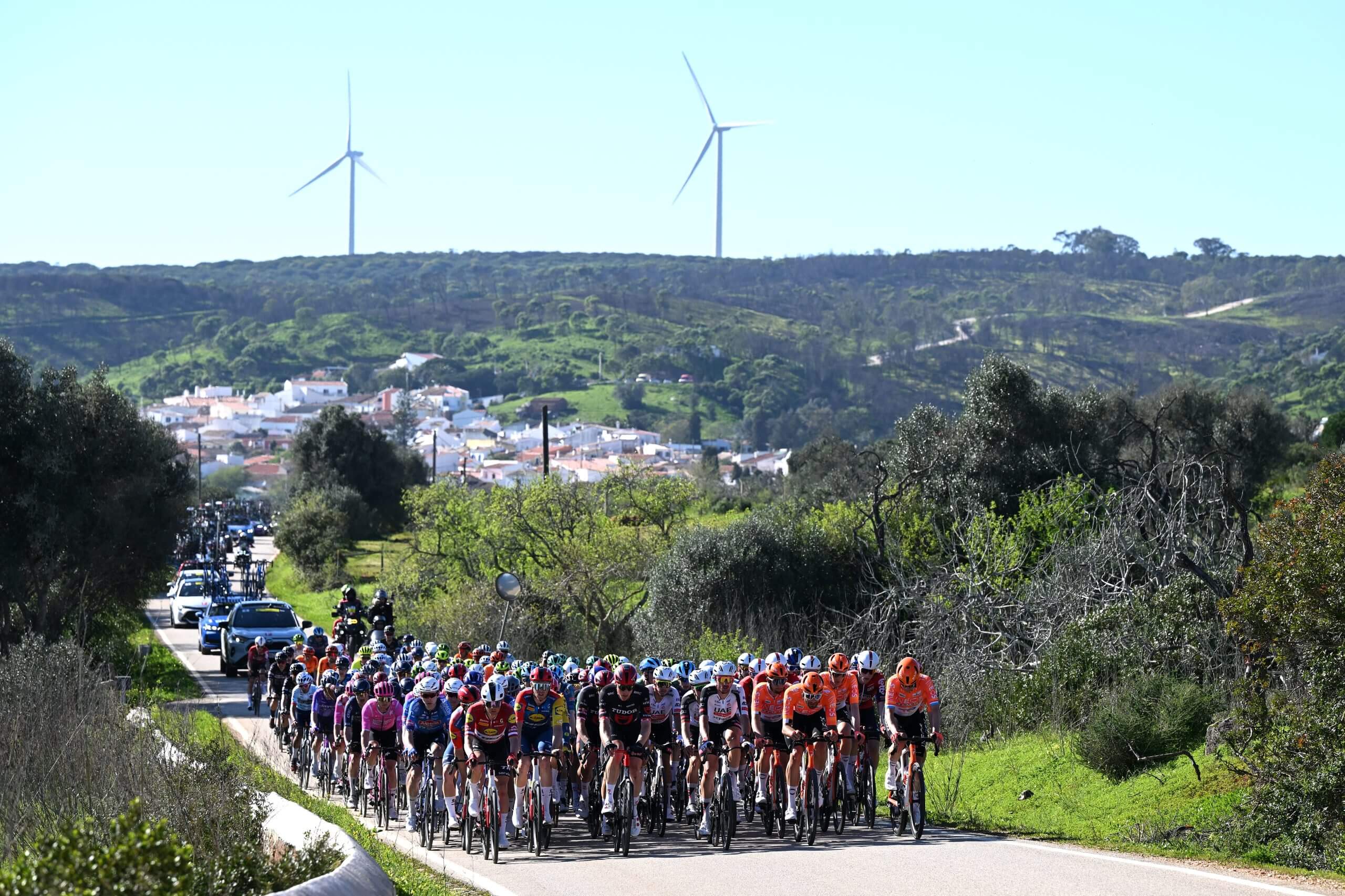
The peloton, with the team cars lined up behind them, makes its way through southern Portugal on stage four. (Dario Belingheri / Getty Images)
Steels begins his pre-stage PowerPoint briefing with a copy of the New York Times cover from July 21, 1969, bearing the headline “Men Walk On Moon.” It puts a bike race into perspective, even if its inclusion is designed to announce The Athletic’s fly-on-the-wall presence.
The quotation “Sit down with winners, the conversation is different” flashes up next on the screen at the front of the team bus. Soudal–Quick-Step have not spoken up in that discussion regularly this season. The squad went to the Volta ao Algarve without a single victory to their name — the longest it has taken them to get off the mark, a fact noted by the Belgian media. Magnier’s win in the race’s opening stage relieved that pressure.
They have not been helped by knee problems for star sprinter Tim Merlier and a broken spinal vertebra for new signing Laurenz Rex.
The departure of leader Remco Evenepoel to Red Bull–Bora–hansgrohe means the Belgian squad is going “back to our roots”, in the words of directeur sportif Iljo Keisse: Doubling down on Classics glory.
Monument winners Dylan van Baarle and Jasper Stuyven were signed over the winter, although Stuyven, the 2021 Milan-San Remo winner, is a DNS on stage four after suffering an illness.
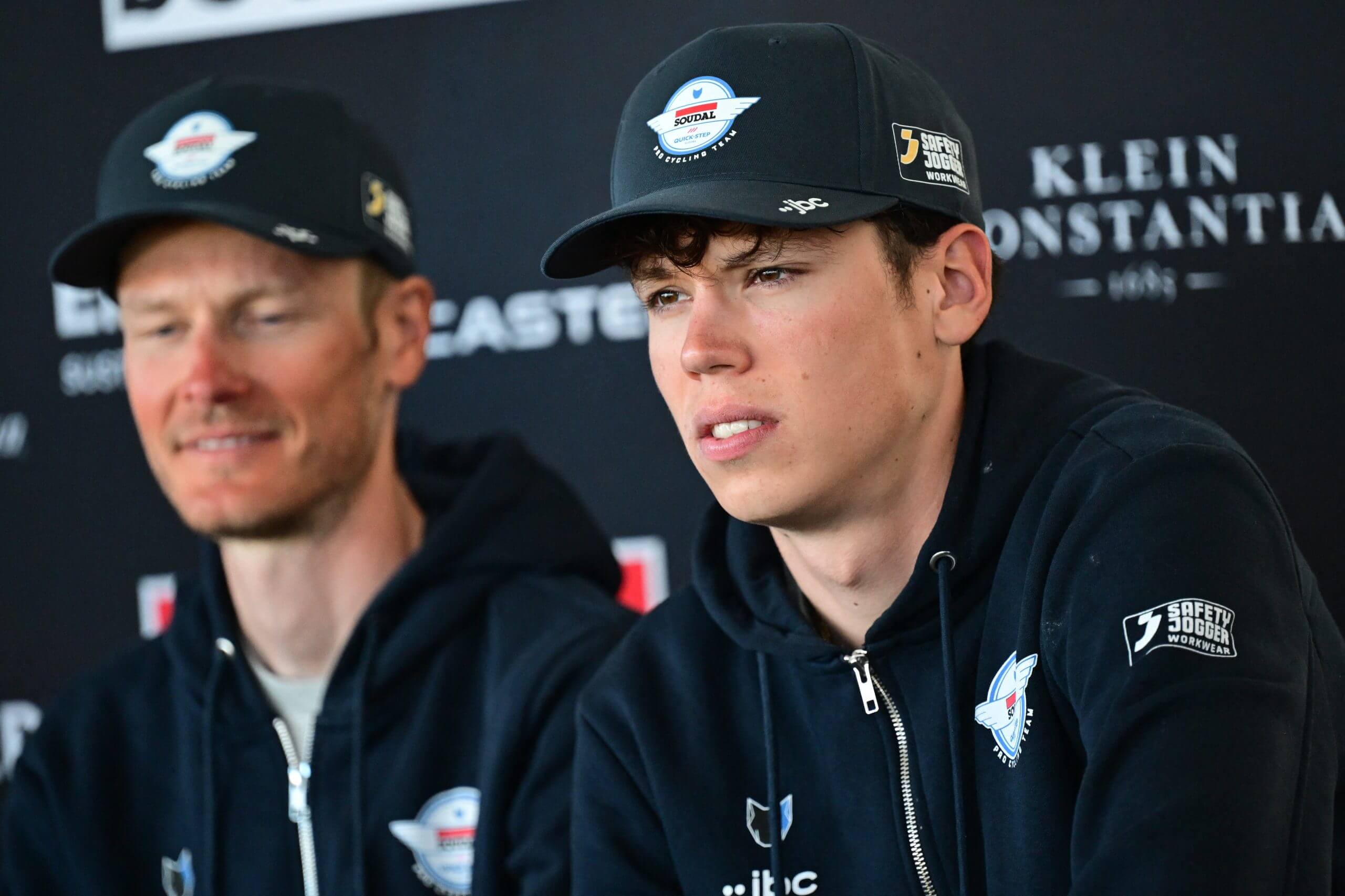
Quickstep have signed experienced Dutch rider Dylan van Baarle (left) to bolster the team and assist Paul Magnier. (Dirk Waem / AFP via Getty Images)
They are known quantities and then there is 21-year-old Magnier, stretching out his long legs and pinning on his race number as Steels speaks. The Frenchman was born in Laredo, Texas, because his engineer father Laurent was working in the automotive industry on the United States-Mexico border at the time.
He is the latest in a long line of successful bunch sprinters on this team, following Mark Cavendish, Marcel Kittel, Elia Viviani, Fernando Gaviria, Fabio Jakobsen and Merlier.
Magnier has remarkable momentum after winning 20 races in the last nine months, more than any other male pro road racer, even if most of those have come in non-WorldTour races.
Team-mate Yves Lampaert has previously compared him to their former talisman, Tom Boonen. A hardy sprinter who can get over short hills, Magnier, the 2025 Omloop Het Nieuwsblad runner-up, could be a contender in the year’s spring Classics.
“Paul has incredible explosivity, but he also has the endurance to go into those races,” Steels says. “The only thing he still has to learn is the specificity of the Classics, handling the bike, staying calm at the right moments. That’s why it’s good that Dylan van Baarle and Jasper Stuyven came (to the team).”
Two-time Paris-Nice winner Max Schachmann can see Magnier’s hunger in their team meetings. “He’s young, he’s savage. When others get scared of pressure, he smiles and he’s ready for it. It’s fun to ride for him,” the German says.
With more than 60 wins on his record, including nine Tour de France stages, former star sprinter Steels has a rare understanding of the mental pressure Magnier is under and the confidence he needs in his team-mates. “When you work for a sprinter, you need that knife between your teeth,” Steels tells the riders.
Nothing has been left to chance. Steels shows the team temperature, precipitation and wind graphs, runs through riders’ roles, plays a couple of videos of the same finale in the 2024 edition and points out potential danger points on the stage map, including a precipitous, straight descent.
“120km an hour: I want to break my speed record,” Magnier says.
“Don’t play that game — break it on the finish line,” Steels replies.
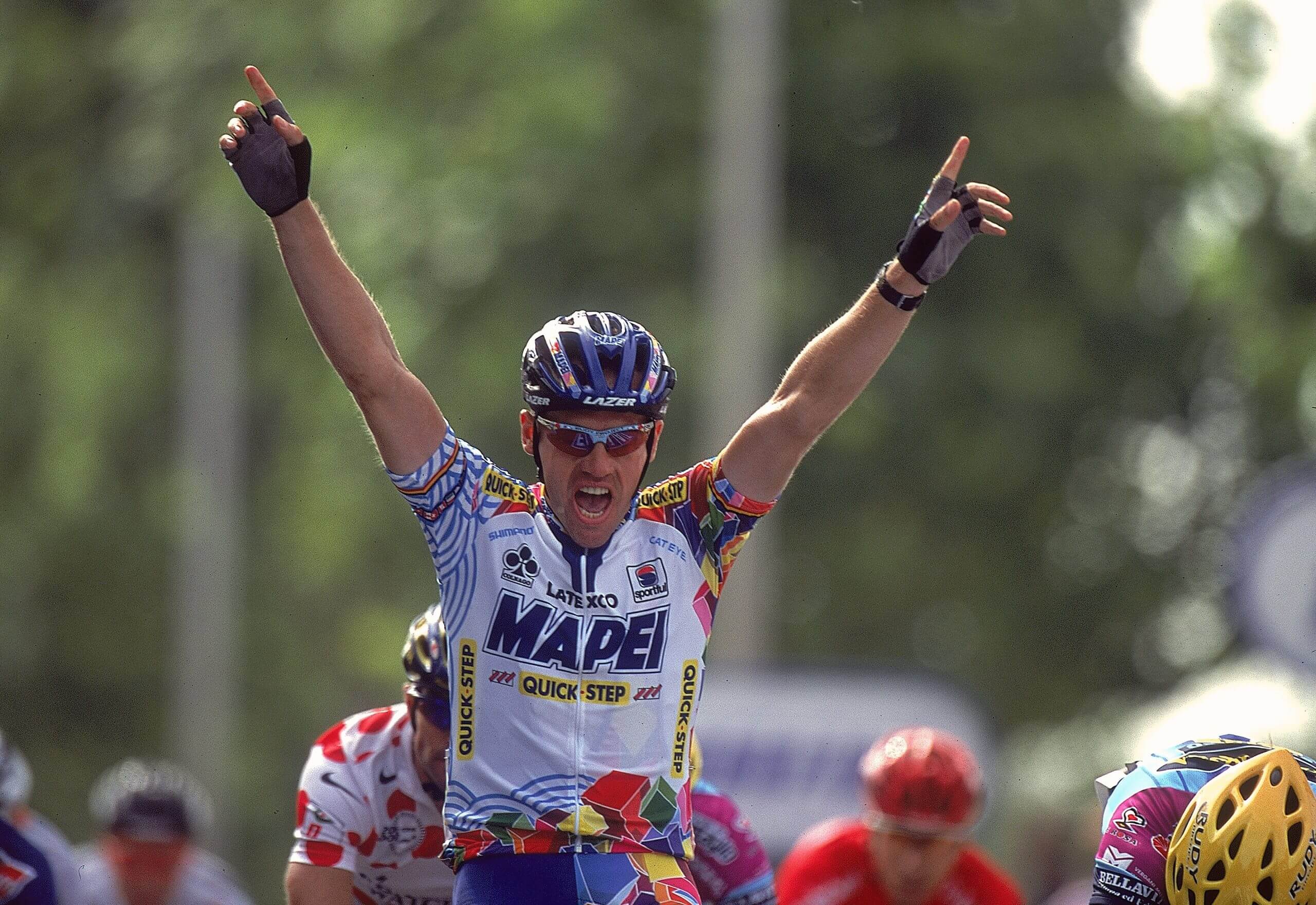
Tom Steels celebrates one of his nine Tour de France stage wins, this victory coming in 2000. (Doug Pensinger / Allsport)
Jumping into the passenger seat of their BMW team car next to Steels, there is a glut of in-car gadgetry. An iPad with the VeloViewer profile for flat stage four is taped to the dashboard, showing the game-changing ride data app that warns Steels of upcoming corners, obstacles, and climbs.
Race radio babbles away from the glove compartment, providing updates in Portuguese and English. A pair of two-way radios hang from the rearview mirror — a blue one for communication with riders, a black one for internal chat with Iljo Keisse in the second team car.
His mobile phone is also plugged into a mount in the cup holder, used to examine ProCyclingStats updates and to watch the race’s last hour. There is evidently no such thing as too much information.
Every few minutes, Steels talks to his charges, letting them know about poles in the middle of the road, the gap to the day’s nine-man breakaway or asking whether they want a bottle with 30g or 60g of carbohydrates. Meanwhile, mechanic Fausto Oppici is in the back seat, a cooler of water bottles at his feet and five spare wheels next to him.
As team car No 7 of 24 in the race convoy, the back of the Volta ao Algarve bunch is regularly visible up the road, flopping left and right like a technicoloured fish tail.
With team cars driving in a line on the right side of the road, Steels needs to be aware of his surroundings all day: Of riders on his bumper returning to the bunch, race commissaires on motorbikes to his side, the vehicle in front slamming on the brakes. Just like in bike racing, he knows to look at where he wants to go, not at the potential hazard.
“It’s OK, these are quiet roads. But in the Tour de France, with all the public, it’s already dangerous. It’s still an outdoor sport, you cannot control everything,” Steels says. “It’s already the second year that guys in the gruppetto say they often have to stop because of people on the roads.”
It helps that the majority of directeurs sportifs are former pro racers, knowing when to steer clear of the racing line at the wheel.
When Steels puts the pedal to the metal to close a gap or move to the convoy’s head to give drinks to a rider, it is hard not to smile and feel the adrenaline surge. You could never drive like this in the real world.
The pre-eminent spring Classics squad at the turn of the 2020s, Soudal–Quick-Step are no longer on top of that perch. A rider from the team last won the Tour of Flanders and Paris-Roubaix, the two races that matter so much to them, in 2021 and 2019.
They have to figure out the same riddle as their other rivals: How do you beat Mathieu van der Poel and/or Tadej Pogačar in the most prestigious one-day races?
“Individually, they are above anybody else,” Steels says. “They have strong teams, too. The only way you can make it as hard as possible for them is to have the numbers. You have to give them a lack of team-mates at a certain point and (make them) do it themselves.”
Step forward their 33-year-old new signings, Stuyven and Van Baarle, savvy, experienced operators with points to prove. Van Baarle, who has suffered several broken bones in recent seasons, has not lost his power. Coming back to the car mid-race, Lampaert wryly asks for “that motorbike Dylan” to take it a bit easier on the front.
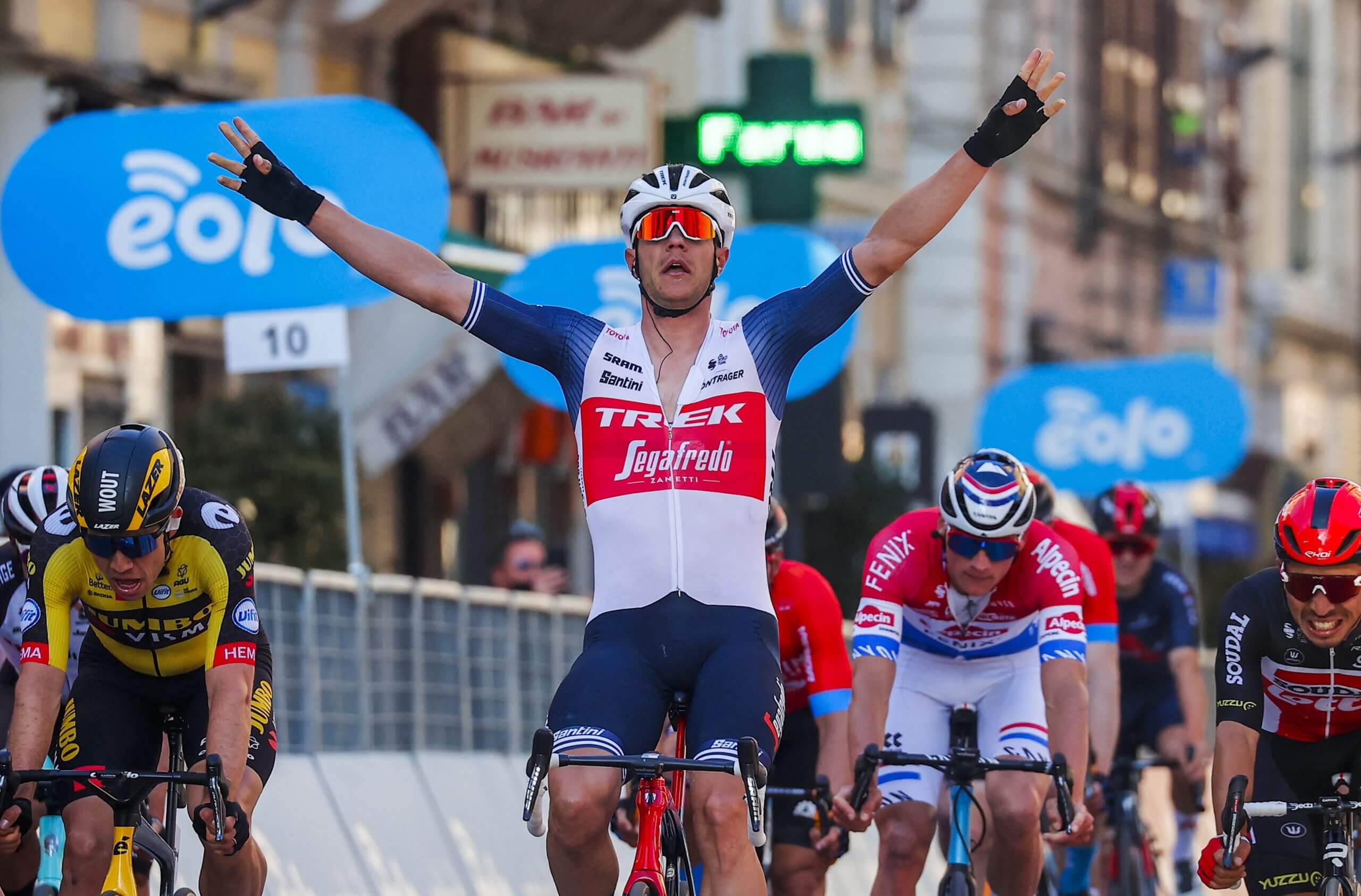
2021 Milan-Sanremo winner Jasper Stuyven has joined Soudal–Quick-Step this season. (Tommaso Pelagalli / AFP via Getty Images)
As well as the departures of Evenepoel and Julian Alaphilippe in recent years, there have been big changes in the team’s backroom. Jurgen Foré came in as CEO at the end of 2024, replacing longtime, larger-than-life boss Patrick Lefevere. Akin to a new manager taking the reins at Old Trafford after Sir Alex Ferguson, he is a tough act to follow.
“We see that Jurgen wants to make the team a bit more modern again,” Lampaert says pre-stage. “It is not that we were outdated, but we are really a family team. Now he wants to take it up to another level in terms of science and structure.”
A Tour de France stage winner in 2022, the Belgian veteran reckons he trains more extensively than ever, doing 100 hours more per year than he used to. In recent years, Soudal–Quick-Step have added a performance sleep specialist.
“We have a bit of a (performance) gap and distance to close (to the top teams),” Lampaert concludes. “I hope we close it fast, but I’m not saying we will close it in one year.”
Nevertheless, Steels believes the self-styled “Wolf Pack” are not howling at the moon when it comes to taking on the WorldTour’s alpha predators this spring.
“We’re the underdogs, but that’s also not always the worst position to be in,” the directeur sportif says. “Then it’s all about the riders’ condition, their commitment — and like many other teams, we also have to hope the weather conditions are not that good. If there is wind and rain, it makes the race completely different. You need that extra difficulty, which makes it hard for us but also for any other team to control the race.”
Victory at Omloop Het Nieuwsblad today (Saturday), a world away from the palm trees and pleasant weather of southern Portugal, could help to set the tone.
We get onto the subject of creating a winning atmosphere and the challenge of maintaining it. Steels believes even riders working in race finals for the team’s winning sprinters automatically learn how to race them too. “It’s like a group dynamic, everybody improves each other, also the belief they have,” Steels says.
“It’s not like we give 50,000 PowerPoints on how to win a race or why. Like I said in the pre-race meeting, you either have a winner’s mentality or you don’t.
“In training, we often do small races between five or six riders, and usually it’s always the same guys who win — not always the fastest or the strongest. But they just have that feeling, that need to win.”
It is far from panic stations. Only UAE Team Emirates–XRG enjoyed more success than Soudal–Quick-Step (56 victories) last year. “If you win a lot, it seems like it’s become a habit. But it’s never normal,” Steels adds. “It’s always a big fight.”
As helicopter blades whirr above the team car, Steels pops black-rimmed glasses on for the last 40 kilometres. Business time.
“It’s getting hectic, boys. Pick the fight you can win, let the other ones go for five seconds. Then fight back, use your brain,” he says into the radio as the peloton enters the finishing circuit in Lagos. Clear, commanding and concise instructions.
As the race speeds up and riders are jettisoned, the team cars are stuck further behind the bunch. Frankly, you would see the decisive moments far better watching on the couch than in the Soudal–Quick-Step team car, trying to make out who is leading on Steels’s mobile phone screen, as the car goes through twists and turns, light and shadow.
He is reversing the BMW to park near the team bus as Soudal–Quick-Step rider Jonathan Vervenne hits the front. After letting other fast men hit out first in the wind, Magnier punches through the middle and there is nothing that rivals Jordi Meeus or Jasper Philipsen can do. “Yes, he won!” mechanic Fausto exclaims.
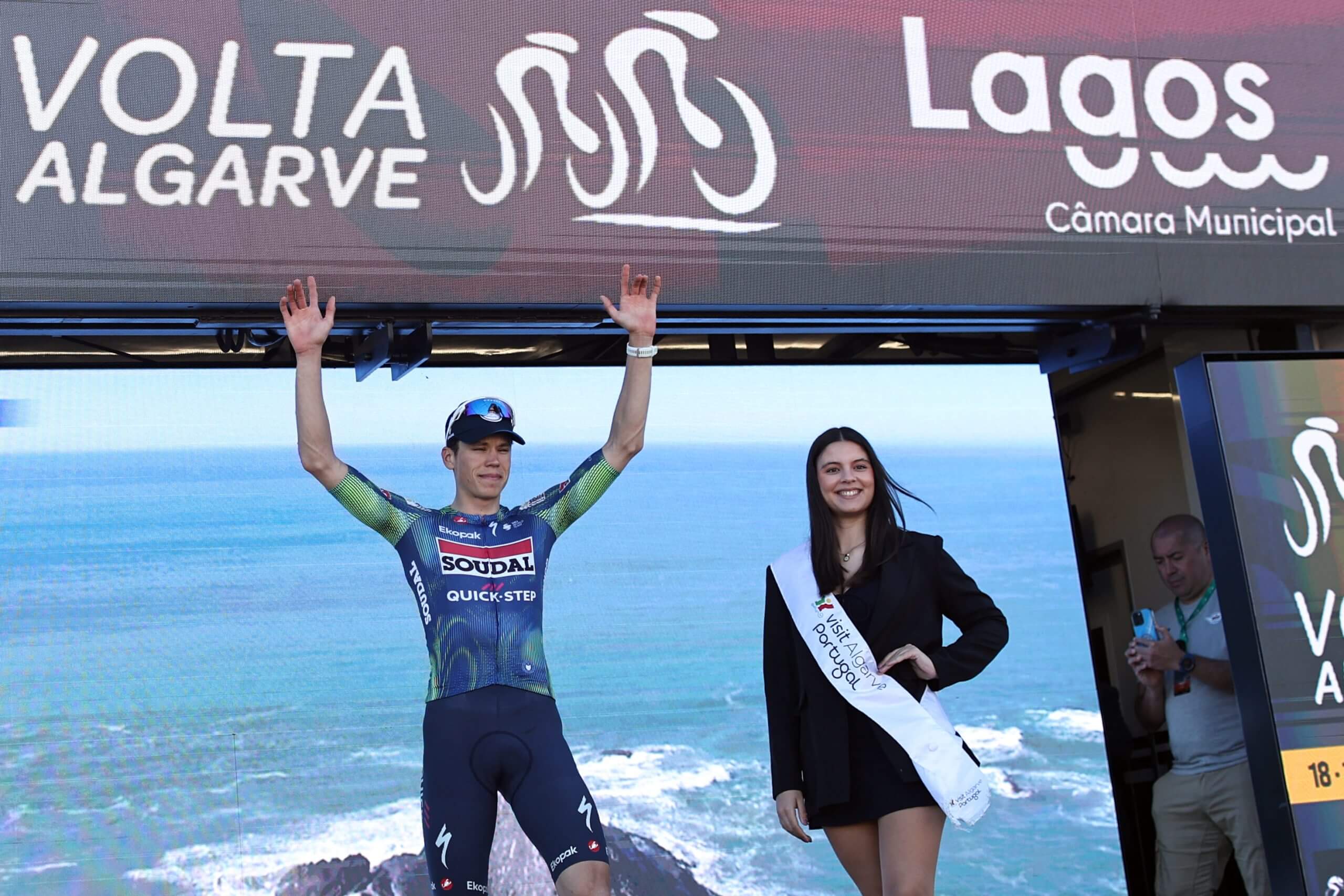
Texas-born Paul Magnier celebrates on the podium in Lagos after winning stage four. (João Matos / AFP via Getty Images)
There are high-fives all round in the car and hugs for the riders from soigneurs, mechanics and the team bus driver once they roll to a halt: a real team effort.
“He has an acceleration,” Steels says after replaying the finale on his phone. “The explosivity and endurance of his sprint are impressive.”
Sure, it might only be bunch sprinting, not putting a man on the moon. Nevertheless, another win for Paul Magnier is another small step for their fresh-faced French finisher and Soudal–Quick-Step, inching them back towards the top of the sport.