

Listen to this article
Estimated 5 minutes
The audio version of this article is generated by AI-based technology. Mispronunciations can occur. We are working with our partners to continually review and improve the results.
Saskatchewan’s upcoming budget will be a deficit. The only question now is how large the number will be.
Taxpayers may not get the answer until later this month when the budget is tabled, but the question will loom large over the provincial legislature as it resumes on Monday.
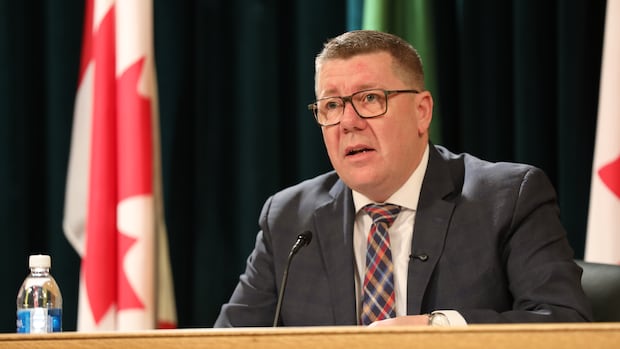
“We’re in a challenging time across Canada and you’re going to see that,” Premier Scott Moe told media this past week.
Along with a deficit budget, Moe must contend with a backlog of legislation and a continued focus on the state of health care in the province.
Moe set the stage for the session earlier this week when he spoke at a luncheon in Saskatoon.
“You’ll see a deficit in a couple weeks in this province,” he said.
Moe has remained tight-lipped on the size of the potential deficit, refusing to provide a direct answer when asked by media multiple times this week.
The premier offered one more hint about the budget, saying it will not include a tax increase and services won’t be cut.
One political expert says that combination can only mean one thing: debt financing.
Charles Smith, a professor of political science at the University of Saskatchewan, said he believes the decision will leave Moe vulnerable on both political flanks.
“Right-of-centre think tanks like the Canadian Taxpayers Federation find borrowing to be fundamentally wrong as a policy choice because they worry about the long-term consequences of floating government bonds,” Smith said in an interview this week.
“That does provide an opening for the NDP to criticize on the increasing size of the budget deficit and of course the long-term debt,” Smith said.
WATCH | New training for teachers aims to improve K-3 literacy rate in Sask. :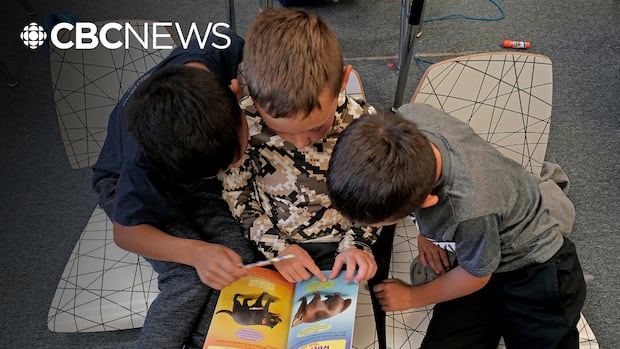
New training for teachers aims to improve K-3 literacy rates in Sask.
The Ministry of Education and the Saskatchewan Teachers’ Federation are teaming up to offer a new three-day course for Kindergarten to Grade 3 teachers, which they hope will give educators more tools to teach kids how to read.
At news conferences this week, the Saskatchewan NDP Opposition has already begun to hit the provincial government on the subject of the province’s debt.
NDP Leader Carla Beck said Moe’s preview of the budget is not a good sign.
“[Moe] certainly did not mention, let alone take responsibility for the fact that we’re paying a billion dollars, a billion dollars every year just to finance that debt that he has been growing,” she said.
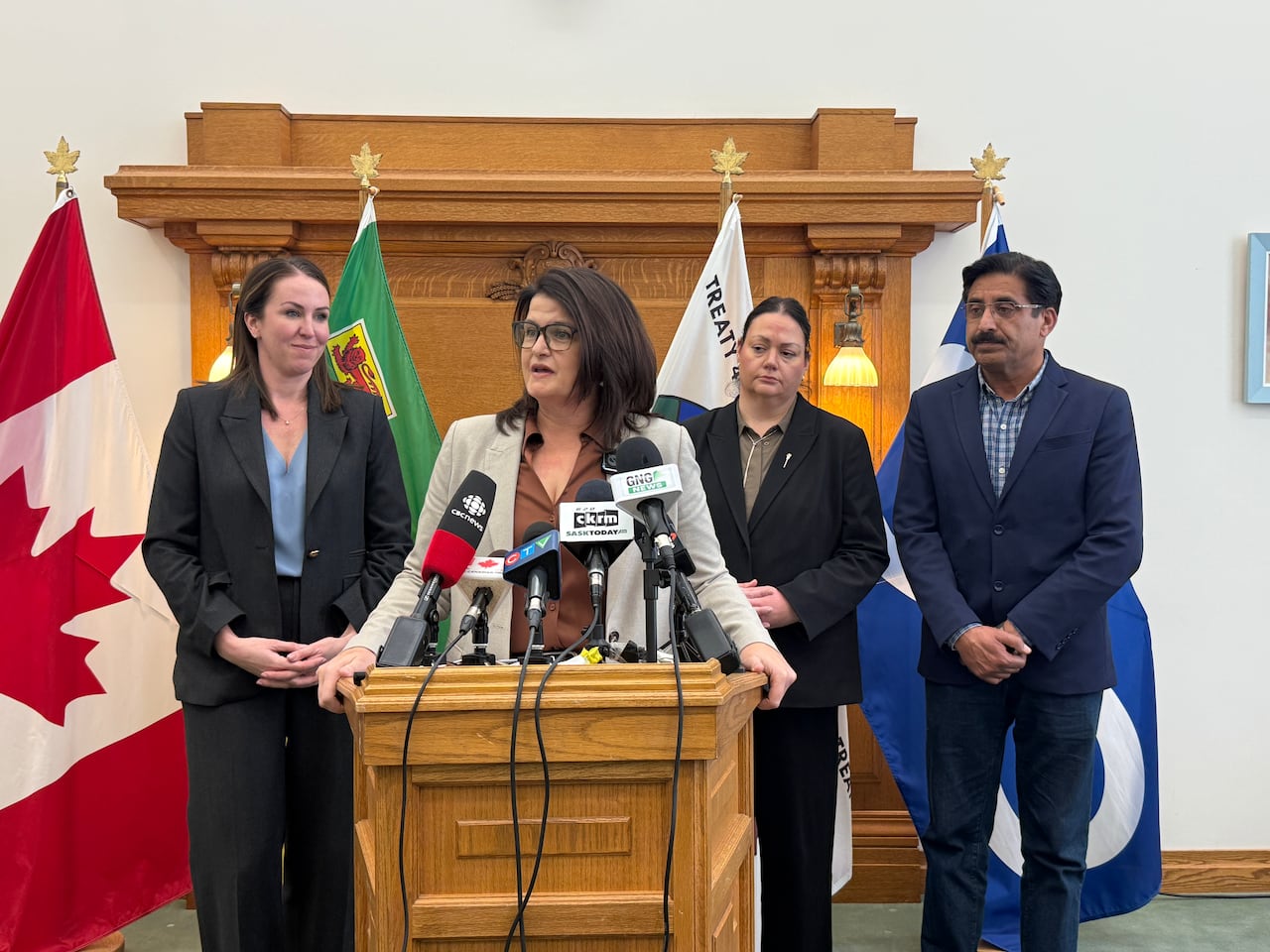 Saskatchewan NDP Leader Carla Beck (centre) is joined by NDP MLAs Aleana Beck (left), Jacqueline Roy and Noor Burki at a news conference in Regina on Feb. 24, 2026. (Alexander Quon/CBC)Legislation and health care
Although several government bills are waiting to be passed, the headline bill for the province from the last sitting is likely to remain a focus.
The government introduced the Compassionate Intervention Act, the province’s involuntary addiction treatment legislation, on the last day of the winter sitting.
That means a debate and committee work must occur before the bill is passed.
Smith said he believes the government will try to keep the focus on the economy rather than highlighting what may be a politically and legally controversial piece of legislation.
“I think it’ll be interesting how they navigate that terrain,” he said.
During the legislature’s break, the NDP repeatedly tried to highlight the state of the province’s health facilities, using the topic of health-care delivery and safety of front-line staff as a cudgel against the provincial government.
LISTEN | The politics behind ‘snitch lines’ at Sask. hospitals:
This is Saskatchewan12:32The politics behind ‘snitch lines’ at Sask. hospitals
New security measures are being introduced in some Saskatchewan emergency rooms. Unions representing health care workers have been calling for improved safety measures after the seizure of several weapons and an increase in violence. Meanwhile, the Saskatchewan Health Authority wants to bring in a system to anonymously report employees suspected of violating SHA policies. Our political panelists Alexander Quon and Murray Mandryk help us make sense of this.
Moe appears ready to make moves of his own on the file.
He’s repeatedly referenced plans for the provincial government to deliver services — especially health care — in “new and innovative ways.”
What that means in terms of policy remains unclear.
Smith said deteriorating health-care services are not unique to Saskatchewan.
“All jurisdictions are dealing with this, but this province has responsibility for health care and they have to address these concerns. What is their plan?” he said.
‘What would we do’
The Opposition has already indicated that it plans to double down on the use of private members’ bills as a way of communicating policy goals in this sitting.
“I would say to the premier and the government, ‘You’re gonna get a whole lot of what would we do in the upcoming session,'” Beck said.
The NDP has seen sporadic success using the method previously.
Efforts to introduce Sikh Heritage Month, as well as measures around domestic violence, have been picked up and then passed by the government.
Other private member’s bills, like the NDP’s plan for rent control or a review of the notwithstanding clause, appear likely to die on the order paper.
Smith said he’s not surprised that the NDP will continue to use that method of political communication going forward, even if the bills don’t go anywhere.
He said private member’s bills are one of the few tools available to an Opposition, especially one that’s in the minority of a two-party legislature.
“I think it’s a pretty common tool that opposition parties use and have used for, well, since forever, and it makes sense for them to use the tools at their disposal.”