
Tahir Janmohamed’s mother lives with fibromyalgia, a chronic condition that causes pain throughout the body. Janmohamed grew up watching her describe her experiences to health care providers and to family. And he watched how she wasn’t believed.
Janmohamed doesn’t have a background in health. He’s a Torontonian software engineer who got his MBA and worked in management consulting. His work at IBM brought him to the intersections of business, tech and data.
Seeing how data could be leveraged was exciting — but he was disappointed seeing it not be impactful at the person level. “I needed to use my skill set in a way that I felt could make a difference.”
“I thought that if I could bring data to people like my mom and her clinical team, maybe people like her can (be) believed a little bit more,” he says.
Janmohamed also thought about health-care providers who could use the data: “Now they’d have some data to run with because there’s no blood test for pain, there’s no X-rays for pain.”
This impulse led him to developing the app ManageMyPain. A few years in, the app had 18,000 registered users, and he happened to meet Dr. Hance Clarke and Dr. Joel Katz, both team members at the Transitional Pain Service, a multidisciplinary pain program, located in University Health Network’s (UHN) Toronto General Hospital.
“I told them, I have all this data,” says Janmohamed. “We’ve clearly found a way to engage people with chronic pain.”
Fast forward to today and ManagingLife, the company Janmohamed founded, now counts Clarke as its medical director and Katz as its research director. The app has grown, with over 125,000 users in Europe, the United States and Canada, and it’s been a source of data for UHN researchers.
Still, are apps like this one an important part of the future of chronic pain care? Those living with chronic pain see potential, but some experts express concerns about the data these apps generate. These experts worry about data privacy and the implementation and usefulness in a Canadian health-care system already under strain.
Tech trends
Like Janmohamed, Michelle Charette grew up watching her mother navigate chronic pain. This is part of what led her to pursuing a PhD focused on the issue, which brought her to speaking with a number of people living with chronic pain. Through that work, she observed a change in the way technology interfaced with pain.
“I started to kind of notice that there were these trends towards more apps, more digital forms of tracking and management, games for pain management.”
Charette is a chronic pain researcher who now works at York University’s Connected Minds: Neural & Machine Systems for a Healthy, Just Society initiative. She worries about the “datafication” of pain.
“You have this complex human thing,” says Charette, “and we can talk about that in so many different ways.” However, transforming a human experience through technology into something neat like numbers — datafication, she says — can obscure more than it reveals.
Technology like mobile apps have emerged as a tool for people living with chronic pain to track their symptoms, usually by self-reporting. ManageMyPain may be an outlier because it’s an app coming out of a partnership between a tech company and a research hospital.
With names such as Bearable, Flaredown, Curable and Releaf, many mobile apps seem to propose a future where the disease is more manageable.
But apps don’t always produce coherent information beneficial for people living with chronic pain, says Charette, based on her research with people who use these apps.
“We looked at the charts together,” says Charette, “a number of them said ‘I don’t know how to read this. I don’t know what to take away from this.’ ” Charette says this is because the apps were likely designed by doctors for doctors.

Maia Ross is a 22-year-old student at McGill University who has lived with chronic pain since she was five, and has experienced periods of being bedbound.
Vindolanda Field School photo
Treatment with data
Maia Ross is a 22-year-old student at McGill University who has lived with chronic pain since she was five, and has experienced periods of being bedbound.
She was diagnosed with a hypermobility spectrum disorder at the age of 21, by a team housed in a pain clinic at UHN.
The clinic introduced her to ManageMyPain. The app is free, lets her log pain and medications, and makes it easy for her clinical team to stay updated.
“It just syncs from my phone directly to my chart at the hospital,” she says. The clinical team can easily analyze the patterns during appointments, and make adjustments to treatment based on her data.
Before ManageMyPain, Ross paid $180 for an app called CareClinic. However, she was frustrated: “I didn’t feel like I was getting enough out of it,” she says. “I was getting data out of it, but I was not getting patterns.”
Being online
“When you’re in pain all the time, it becomes synonymous with living. It becomes your reality,” says 22 year-old Aditi S., a chronic illness advocate based in Washington state.
Under the Instagram handle aditisroom, Aditi educates people about living with several conditions including severe Myalgic encephalomyelitis/chronic fatigue syndrome, hypermobile Ehlers Danlos syndrome, and chronic migraines.
Our interview was conducted using voice notes, which meant Aditi participated at a pace accommodating the chronic illnesses’ severity. Like many people living with chronic health conditions, Aditi finds technology is a necessary conduit for connection and information.
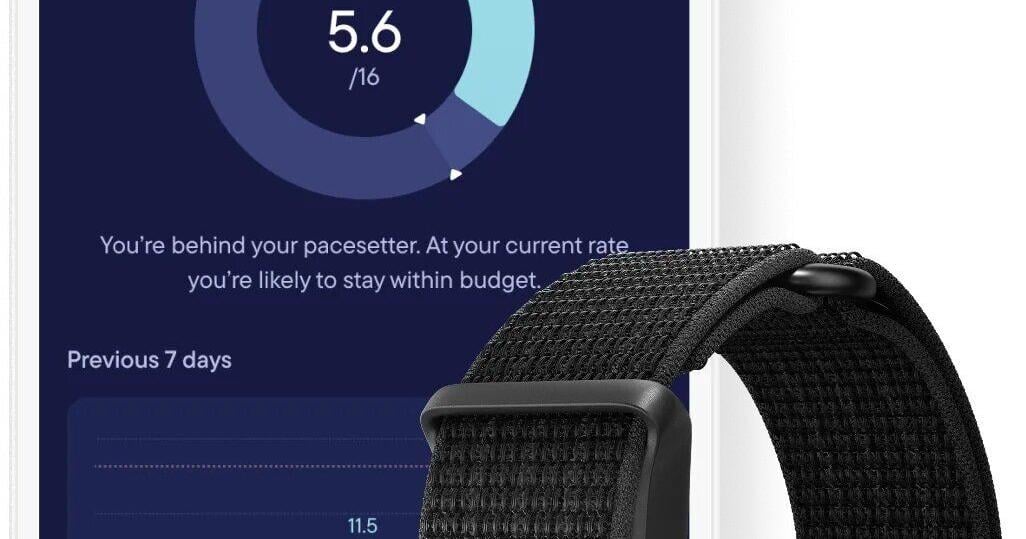
Aditi uses the app Visible and its accompanying arm band, which is a wearable heart-monitor (the band is not available in Canada). “It helped bring my attention to how often I was experiencing symptoms,” Aditi says. “It helped bring attention to how severe my condition was.”
In fact, the app’s tracking of symptoms led Aditi to be diagnosed with another chronic condition, one they say they wouldn’t have known about otherwise.
While there are benefits of apps like Visible and ManageMyPain, they are not a cure-all. Chronic pain is a big issue: Almost eight million people in Canada live with chronic pain.
Devices like glucose monitors, which diabetics can use with apps to stay on top their condition, are a forerunner of the future of chronic pain apps.
Dreamstime photo
Despite the big numbers, there are significant challenges in accessing publicly funded pain care across the country. “With one in four people who live with chronic pain in Canada, it still remains relatively underfunded compared to other areas,” says Dr. Daniel Buchman, a bioethicist and scientist at the Centre for Addiction and Mental Health (CAMH).
“The most frequent interaction or first interaction actually people will have about their pain is with a family physician and/or in primary care,” Buchman says. Yet, beyond the problem of millions of people currently being without a primary health-care provider, health-care providers do not receive adequate training on chronic pain, he says.
Treatments shown to be effective for chronic pain, such as massage or acupuncture, are not covered by OHIP. “Unless you have a job with health benefits,” says Buchman, “you know you’re paying out of pocket.”
What’s more, pain app users may not always be aware of consenting to data ownership and privacy practices, given lengthy or jargon-filled terms and conditions.
For Buchman, privacy and confidentiality are ethical concerns. Without government oversight or regulation, “who owns your data?” asks Buchman, “How is this connected to other forms of data on your phone … that you may or may not be aware of?”
Not all people who are living with chronic pain have concerns about privacy. “I can tell you that not a single person was concerned about privacy,” says Charette, of the research she conducted. “It’s a bit of a luxury to worry about that when you’re in excruciating pain and you need relief.”
Aditi sees this as a concern, given the vulnerability people may experience: “When people are in pain, they’re easier to influence.”
The digital divide means there are people without access to mobile apps. In a 2024 commentary, The Dais, a think tank at Toronto Metropolitan University, described the digital divide as not just those who don’t have access to the internet, but also the cost of devices and the gaps in digital skills including amongst seniors, children and newcomers.
According to Pain Canada, a national network made up of leading pain organizations and established to advance Health Canada’s Canadian Pain Task Force action plan, the prevalence of chronic pain is higher among groups such as Indigenous Peoples and people living in poverty. There is an overlap between those who are disproportionately impacted by chronic pain and those disproportionately impacted by the digital divide.
Affirming experiences
Despite potential risks, these apps help validate experiences of chronic pain, says Aditi: “When the world is telling you … that your pain is not valid, these apps are there to remind you that you are experiencing something that deserves to be acknowledged and tracked.”
Even so, self-validation and being believed are not the same.
“Do people see this (data from apps) as being more truthful than what the patient says?” says Buchman, “We don’t listen very well to people about their pain … especially populations with stigmatized identities.”
Aware of potentially harmful consequences, Aditi says it’s important to distinguish between apps that track symptoms and apps that provide advice — even when that advice is presented with the caveat that it’s not official medical guidance.
A future where data from apps could be used to predict health outcomes is still far away. While he’s a co-author on a recent peer-reviewed article about the possibilities in using machine learning and his app’s data to predict which patients might better respond to treatment, Janmohamed is not convinced that prediction will take off in Canada.
This is due, in part, to the physician billing constraints, which do not now allow for reimbursement of health-care providers’ time spent on engaging with app data. Janmohamed is looking to other jurisdictions, such as the United States, where the incentives are different.
The fast-paced growth of apps, as well as AI, machine learning, neuroimaging, and brain interventions, worry Charette. “I’m not confident that we can slow down these technologies,” she says, and so the only way forward is “making sure that some of these technologies are being codesigned with people that have lived experience.”
Anu Radha Verma has a background in chronic disease research, health promotion and health equity. She is a freelance journalist, and a fellow at the Dalla Lana Fellowship in Journalism and Health Impact. She is based in Mississauga, Ont.