
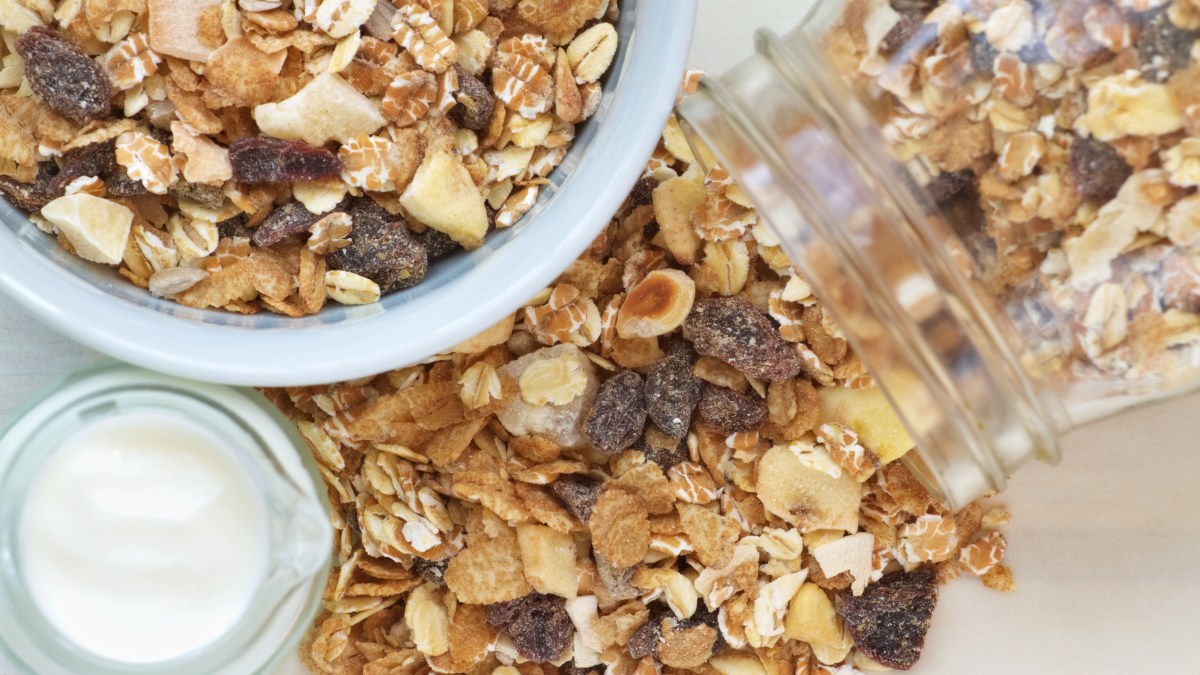
Some premium brands of muesli are no healthier than chocolate breakfast cereal, research has found.
Muesli, with its mix of oats, nuts, seeds, and dried fruits, is typically considered a nutritious and high-fibre breakfast. However, analysis of 86 different muesli brands by Which? has found that some mueslis are very high in sugar and calories and may not be any healthier than Nestlé KitKat cereal.
The research also found that expensive, premium brands often contain more sugar and less fibre than budget supermarket own-brands, despite being up to ten times more expensive.
Some muesli packaging also “trips up” shoppers with potentially misleading claims about “no added sugar”. Although this is technically accurate, the high quantities of dried fruit that can be included means they can still contain the equivalent of four teaspoons of sugar per 100g.
Which? assessed mueslis using the government’s nutrient profiling model (NPM), a system devised to decide whether foods are “junk foods” and high in fat, salt or sugar. Products are scored out of 100 on both positive nutrients, such as fibre and protein, and negatives including sugar, saturated fat and calories.
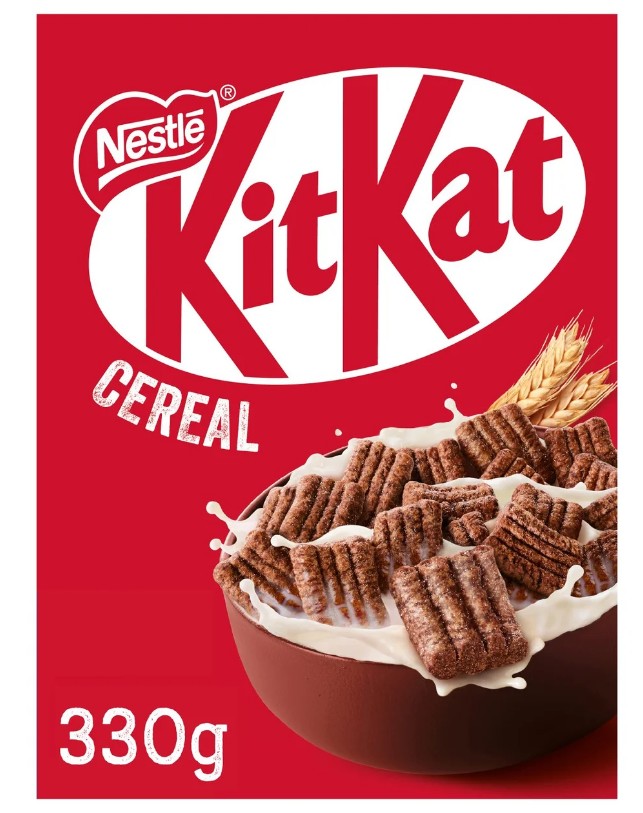
The analysis compared mueslis with Nestlé’s KitKat cereal, which, like the chocolate bar, is made of chocolate and wafers, and scores 56 out 100. This product has 25g of sugar per 100g and has been criticised by health campaigners who say it is irresponsibly marketed as a “nutritious choice”.
One of the lowest-ranking mueslis was Waitrose Essential No Added Sugar, which contained 19.5g sugar per 100g — nearly as much as the KitKat cereal — and scored 62 out of 100.
Two mueslis ranked lower than KitKat cereal for nutrition, and both had more calories and saturated fat than KitKat cereal. Raw Gorilla Keto Mighty Muesli scored 47 out of 100 and Eat Natural Gluten-Free muesli scored 50.
The healthiest mueslis were the budget options, such as Asda Just Essentials, which scored 80, Morrisons Savers and Sainsbury’s Stamford Street Co. The value mueslis performed well because they were “built around simple wholegrains with modest amounts of fruit and nuts”, the report said.
As well as being the healthiest, own-brand products were also the cheapest, costing 20p per 100g. Raw Gorilla Muesli, by contrast, cost £2.20 per 100g.
Shefalee Loth, a Which? nutritionist, said: “Muesli remains a solid option for a balanced breakfast, thanks to its combination of convenience and fibre. However, not all blends are created equal. Expensive price tags, premium branding, and wellness buzzwords don’t guarantee nutritional value. In fact, the healthiest options are often the simplest and the cheapest, so it’s worth reading the small print if you are worried about sugar or saturated fat.”
A spokesman for Mornflake, which makes muesli, said: “Mornflake produces a wide range of breakfast cereals to offer choice for different consumers. The product reviewed is one of only a small number classified as high in fat salt and sugar, but it contains no added sugar and is high in fibre.
“We provide clear ingredient and nutritional information, including front-of-pack labelling, so shoppers can make informed choices. We have not received consumer complaints regarding the nutritional content of this product.”
A spokesperson for RawGorilla said: “Comparing a specialist keto product to sugary ultra-processed cereals highlights the limits of the NPM method, a ‘one-size-fits-all’ mathematical model.
“While the system penalises the natural energy density and the fat content of our seeds and nuts, it ignores the vital difference between unprocessed whole foods and ultra-processed products. Unlike refined cereals, which cause a quick sugar spike, our ingredients provide slow-release energy. We urge shoppers to look past the maths and read the ingredients list; real health is about the quality of the food, not just a calorie count.”