
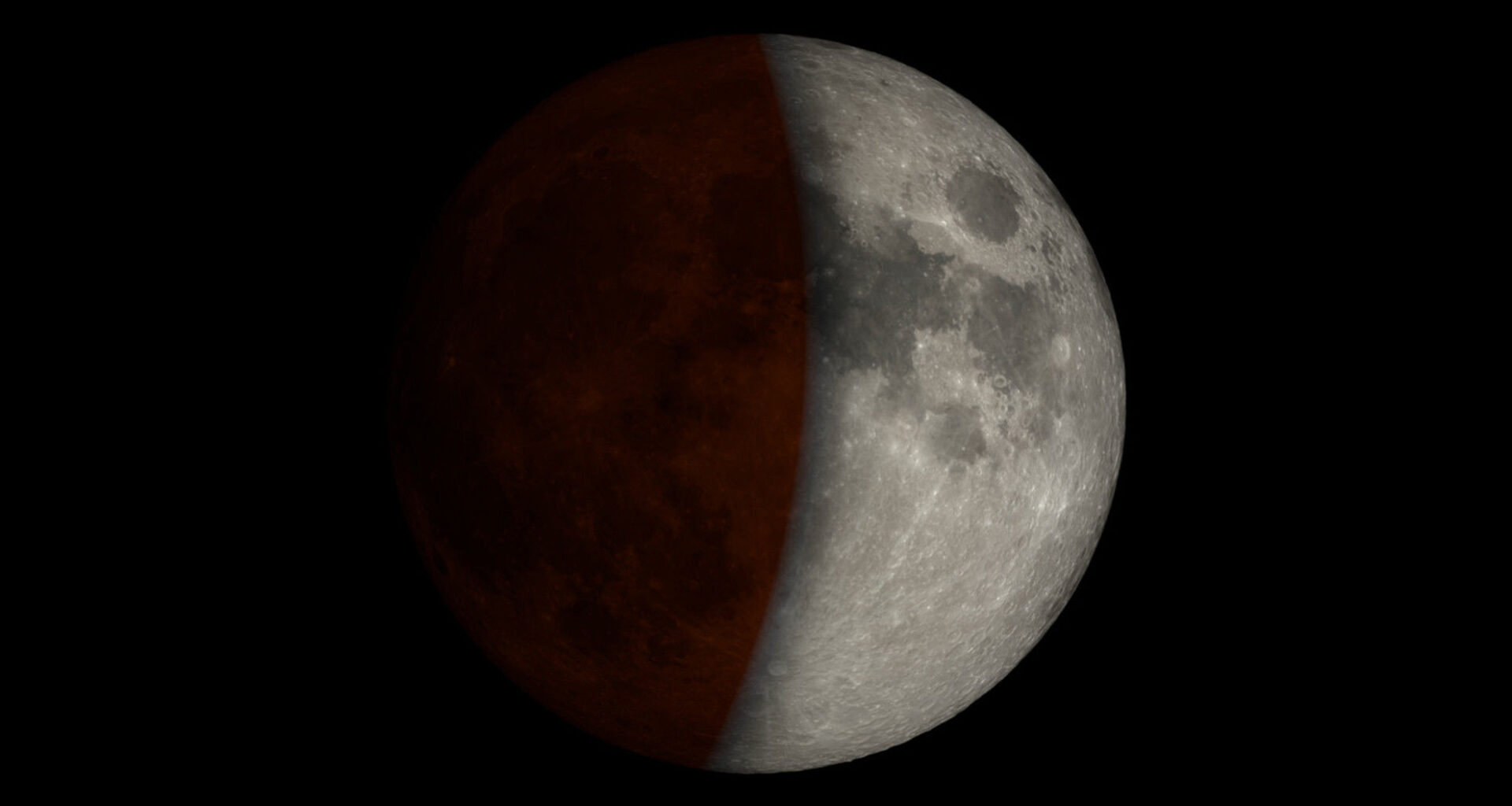
“For many years, we thought this name referred to the earthworms that appear as the soil warms in spring,” The Old Farmer’s Almanac stated on their website.
“However, more research revealed another explanation,” they added. “In the 1760s, Captain Jonathan Carver visited the Naudowessie (Dakota) and other Native American tribes and wrote that the name Worm Moon refers to a different sort of ‘worm’ — beetle larvae — which begin to emerge from the thawing bark of trees and other winter hideouts at this time.”
Other Indigenous peoples named this Full Moon, and the roughly 29-day ‘lunation’ that it belongs to, after animals, such as the goose (the Haida), the eagle (the Cree), the frog (the Omaha), or the crane (the Potawatomi). For others, the name signified the time when they hunted moose (the Abenaki) or caught specific species of fish (the Algonquin). The various Sioux people, such as the Assiniboine, Dakota, Lakota, and Nakota named it the “sore eyes moon” — referring to the snow blindness that comes from sunlight reflecting off the bright ice that forms as old snow slowly settles and melts into a hard surface.
Total Lunar Eclipse
Depending on where the observer is across Canada, either staying up after midnight or getting up very early on Tuesday morning, will reward them with a view of the last total lunar eclipse until the end of 2028!
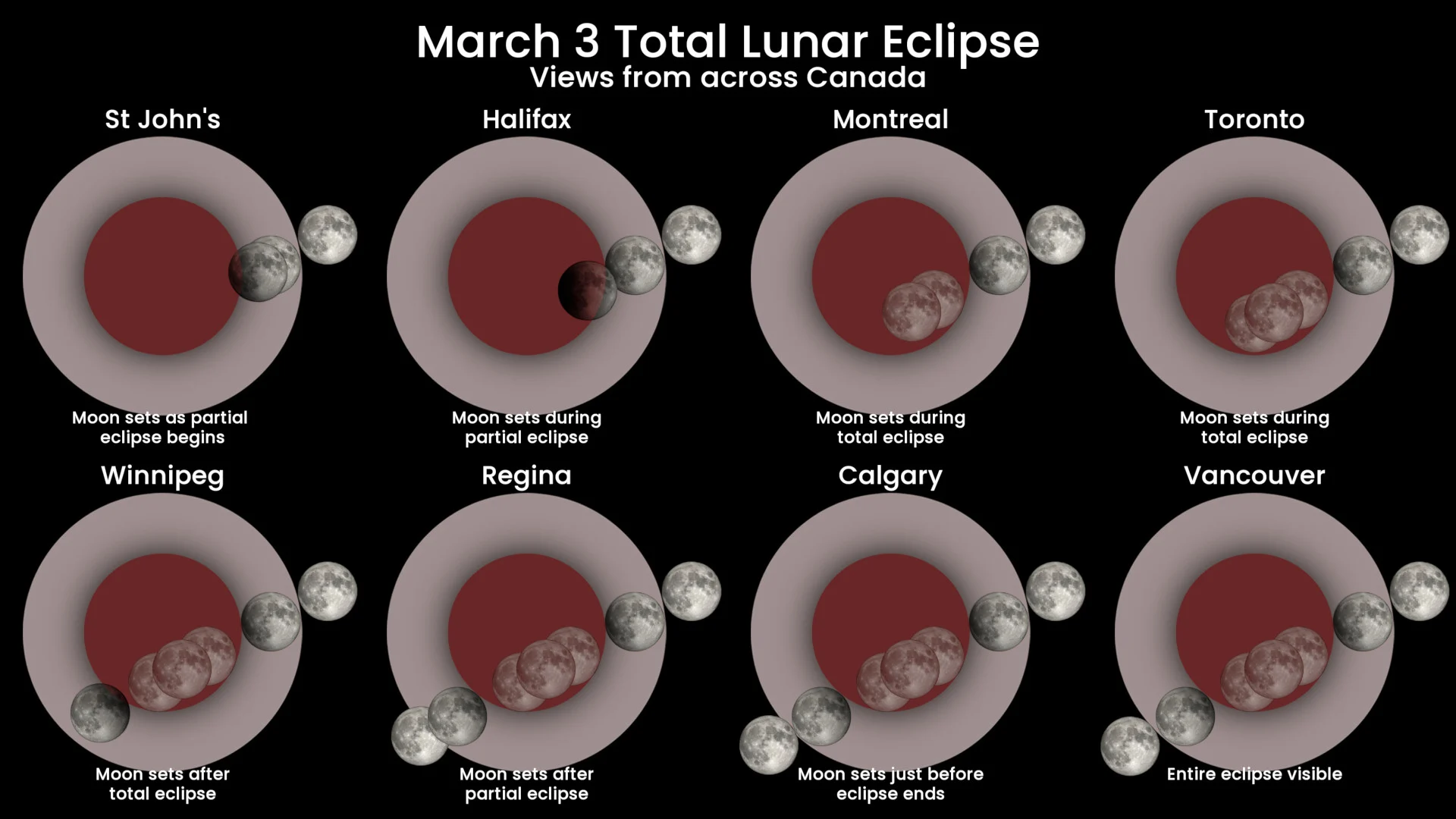
This graphical representation of the eclipse shows how much of the eclipse each location will see, based on the timing. The time the Moon sets during the eclipse is shown for all locations except Vancouver, where it slips below the horizon just after the eclipse ends. (Scott Sutherland/NASA SVS)
As shown in the graphic above, what someone sees from this eclipse varies quite a bit depending on what time zone they watch from during the event.
Farther east, the eclipse will occur closer to dawn on Tuesday. Thus, it will end early due to the Moon setting beyond the horizon.