
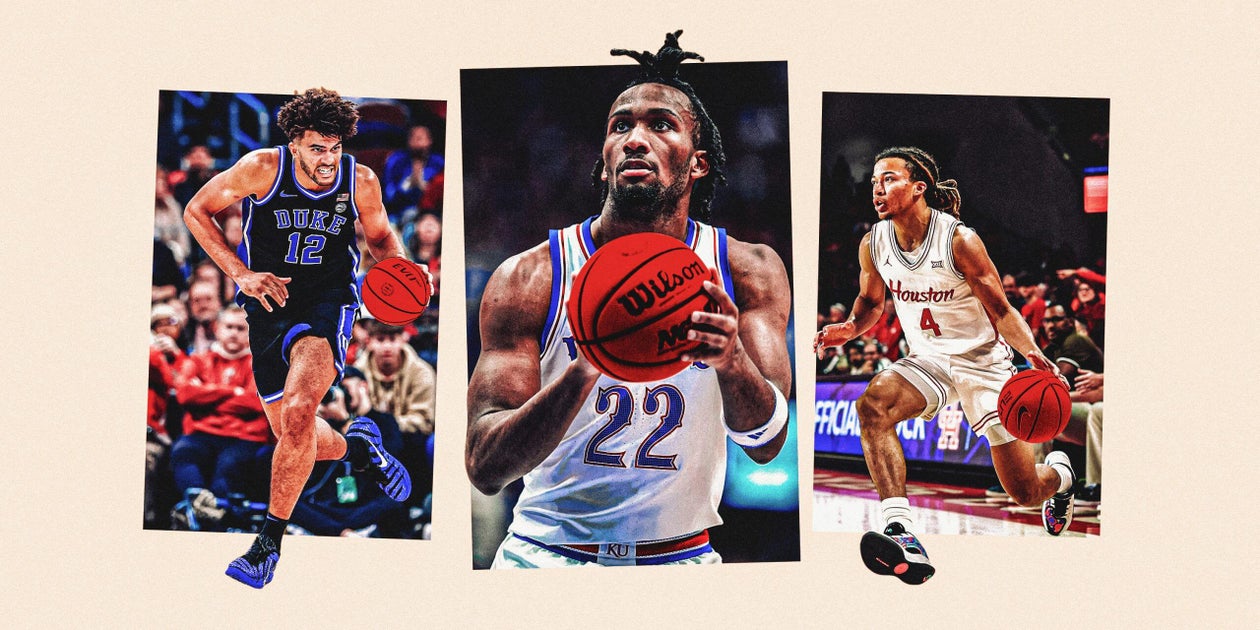
March is here, and as we head toward the madness, it’s worth updating The Athletic’s 2026 NBA Mock Draft.
As I’ve said all year — and as NBA teams have made clear through their tanking measures — the top end of this draft class is absurdly good. With Kansas’ Darryn Peterson, BYU’s AJ Dybantsa, Duke’s Cameron Boozer and North Carolina’s Caleb Wilson, four teams are going to walk away from draft night exceptionally happy.
Even beyond them, the guard class in the middle of the lottery has stepped up significantly. Louisville’s Mikel Brown Jr., Arkansas’ Darius Acuff Jr., Illinois’ Keaton Wagler and Houston’s Kingston Flemings have displayed qualities that could make them franchise guards. Throw in the emergence of Nate Ament at Tennessee, and you have nine players who teams are very excited about.
After that is where the draft gets hectic. I think you could jumble names from No. 10 all the way through No. 30 or so in a hat (with some exceptions) and make a pretty reasonable guess at the final order. Some scouts love the upside of Houston’s Chris Cenac Jr, for example. Others want more ready-made guys like Florida’s Thomas Haugh. What’s clear, though, is that this class is loaded with depth — and this mock doesn’t even include all the freshmen who could have strong finishes to the season or great pre-draft processes. When I reached out to nearly 20 NBA executives over the last few weeks, I got 44 names of players whom teams saw as first-round-quality prospects, including obvious ones like Dybantsa and Peterson, college veterans like Connecticut’s Alex Karaban and Purdue’s Braden Smith and even some off-the-radar freshmen.
Players, colleges and their respective agents sorting through the draft process will be fascinating. How many players will risk being second-round picks to stay in the draft? How many will take what will undoubtedly be significant name, image and likeness money — in the ballpark of $4 million for some top players — right after their collegiate season ends to lock in financial security? How many will test their draft stock, knowing that colleges might not keep their roster spot available through May? And how many NBA teams will promise draft prospects and agents that they will select their clients if they fall to their pick in the first round to persuade them to stay in?
We’re set for what will be a wild game of chicken when it comes to draft prospects in April and May.
A few other notes:
• Every time I do one of these, I get asked where certain players are. (That’s even more true in the NIL era.) The reality is that if I didn’t have a freshman in the consensus top 30 based on the feedback I got from teams, I did not place them here. Players that apply to include Illinois’ David Mirković, Santa Clara’s Allen Graves, USC’s Alijah Arenas, Stanford’s Ebuka Okorie, Duke’s Dame Sarr, Virginia Tech’s Neoklis Avdalas, Arkansas’ Meleek Thomas and Kentucky’s Malachi Moreno. I even withheld a few sophomores, because if they aren’t first-rounders, they would be passing up significant earning potential. Kansas’ Flory Bidunga fits such a billing. All these players should declare for the draft and test their stock in workouts and at the combine, and they could earn their way in. But the goal with this project is to try to gauge what the draft could actually look like, and the best way to do that is by understanding that the landscape has completely changed; underclassmen outside of the top 35 should not declare.
• Ages are as of expected draft night in 2026.
• Heights for college freshmen are what their schools list. Players who attended this year’s draft combine are listed by their official measurements there.
• Draft order is based on standings at the NBA All-Star break.
• Scouts were granted anonymity in exchange for speaking freely about prospects.
1. Sacramento KingsAJ Dybantsa | 6-9 wing | 19 years old | BYU
Dybantsa continues to make his case for No. 1. He’s averaging 24.9 points, 6.8 rebounds and 3.7 assists while shooting 53 percent from the field, 36 percent on 3-point attempts and 75.6 percent from the free-throw line while getting there eight times per game. In Big 12 play, he’s averaging an absurd 26.4 points, 6.4 rebounds and getting to the line 8.3 times per game. He’s taking and making 37.5 percent of his now five 3-point attempts per game. He might have better physical tools entering his pre-draft year than any wing I’ve seen in a while. His ability to play with serious bend mixed with explosiveness allows him to consistently get into the teeth of the defense as a straight-line driver. In transition, he’s a menace. NBA scouts see that production mixed with upside as he continues to improve his skill set.
I wrote last month that while Dybantsa is immensely talented, he was flawed. Over that month, he’s done an incredible job assuaging those worries. He’ll still sometimes take difficult shots instead of making the right pass, but his decision-making and passing have gotten far better. He turns the ball over a bit more often than you’d like, in part because of a pretty loose handle, even if he is excellent in a straight line getting to the rim. But he’s not overdriving as often anymore as he problem-solves the way defenses are playing him. On defense, he’s gotten better throughout the season at making the right rotations — though I wouldn’t say his anticipation has been on point, and he’s not as disruptive as his athletic tools would indicate he should be. He needs to get better on that end.
Still, teams are always going to bet on being able to fix the things that come with age and gamble on a player with elite athletic tools. Dybantsa has a chance to be the kind of apex wing scorer that many of the best teams in the NBA possess and search across the globe to find.
Teams are generally torn on who should go No. 1, with Dybantsa, Peterson and Boozer all in contention. Peterson and Dybantsa, however, are the two most talked about options.
2. Washington WizardsDarryn Peterson | 6-5 guard | 19 years old | Kansas
Unsurprisingly, when I speak with NBA scouts and executives, the question as to what’s going on with Peterson’s injuries and the yo-yo nature of his availability arises. It’s a question that evaluators need answered before selecting Peterson at the top of the draft. What exactly are the injuries? Is it a long-term concern? Is it an issue of mentality and comfort playing through minor injuries? Is this all much ado about nothing, and will we all look back on Peterson’s career and think this was silly?
Some of the medical questions will get answered naturally in the pre-draft process during the checks he’ll go through at the combine. For other questions, teams will have to rely on their intel people to get the right information. Executives and decision-makers are taking a cautious approach to all of this, understanding that they don’t have to decide on Peterson right now with incomplete information. Because they’re going to get the medical review at the combine, there’s no reason for front office personnel to feel too high or low on the Peterson experience at Kansas.
Peterson’s talent is undeniable. The numbers look outstanding, as he’s averaging 19.7 points on 46.5/40.3/80.7 shooting splits in just 27.6 minutes per game. His shot-making ability has been obscene, as he’s drilled an incredible number of difficult pull-up jumpers from all levels of the court. On top of that, the flashes of him getting to the rim have looked spectacular, although he hasn’t done it often enough. Part of that could be because of his injuries, as he looks a bit less explosive than he was in high school, and part of it could be because of Kansas’ lack of spacing, as it consistently plays non-shooters next to him. It’s not dissimilar to what Anthony Edwards sometimes looked like at Georgia, settling for shots away from the rim while no one on his team made more than 35 percent of their 3s.
NBA teams will have to rely a lot on their high school evaluations of Peterson when assessing whether he can consistently get paint touches. The big step forward for Peterson last year at Prolific Prep came with his passing and playmaking out of ball screens. He’s always been a tremendous scorer, but last year he began to read the second and third levels of the defense and make plays off how help defenders played him, even at times manipulating them himself. At Kansas, he has not been asked to do this all that often. For him to go No. 1, that’s what teams will have to buy into.
3. Atlanta Hawks (via NOP)Cameron Boozer | 6-9 forward | 18 years old | Duke
This pick goes to the Hawks after an ill-fated draft-night trade last year in which the New Orleans Pelicans moved their unprotected 2026 first-round pick and No. 23 selection to acquire Derik Queen late in the lottery. Queen has a chance to be a first-team All-Rookie selection, but I would bet New Orleans would love to have this pick back.
For me, Boozer is the safest bet in the class to become a remarkably productive player. There is consensus around the NBA that the son of Carlos Boozer is likely to follow in his father’s footsteps as an NBA All-Star. What teams wonder is whether he profiles as more of a No. 1 option or as a great No. 2 guy like Kevin Love. His game has a lot of power-based elements to it, and that is somewhat concerning for teams given that he’s listed at 6-9 and might not measure that tall without shoes on. Can he consistently separate and draw help defenders in the NBA, where everyone is bigger, stronger and faster, in the same way he did in high school and has in college?
What goes underrated about Boozer is just how incredibly versatile his skill set is. He’s the most productive college player in the country, averaging 22.5 points, 10 rebounds and four assists on his way to a likely national player of the year award, largely because of the myriad ways that Duke can use him. He can post on the interior. He can spot up and attack closeouts or knock down shots from distance, as he’s made 40 percent of his 3.7 3-point attempts per game. You can run him as a screener and roller in ball screens, where he can get to the rim, short-roll into the middle or pick-and-pop effectively. Or, you can run him as a ballhandler in ball screens and let him make plays out of inverted actions. From a skill perspective, because of his balance and ability to dribble, pass and shoot, there is a lot to believe in.
4. Indiana PacersCaleb Wilson | 6-10 wing | 19 years old | North Carolina
In this scenario, the Pacers keep their creatively protected draft pick that will go to the LA Clippers if it falls between No. 5 and No. 9. Wilson is currently out with a fractured left hand. Before that, he had been arguably the most consistent player in college basketball. From Dec. 7 until Feb. 7, Wilson scored between 20 and 23 points in 12 out of 15 games, with his other point totals being 13, 17 and 26. He averaged 9.3 rebounds in that time and also dished out three assists to go with 1.5 steals and 1.3 blocks.
He’s extremely reliable because of his athleticism and power, and I’ve talked to a few scouts who see Wilson in the top group of prospects with Peterson, Dybantsa and Boozer. It hasn’t hurt Wilson’s case that he outperformed all three of those players when North Carolina played them this season (in Dybantsa’s case, it was in an exhibition game, but still).
Wilson’s flaws are easier to scout than the others’. He doesn’t take many 3-pointers (he’s just 7-for-27 on the season), although his mechanics have looked good from the extended midrange area and he’s made about 45 percent of those attempts. Defensively, the block and steal numbers are strong, but he’s not quite as twitchy on the ball as you’d expect for an athlete of his caliber; plus, he’s messy off the ball with his rotations and with how quickly he reacts. But the reality is that few players consistently play with the type of motor and aggressiveness as Wilson does, and he leads the country in dunks for a reason. If you believe his shooting can improve, he has a lot of similarities to Pascal Siakam, who has made multiple All-NBA teams.
5. Brooklyn NetsKingston Flemings | 6-4 guard | 19 years old | Houston
Few players have helped themselves as much as Flemings this pre-draft cycle. He has gone from a player scouts weren’t sure was a one-and-done to a no-brainer top-six choice in the class. He’s wildly explosive and powerful, utilizing a lightning-quick first step to get by opposing players with ease. The Houston guard is leading Kelvin Sampson’s offense wonderfully, attacking the rim and creating easy shots both through his ability to get paint touches and to kick out to his teammates. He’s averaging 16.4 points and 5.2 assists while shooting 48.6 percent from the field and 37.9 percent from 3, but he is also very much an eye-test player. You can feel his explosiveness and burst every time he touches the court. He’s also an excellent decision-maker and has gotten better defensively throughout the year.
The main concerns with Flemings revolve around his jumper consistency and the way that he scores. Flemings’ percentages have gone down a bit in Big 12 play, as he’s made just 33 percent of his 3s and 44 percent of his shots overall. He also doesn’t live at the foul line in the same way of many of the elite prospects in this class. Still, Flemings has had monster games against elite competition, such as his 22 points against Iowa State on Feb. 16, his 42-point masterpiece against Texas Tech on Jan. 24 and his 25 points against Tennessee at the Players Era event in Las Vegas. All of those games came in away arenas, showing his comfort level in hostile environments.
6. Utah JazzKeaton Wagler | 6-6 wing | 19 years old | Illinois
Wagler is unequivocally this year’s biggest draft riser, maybe the biggest draft riser in the one-and-done era.
Wagler was ranked outside of the top 150 in the 2025 recruiting class but has proven his worth as a wildly impressive guard who can create shots both for himself and his teammates, thanks to a crafty, creative handle and outstanding feel for the game. Since moving to the point guard position on Dec. 6, Wagler is averaging 20.2 points, 4.9 rebounds and 5.1 assists while shooting 46 percent from the field, 44 percent from 3 and 82 percent from the line. He’s not particularly impactful on defense, but early in the season, when he was playing more consistently off the ball, he showed more consistent instincts for crashing the offensive glass and creating action plays on defense.
There is some concern about Wagler’s athleticism, as he’s not very quick-twitch with his first step, and he has very little upward explosiveness. He’s also not all that strong yet. But he’s clearly a late-bloomer whose frame gives him some room to grow. I’ve gotten anywhere from No. 2 to No. 9 in the last month when I ask NBA executives about where Wagler ranks on their personal boards; it’s clear that he’s made an impression while leading the nation’s No. 1 offense.
I went with Wagler here over Acuff and Brown because I think Wagler fits the Jazz a bit better. Keyonte George has proven his worth as a primary on-ball player this year, and neither Acuff nor Brown projects to be as effective off the ball as Wagler could be.
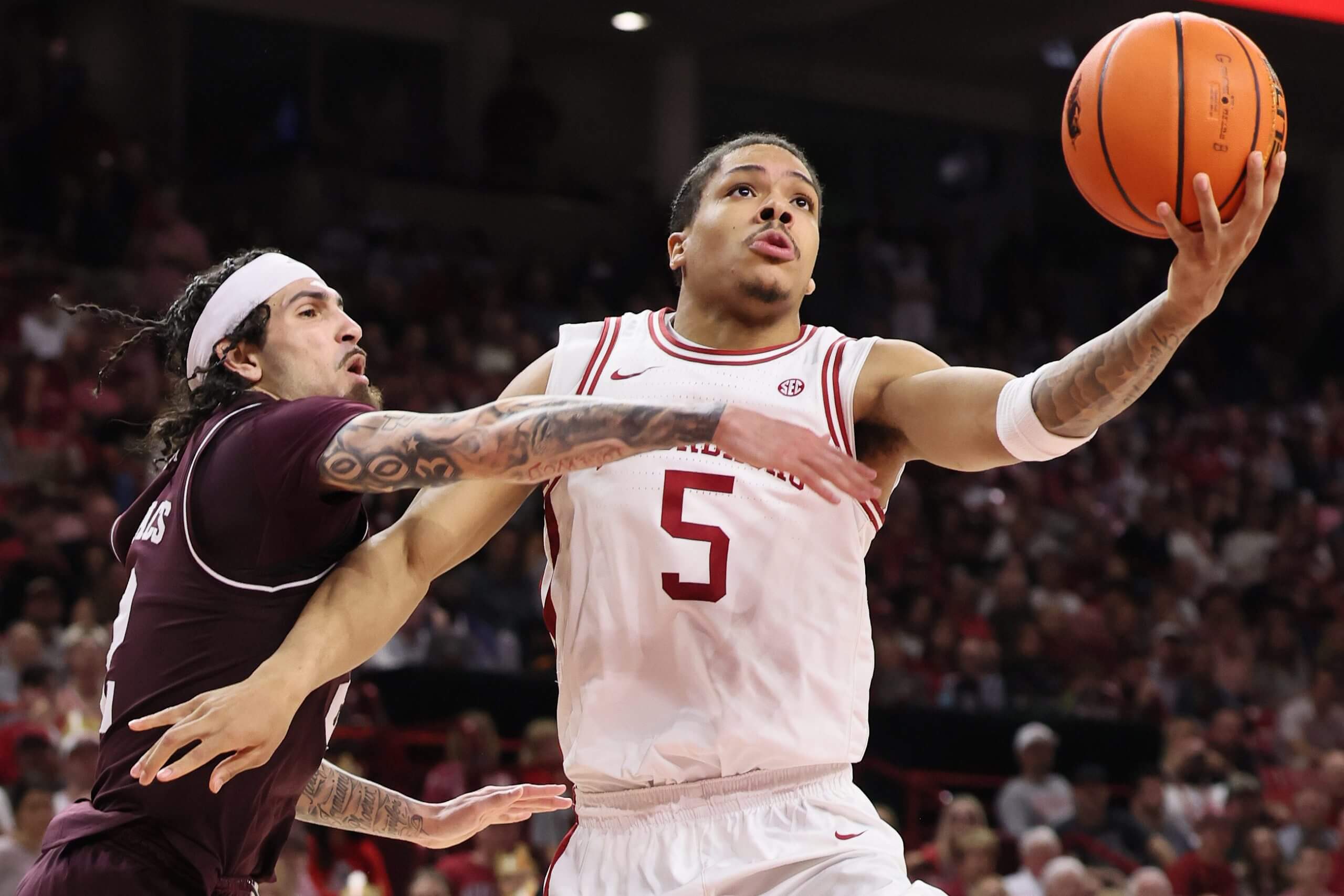
Darius Acuff Jr. has been dominating SEC competition. (Nelson Chenault / Imagn Images)
7. Dallas MavericksDarius Acuff Jr. | 6-2 guard | 19 years old | Arkansas
I don’t know if any player has quieted more worries over the last month with his outstanding play than Acuff. He continues to silence questions by dominating. The freshman guard is averaging 22 points and 6.2 assists while shooting an absurd 49.1 percent from the field, 42.9 percent from 3 and 79.3 percent from the line. He’s the most polished floor general in college basketball. He plays off two feet and moves well without the ball to set up his on-ball moves. His passes are always crisp and on-target, even if his vision and his highlight-reel passes are a bit less polished than some others in the class. His decision-making is superb, and he rarely turns the ball over, posting a 3-to-1 assist-to-turnover ratio.
The only two quibbles that scouts still bring up are whether he can consistently get paint touches against NBA athleticism and length and whether he can guard anyone consistently. In terms of the former, he’s done just about everything in his power to make me a believer that he can separate, thanks to the threat of his shot and elite pace. But the latter is something I’m definitely concerned about. Even though Acuff is stocky and strong, he’s the worst defender of the players slated to go in the top 10 by a wide margin. He struggles to get through screens and shows a lack of engagement too regularly off the ball. Still, the offensive skill package is so good that it’s hard to see how he doesn’t at least turn into a starting-caliber point guard with All-Star upside.
8. Memphis GrizzliesMikel Brown Jr. | 6-4 guard | 20 years old | Louisville
Brown’s best flashes have been those of a top-five pick, and it helps that they’re starting to come in bunches late in the year as he gets past his back injury. He dropped 45 points with 10 made 3s in a game recently against NC State, then followed it up with 29 points, six assists and three rebounds against Baylor and 29 points, five rebounds and four assists against SMU. When Brown has it rolling, there may not be a more dynamic ball-screen playmaker in college basketball. He has range out to 30 feet, though his 3-point shooting has regressed to the mean, and his vision as a playmaker for others exceeds everyone in the class when playing in a screen. If there is anyone in this deep draft class who could average nine or 10 assists per game in the NBA, it’s Brown.
So why is he only No. 8? First, eight or nine players in this class could find themselves in the top five in a lesser draft year. Second, he’s still a bit wild right now. The turnovers are an issue, as he hasn’t figured out how to moderate his decision-making. That’s OK, and it’ll come with experience in all likelihood, but he’s been a bit less effective in that regard than some of his peers. Additionally, his body of work has been smaller this season than others. In his first 14 games of the season, Brown averaged 15.6 points and 5.1 assists versus three turnovers per game, but he’s shot just 37 percent from the field and 28 percent from 3. No one is too worried about Brown shooting it well from distance long-term, but his efficiency and turnovers were an issue early as he dealt with a back issue. If he continues the run he’s on, he’ll likely go higher than this.
9. Milwaukee BucksNate Ament | 6-10 wing/forward | 19 years old | Tennessee
Ament probably hasn’t gotten enough credit yet for turning around a rough start to his season. He was averaging 14.7 points, 6.5 rebounds and 2.6 assists per game in his first 15 games but was only shooting 40 percent from the field and 27 percent from 3. Those numbers were also buoyed by big games against bad teams, like his 23 points against Northern Kentucky, his 19 against Rice and North Florida and his 20 against Rutgers. But over his last 12 games before an injury scare in Tennessee’s game against Alabama, few players have been better in high-major conference play. He’s averaging 22 points, 6.8 rebounds and 2.5 assists while shooting 44 percent from the field, 38 percent from 3 and 84 percent from the line. He’s getting to the line a ridiculous nine times per game in that run, as teams struggle to deal with his comfort on the ball and his ability to long-stride out on his drives to the rim.
He’s playing like a top-five pick in SEC play, but he drops to ninth here because the body of work is less consistent over the totality of the season and because, similarly to Wagler, teams worry about his strength level for his style of play. He’s still quite skinny, and scouts aren’t sure how his frame will fill out long-term. He added a lot of good weight in the offseason leading into his freshman year, which has allowed him to at least deal with the rigors of college basketball. However, he doesn’t have a ton of athletic explosiveness, his finishing at the rim has been concerning when he doesn’t get fouled, and his jumper has been a roller coaster after strong high school samples.
Ament feels like a player for whom pre-draft workouts will be critical. But he is regarded as a high-character player with dribble, pass and shoot capabilities at 6-foot-10, and those are qualities that essentially every NBA team is looking for.
10. Chicago BullsBrayden Burries | 6-4 guard | 20 years old | Arizona
Burries has been outstanding for the Wildcats and is the team’s leading scorer, despite a slow start that saw him average just 7.8 points in his first five games. From that point, he’s averaged 17.3 points while shooting 52 percent from the field, 39 percent from 3 and 78 percent from the foul line for a top-five team. He’s also an aggressive rebounder who has grabbed 5.5 rebounds per game in that time, plus has averaged 2.8 assists and is a solid ball mover who doesn’t take many bad shots.
Teams think he’s a good power guard but worry about him separating from his man consistently in the NBA. He relies on his pace and balance for the most part and might not be able to play as often on the ball. If that’s the case, is Burries good enough at other parts of the game where he’s worth having on the court? I think the answer is yes because of his rebounding and quick hands.
This is definitely where the tier break is in the draft. Even though Ament is flawed, teams can squint and see the upside in a 6-foot-10 wing who can dribble, pass and shoot. For the rest of the players in this next group, I tend to hear the phrase “he looks like a good top-20 pick” as opposed to a surefire lottery guy.
11. San Antonio Spurs (via ATL)Koa Peat | 6-8 wing | 19 years old | Arizona
Peat is a fascinating player who prompts a wide range of opinions from NBA scouts. On the plus side, he’s the second-leading scorer (behind freshman teammate Brayden Burries) for a top-five team in the country. Peat has also won everywhere he’s been and is one of the most decorated players in the class from that perspective. He’s averaging 13.7 points while shooting 54 percent from the field and is a tough, physical rebounder on a team that features guys like Motiejus Krivas and Tobe Awaka, both of whom are elite rebounders. He passes well and makes excellent decisions to keep his team in the flow of the offense, be it in short rolls out of ball screens or on the wing. Peat knows his role and plays it exceedingly well, and he has been an excellent mismatch shot creator for an awesome team.
Yet, the flaws jump off the page. He’s not really a shooter, as he’s only taken 18 3-point attempts and made six of them while hitting just 61.9 percent of his attempts at the foul line — basically in line with his averages at lower levels. Defensively, he’s not overly fast, and there are possessions when you see him get beaten laterally by quicker players. I don’t see him falling outside of the top 20 on draft night — he does too many things too well — but he’s more polarizing than you’d expect for a player who has had a largely successful year on a great team.
12. Charlotte HornetsJayden Quaintance | 6-10 big | 18 years old | Kentucky
Quaintance has only played in four games this year, as he attempted to return early from a torn ACL he suffered late last season before it became clear he wasn’t quite ready for game action. He looked like a potential defensive anchor for a Kentucky team that desperately needed one on the interior and played really well in the team’s win over St. John’s in his first game back. His mobility, quickness and elite defensive instincts jump off the film even when he’s not quite 100 percent. That was even more true last season when he was a 17-year-old at Arizona State and made the Big 12 All-Defense team while averaging 1.1 steals and 2.6 blocks per game.
Ultimately, projecting Quaintance is a fool’s errand until we get answers at the combine on his medicals and whether he can make a full comeback by the time the NBA season starts. If he were fully healthy, I think he’d clearly be the 10th pick in this class, as he reminds me a lot of Robert Williams III, who made an All-Defense team for the Boston Celtics before repeated knee injuries forced him to miss too many games. But the range is extremely wide for Quaintance and could extend all the way down into the 20s.
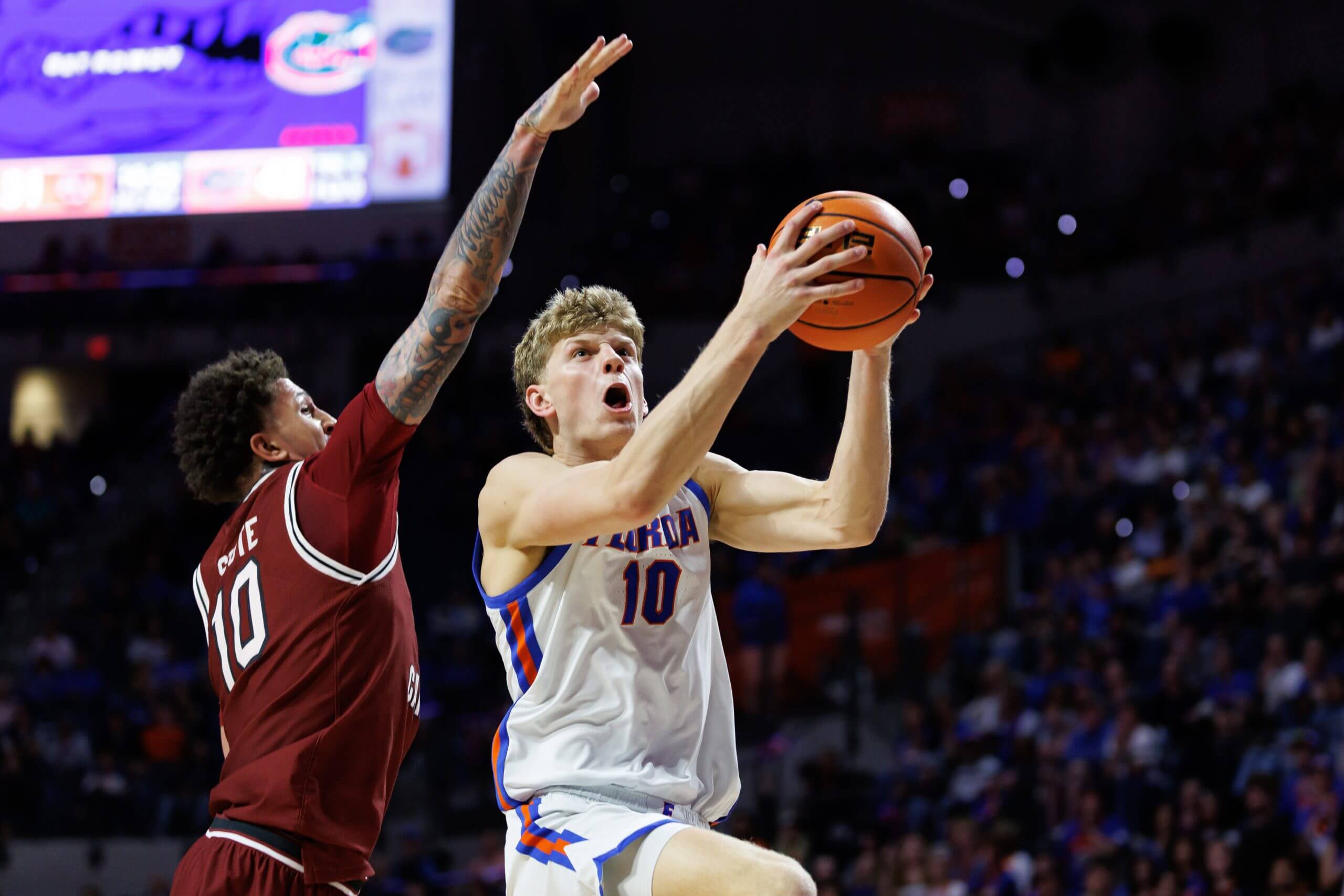
Thomas Haugh is one of the most well-rounded forwards in college basketball. (Matt Pendleton / Imagn Images)
13. Oklahoma City Thunder (via LAC)Thomas Haugh | 6-9 wing | 22 years old | Florida
Teams are excited about Haugh’s well-rounded game. He, Texas Tech forward JT Toppin and Wilson are the only high-major players in the country averaging at least 17 points, six rebounds, two assists, a block and a steal per game (although Iowa State’s Joshua Jefferson and St. John’s’ Zuby Ejiofor are close to those thresholds). He’s a terrific transition player and straight-line driver as a great run-and-jump athlete. His motor runs really hot on both ends, and his defense has gotten better throughout the year, even if there are some lateral concerns. (He tends to have to turn and run to play in recovery as opposed to sliding.) The swing skill for Haugh will be the jumper, as he’s made 33.8 percent of his 3s this season.
It’s hard to find wing/forwards who are this big, this athletic and this skilled. He profiles more as a role player at the next level, but one who could provide some positional flexibility and versatility.
14. Portland Trail BlazersLabaron Philon Jr.| 6-3 guard | 20 years old | Alabama
Philon has taken advantage of his extra year, returning to college and helping himself immensely while stepping into Alabama’s lead guard role. He’s averaging 21.4 points and nearly five assists per game while shooting 51 percent from the field, 38.6 percent from 3 and 78 percent from the foul line. Though his defense has taken a bit of a step back from last season, when he was terrific while playing next to Mark Sears and only sharing the on-ball responsibilities, he has been acceptable on that end.
So why is he not higher? Three reasons. First, this class is loaded with truly elite point guards who teams have ranked ahead of him, such as Brown, Acuff and Wagler. Second, teams worry about his frame and that he seemingly has not put on much mass this year after returning to school. Third, Alabama’s scheme is clearly favorable to him and gives him the space and time he desires to operate, both in half-court and transition settings. Still, somewhere in the No. 10 to No. 22 range feels right for him.
15. Miami HeatKarim Lopez | 6-8 wing | 19 years old | New Zealand Breakers
Lopez’s numbers look in line with past lottery picks coming out of Australia’s NBL Next Stars program, as he’s averaging 12 points, six rebounds, two assists, a steal and a block per game. He has excellent hands, is very skilled with the ball and often operates as essentially a mismatch three/four hybrid for the Breakers. He’s a physical bowling ball who can play in screens and short rolls. He can attack in a straight line from the perimeter, and he is a solid finisher. He also had a few monster games down the stretch, such as his 32 points against Melbourne United.
Ultimately, teams wonder what his role is in the NBA. He looks to have good touch, but he hasn’t hit 3s at a high-enough level and has a slower release. Additionally, his lateral speed isn’t particularly great on both ends. He doesn’t have much shake on the ball, and I’m definitely worried about his defense. Lopez is skilled enough that he’ll be a terrific player somewhere, but I wonder if he’s going to be the best player in EuroLeague at some point or if he’ll be a legitimate NBA player. It will probably depend on what level he can reach as a shooter.
16. Golden State WarriorsBennett Stirtz | 6-4 guard | 22 years old | Iowa
The level to which Stirtz has figured out college basketball is pretty astounding after a slow start. In 18 Big Ten games, he’s averaging 22.9 points and 3.7 assists while drilling 52 percent of his shots from the field and 38 percent of his seven 3-point attempts per game. Moreover, he’s getting to the free-throw line five times per game and making 84 percent of his attempts. With his pace and skill, he’s been a dynamite scorer with elite-level basketball IQ for a team that, frankly, isn’t that talented by Big Ten standards. The Hawkeyes also play at one of the slowest paces in college basketball under coach Ben McCollum, making these numbers all the more impressive. (They play about 10 possessions fewer per game, on average, than Alabama.)
There are some concerns about whether Stirtz can consistently get to the rim in the NBA and whether he’ll be able to guard at a high-enough level against professionals. But teams always want guards who are elite shooters and who can dribble and pass, plus have a tremendous feel for the game.
17. Memphis Grizzlies (via ORL)Hannes Steinbach | 6-11 big | 19 years old | Washington
With Steinbach, scouts see more of a solid potential starting big man with great hands, good touch and the instincts to be highly productive at the next level. He’s an elite rebounder who is averaging 11.1 per game, including 3.9 offensive rebounds. He’s also scoring 18 points per game in a physical Big Ten by using his frame and timing to carve out space and then using his terrific interior touch to score. He’ll also occasionally step out and knock down a 3 and has made 14 of 42 (33.3 percent) from distance. There are some worries about his quickness on defense, but guys who are this productive as teenagers at this position have a strong track record of being useful NBA players.
18. Oklahoma City Thunder (via PHI)Braylon Mullins | 6-5 wing | 20 years old | Connecticut
NBA teams share a wide range of opinions on Mullins. Some see him as a potential lottery pick, an elite floor spacer and shooter who can get his 3-point shot against any defense thanks to his ability to move without the ball and fire off that movement at high speed. Others see him as more of a pick in the 20s because of his frame and questions about whether he can guard in the NBA.
After an injury-riddled start to the season, Mullins is averaging 14 points, 3.5 rebounds, 1.3 steals and 0.9 blocks over his last 14 contests for the Huskies while drilling 40.2 percent of his seven 3-point attempts on a top-10 team in the country. NBA teams are starved for this kind of shooting weapon and high-IQ instincts, so Mullins should certainly go in the top 25.
But Mullins is the first player on the board whom I can see a legitimate argument for staying in school, taking advantage of NIL dollars, working on his frame and comfort handling the ball and coming out into a weaker 2027 draft.
19. Charlotte Hornets (via PHX)Yaxel Lendeborg | 6-9 big | 23 years old | Michigan
Lendeborg helped himself this season by transferring to Michigan and performing as one of the best players on one of the best teams in the country. His counting numbers are down from their heights when he was at UAB, but he’s averaging 14.3 points, 7.3 rebounds and 3.6 assists while playing aggressive defense across the court, often in a more perimeter-based role than what we saw previously. He’s also an active help defender with excellent hands, as he consistently rotates across to block weakside shots and is disruptive getting into passing lanes.
So why isn’t he higher, given that he’s listed 6-foot-9 with a massive 7-foot-4 wingspan? He’s going to be 24 before he plays an NBA game, and the jumper has been questionable this season, as he’s shot just 31 percent from 3. If Lendeborg can’t shoot, teams might wonder if he’d be more of a big than a wing and worry about the offensive role. Still, he’s enormous, skilled and makes a massive impact on the box score every night. I consistently get a range of No. 12 to No. 24 for him.
20. Toronto RaptorsPatrick Ngongba II | 6-11 big | 20 years old | Duke
Ngongba has turned into a weirdly polarizing player for scouts, with some very strongly appreciating his well-rounded game on both ends and thinking it will translate exceedingly well. Ngongba is an excellent passer who initiates Duke’s actions from the top of the key regularly. He has finished well around the basket when given the chance, even though he’s not that explosive vertically, due to good touch. Defensively, Ngongba takes up a ton of space on the interior and is very solid positionally. Duke’s defense is eight points better per 100 possessions with him on the court because of how well he protects the rim.
His lack of vertical explosion, however, gives scouts pause as to how his finishing at the rim will translate. He’s also not a particularly strong defensive rebounder, and scouts wonder whether he can anchor a defense by ending possessions. Ngongba also has a history of foot injuries; he missed the senior year of his high school season with a right foot injury, and he had a left foot injury last fall.
21. Detroit Pistons (via MIN)Christian Anderson Jr. | 6-2 guard | 20 years old | Texas Tech
If you made me choose my pick for the best shooter in the 2026 draft class, it would be Anderson. The smaller guard is drilling 43 percent of his eight 3-point attempts per game and is an absurd shot maker at the point guard position. He can make them going to his right or to his left, hits them off the catch after movement or off pull-ups by creating space. He’s also a terrific passer out of ball screens, averaging 7.7 assists per game.
The two big questions are pretty simple. First, can Anderson generate consistent paint touches and get to the rim? It’s been hit or miss in that respect, particularly in Big 12 play. He’s averaging just four attempts per game inside of 2-point range because of his lack of size and strength. That size and strength question is also an issue on defense, where Anderson is a willing worker and fights for position but isn’t strong enough yet to hold up at the point of attack through his core and lower half.
22. Los Angeles LakersMorez Johnson Jr. | 6-9 big | 20 years old | Michigan
Johnson is one of my favorite players in college basketball. He’s one of the most efficient players in the country, averaging 13.4 points per game while shooting 65 percent from the field. He gets to the foul line four times per game and makes 79 percent of those. He’s a tough rebounder who is physical on the interior and crashes with his long arms. But I love Johnson the most on defense, as I think he’s the best defender on one of the three best defenses in college basketball. He’s tremendous as a post defender, flying around in help and showcasing switchability on the perimeter. He’s an incredibly versatile player on that end.
Where are teams worried? Johnson is a bit undersized for his role despite his strength and doesn’t have a ton of offensive versatility. Essentially, he’s a play finisher around the interior. That skill set is reminiscent of Isaiah Stewart, and Stewart has turned into a very valuable player for the Detroit Pistons.
23. Atlanta Hawks (via CLE)Chris Cenac Jr. | 6-10 big | 19 years old | Houston
Cenac is another wildly polarizing prospect. Some view him as a potential lottery pick, while others think he desperately needs another year at Houston. One of the most highly touted prospects in the 2025 recruiting class, Cenac is an incredibly flexible athlete who moves well on the perimeter and has a burgeoning offensive game to match. He plays a lot of minutes at power forward for Houston, often sitting in the corners or cutting baseline to space the court. He’s also embraced his role on an excellent team and seems to have enjoyed being challenged by Kelvin Sampson and the coaching staff to be a better rebounder and more aggressive defensively.
Sampson has done a great job of pairing Cenac’s minutes with Kingston Flemings and Milos Uzan. When that trio is on the court, the Cougars outscore their opposition by 31 points per 100 possessions, per CBB Analytics. When Uzan and Flemings are out there without Cenac, the team wins its minutes by three points per 100. His presence is clearly positive, but teams worry about his role at the next level. Is he capable as a true five? Will he embrace rolling and rim-running consistently as opposed to playing a perimeter-based game, something we haven’t seen from him going back to high school? While he’s improved defensively throughout the year, he still doesn’t make as many high-IQ rotations as some would want. It’s clear that Cenac is still a project, so teams vary on how willing they are to take him, knowing that it might take some time. But it could pay major dividends down the road.
24. Philadelphia 76ers (via HOU)Dailyn Swain | 6-8 wing | 20 years old | Texas
Swain has helped himself a lot by following his former Xavier coach Sean Miller to Texas. The slashing wing has moved into much more of a primary role and thrived, averaging 17.7 points, 7.4 rebounds and 3.1 assists per game while shooting 55 percent from the field and driving his way into more than five free-throw attempts per game. His style is very reminiscent of another former Xavier wing, Naji Marshall, as he is an aggressive downhill player who should have zero issue pressuring the rim even in the NBA, but who also needs to improve as a shooter to maximize that ability. But Swain also has far better overall explosiveness and his body mechanics allow him to get into tighter areas of the court with ease.
Swain’s shot mechanics are very elongated and take a while to release, meaning that opposing players can close out on him with little issue and force contested shots. While he clearly has touch and has made 80 percent of his free throws in his career, he still hasn’t had a season where he’s made shots consistently. Additionally, while Swain is a ball hawk on defense who averages 1.5 steals for his career, he’s a riverboat gambler who often misses help rotations, and he’s often a negative on the defensive end. There is a lot to like with Swain, but you have to believe in what he can do right now as opposed to what he can’t do to buy into him.
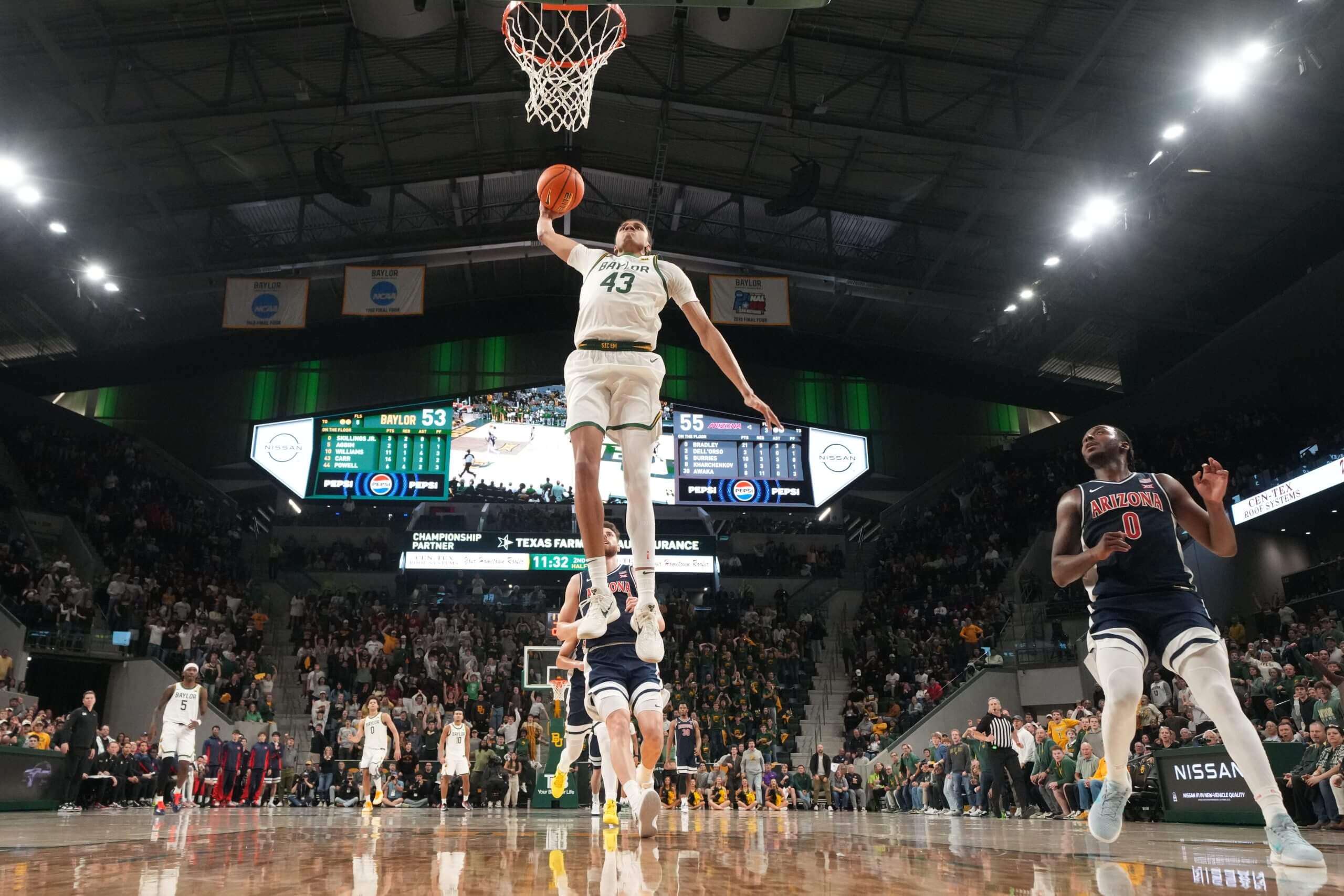
Cameron Carr brings length and shooting but needs to get stronger. (Chris Jones / Imagn Images)
25. New York KnicksCameron Carr | 6-6 guard | 21 years old | Baylor
Carr had a nuclear hot start to the season and has largely settled in as one of the best high-major scorers in the country. He’s averaging 19 points per game while shooting 51 percent from the field, 38 percent from 3 and 80 percent from the foul line. Carr is a terrific shooter with great straight-line slashing instincts, using his long strides and length to cover ground quickly before getting to the rim, and he also has a nice pull-up game from the midrange if his drive gets cut off.
What scouts are looking for in the final month is the ability to impact the game in other ways. He’s up to 2.7 assists per game after a slow start there, and he has done a nice job finding teammates when help defenders flood toward him. But defensively, he still doesn’t impact the game unless he’s rotating across for a weakside shot block or contest. Carr needs to keep putting on weight and getting stronger. But guys who are this long and can shoot tend not to last long on draft night. Don’t be surprised if he goes higher than this.
26. Denver NuggetsAmari Allen | 6-8 wing | 20 years old | Alabama
Allen is a terrific Swiss Army knife wing. He’s averaging 12 points, 7.3 rebounds, 3.3 assists, 1.1 steals and nearly one block per game while shooting 46 percent from the field, 38 percent from 3 and 75.8 percent from the foul line. His numbers have jumped in SEC play since he’s moved into the starting lineup. He’s one of those players who does a little bit of everything without truly excelling in a single area outside of rebounding. But NBA teams are always looking for wings who can dribble, pass and shoot while providing at least solid size on the defensive end.
27. Boston CelticsAday Mara | 7-3 big | 21 years old | Michigan
After a disappointing first two years at UCLA, Mara has worked his way back into draft consideration by being one of the best shot blockers in college basketball while also being arguably the best passing 7-footer. He’s swatting nearly three attempts per game, contesting everything on the interior when he’s set. Michigan uses his creativity and intelligence on offense well by having him sometimes initiate sets out high or on the wing as a passer, where he’s elite at finding cutters from all sorts of fun looks. He’s dishing out 2.4 assists per game and has thrown some highlight reel-worthy looks. He’s also averaging 11.4 points while shooting 67.7 percent from the field.
All of that has the makings of a great NBA big man, but there are pronounced concerns. For one, he’s not overly quick, which shouldn’t come as a surprise. He sometimes gets the corner turned on him in ball screens and is not that effective when he gets isolated. Mara also doesn’t have great hands around the rim and has a penchant for bobbling the ball instead of catching it immediately.
28. Cleveland Cavaliers (via SAS)Motiejus Krivas | 7-2 big | 21 years old | Arizona
In a truly baffling decision by the Naismith committee, Krivas was left off the midseason watchlist for National Defensive Player of the Year. I feel pretty strongly that he should be a finalist. No player in the country is better at using his size and verticality at the rim without blocking shots than the big Lithuanian, and the numbers back that up. When he’s on the court, opponents’ true-shooting percentage drops all the way to 45.1 percent, versus 55.1 percent when he’s off the court. Largely, that’s because they take three fewer shots at the rim per 40 minutes and shoot 10.6 percent worse at the rim when he’s on the court. Opponents are shooting just 49 percent at the rim with Krivas on the court and 32.9 percent on 2-pointers from outside of 5 feet in the paint, per CBB Analytics. Arizona’s defensive rebounding rate also jumps with Krivas out there, even though his backup, Tobe Awaka, is one of the country’s best individual rebounders.
Throw in that Krivas is also a terrific finisher on the interior, he’s mobile and he also makes his free throws. I personally think he’s been far too unsung a hero on this Arizona team. Scouts see him as a potential option in the 20s, but I’ll be interested to see if that changes as they dig deeper into Arizona’s bevy of prospects.
29. Dallas Mavericks (via OKC)Tyler Tanner | 6-0 guard | 19 years old | Vanderbilt
Tanner is one of the most interesting players in the country and another one of my favorites to watch. The diminutive guard is a terrific athlete who can sky around the rim as well as burst his way by opposing defenders. He’s good in ball screens, a strong shooter and works hard on defense with quick hands. He’s also one of the most productive players in the country, averaging 18.5 points, 3.5 rebounds and 5.2 assists while shooting 48.4 percent from the field, 36 percent from 3 and 86 percent from the free-throw line.
The issue is that smaller, skinny guards are going by the wayside in the NBA and are incredibly difficult to make work in high-leverage moments with how aggressive teams have gotten at attacking what they perceive to be mismatches. Teams question whether he can guard in the NBA, as there are not many players this skinny and small who are starters.
30. Minnesota Timberwolves (via DET)Tounde Yessoufou | 6-5 wing | 20 years old | Baylor
From a scoring perspective, Yessoufou has been one of the most productive freshmen in the country. He’s averaging 17.6 points per game, while grabbing 5.7 rebounds per night. He’s all sorts of physical and plays with an insatiable motor that never seems to stop running.
Teams, however, are concerned about his style of play and how it will translate. Yessoufou is largely a power-based player and has gotten a lot of recent points through mismatches against smaller players, posting them or attacking out of the midpost. That’s not a style that works in the NBA. Additionally, while Yessoufou sports a remarkably high steal rate, his overall defensive quickness and awareness are not that strong. He regularly gets beat off the bounce by quicker players.
Second round
31. Sacramento Kings: Joshua Jefferson | 6-9 wing | 22 years old | Iowa State
32. New York Knicks (via WAS): Henri Veesaar | 7-0 center | 22 years old | North Carolina
33. Chicago Bulls (via NOP): Rueben Chinyelu | 6-10 big | 21 years old | Florida
34. Memphis Grizzlies (via IND): Braden Smith | 6-0 guard | 22 years old | Purdue
35. Brooklyn Nets : Alex Karaban | 6-7 wing | 22 years old | Connecticut
36. San Antonio Spurs (via UTA): Isaiah Evans | 6-6 wing | 20 years old | Duke
37. Oklahoma City Thunder (via DAL): JoJo Tugler | 6-8 forward | 21 years old | Houston
38. LA Clippers (via MEM): Juke Harris | 6-7 wing | 20 years old | Wake Forest
39. Boston Celtics (via MIL): Adam Atamna | 6-5 guard | 18 years old | ASVEL
40. Washington Wizards (via CHI): Tarris Reed Jr. | 6-11 big | 22 years old | Connecticut
41. Brooklyn Nets (via ATL): Zuby Ejiofor | 6-9 big | 22 years old | St. John’s
42. Sacramento Kings (via CHA): Richie Saunders | 6-5 wing | 24 years old | BYU
43. Denver Nuggets (via LAC): Sergio De Larrea | 6-5 wing | 20 years old | Valencia
44. San Antonio Spurs (via POR): Emanuel Sharp | 6-3 guard | 22 years old | Houston
45. San Antonio Spurs (via MIA): Momo Faye | 6-10 big | 21 years old | Senegal
46. Charlotte Hornets (via GSW): Dash Daniels | 6-6 wing | 18 years old | Melbourne United
47. Orlando Magic: Tamin Lipsey | 6-1 guard | 23 years old | Iowa State
48. Phoenix Suns (via PHI): Ja’Kobi Gillespie | 6-1 guard | 22 years old | Tennessee
49. Toronto Raptors: Ryan Conwell | 6-4 guard | 22 years old | Louisville
50. Dallas Mavericks (via PHX): Baba Miller | 6-11 wing | 22 years old | Florida Atlantic
51. Washington Wizards (via MIN): Jaden Bradley | 6-3 guard | 22 years old | Arizona
52. Golden State Warriors (via LAL): Darrion Williams | 6-6 wing | 23 years old | NC State
53. LA Clippers (via CLE): Michael Ruzic | 6-11 big | 19 years old | Joventut
54. Houston Rockets: Nick Martinelli | 6-6 wing | 22 years old | Northwestern
55. New York Knicks: Nate Bittle | 7-0 big | 23 years old | Oregon
56. Chicago Bulls (via DEN): Milos Uzan | 6-4 guard | 23 years old | Houston
57. Atlanta Hawks (via BOS): Bruce Thornton | 6-2 guard | 22 years old | Ohio State
58. Minnesota Timberwolves (via SAS): Otega Oweh | 6-5 guard | 22 years old | Kentucky
59. Washington Wizards (via OKC): Lamar Wilkerson | 6-4 guard | 24 years old | Indiana
60. New York Knicks (via DET): Dillon Mitchell | 6-8 forward | 22 years old | St. John’s