
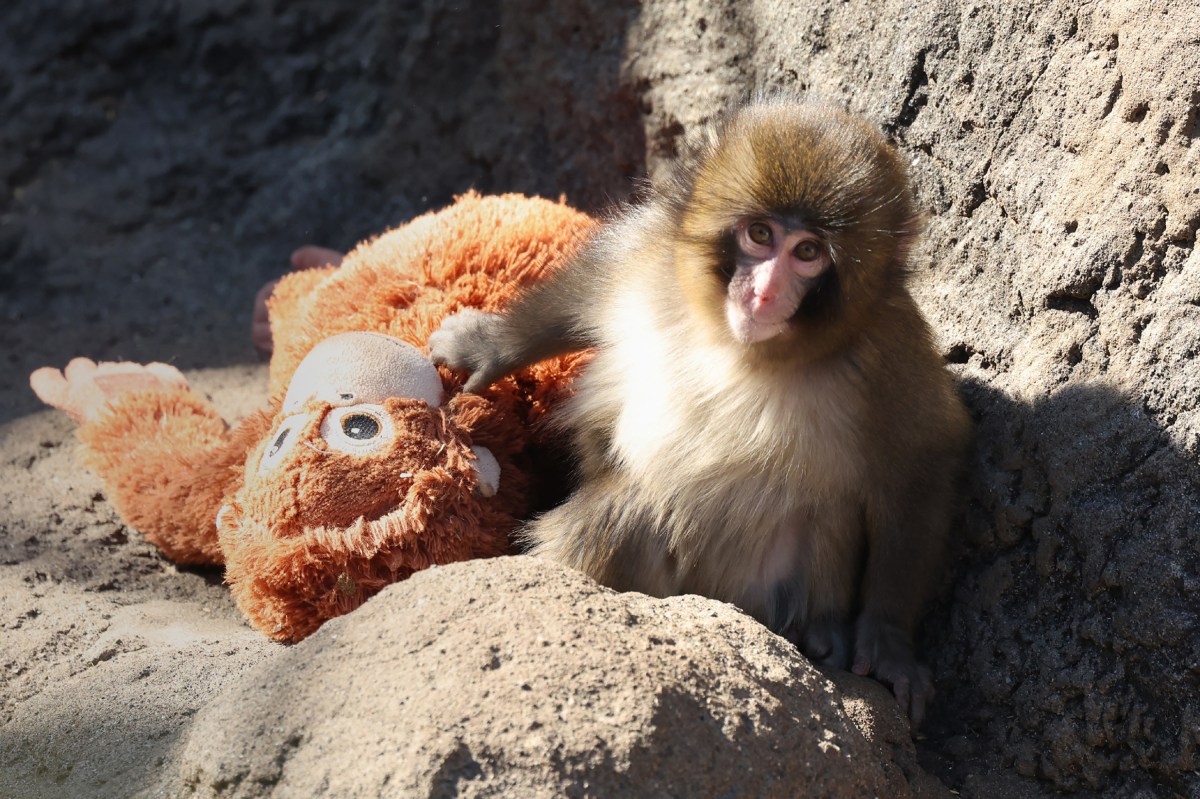
As millions of fans follow the emotional journey of Punch, the 7‑month‑old Japanese macaque whose attachment to a stuffed orangutan toy has made him a viral sensation, one lingering question continues to tug at the heartstrings: Will the tiny primate ever reunite with the mother who abandoned him at birth?
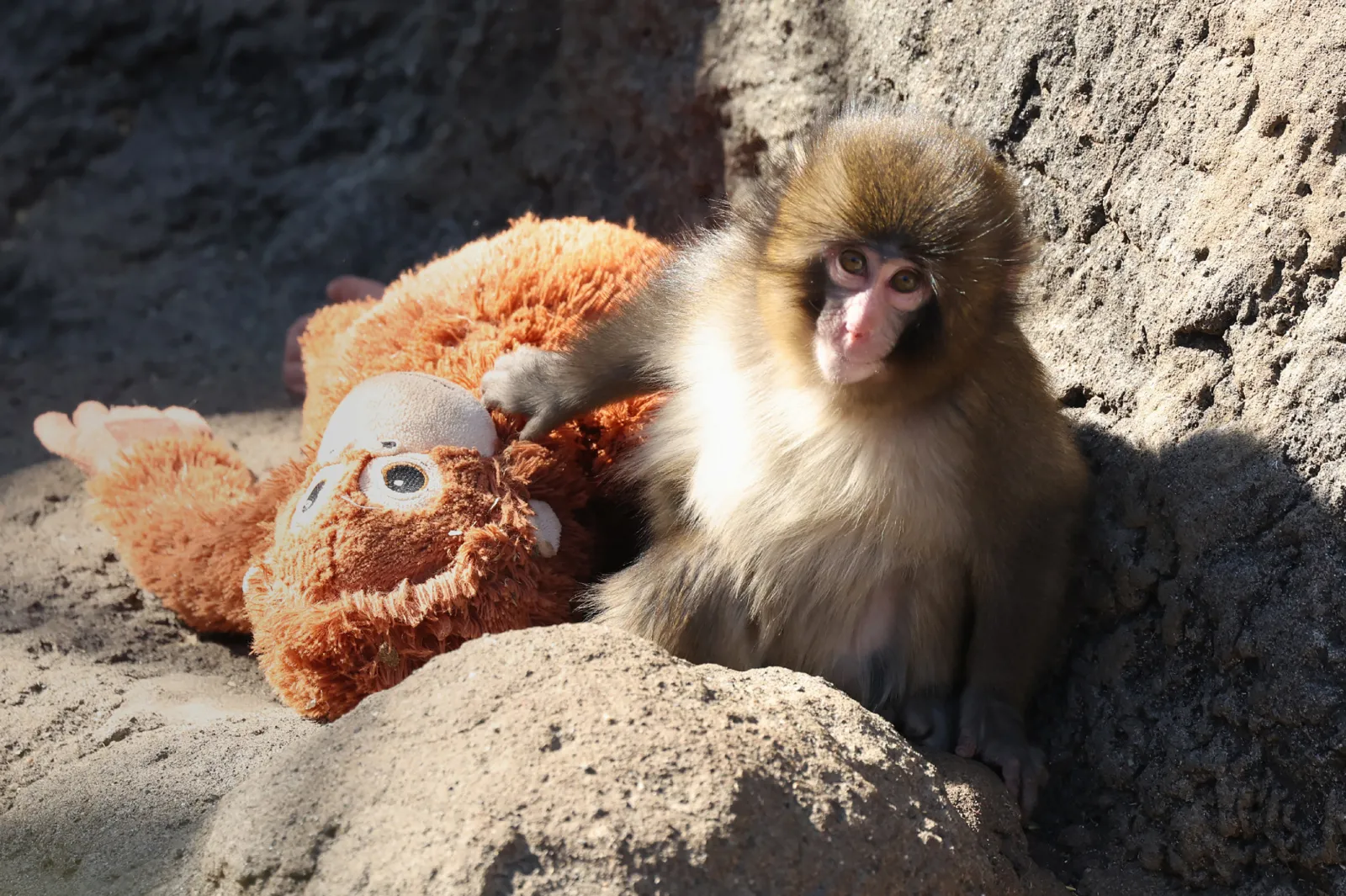
The infant, known in Japan as Panchi-kun, was born on July 26, 2025, and rejected by his mother shortly after birth. Keepers at the Ichikawa City Zoo provided soft comfort items, and Punch quickly bonded with a plush orangutan—a relationship that turned him into a social media star and drew surging crowds to the zoo. However, Punch’s journey has been anything but easy. Other monkeys in the troop have also exhibited unsettling behavior toward Punch, with many social media users expressing concern when a larger macaque dragged Punch across an enclosure, with the infant fleeing to clutch his toy for comfort.
Punch continues to integrate into his troop at Ichikawa City Zoo, and in recent reports, one adult macaque named Onsing has groomed and hugged the younger monkey. Despite this recent development, Punch will likely never be able to recover his relationship with his mother.
Newsweek reached out to the Ichikawa City Zoo via email for comment.
 Would Punch Recognize His Mom?
It remains unclear whether Punch’s mother is at the zoo or even alive, primatologist Debbie Metzler told Newsweek. Regardless, the mother-infant bond will likely not be repaired.
“That mother-infant bond has, at this point, been disrupted,” Metzler said. “[Punch] has not had a natural upbringing, and he has not learned the skills he needs to thrive in a social group. There’s still potential…that he could be accepted in the group, but he really needs to be in a facility where he can exhibit his natural behaviors out of the limelight.”
A reunion between Punch and his mother is also unlikely because of the long time that has passed since they last saw each other.
“After 6–7 months of separation, particularly if the infant has been hand-raised by humans, reintegration with the biological mother would be complex and uncertain,” New England Primate Conservancy President and founder Debra Curtin told Newsweek. “In macaques, early bonding occurs immediately postpartum through constant physical contact, nursing, scent, and vocal communication. A prolonged separation during this critical period can significantly disrupt that bond.”
Even if the two were to meet, Punch might not even recognize his mother.
“Infant macaques rely heavily on early continuous contact to establish secure attachment. After months of separation, especially during early development, recognition and bonding may not function as they would under normal rearing conditions,” Curtin said.
Is It Common for Japanese Macaques to Abandon Their Babies?
In the wild, macaques form strong bonds with their infants, though abandonment can occur when there is significant stress, illness, social instability, environmental factors, or when the mother is inexperienced, Curtin said.
“In captive settings, maternal competence can also be influenced by whether a female has had the opportunity to observe other mothers raising infants, something that is an important part of social learning in primates,” Curtin said.
The Heartbreaking Meaning Behind Punch’s Stuffed Orangutan
Punch dragging his stuffed orangutan around his enclosure might be perceived as cute, but actually reflects his “need for constant contact and comfort that would normally come from the mother,” Curtin said.
“In macaques, attachment is built through continuous physical proximity. When that bond is disrupted, substitute objects can become a source of security—a coping response to early separation,” Curtin said.
The stuffed animal might also become problematic for Punch in the future.
With more and more people flocking to the enclosure to see the little monkey, it may create a stressful situation for him, Metzler said, adding that going viral can also harm animals on a larger scale.
“If some certain viral animals on social media are having more close contact with humans, sometimes people are led to believe it’s fine to go up to, let’s say a bear cub in the wild, and that can be a death sentence for [the cub] if they start to habituate to humans,” Metzler said.

In a polarized era, the center is dismissed as bland. At Newsweek, ours is different: The Courageous Center—it’s not “both sides,” it’s sharp, challenging and alive with ideas. We follow facts, not factions. If that sounds like the kind of journalism you want to see thrive, we need you.
When you become a Newsweek Member, you support a mission to keep the center strong and vibrant. Members enjoy: Ad-free browsing, exclusive content and editor conversations. Help keep the center courageous. Join today.
