

BMC, Ronan Mc Laughlin
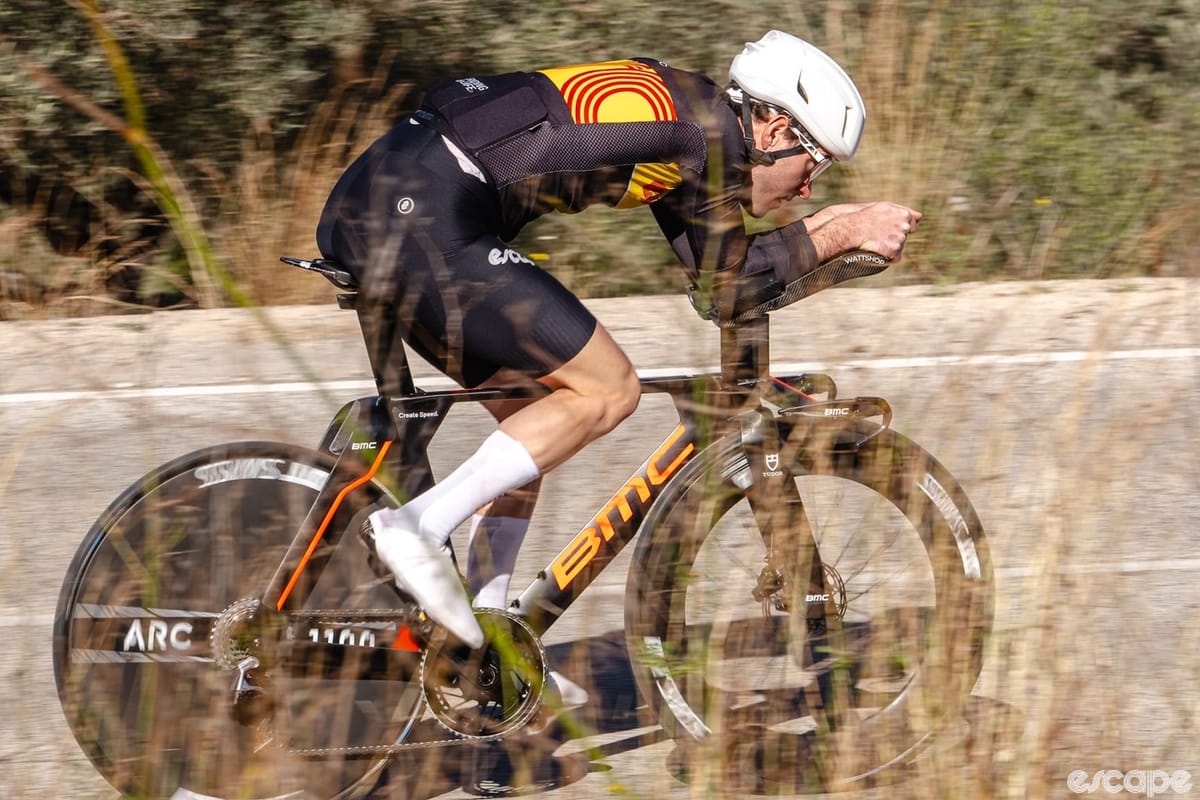
After more than a year of development, countless CFD simulations, wind-tunnel tests, velodrome and outdoor testing, and a UCI rule change that threatened to scupper the entire project, BMC has officially unveiled its new Timemachine MPC TT bike.
The bike has already seen racing action this year, but as Stefan Küng rolled down the start ramp at the Volta ao Algarve for the bike’s first test in top-level competition, it marked the conclusion of a development project that Escape Collective has been deeply embedded within almost since its inception. (Küng finished 7th in the Algarve TT but alas, broke his left femur in a crash at the Omloop Nieuwsblad and will be out of the action for some time.)
Exclusive: Inside BMC and Tudor’s innovative time trial project
The bike brand and its team partner invited us to document the development of a time trial bike still so new even some of Tudor’s pro riders haven’t seen it yet.
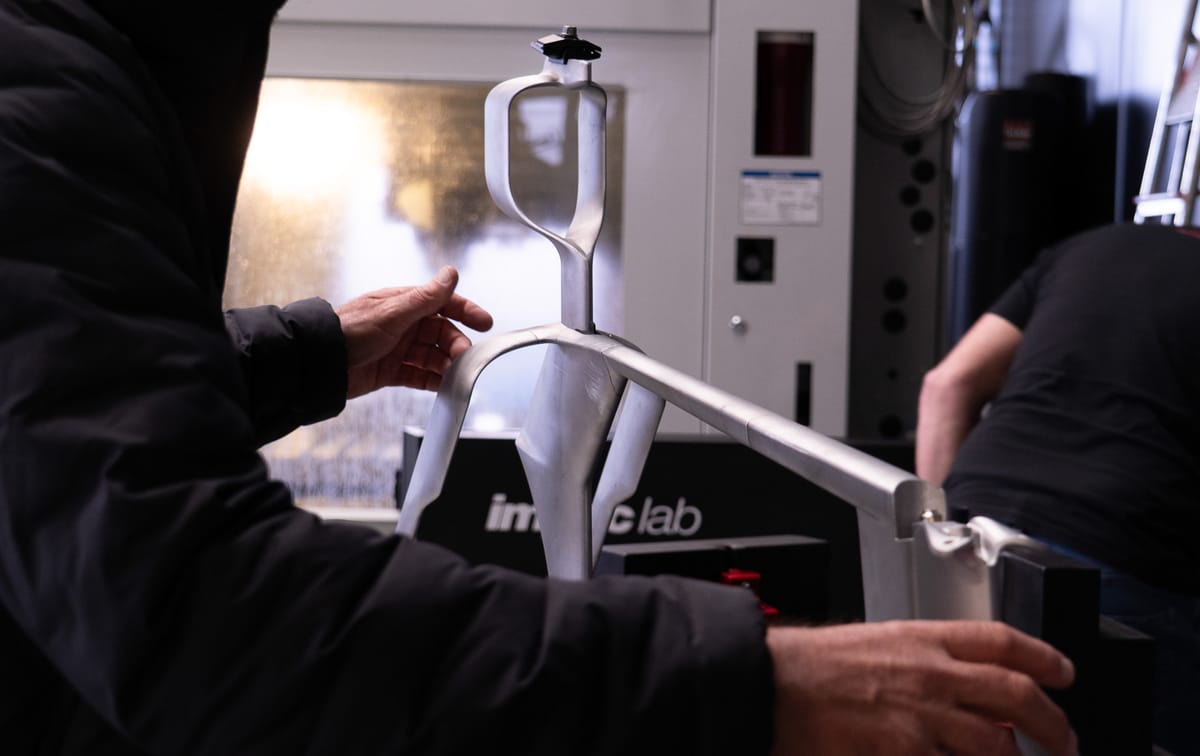
Exclusive: Part 2 inside BMC and Tudor’s new TT bike project
Concept validation is quickly followed by disaster when the UCI changes its frame design rules.
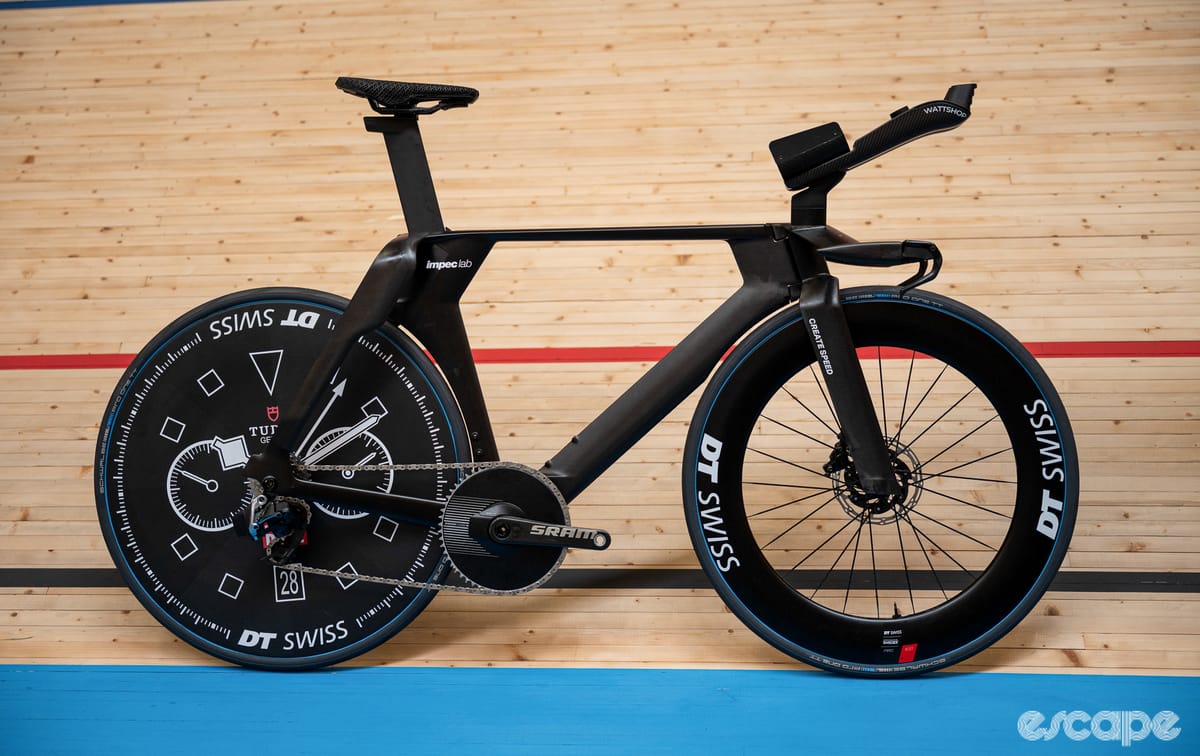
This is the third and final instalment in our series following the project from the inside. In parts one and two, we covered the “why” and the early “how,” from targets and interaction effects to wind tunnel validation, a costly rule change, and the first on-road prototype rides. Here, we pick up where part two ended, when the prototype I rode in Grenchen went straight into structural and impact testing. From there, we follow the next iteration, my ride on one of the first production frames at Tudor’s January camp, and the final details of the bike BMC recently unveiled to the public.
Structural testing
The focus until that point had been on performance – how fast or how aero the new frame is, and how it rides. But performance is nothing if the thing falls apart under the rider. That’s where the destructive testing any manufacturer must do on their bikes comes in.
There are, of course, ISO standards and requirements to meet, but as I’ve heard time and time again over the years, simply meeting those standards isn’t enough to ensure a bike is suitable for WorldTour racing. In other words, ISO is a minimum safety standard, not a guarantee of performance. Any manufacturer worth its salt will go above and beyond the ISO standards, and BMC is no different.
While I couldn’t attend the testing in person, Stefan “Stifu” Christ talked me through everything that happens. BMC uses what he calls “ISO plus” where the ISO requirements are the baseline from which BMC increases the test severity until it finds a breaking point. The testing included several iterative loops, focusing on three primary areas: the fork, the frame, and the cockpit.
 Fork testing
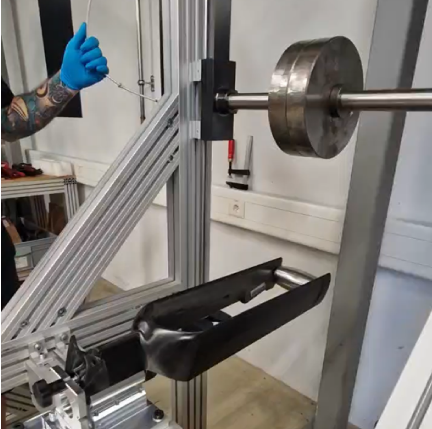
For a fork to pass the ISO requirement, it must survive a 22.5 kg-weight dropped from a height of 212 mm, while mounted in the frame. The frame and fork are mounted vertically in a test rig and the weight is dropped from above directly onto the fork at the dropouts. This could be representative of hitting a pothole at high speed.
BMC’s own testing includes subsequent drops from 312 mm and all the way up to 640 mm. Asked what these higher drops represent, Christ first jokingly said “nothing,” before clarifying the 640 mm drop could be representative of a much larger accident, e.g. hitting a fixed object. But, as he explained, in all likelihood an impact of this severity would throw the rider from the bike anyway; damage to the bike would be associated with the crash, but almost definitely not the cause of it.
BMC isn’t necessarily looking for a fork that can sustain all these impacts without damage, but rather a failure that is predictable. It’s reasonable to expect that a fork will suffer structural failure in such a high-impact collision, but how it fails is critical. “A fork that disintegrates into pieces is more dangerous,” Christ explained. BMC wants a structure that survives a crash relatively intact, but also in such a way that a rider doesn’t unknowingly continue on a damaged part that could later fail. For this reason, BMC tests the same fork multiple times with the weight dropped from 640 mm to ensure it remains in one piece even when damaged.
The new Timemachine MPC forks underwent nine prototype loops before passing both the required structural test and stiffness targets BMC had set.
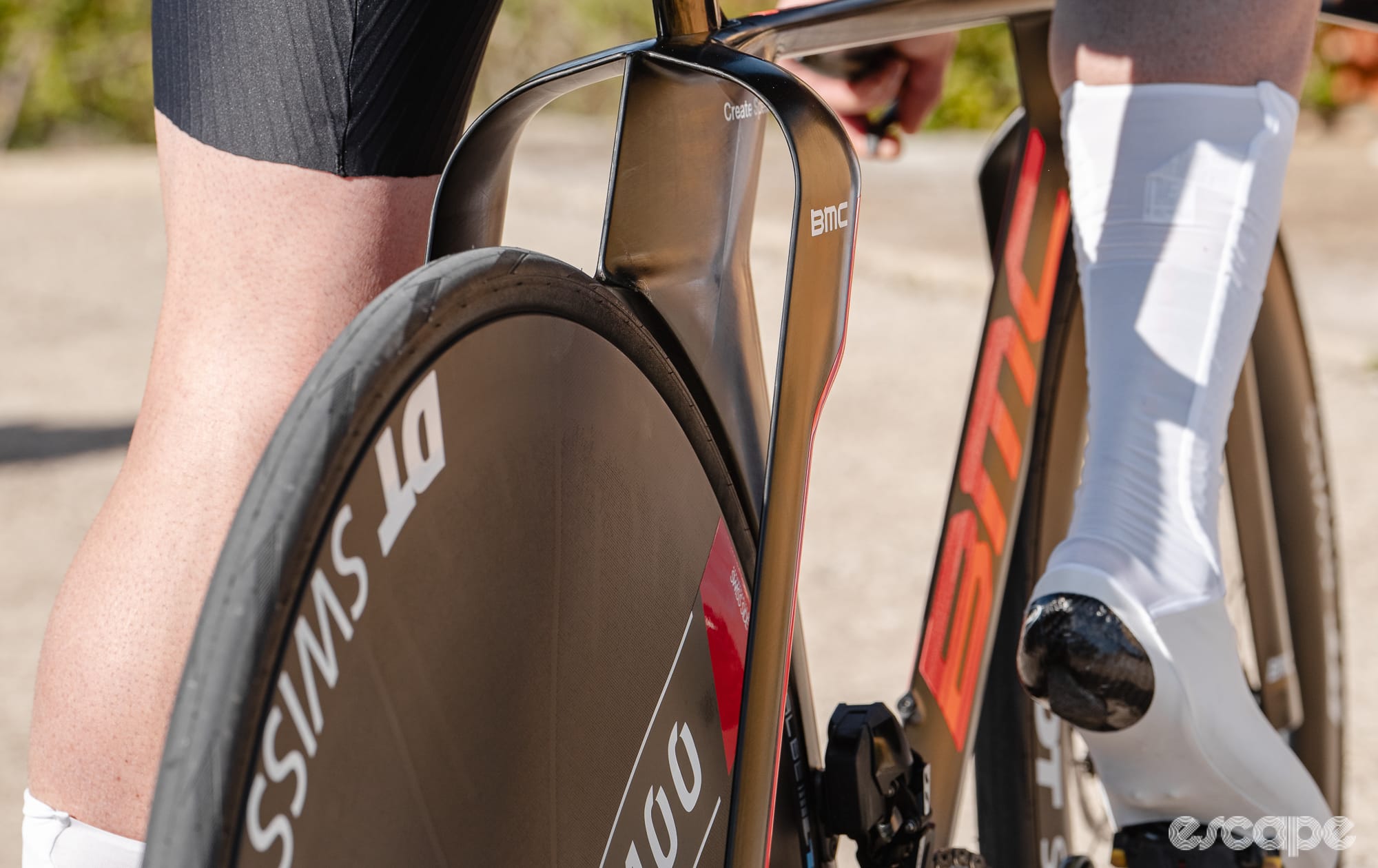
BMC took a lightweight approach with the first fork prototype (460 grams), but as expected, it lacked the strength and stiffness required. This lightweight prototype developed minor cracks at 212 mm and failed structurally at 312 mm.
By the time they’d got to prototype number nine, the forks were beefed up quite considerably with an additional 160 grams of material that improved lateral stiffness by 87% to 51 N/mm of deflection and transformed the test results once on the impact rig. The final fork survived five consecutive impacts at 640 mm. Though it did deform by 34 mm and was clearly damaged, it remained in one piece, whereas typical lightweight forks often separate after a second hit, Christ explained.
 Frame testing
The frame is a little different. Unlike the fork, the frame’s primary challenge is stiffness rather than strength. In fact, the very first prototype frame already passed the ISO-required 212 mm drop test. Christ explained this “was not a big surprise, because just by the frame design, it’s clear that stiffness is the challenge and not the strength.”
Asked how a frame may fail, he said, “We rarely see issues (these days) in those tests,” before adding that “occasionally you might see something like cracking around the down tube. On extremely light frames, that is one of the areas you would expect to fail, simply because the compression loads through the down tube are quite high. With very thin alloy tubes, for example, you can even see buckling failure there.”
So strength wasn’t an issue, but, as we’d seen back in the Grenchen field test, stiffness was. Again, this wasn’t a surprise for Christ. His reaction to my ride feedback was essentially that the prototype behaved exactly as his testing suggested. BMC had already run the frame through its internal stiffness rigs before I’d ridden it on the road, so he had a fairly clear picture of where it sat relative to the targets BMC now sets based on years of experience. While he hadn’t mentioned it to me, he had already identified that the front assembly stiffness would need refinement.
Stiffness is always the challenge with TT bikes and aero-profiled tubing. Those aerodynamic profiles that made the bike what it is also made it inherently less stiff than, say, a round traditional tube. Tube shapes are always a compromise between aero drag, stiffness, strength, and weight, but in TT frames, that balance is heavily weighted toward reducing aero drag.
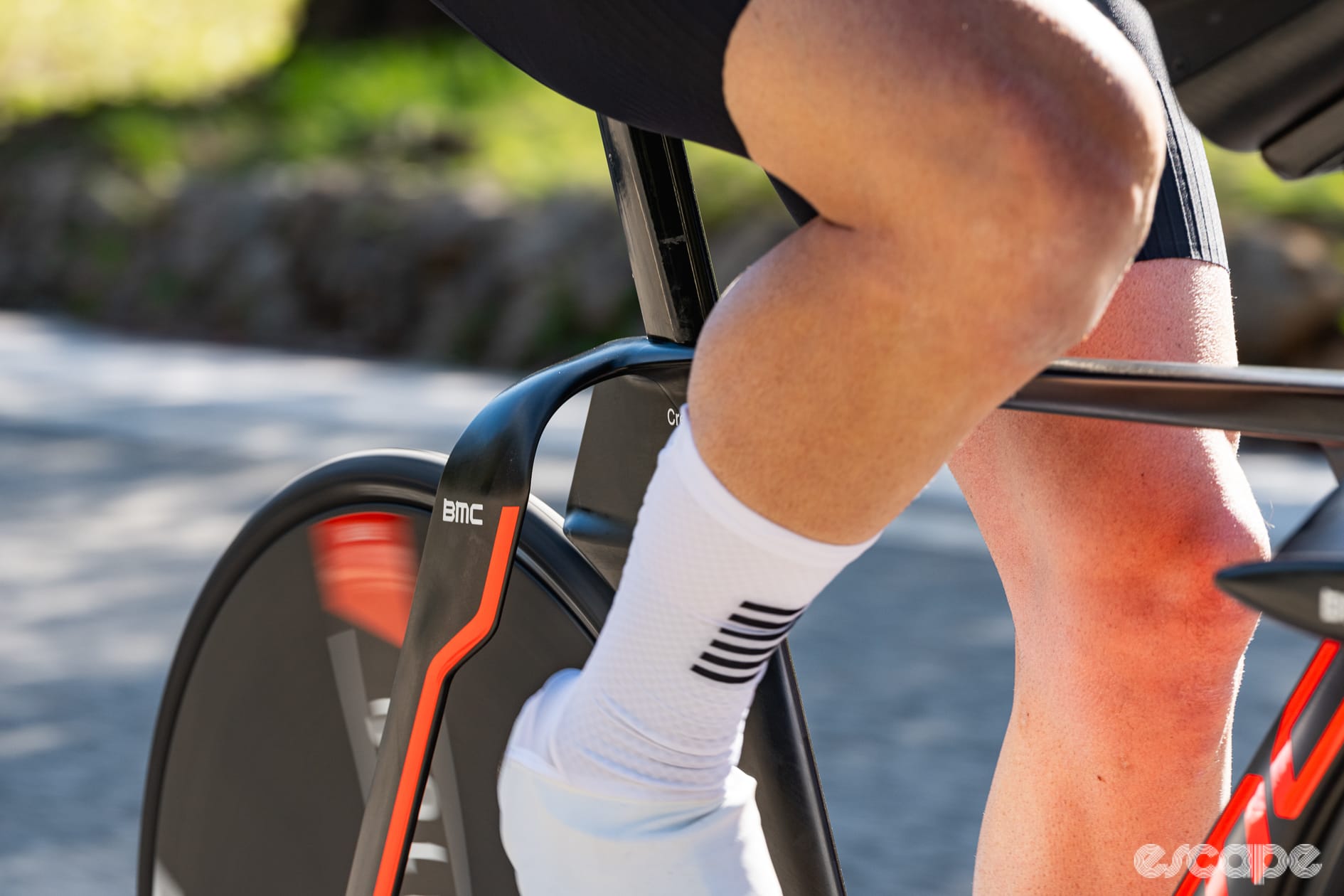
TT bikes are effectively asking long, thin tubes to resist bending and torsional loads. Imagine a ruler versus a round tube – the ruler will flex much more easily. Christ noted that the head tube area was particularly challenging due to its reduced height and short distance between bearings. The solution was relatively blunt: beef it up! Thus, the head tube area now has a 3 mm wall thickness all around.
In fact, somewhat counterintuitively, the smaller size of the two bikes had the greater stiffness challenges, primarily due to that uniquely small head tube and bayonet steerer design. In most conventional road frames, smaller sizes are inherently stiffer because tube lengths are shorter and the load paths are more compact.
All told, and somewhat impressively, it took just three prototype iterations to land on a stiffness profile Christ was happy with. This did require additional material, as well as changes to the layup and laminate, which resulted in the final version weighing 170 grams more than the early prototype.
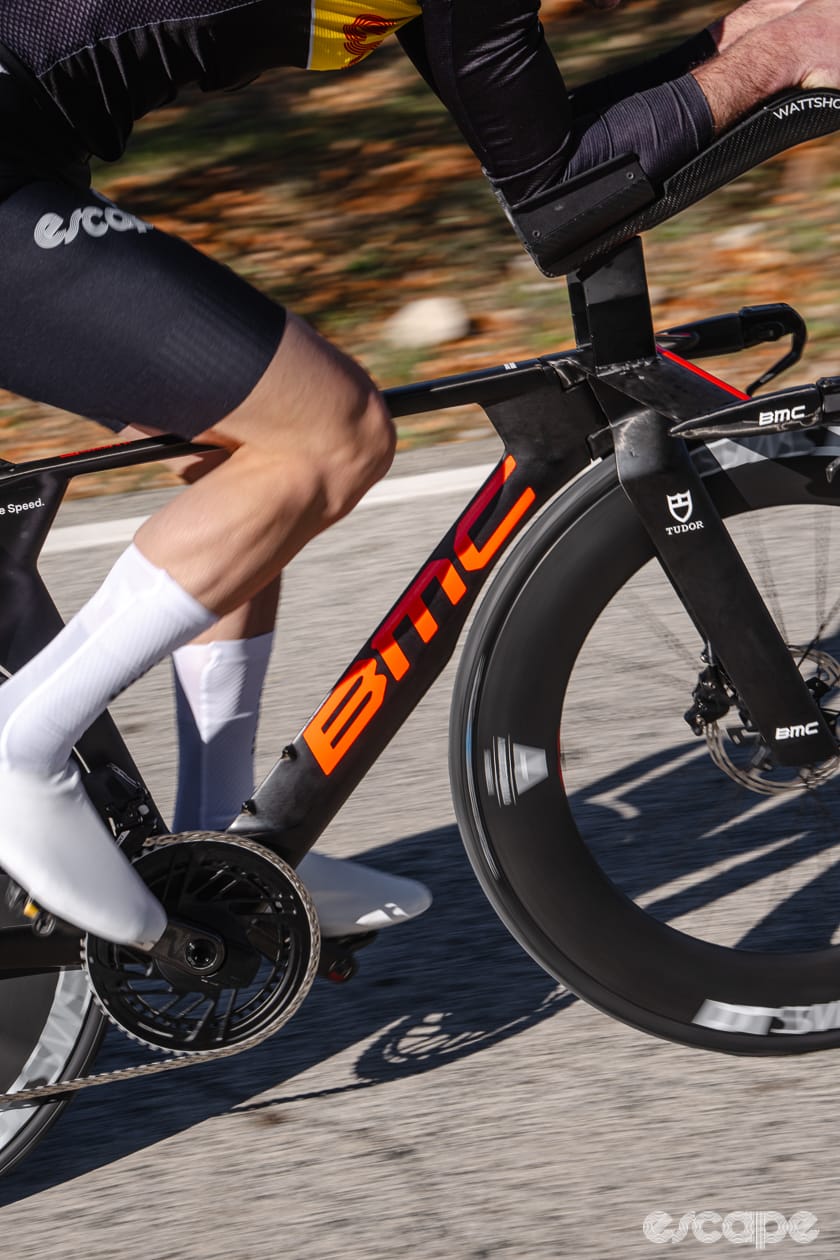
If the fork proved testing to design, but the frame relatively less so, the base bar ensured this part of the development cycle was a somewhat challenging sandwich for the BMC engineers. In fact, Christ described the base bar as the most challenging structural element to develop.
The ISO validation for a base bar involves two stages: one testing static strength and the other fatigue resistance. Stage 1 assesses static load and deflection behaviour using a 280 Newton push-and-pull force, during which bar deflection is measured. Stage 2 tests durability under repeated stress, applying a cyclic load of 400 N per side for a total of 100,000 cycles to confirm long-term structural integrity.
These ISO tests evaluate safety and structural robustness rather than ride feel or stiffness, but, as mentioned in part 2 of this series, the base bar on the original prototype I rode in Grenchen was certainly underwhelming in these areas and curbed my confidence in the entire bike. In testing, that early prototype showed 16 mm of deflection on stage 1 of the ISO test. In other words, it passed the ISO test, but was too flexible.
Stage 2 of the testing went a little better, passing the ISO test, but again, it didn’t meet BMC’s own stiffness targets. Several iterations later, BMC has since reduced the deformation to 9 mm. As for what that means out on the road, I’ll get to that in a bit when we dig into my ride impressions on the first production model bike.
The extension’s mounting area gets its own dedicated 300 N load test, but BMC increases it to 560 N, almost double the ISO requirement. The team had used fairly basic bolts for this prototype phase. These had worked their way loose during the test. But after replacing those with the bolts that would be used in the final version anyway, the bar subsequently passed the test.
 Geometry: Low and long and low and longer
With testing complete, I wouldn’t hear from BMC again until early January when it was time to go see the first production frame. I’d be headed to Tudor Pro Cycling’s January training camp base in Moraira, Spain and I’d be testing one of Tudor’s new Timemachines. They only had two at the time.
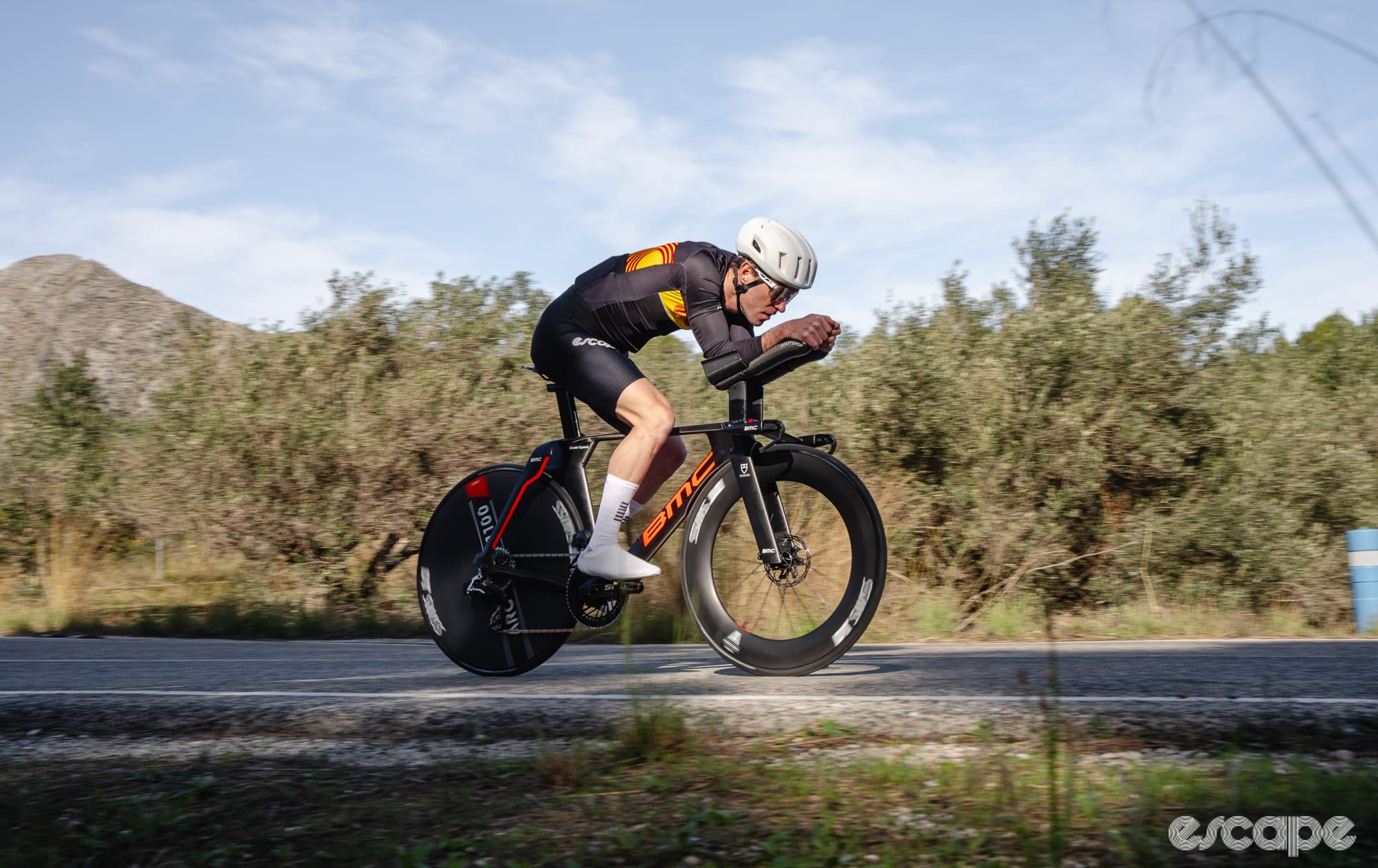
As detailed in part one of this series, BMC decided to produce two sizes of the new Timemachine. While officially these are named sizes Small and Medium/Large, they could just as easily named them Low & Long and Low and Longer. BMC and Tudor had determined that these two sizes, with the use of spacers under the aerobar extensions and two seat post options (standard and forward) could cover the entire range of team rider positions.
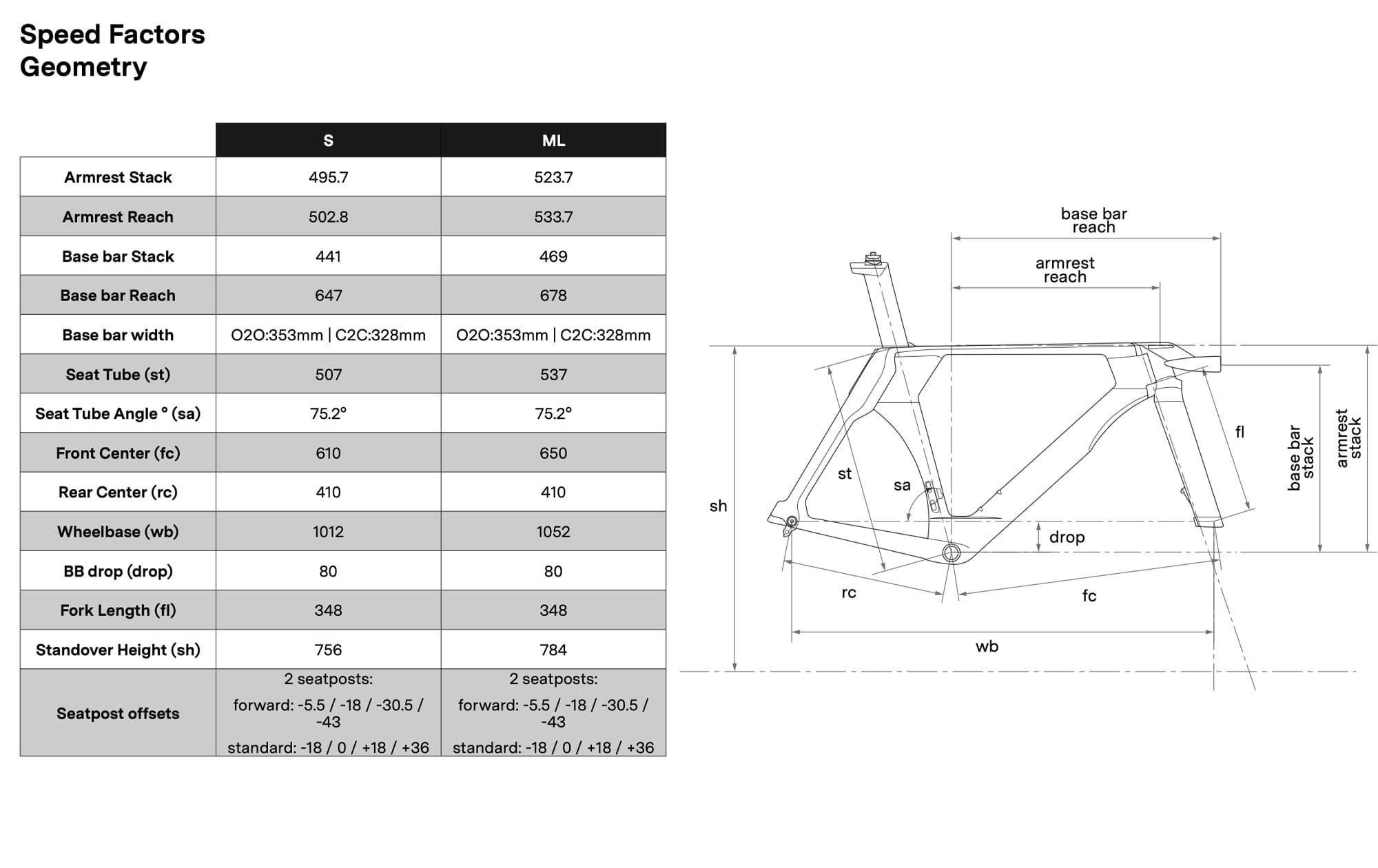
I knew this bike was long, but looking at the geometry chart I still found myself wondering if there had been a typo. There wasn’t. Armrest reach is 502.8 mm on the S and nearly 534 mm on the M/L. Remarkably, those reach numbers are not only longer than the stack figure is in height, but it’s almost a square bike given the armrest stack is 495.7 mm on the S, just 7 mm shy of its reach, and 523.7 mm on the large, just 10 mm shy of the reach figure. BMC also lists stack and reach for the base bar reach. The reach runs at 647 mm (S) and 678 mm (M/L), while stack drops to 441 mm (S) and 469 mm (M/L).
First off, I like how BMC details these two reach figures to the actual points that matter on a TT bike. Stack and reach to the headset means nothing when the extensions mount some distance further forward. Secondly, these dimensions, and the limited two-size run, looks wild on paper, but not only does it make sense when considering modern TT positions, but I suspect many others will follow suit as more new TT rigs roll out in the coming years. The stack isn’t all that egregious; it’s actually 8.7 mm above the average stack from a selection of six commonly used pro TT rigs (Cervelo P5, Giant Trinity, Ridley Dean, Specialized Shiv, Scott Plasma, and Colnago TT1).
But the reach is where it gets interesting. Looking at the same average, the new Timemachine is a full 105 mm longer! It’s effectively the stack from a comparable brand’s frame a size or two smaller, if not more. This makes sense, though. The lower stack (and head tube) reduces the frontal area of the frame and riders compensate with more spacers in the armrest riser stack. That combination of more spacers and more reach allows them to get into the contortionist-like positions now required in modern time trialling.
Now, all that reach has to come from somewhere. The front centre on these two bikes has grown out to 610 mm and 650 mm, a good 30 or 40 mm bump on typical TT frames. This also provides the not insignificant benefit of increased toe clearance.
With the chainstays relatively in line with many TT frames at 410 mm for both sizes, the Timemachine’s wheelbase at 1,012 mm (S) and 1,052 mm (M/L) is again much longer than most WorldTour-level TT rigs. In other words, the Timemachine is long! And all that length comes at the front end.
Both bikes get 80 mm of bottom bracket drop, which is 5-10 mm more than the norm. This extra drop serves two purposes and is an option now, at least partly, thanks to the increased prevalence of shorter-than-traditional crank lengths. The extra BB drop means that while the riders will maintain the same saddle height from the bottom bracket, relative to the ground, the saddle height will be lower. A lower saddle means the extensions must also sit lower to maintain the same drop from saddle to elbow pads. In other words, both the rider and bike sit lower overall in the bike, reducing frontal area for an aero gain.
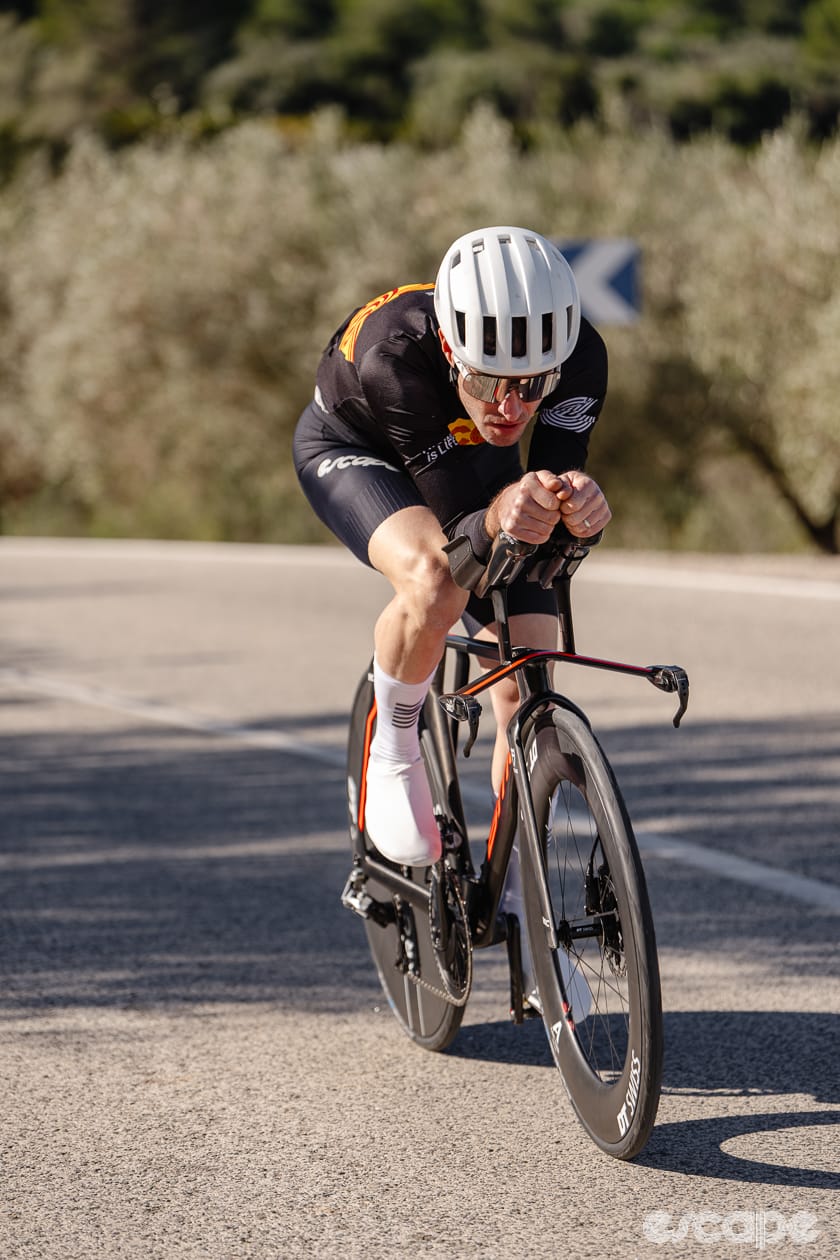
The lower BB, longer wheelbase, and greater front centre should all help with greater straight-line stability, reducing the influence of small steering inputs that can happen when riding at speed and under pressure in the TT position.
The geometry should also contribute to a more composed bike at high-speed by lowering the rider’s centre of mass and reducing steering sensitivity in the weight-forward TT position. However, that typically also leads to slower steering response and reduced agility, which is particularly noticeable during initial turn-in and in tight, low-speed direction changes, and will require larger steering inputs to achieve the same line.
That said, steering geometry from the head tube angle, fork offset, and resulting trail will also influence steering behaviour. BMC opts not to publish these figures. Asked why, Christ explained that when read as just a number on a geometry chart the trail BMC opts for would be off-putting to many riders who might assume a handling penalty from what the company considers a deliberate stability characteristic of its triathlon and new TT platforms.
Finally, at 75.2° on both sizes, the actual seat tube angle isn’t all that aggressive by modern standards, but with -5.5, -18, -30.5, and -43 mm mounting points (mm forward from the neutral position) for the seat clamp on the “forward” post alone there is no doubt plenty of opportunity to push the effective seat tube angle even steeper.
 Test rides: Handle with care
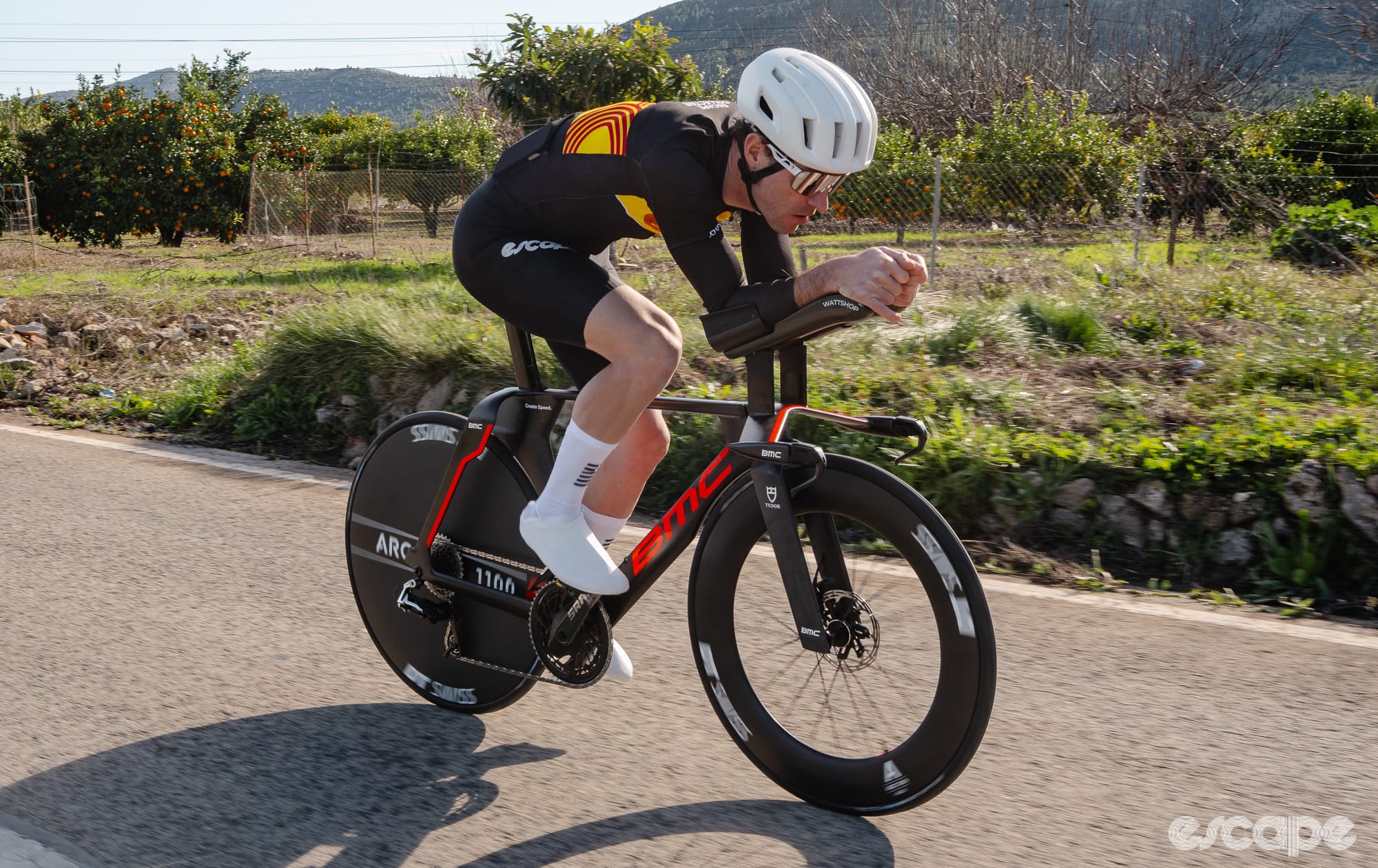
For my test ride we decided on a size small, partly because the M/L did seem too long for me in Grenchen, but also because only two frames existed at the time. Stefan Küng’s is a Medium/Large and the other was a Small. As it wouldn’t be possible to adjust either rider’s position, other than to add my own saddle and change the saddle height, the fit on the smaller bike was much better for me than Küng’s, who is 193 cm / 6’4″ tall.
If I’m honest, I didn’t really want to ride either. This area of Spain is mobbed with cyclists at this time of year, the roads to get out of Moraira are twisty, up and down, and technical. While I’ve ridden them a hundred times or more before, never on a bike that I absolutely, under no circumstances, could damage. Again, only one of each size exists, and there was no chance to make another before the season kickoff. If I happened to damage the bike, there wouldn’t be a replacement for at least a month. Stress! That said, I’d committed to this series and comparing the final production sample to the earlier prototype was a key component of the development cycle.
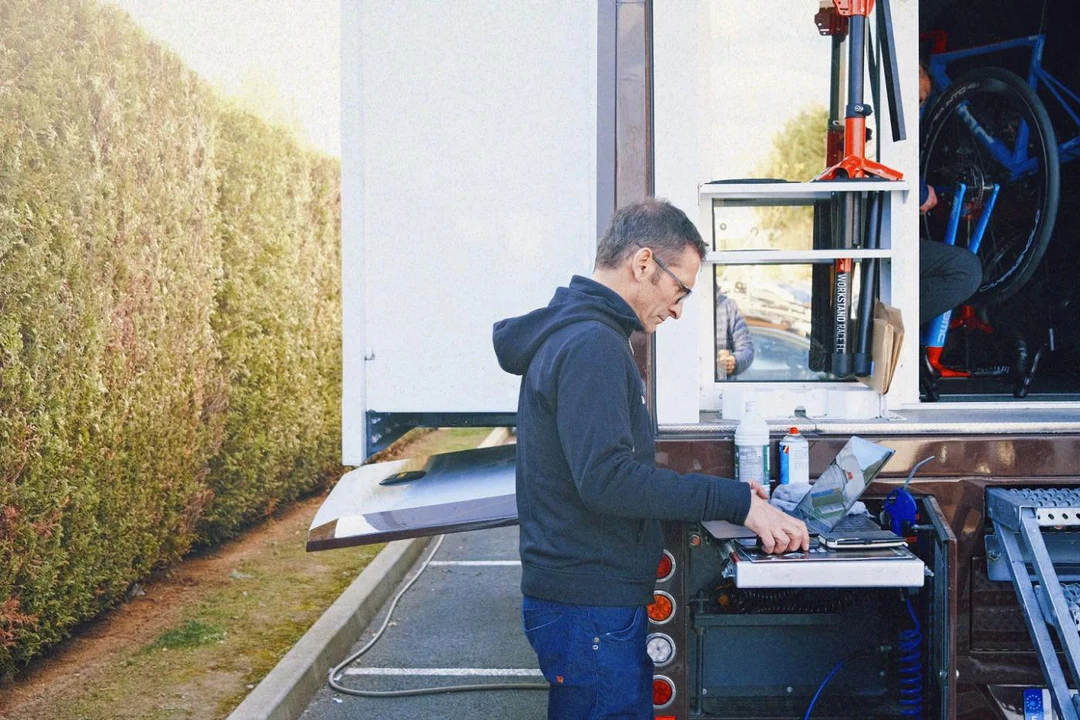 BMC’s Stefano Cattai is an essential piece of the brand’s relationship with its pro team partners.
BMC’s technical team liaison, Stefano Cattai, is the main point of contact on technical matters between sponsored teams and athletes and BMC. He works with and trains team mechanics on BMC products, and it’s his job to find solutions to technical or compatibility issues. In the other direction, he brings team feedback and requests to BMC. He’s been with BMC almost since the company’s inception. When the UCI stops a rider at a TT bike check, it’s Cattai that is tasked with resolving the matter. Back when BMC sponsored the Ag2r team and a Campagnolo EPS wire didn’t fit through a frame, it was Cattai, not Ag2r mechanics who drilled the frames to make it fit. Even further back, when Philippe Gilbert wanted a lighter bike for the Valkenburg World Championships in 2012, it was Cattai who sorted it out, probably ensuring it was the Belgian who beat me the following Sunday.
Over the course of the 12-month project, I’d met Cattai several times. He’s a quiet, modest man, in his late 50s, and my god is his finger on the pulse of everything bike racing. He’ll listen as a conversation unfolds over lunch, allow the various opinions to float, and only deliver his mic-drop worthy assessment when asked. He was a pro himself for 11 years, not that you’d know or he’d feel the need to tell you. (I didn’t know, and felt rather embarrassed when I asked him if he had raced, only for him to explain how he had raced 12 Grand Tours.) The respect for him and trust in him from everyone involved is evident without even a word.
Cattai organised the bike setup for me for both the prototype in Grenchen and Tudor’s bike in Moraira. While I’d met him before, it was during the setup in Grenchen that I began to realise the vast understanding he has. Having attended countless bike launch events, I know from experience I need to do my own bike setup. When Cattai asked for my dimensions, I said it was fine, I could look after the position as I have my own way of measuring each point. “Tell me,” he said, and with barely half an explanation of what I do, away he went and had my setup millimetre perfect.
In Spain, I had the sense he thought it was crazy to let a journalist ride the only small frame Tudor had, but also the experience to know that it wasn’t his problem. He merely advised that if I were changing saddles, it had better be clear this was a BMC activity, not the team’s doing, given sponsor commitments.
As for the team and the new Timemachine, it is Cattai who has to train the team mechanics on the intricacies of building the new bike and, in turn, bring feedback on that process and on the rig’s general maintenance back to the engineers and product team in BMC. Given how complex modern bikes are becoming, not least TT bikes, Cattai’s role as liaison is critical to the overall success of the new Timemachine, both for BMC and Tudor. Long gone are the days when all the various components of a frame slotted and bolted together in relatively the same fashion, regardless of the bike. Getting this right is the difference between successfully promoting your new bike with a pro team or suffering a brand-damaging failure thanks to an error on the team’s side.
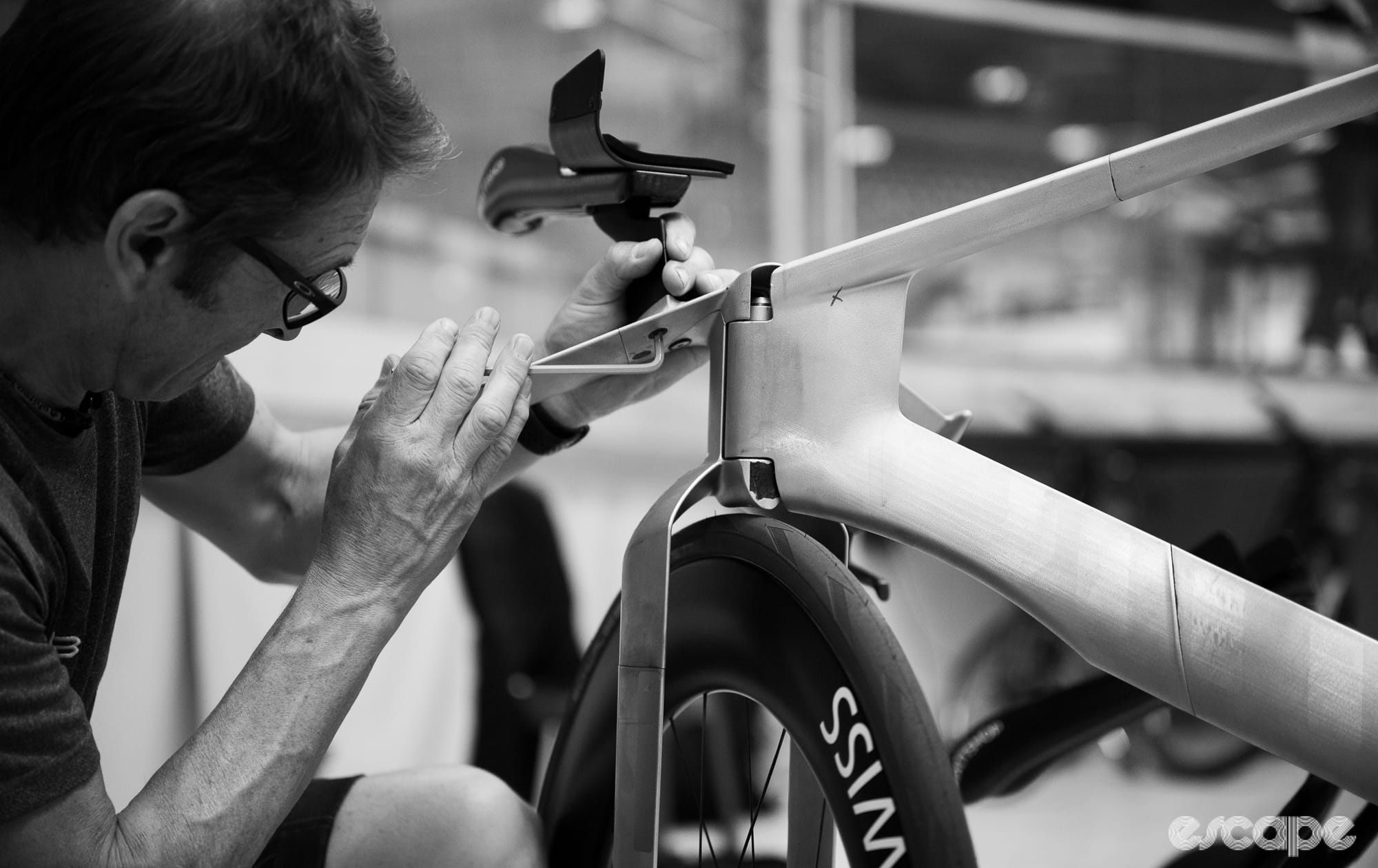
Vice versa, getting it wrong, especially in prototype testing, could see a team rider injured carrying out R&D testing for a sponsor, or rider sentiment for a new bike quashed before the final version is even delivered. All this is why Cattai is there, working on all the prototype testing days and alongside the team mechanics during the initial builds of the new team frames. Ultimately, it is these tasks, and ensuring the team understands the products delivered by the sponsor, that is why these team liaison roles exist for every manufacturer with a presence in the pro peloton. While Cattai’s day job is most often helping teams extract the maximum performance from their equipment and avoid/resolve issues, he is effectively both a risk-mitigation manager for the brand and a brand employee embedded within the team, a trusted-by-both-parties pair of hands with a reliable head.
I want to add, I’ve no reason to doubt the Tudor mechanics. I don’t know them, but they’re expert professionals who know their jobs well. But knowing Cattai was involved gave me confidence that the prototype in Grenchen and this brand-new bike in Spain wouldn’t have any issues. With that in mind … off I went.
The route covered just over 65 kilometres and a little more than two hours of riding. It started with a familiar five-kilometre climb I have done numerous times going back well over a decade – most recently just 24 hours earlier on a rental bike. The route offered a mix of twisting and rolling coast roads, sweeping descents, and flat plains.
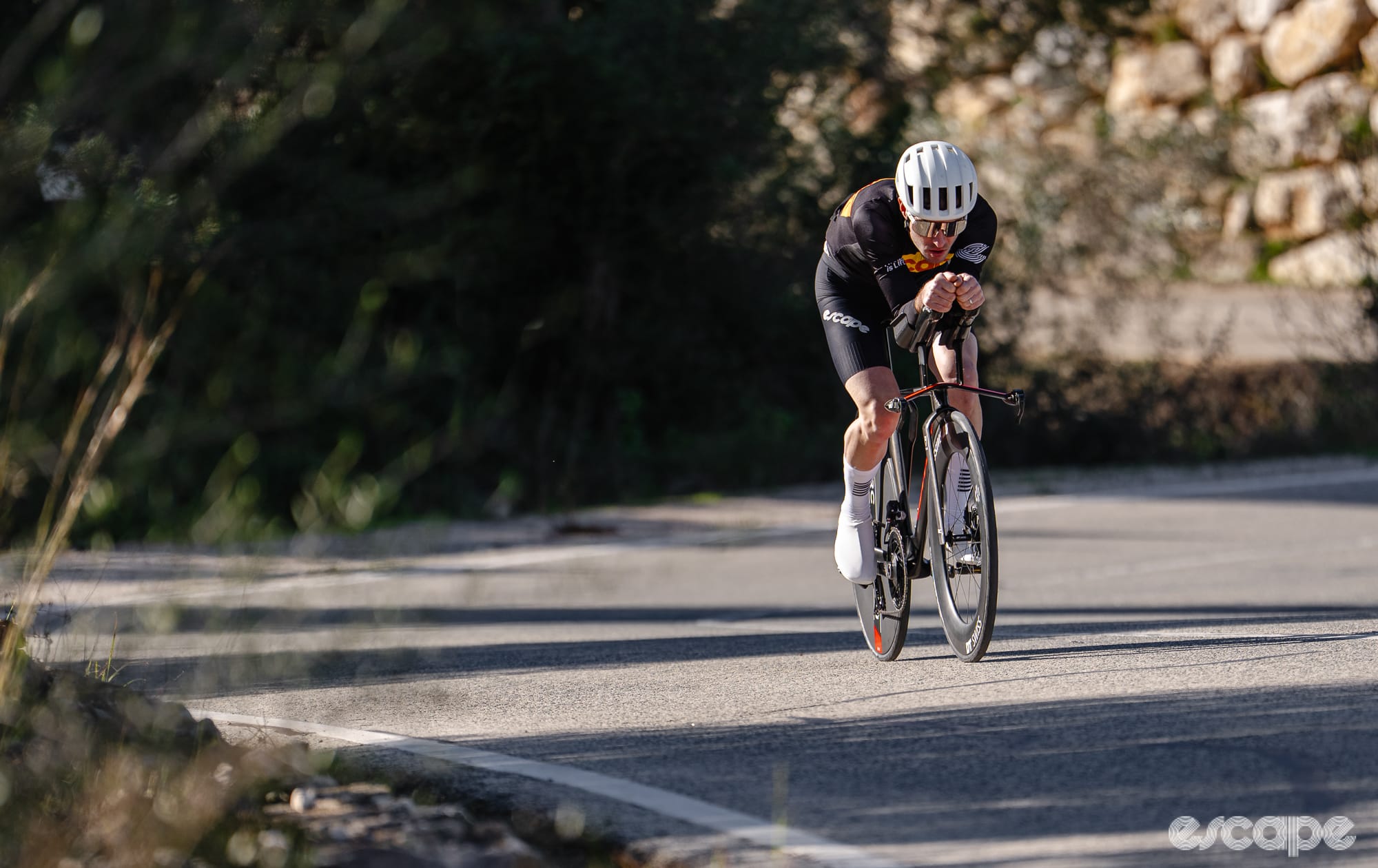
Immediately upon rolling out of the car park, I was struck by the “balance” of the new Timemachine. I find that time trial bikes often have a sensation of putting much of your weight over the front end, which just feels awkward, lethargic, and sometimes kind of stuck to the road despite the speeds they make possible. On the production Timemachine, though, I felt much more balanced over both wheels, in a way I can only describe as the bike floating above rather than rolling on the smooth Spanish roads. I mean, it’s no super-light climbing bike in terms of responsiveness or acceleration, but it felt much freer than, say, the Colnago TT1 I rode. This was likely due to a combination of the longer front end meaning my weight was more balanced, and also the longer wheelbase.
This post is for paying subscribers only
Subscribe now
Already have an account? Sign in
Did we do a good job with this story?
👍Yep
👎Nope