
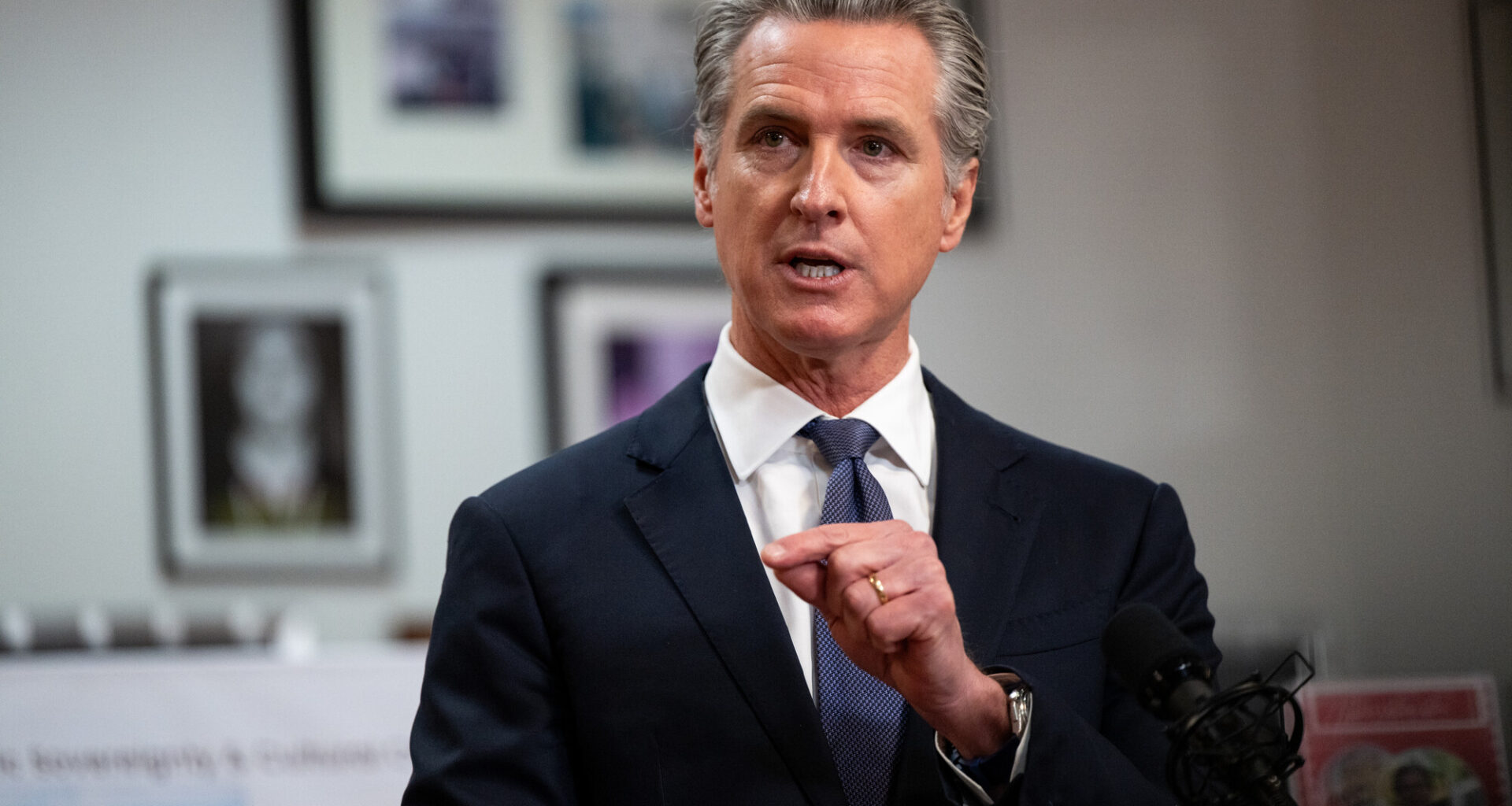
Among those counties is Alameda, which Newsom called a “shining example” of CARE implementation. The county has one of the highest rates of petitions submitted per capita, and has seen an 11% drop in unsheltered homelessness since 2023.
San Francisco and Santa Clara counties, by contrast, are among 10 that have struggled to implement CARE programs. Both had fewer than 100 petitions in 2025, according to a new state dashboard, and San Francisco has seen a significantly lower percentage decrease in unsheltered homelessness than the state average since 2023.
“There are counties that haven’t gotten it done, like Santa Clara County,” Newsom said. “We’re calling [San Francisco] out as well.”
“They’re the care court ICU,” Newsom said, referring to the term his office has coined for the 10 “bottom” counties in terms of implementation.
Santa Clara recorded just 47 CARE petitions in 2025, equaling a rate of about two petitions per 100,000 residents, compared to the state’s six. New state data tracking counties’ progress on reducing unsheltered homelessness says that the county does not have publicly available data. But last year’s point-in-time count in its most populous city, San José — where Mayor Matt Mahan has also cracked down on street homelessness and encampments — reported a 10% drop between 2023 and 2025.
“Long before the creation of CARE Court, the County of Santa Clara has been at the forefront of innovative strategies to address the behavioral health crisis facing California,” Santa Clara County Executive James Williams said in a statement. “Our approach is grounded in what works: rapidly connecting people to clinically appropriate treatment and housing, rather than defaulting to lengthy, costly, and often inadequate court-based processes that do not produce better outcomes.”
Williams called the CARE program “one tool among many. He said via email that counties need sustained funding and partnership, not “reducing a complex system to a single scorecard.”
In a statement, San Francisco Mayor Daniel Lurie’s office, which has been focused on the homelessness crisis since taking office in 2024, said it “has been using every tool in our toolbox to address the crisis on our streets — reimagining street outreach and adding recovery and treatment resources so we can get people off the street and connected to the support they need.”
“Today, encampments are at record lows, more people are getting connected to shelter and treatment, and San Franciscans feel safer than they have in years,” a spokesperson for the office said in a statement.
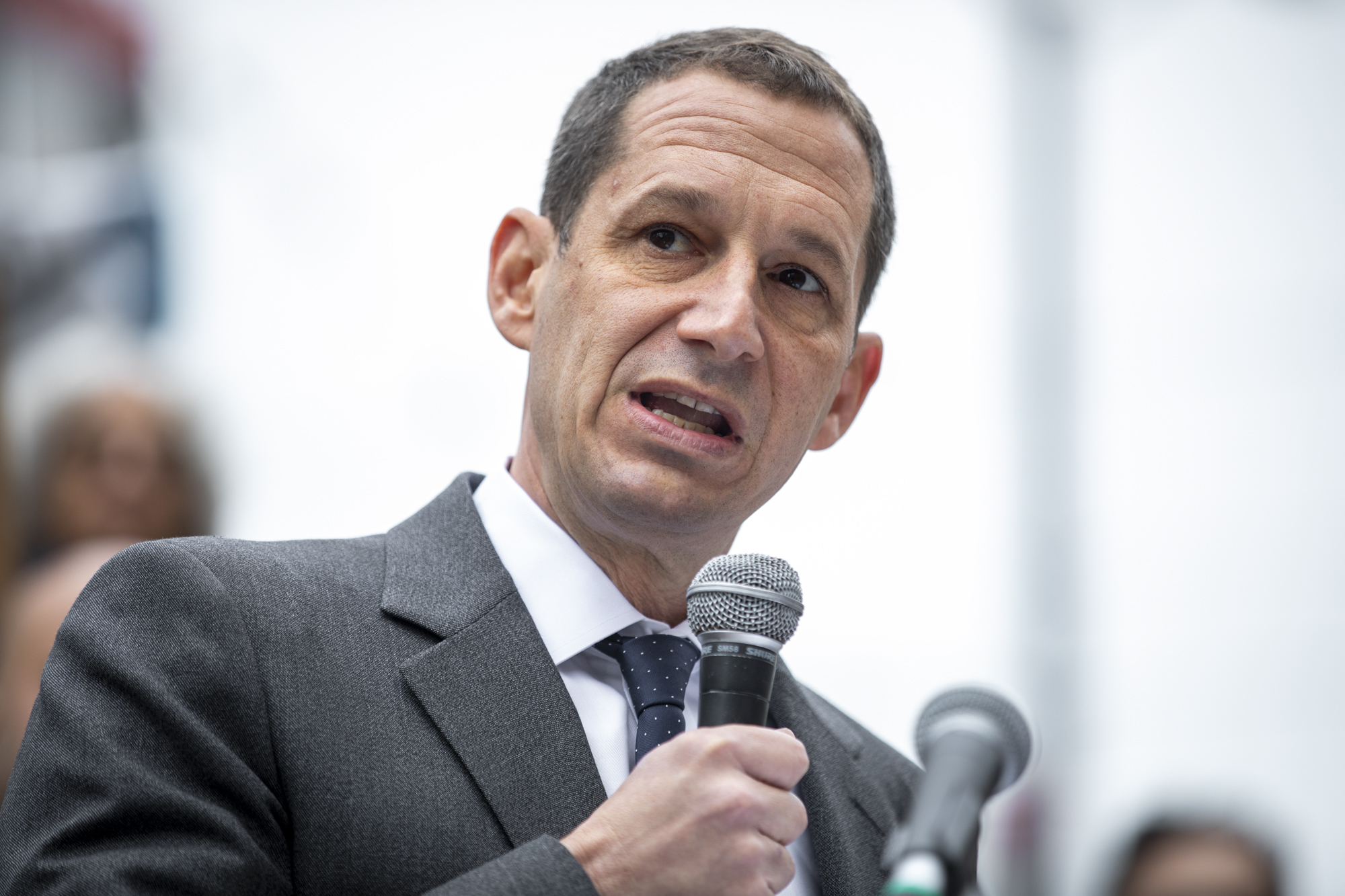 Mayor Daniel Lurie speaks on his support for California Senate Bill 63 at a press conference at Embarcadero Plaza in San Francisco on Jan. 23, 2026. (Tâm Vũ/KQED)
But state data shows that the city has seen just a 1% decline in unsheltered homelessness since 2023, compared to California’s 9% drop. Fifty CARE petitions were filed in 2025. As of last September, about two-thirds of submitted petitions were dismissed, according to an investigation by CalMatters.
The state dashboard notes that the city has increased its number of beds available for unhoused residents by nearly 10% since 2024.
Clark Harvey said flagging the counties that are performing both well and poorly is important to identify what is and isn’t working, and help bring struggling counties up to speed.
“It’s really now time to drill down and say, ‘Why aren’t things working well for these 10 counties? What can we do to support them? And what can we do to ensure that people aren’t cycling back through the system?’” she said.