
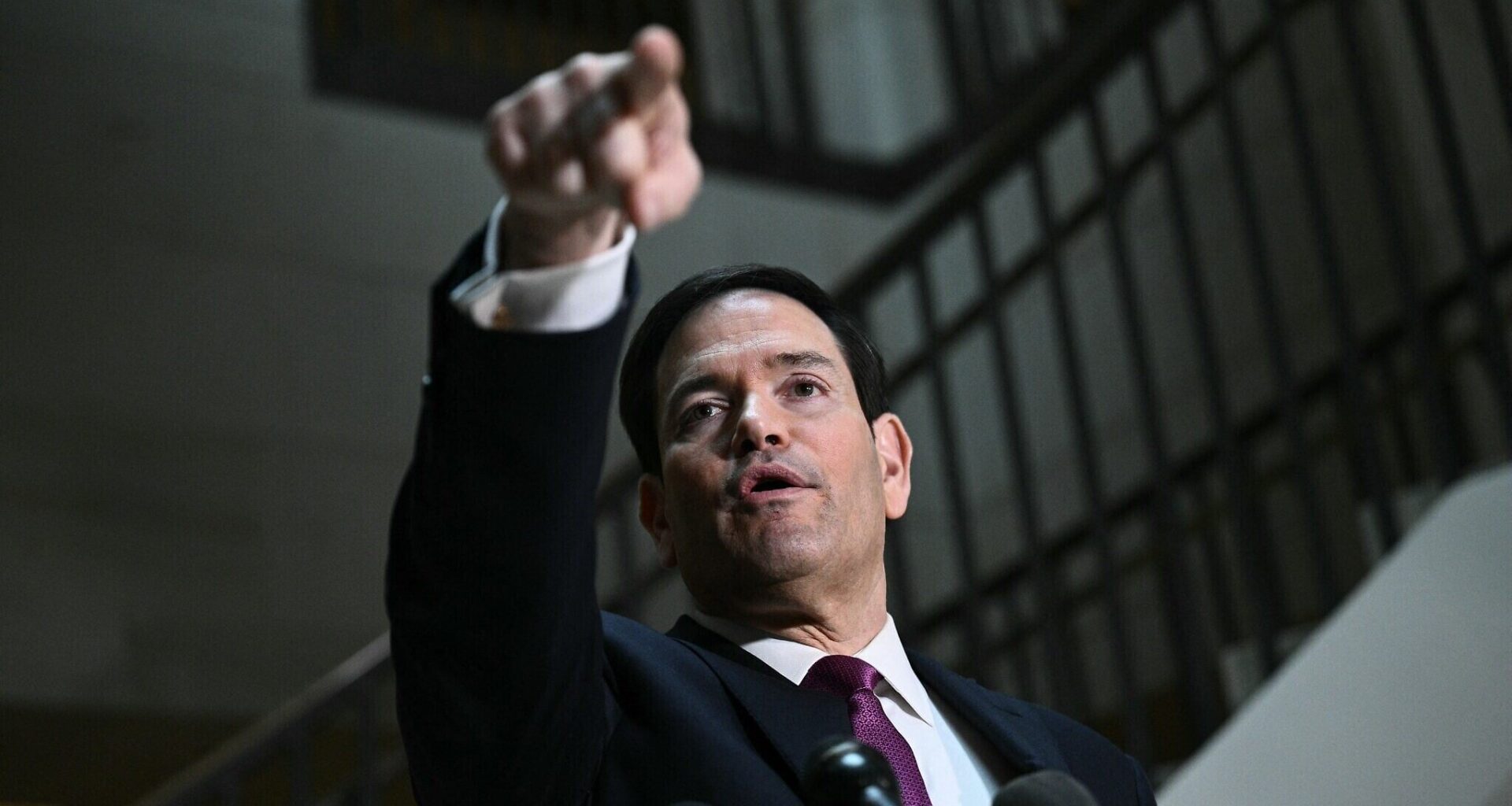
WASHINGTON — US Secretary of State Marco Rubio revealed Monday that Washington launched major strikes against Iran over the weekend because it received intelligence that its assets in the region would be targeted in response to an Israeli attack.
Speaking to reporters before holding a classified briefing with Congressional leaders, Rubio was asked to clarify the “imminent threat” posed by Iran that American officials have been citing in recent days to justify the US launch of Operation Epic Fury on Saturday.
“The imminent threat was that we knew that if Iran was attacked — and we believed they would be attacked — they would immediately come after us,” Rubio said. “We were aware of Israeli intentions… and understood what that would mean for us and had to be prepared to act as a result of it.”
It was an extraordinary revelation that effectively suggested that the US had only struck Iran because Israel had decided to do so first, even though it is widely understood that any Israeli attack on Iran would only have taken place with Washington’s blessing.
Moreover, US Defense Secretary Pete Hegseth said hours earlier at a press conference that the Saturday morning Israeli strike that opened the war by killing supreme leader Ali Khamenei was conducted using American intelligence.
Get The Times of Israel’s Daily Edition
by email and never miss our top stories
By signing up, you agree to the terms
US President Donald Trump has also several times taken credit for that strike.
Rubio: There was absolutely an imminent threat and it was that we knew that if Iran was attacked and we believe that they would be attacked, that they would immediately come after us and we were not going to sit there and absorb a blow pic.twitter.com/jFDc38ttKR
— Acyn (@Acyn) March 2, 2026
Rubio later suggested that the US would have eventually launched Operation Epic Fury regardless and that the initial Israeli strike only explained why Washington chose to act on Saturday specifically.
“If we waited for them to hit us first after they were attacked by someone else, we would suffer more casualties and more deaths,” he told reporters on Capitol Hill on Monday.
“There would have been hearings on Capitol Hill about how we knew that this was going to happen and we didn’t act preemptively to prevent more casualties and loss of life,” the top US diplomat added.
He clarified that the US operation “needed to happen” no matter what.
Regardless, Rubio said it was key that Operation Epic Fury take place around now, “because Iran in about a year, or year and a half would’ve crossed the line of immunity — meaning they would have so many short range missiles, so many drones, that no one [would be able to] do anything about it because they could hold the whole world hostage.”
Iran’s foreign minister, Abbas Araghchi, reacted to Rubio, writing on X that the US top diplomat had “admitted what we all knew: US has entered a war of choice on behalf of Israel. There was never any so-called Iranian ‘threat.’”
“Shedding of both American and Iranian blood is thus on Israel Firsters,” he claimed. “American people deserve better and should take back their country.”
Questions over the supposed urgency of the operation began piling up after a top US official briefing reporters on Saturday claimed that the US had obtained intelligence showing that Iran was planning to preemptively launch a missile attack against US assets around the region, thus leaving Trump with “no choice” but to act.
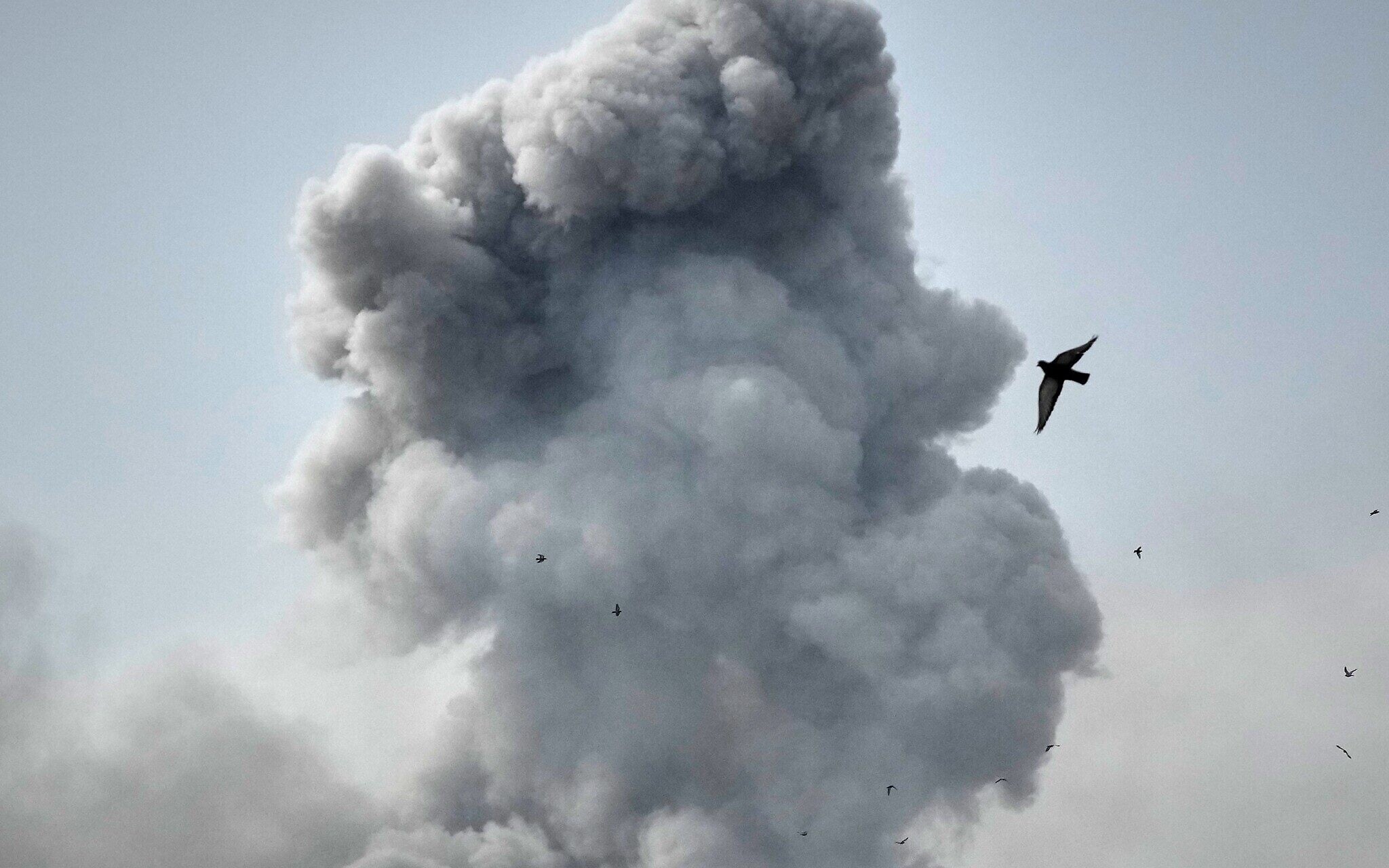
A bird flies by a plume of smoke rising after a strike in Tehran, Iran, March 2, 2026. (AP Photo/Vahid Salemi)
The next day, though, senior Pentagon officials briefing Congressional leaders clarified on Sunday that Iran had not, in fact, been planning a preemptive missile strike on the US, CNN reported.
Asked whether regime change was a goal in Iran, as US President Donald Trump has indicated in the past, Rubio said the US would love to see it happen, but it is not among the aims of the current military operation.
“Our mission and our focus is the destruction of missiles and the ability to manufacture them, as well as their naval capabilities,” Rubio said.
The remarks caused further confusion, as Trump earlier Monday listed two other aims for Operation Epic Fury: ensuring Iran cannot support proxy militia groups or obtain a nuclear weapon.
“That said, we hope that the Iranian people can overthrow this government,” Rubio said.
“Whoever runs the regime, the goal is to ensure that they don’t have missiles and drones to threaten us,” he said, seemingly adding another war aim — neutralizing the Iranian drone threat.
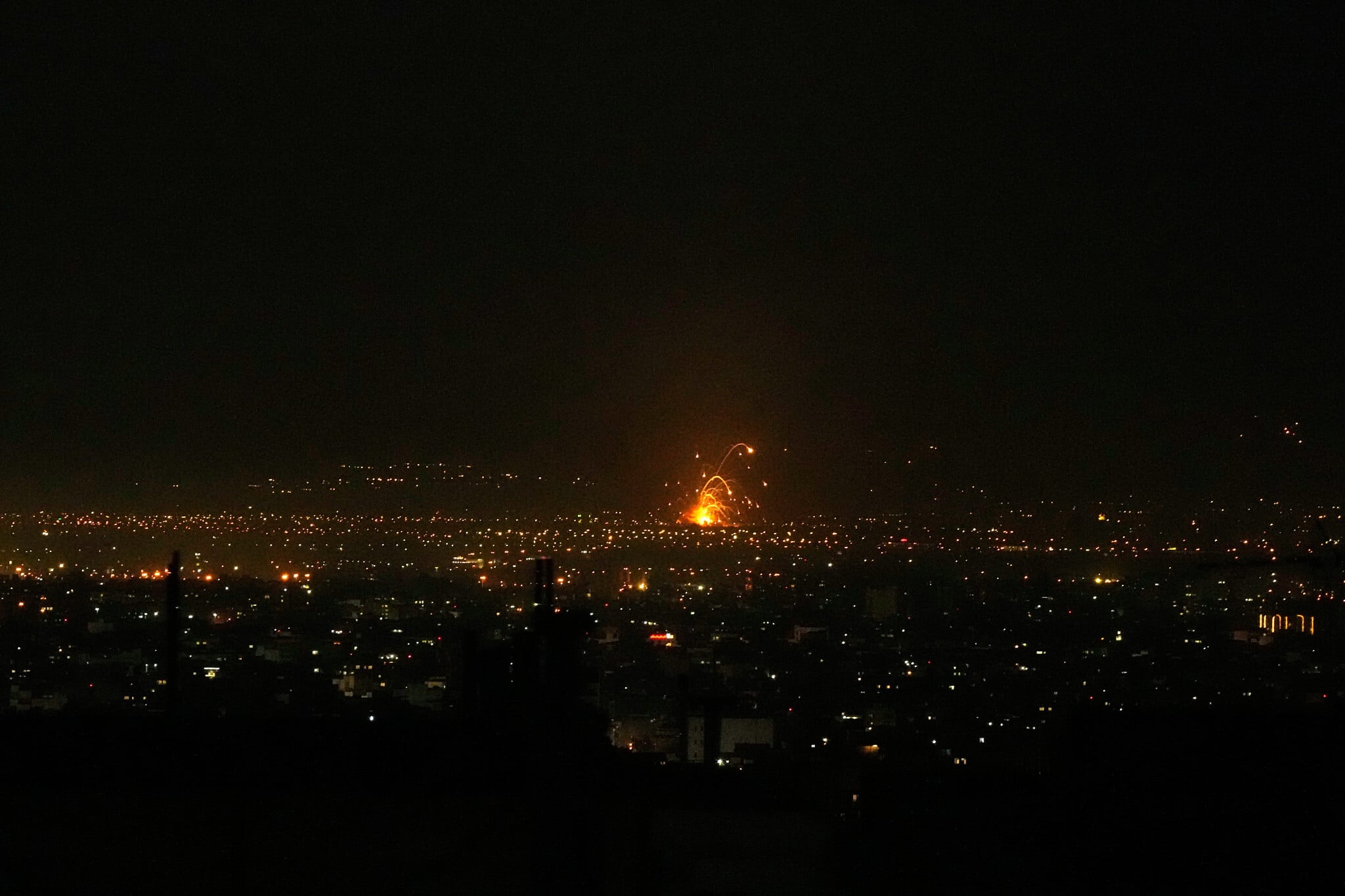
An explosion is seen in Tehran, Iran, March 1, 2026. (AP Photo/Vahid Salemi)
Rubio was also pressed about a strike on a girls’ elementary school in southern Iran on Saturday that reportedly killed over 160 people.
The secretary said the US Defense Department is investigating the strike, while asserting that the US “would not deliberately target a school.”
Democrats unconvinced that imminent threat existed
Following the briefing from Rubio, Republican House Speaker Mike Johnson echoed Rubio’s explanation for the attack, calling it a “defensive operation” because he said Israel was determined to act on their own against Iran, “with or without American support.”
Johnson said Trump had a “very difficult decision” to make, and determined that Iran would immediately retaliate against US personnel and assets.
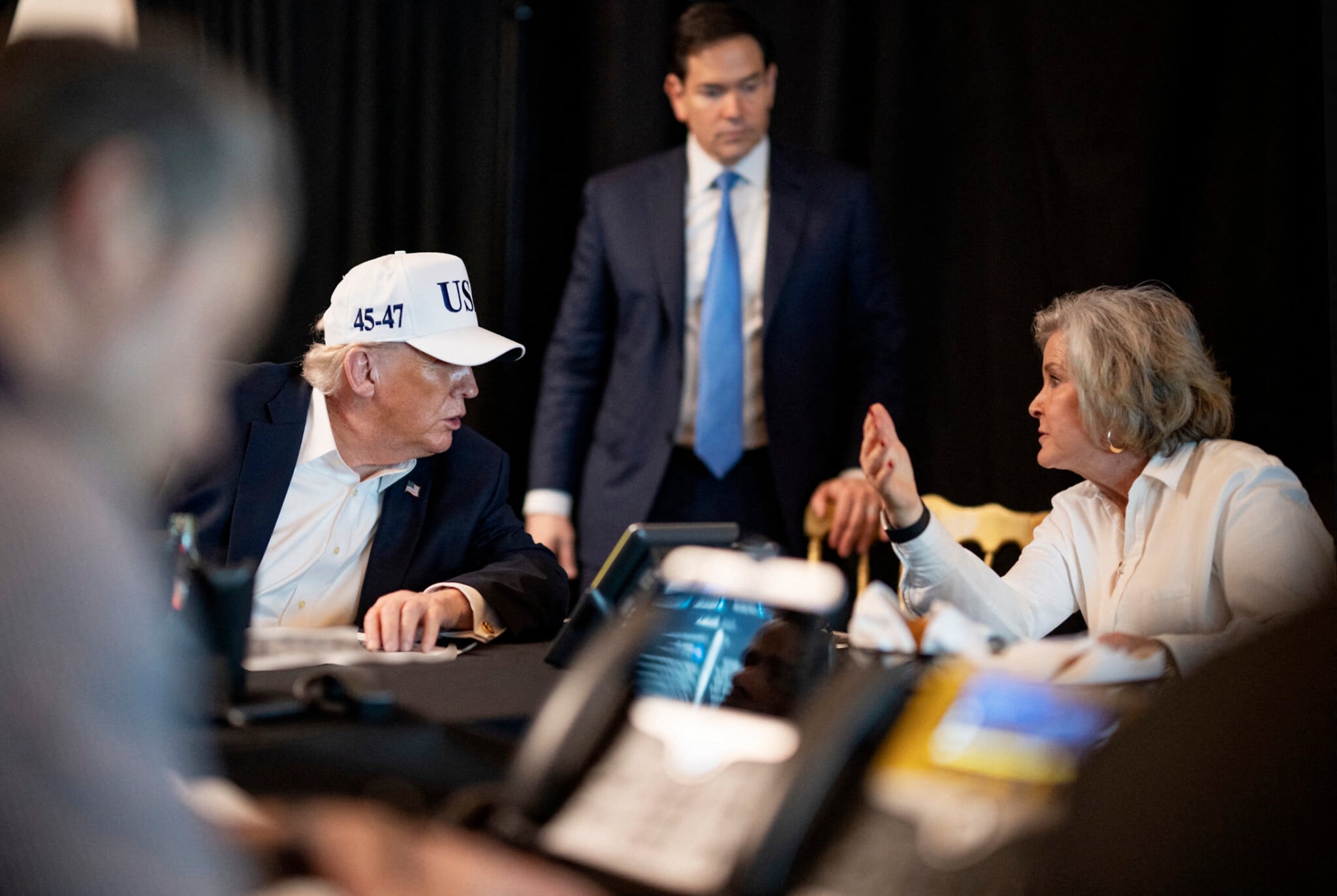
This official White House photograph, made available on February 28, 2026, and released on the White House X account, shows US President Donald Trump (2L), speaking to White House Chief of Staff Susie Wiles (R), watched by US Secretary of State Marco Rubio (C) while monitoring “Operation Epic Fury” activity against Iran, from an unnamed location on February 28, 2026. (The White House/AFP)
But Senator Mark Warner, the top Democrat on the Intelligence Committee, said “there was no imminent threat to the United States of America by the Iranians. There was a threat to Israel.”
Rubio, Hegseth and others briefed the lawmakers, but Senate Democratic Leader Chuck Schumer said he found their answers “completely and totally insufficient.”
The Trump administration will likely seek supplemental funds from Congress to pay for the operation, they said.
You appreciate our wartime journalism

You clearly find our careful reporting of the Iran war valuable, at a time when facts are often distorted and news coverage often lacks context.
Your support is essential to continue our work. We want to continue delivering the professional journalism you value, even as the demands on our newsroom have grown dramatically during this ongoing conflict.
So today, please consider joining our reader support group, The Times of Israel Community. For as little as $6 a month you’ll become our partners while enjoying The Times of Israel AD-FREE, as well as accessing exclusive content available only to Times of Israel Community members.
Thank you,
David Horovitz, Founding Editor of The Times of Israel