
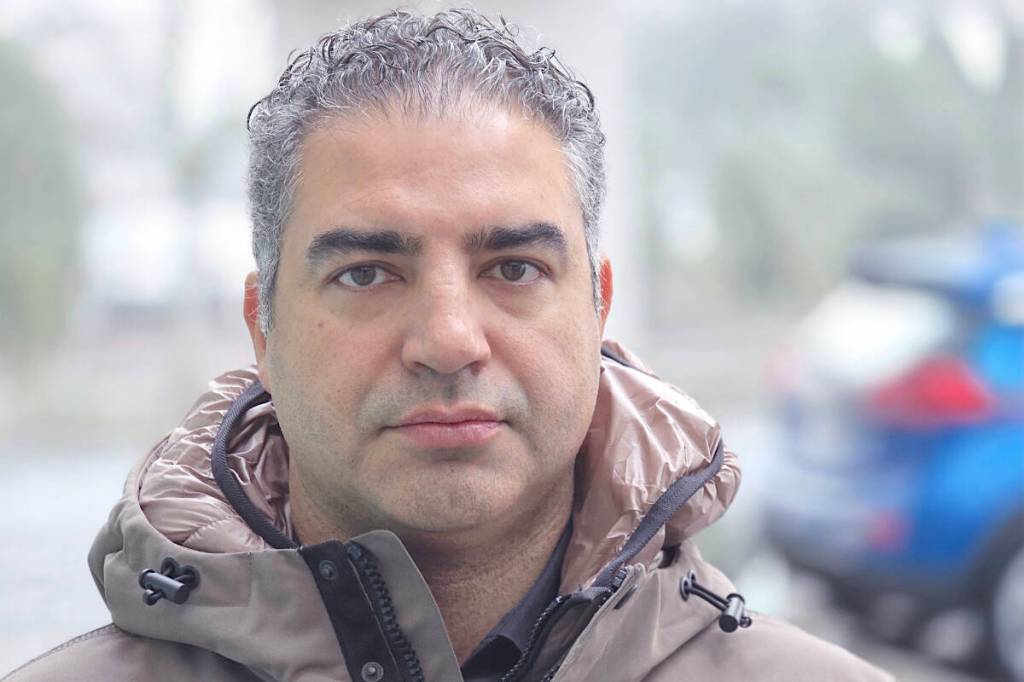
As U.S. and Israeli air strikes continue in Tehran and other Iranian cities after months of worldwide protests, those in the South Surrey-White Rock Iranian community continue to be concerned for family and friends in Iran.
The official state media of Iran’s Islamic theocratic regime confirmed Saturday (Feb. 28) its leader, Ayatollah Ali Khamenei, was killed in a U.S.-Israeli air strike targeting his compound in Tehran.
In retaliation, Iran has sent missile strikes targeting Israel, Bahrain, Iraq, Kuwait, Oman, Saudi Arabia, and the United Arab Emirates, according to Al Jazeera.
As missile strikes continue to be traded in the Middle East, the Iranian diaspora thousands of kilometres away in the Lower Mainland, Okanagan and throughout B.C. took to the streets to celebrate the supreme leader’s death over the weekend, but — with another internet blackout imposed by the Islamic regime entering its third day on Monday (March 2) — it has been difficult to reach loved ones who are in Iran.
“Again, for the last 48 hours, they’ve shut down the internet. I don’t have access to anybody (in Iran),” Sabeti said Monday morning (March 2), recalling how the regime shut down the internet during protests in January. “This time is worse actually. Nobody has a connection to family … you cannot even call directly from your phone or landline.”
While Sabeti — who owns a martial arts academy in South Surrey and was just named president of International Sport Kickboxing Association Canada’s amateur sports division — personally thinks the death of the supreme leader is good, he is apprehensive for his family and friends in Iran as air strikes continue.
“They’re hitting and bombing all over Iran. … Unfortunately the Iranian government built all their infrastructure and army bases in middle of a very populated area,” Sabeti noted. “Right in the middle of a street, right beside hospitals, right beside residences. So, when they get hit, residential (areas) get hit, too. That’s really bad and a tragedy for Iranian people.”
Sabeti is worried for his loved ones, especially his father.
“My dad’s house is in Tehran and is right beside one of the very central bases in Tehran. I hope — I spoke with him a few weeks ago, and I told him to please leave and go to the northern part of Iran by the Caspian Sea, which is safer. I hope he did it, because the last time in the Twelve-Day War between Iran and Israel, all those house got hit by the blast waves.”
It’s not easy to move throughout the country with the conflict that is happening, however, and Sabeti said there should be an immediate ceasefire, with the remaining regime members surrendering themselves to the people of Iran, with the next move being a democratic election, so the people of Iran can choose their government.
He is also hopeful the U.S. and its allies focus missile strikes far away from residential areas.
A potential war is no good for anyone, Sabeti said, especially for innocent, non-military, non-regime citizens who are simply trying to live their lives but become victims of the air strikes.
The best scenario, he said, would be for the Islamic Revolutionary Guard Corps, who “killed more than 40,000 people in Iran in two days” during the protests, to be stopped and stranded, with the U.S. and Israel ceasing fire immediately.
He also feels the U.S. and other Western countries could bring pressure on the Iranian government through diplomatic means, and not deal with the current government or treat it as the official government, as the theocratic Islamic regime was never voted into power.
“Don’t deal with them. Don’t shake hands with them. Make them pay back the price by diplomacy, not with war.”
True diplomacy requires transparency, consistent principles, and responsibility to citizens, not merely words spoken at press conferences, Sabeti continued, not corruption, as “history shows that unchecked power breeds corruption.”
“It requires actions that align with those words … when those entrusted with power begin to operate in secrecy, making deals that benefit themselves rather than the people, the damage can be deeper than any open conflict,” he said.
“A society that demands accountability from its leaders is not rebellious — it is responsible. Only through transparency and integrity can diplomacy be genuine and peace be sustainable.”
— with files from Ty Lim