
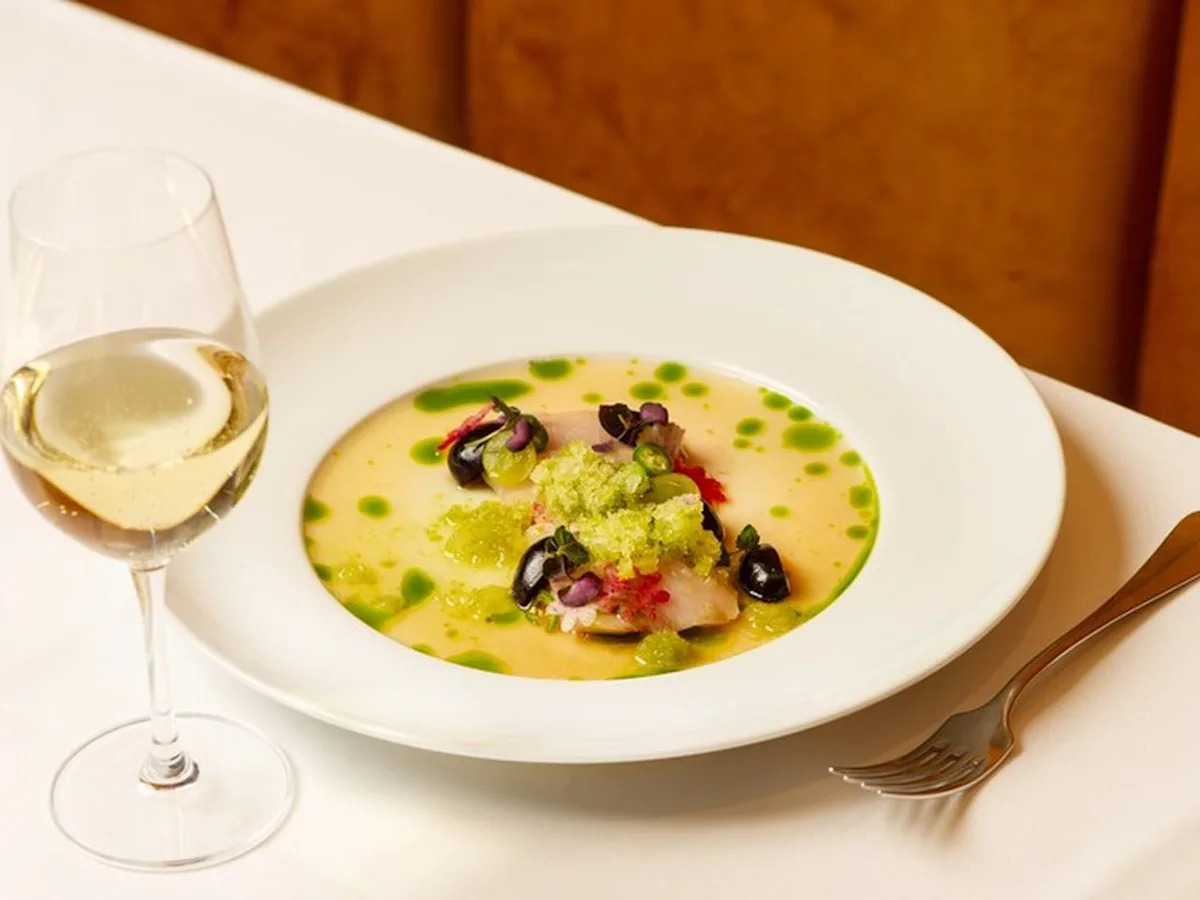
If you talk about French cuisine in Vancouver, eventually, inevitably, the conversation turns to Le Crocodile. For 41 years, chef Michel Jacob led the Alsatian-inspired restaurant that became the elegant and welcoming dining room for a certain segment of Vancouver society.
“Michel had quite a following,” says Rob Feenie, the celebrated chef who stepped in after Jacob retired two years ago. “People knew what they were coming for (and) he knew what his customers wanted.”
For Feenie, taking on such a beloved institution was both a challenge and a homecoming. Long before he opened the fine dining Lumière in 1995, or won Iron Chef America in 2005, or became executive chef of the Cactus Club Café restaurants in 2008, he had worked at Le Crocodile, an experience that has been described as “like going to Harvard” for many of the city’s chefs.
Much of the restaurant’s popularity and influence can be credited to the gracious Jacob and the team he built. But it’s also the beguiling power of French cuisine itself.
“I just love French food. It’s not the richness, it’s the comfort of it,” Feenie says.
Now, as the Vancouver International Wine Festival returns for its 47th year, with France as its theme region, this is the perfect time to take a look at Vancouver’s evolving taste for French cuisine.
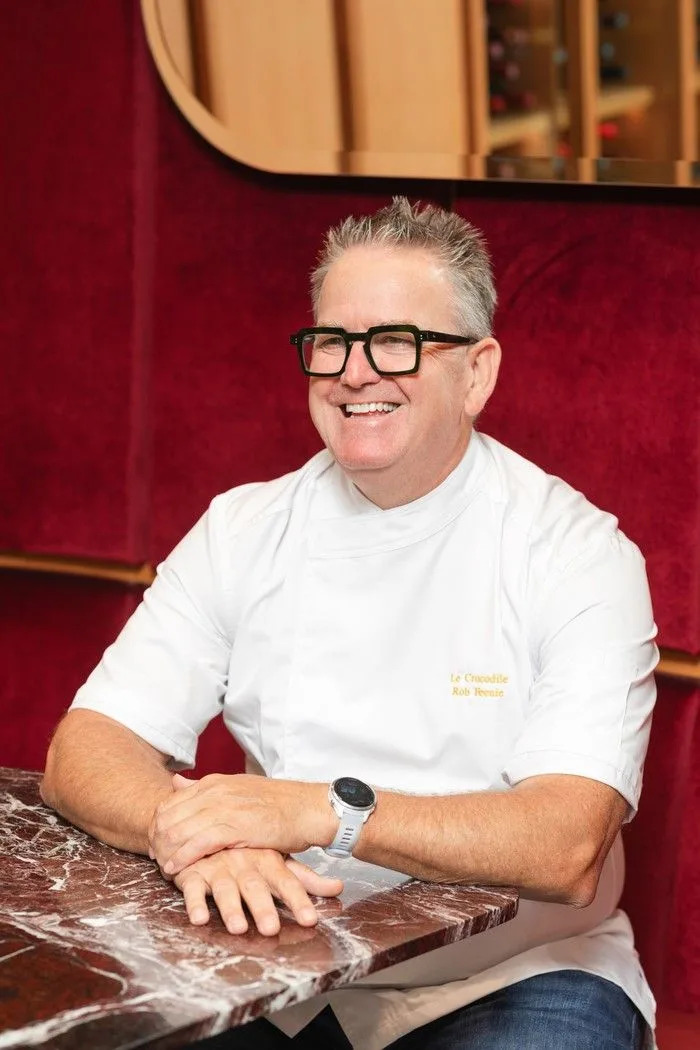
Chef Rob Feenie.
Noble beginnings
French tradition flavours every aspect of the modern restaurant, from the brigade kitchen hierarchy to the menu structure to the foundational culinary techniques to the fact that restaurants exist at all.
Before the French Revolution of 1789-’99, the aristocracy were served fine cuisine in their palaces and châteaux, while the rest of society ate humble fare at home or communally inns. But with the monarchy toppled and the nobility either exiled or executed, their highly trained chefs were forced to ply their craft elsewhere. And so they opened the first restaurants in Paris, including Le Grand Véfour, Les Trois Frères Provençaux and Méot.
Et voila, for the first time, the middle classes could enjoy the same fine cuisine and attentive service as the nobility. Dining out soon became an aspirational activity and the epicentre of modern life, not just in Paris, but around the world.
Even so, Vancouver wasn’t much of a fancy French dining kind of town. Instead, there were taverns for every day, steak and lobster for special occasions, and Chinese for those willing to venture down to East Pender Street (and, during Prohibition, for those thirsty for “cold tea”). Even today, this city is better known for its exceptional Asian cuisine and a distinctive sort of east-meets-west-meets-farm-to-table fusion.
French restaurants were such a rarity here that when a handful of them opened in the late 1970s and early ’80s, the news merited its own segment on national television. In September 1983, CBC TV reporter Mike Duffy flew in from Ottawa to report that Chinatown was facing “stiff competition” from a different sort of cuisine.
“A score of excellent French restaurants have opened in Vancouver,” said Duffy, noting that they catered to people “with lots of cash, and an appetite for a meal that’s out of the ordinary.” Among them: Chez Nous, Bistro la Palette, Café de Paris and Le Vieux Quebec.
They are all long gone. Indeed, the city’s restaurant graveyard is littered with French restaurants. Le Gavroche. Ouest (later West). DB Bistro Moderne. Le Parisien/Left Bank. Jules Bistro. La Regalade. Most recently, French Table, the charming Main Street restaurant chef Hervé Martin opened in 2011 after operating The Hermitage on Robson for 25 years.
Despite those losses, the city’s French dining scene has, arguably, never been finer, with options ranging from the casual fare of Tableau Bar Bistro or Alouette Bistro to the sun-soaked dishes of Provence Marinaside to the indulgent, Escoffier-by-way-of-Quebec cuisine of Michelin-starred St. Lawrence.
French cuisine is always in fashion for one good reason. As Feenie says, “It’s simple, really well-made food.”
‘A very special place’
When Michel Jacob was just 15, he apprenticed at the original Au Crocodile, a historic, three-Michelin-starred restaurant in Strasbourg, France, that had since 1971 been led by chef Emile Jung. In 1983, when Jacob opened his own restaurant in 1983, he named it Le Crocodile in homage.
Years later, Feenie, too, cooked at both Crocodiles. But he’d fallen in love with French cuisine long before that.
“It’s a real vivid memory. I had mussels and frites in Belgium when I was 16 years old,” he says. He admits that “isn’t really French,” but recalls travelling through Paris on that same school trip “and having baguette and brie — that was my first inkling of French food.”
Since then, he has travelled to France many, many times. “My favourite region is Alsace for obvious regions, that’s where Michel’s family is from,” he says. He raves about the seafood in Normandy and Brittany, the dozens of Michelin-starred restaurants he’s visited, the major chefs he’s been lucky enough to meet and work with.
But, mostly, he raves about the food.
“Where do I start? I love the cheeses, I love the bread, I love the butter.”
He also loves the classic dishes: steak au poivre, coq au vin, crêpes suzette, foie gras, tarte flambé, choucroute, sweetbreads, poulet de Bresse, duck confit.
“Onion soup. I make it a mission of mine to go to Au Pied de Cochon every time I go to Paris,” he says, referring to the famous (nearly) 24-hour restaurant in Les Halles where the dish originated.
He adds: “I have so many memories … it’s a very special place. There’s so many things I love. I was given a gift as a young boy of knowing what I wanted to do and gifted even more by going to France at a young age and trying all this great food.”
A lighter touch
And now, after a dozen years overseeing globally inspired fine-casual food at Cactus Club, Feenie has gone back to the beginning, not just to the restaurant where he began his career, but to the heart and soul of French cuisine.
At Le Crocodile, he is carefully preserving Jacob’s legacy; in fact, he’s about to start splitting his menu into a “classics” section, which will feature favourites like the Dover sole and veal medallions, and a new section that will showcase his own dishes.
Still, his food is a little bit lighter, the sauces based on reductions rather than thickened with flour. It’s also more likely to be locally sourced, the bread from Small Victory, the chocolates by Thomas Haas, the produce from local farmers.
“The irony is that I learned all that from Emile Jung himself at the original Au Crocodile, where Michel went to work at 15 years as an apprentice,” Feenie says. “He actually taught me the lightness of my food.”
That connection between France and Vancouver is why he has hung pictures of himself working at the Alsatian Au Crocodile in the hallway of Le Crocodile.
“People always say about my food that it speaks for itself and that’s what French food is all about,” he says.
“I’m just grateful that I’m back doing this again. I love making people happy and I love doing it in a place where I first worked when I was 24 years old. I feel I’m back home again.”
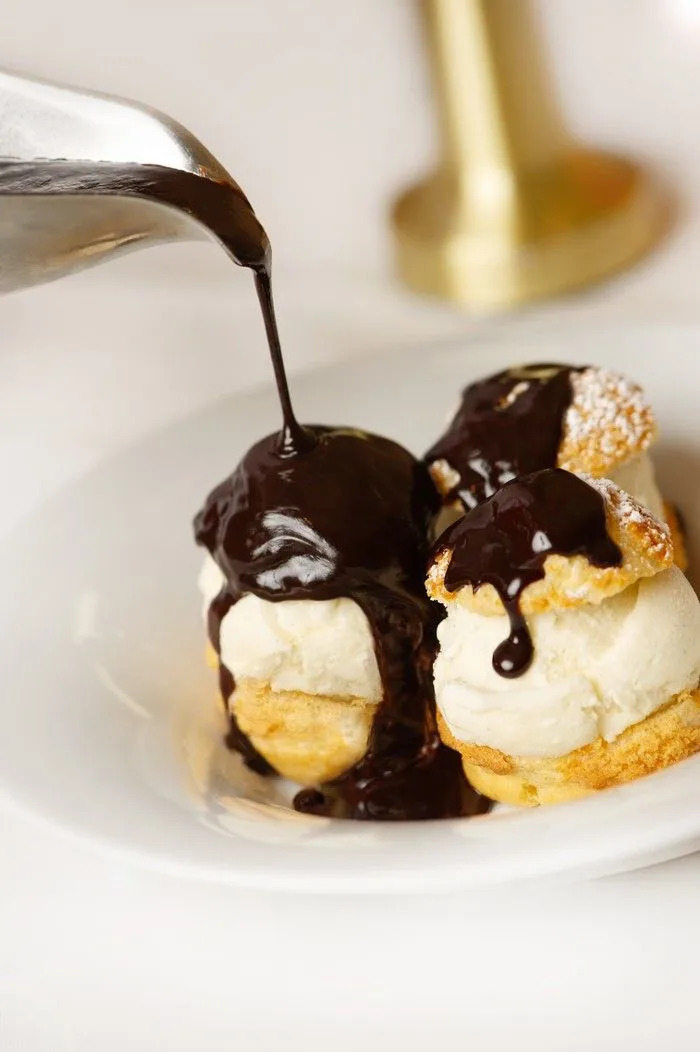
Profiteroles at Le Crocodile.
13 must-try French restaurants in Vancouver
Vancouver is a hub of fabulous French restaurants. Check out a few on our must-try list.
Le Crocodile may be Vancouver’s most classic, long-standing French restaurant, but here are a dozen more to try. Bon appétit!
• Le Crocodile by Rob Feenie, 909 Burrard St. (Read our review HERE)
• Alouette Bistro, 567 Hornby St.
• Au Comptoir, 2278 W 4th Ave. (Read our review HERE)
• Brasserie Coquette, 2685 Arbutus St.
• Chez Céline, 4298 Fraser St. (Read our review HERE)
• Collective Goods, 3532 Commercial St. (Read our review HERE)
• L’Abattoir, 217 Carrall St. (Read our review HERE)
• Les Faux Bourgeois, 663 E 15th Ave.
• Linh Café, 1428 Granville St. (Read our review HERE)
• Provence Marinaside, 1177 Marinaside Cres.
• Café Salade de Fruits, 1545 W 7th Ave.
• St. Lawrence, 269 Powell St. (Read our review HERE)
• Tableau Bar Bistro, 1181 Melville St. (Read our review of Tableau HERE)
Related