
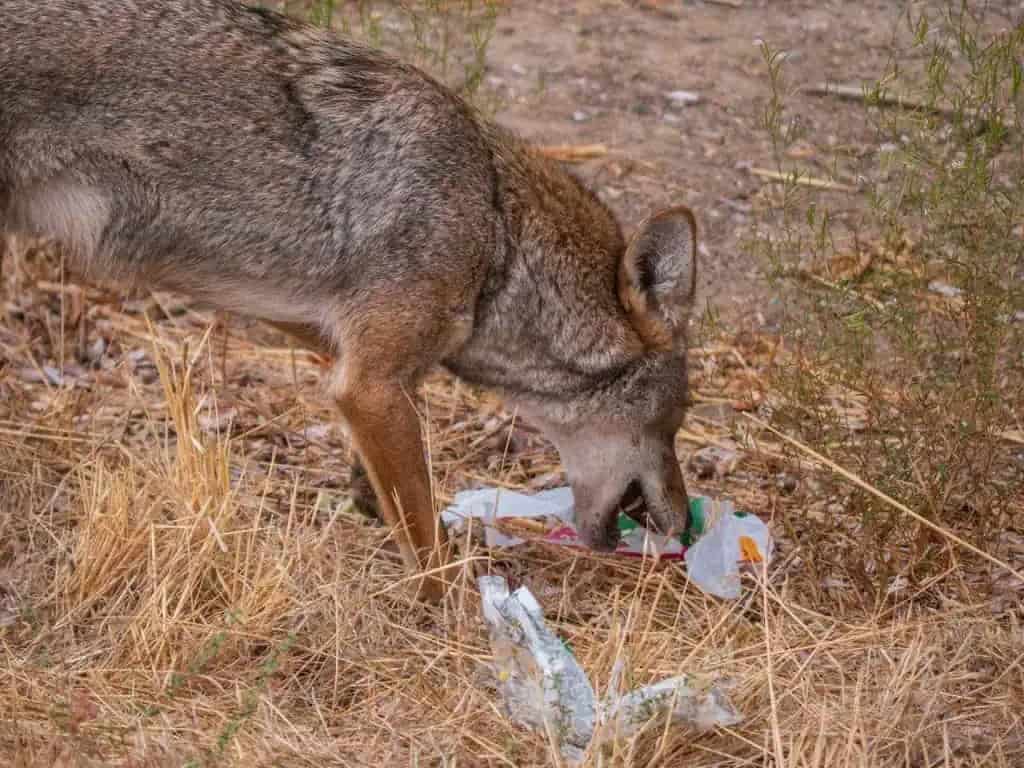
Mississauga officials remind people not to feed coyotes or any other wild animals. Coyote shown in photo is not “Bunny.” (Photo: City of Mississauga)
A coyote without a tail who’s become a bit of a celebrity in Toronto where she’s reportedly endeared herself to many people is now regularly venturing into Mississauga, it seems.
“Bunny,” so named, affectionately, by Toronto residents who’ve encountered her — either from a distance or somewhat closer — multiple times over the past couple of years, is immediately recognizable due to her missing tail and what appears to be some type of netting that sits loosely around her neck.
Word from various people online suggests the female coyote is not aggressive with people and was first spotted in spring 2024 — and her legend on the local scene, particularly in the Etobicoke area of west Toronto, has grown from there.
One commenter on a February 2025 Facebook post dedicated to “the story of Bunny” noted “people don’t faze her” and that she was “living in the High Park area (of Toronto) for months and has been travelling around all over. She’s been sighted (in) High Park, Bloor West Village, the Junction, south Etobicoke, (the) Etobicoke-Mississauga border near Highway 427 and downtown Toronto.”
The person went on to say “Bunny” has been known to chase a squirrel up a tree, but “is never interested in humans and hasn’t gone after people’s pets that I know of.”
Apparently, the commenter added, people in Toronto have also been known to talk to the wandering critter “from their car windows” when they cross her path.


Despite reports suggesting “Bunny” is not aggressive towards people, city officials in Toronto and Mississauga urge residents to be cautious should they encounter her or any other seemingly harmless critter.
Both cities are working together on that front.
“Bunny” has been spotted in Mississauga
In Mississauga, Animal Services workers have been “actively monitoring a food-conditioned coyote known as Bunny, who has been seen moving between Mississauga and Toronto,” Ward 7 Coun. Dipika Damerla told her constituents in an online community update this week.
The coyote “has shown concerning behaviour such as approaching people and staying unusually close,” the Mississauga councillor continued.
Damerla went on to tell residents that sightings of “Bunny” have been reported in several Mississauga wards since last fall and the situation has been classified as “Orange” under the City of Mississauga’s Coyote Response Framework.
“This means staff continue to use hazing and other aversive techniques, with removal (of the animal) considered only as a last resort,” Damerla said in her notice to residents.
Hazing is a method that uses various deterrents — yelling and waving arms, whistles and other noisemakers, throwing small rocks or rubber balls to name a few — to move an animal out of an area or discourage an undesirable behavior or activity.
Hazing can help keep people and animals safe, city says
The practice of hazing can help, importantly, maintain a coyote’s fear of humans and deter them from backyards and play areas, officials say — which is good for people, their pets and the coyotes themselves.
Damerla and Mississauga city officials noted intentional wildlife feeding, including the feeding of coyotes, continues to be an issue.
“Staff report that Bunny is responding to hazing, but sightings will continue as long as food is made available,” the councillor’s community update reads. “A coordinated approach across both cities is underway to keep residents and wildlife safe.”
Here’s what the City of Mississauga is doing:
Ongoing patrols and rapid response to sightings.
Aversive conditioning to deter unsafe behaviour.
Multilingual “Do Not Feed Wildlife” signs and community outreach.
Collaboration with Toronto Wildlife Centre, Coyote Watch Canada and Toronto Animal Services.
A public information session is being planned.
City officials say residents also have a role to play:
Do not feed wildlife.
Remove food sources such as accessible garbage, compost and pet food.
Report coyote sightings to Animal Services.
Share this information with neighbours.
Coyote sightings can be reported to the city online.
To report an injured/sick coyote, or any other animal, and animals posing a risk to the public, call Animal Services at 905-896-5858.
In addition, the city says this is the time of year when residents can expect to see — and hear — more coyotes due to late winter mating season.
(Cover and inside coyote photos: City of Mississauga)
INsauga’s Editorial Standards and Policies
Last 30 Days: 46,671 Votes
All Time: 1,246,680 Votes
185 VOTES
Should Ontario keep daylight saving time year-round?
WIN A $100 GIFT CARD
Subscribe to INsauga’s daily email newsletter for a chance to win a $100 Amazon gift card.