
Tree canopy loss a ‘significant challenge’ in Surrey
Published 1:00 pm Tuesday, March 3, 2026
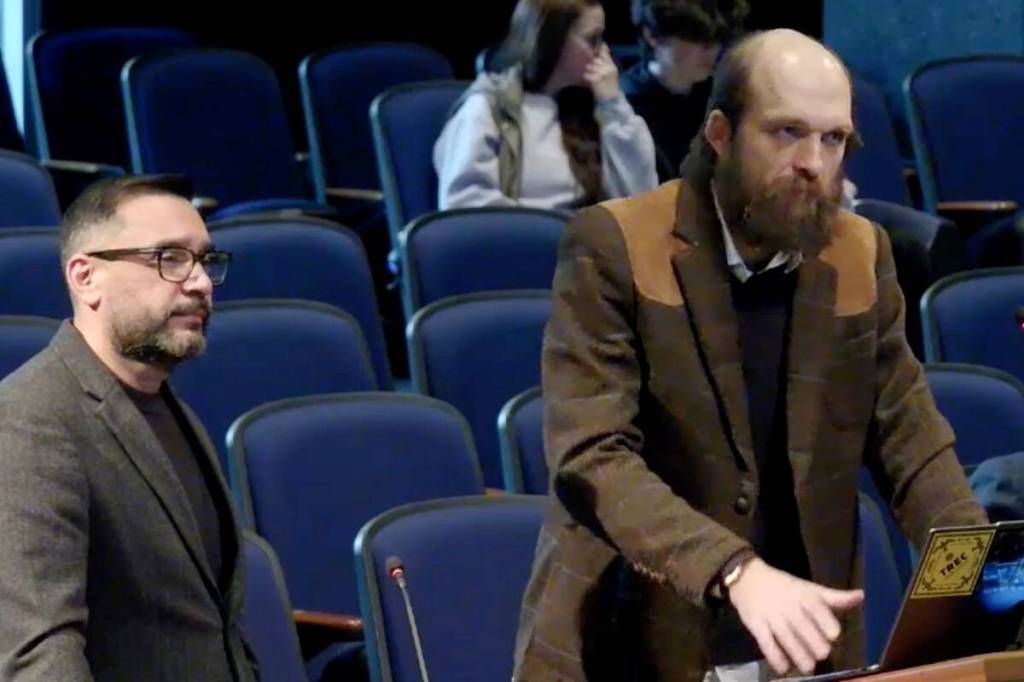
Representatives of Surrey’s seven-member Environment and Climate Change Committee discussed accomplishments in 2025 and priorities for 2026 during a recent presentation before council-in-committee at Surrey City Hall.
The ECCC’s purpose is to “provide a community perspective” to council and advise its members on environmental protection, reducing greenhouse gases, and other issues related to climate change and sustainability through identifying trends and reporting on them.
Some areas it tackled in 2025 include salmon habitat restoration, invasive species, tree protection bylaw issues, water conservation and drought management, the city’s cycling network plan, and RELEAF tree planting events at Hazelnut Meadows Park, Panorama Park and Bob Rutledge Park.
“The RELEAF events, they focus on restoring and enhancing the quality of the urban tree canopy and ecosystems. They were in fact very popular events, lots of folks coming out, lots of kids coming out as well,” Sadja said, adding participants learned about the importance and legacy of the tree canopy.
“In some cases the events were so popular that the trees were actually rationed off so that you could only plant so many trees because there weren’t that many available.”
Among its 2025 recommendations to council, the committee urged city hall to prioritize monitoring tree canopy integrity “to best meet the needs of residents.”
The ECCC’s 2026 initiatives include recommendations to support increased services related to illegal dumping, reviewing tree protection regulation for agricultural land and tree clearing permits, watershed management, corporate and community emissions and biodiversity design guidelines and their application in Surrey.
Waraich told council the salmon habitat restoration program, aka SHaRP, has proved to be an “incredibly valuable” program for Surrey. “With 30 years of history SHaRP has worked all across Surrey providing important restoration work and offering great job-training for both Surrey high school and university students,” he said.
“Investing in SHaRP protects salmon, strengthens climate resilience and supports long-term ecological services. The environment committee recommended that SHaRP see more support through a diversity of core funding that would be increased to meet rising employment cost and environmental priorities.”
Invasive species is also a “very important” top on the ECCC’s radar, Waraich noted. “Surrey has numerous programs to remove and replace invasive vegetation and yet some invasives are still sold at nurseries and garden shops. The environment committee recommended that council direct staff to develop a bylaw to restrict the sale of invasive plants in Surrey and that Surrey’s bylaw be sent to Metro Vancouver Board for consideration in other municipalities in the region. Requesting regional adoption through Metro Vancouver promotes consistency and strong outcomes as we know that there are no boundaries for the invasive species.”
Moreover, Waraich told council urban tree canopy loss is a “growing concern due to development pressures and climate stress. Urban tree canopy is an important resource for Surrey’s residents, supporting biodiversity, offering shade, cooling and resilience to climate change.”
Surrey’s tree protection bylaw, he said, is the “principal tool” to protect the urban tree canopy and added that “the environment committee recognized that loss of tree canopy is a significant challenge in Surrey.”
Mayor asked if there’s “any chance of ever getting ahead of the blackberries that we see everywhere? Like, is that even something we can even achieve because it seems like as soon as they’re removed, they’re so tenacious those things.”
Sadja replied that speaking from his own perspective anything is possible “if you dream big enough, but it would certainly be a massive challenge for the City to tackle that all and it would probably have to be done in coordination with neighbouring municipalities because the ecosystem doesn’t obey any political boundaries so, you know, it would be a very, very big challenge and I think it’s probably not the best use of our resources in the City, that’s my own personal perspective, not speaking for the committee.”