
Surrey judge’s sexual exploitation decision confirmed by appeal court
Published 3:30 pm Tuesday, March 3, 2026
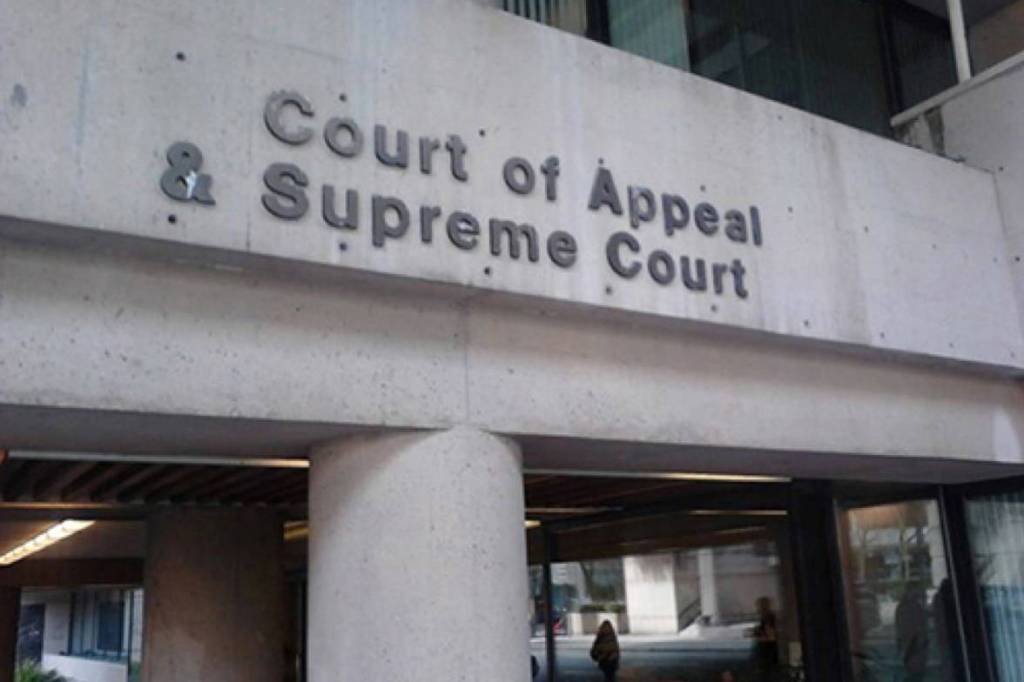
The Court of Appeal for British Columbia has upheld a Surrey judge’s decision to convict a man of sexual interference and sexual exploitation related to a teenaged girl.
A sexual assault charge was conditionally stayed.
There is a publication ban on any evidence that could identify the girl, who was 15 and 16 years old at the time of the offences which occurred over 18 months.
Mark Douglas Hallwachs appealed his convictions. He was 42 at the time of the crimes, committed between Nov. 1, 2014 and April 30, 2016.
“The primary issue on appeal is whether the judge misapprehended evidence material to her assessment of the complainant’s credibility,” Justice Lauri Ann Fenlon noted in her March 3 reasons for judgment delivered in Vancouver.
Justices Margot Fleming and Lisa Warren concurred with Fenlon’s decision to dismiss the appeal.
“Initially, the complainant did not consent to the sexual contact, but did not know how to stop it. Eventually, she started to have feelings for the appellant and agreed to sexual activity with him on an ongoing basis,” Fenlon said.
But this stopped after the girl’s mother found out what was happening.
“The complainant’s parents went to the police but were told the complainant would need to make a statement in order for the investigation to proceed,” the appeal court judge noted. “At that time, the complainant refused to do so, feeling that she loved the appellant and wanted to protect him. It was not until she was 19 years old and began to realize the impact of the events on her life that she contacted the police to make a statement.”
Hallwacks denied having any sexual contact with the girl. He argued that the Surrey judge erred in assessing the teen’s credibility.
Fenlon noted that “demonstrating a misapprehension is a high standard for an appellant. They must point to a plainly identifiable error, not merely suggest that the judge may have erred.
“I see no basis in the judge’s reasons to suggest that she misapprehended the complainant’s evidence,” she found. “Further, in assessing the appellant’s argument that the judge should not have drawn the inference she did, context is important. The issue before the judge was not when the assaults occurred, but whether they happened.”
Fenlon noted that the provincial court judge found that the complainant “did not consent to the sexual activity at issue.”
She further explained that “even when sexual assault complainants are entirely mistaken about details such as time and place, it is for judges to determine what significance this will have on an assessment of their credibility and reliability.”
“I see no material error in the judge’s reasoning in this case,” Fenlon concluded.