
Key Takeaways
Eating a daily handful of almonds delivers a satisfying mix of protein, fiber, and healthy fats that supports fullness, weight management, and steady energy.Despite their fat content, almonds are rich in heart-healthy unsaturated fats and are linked to lower cholesterol, blood pressure, and reduced heart disease risk.Regular almond intake also benefits gut health by feeding good bacteria and boosting anti-inflammatory compounds, making them a smart swap for processed snacks.
It’s no secret that almonds are loaded with nutrients and packed with health benefits. Plus, they have a satisfying crunch, and since they’re shelf-stable and portable, you can take them on the go. With many varieties and forms to choose from—raw, roasted, almond butter, etc.—it’s also easy to keep things interesting. Grab a handful of almonds for an easy snack, or chop ‘em up for your oatmeal or salad toppings.
Unless you’re allergic to tree nuts, it’s clear that eating more almonds is definitely a good thing. But for some people, there’s one holdup: Aren’t almonds high in fat?
We asked a nutrition expert to settle the score on whether it’s beneficial to eat almonds daily (and what can happen if you do) or if you should enjoy them in moderation.
Almonds Nutrition
“Almonds are truly a nutritional powerhouse—you’re getting plant protein, dietary fiber, healthy fats, vitamins, and minerals,” says Molly Pelletier, RDN, registered dietitian and gut health specialist. “That specific combination of protein, fiber, and healthy fats really hit that trifecta for satiety, making [almonds] a go-to for me and my clients.”
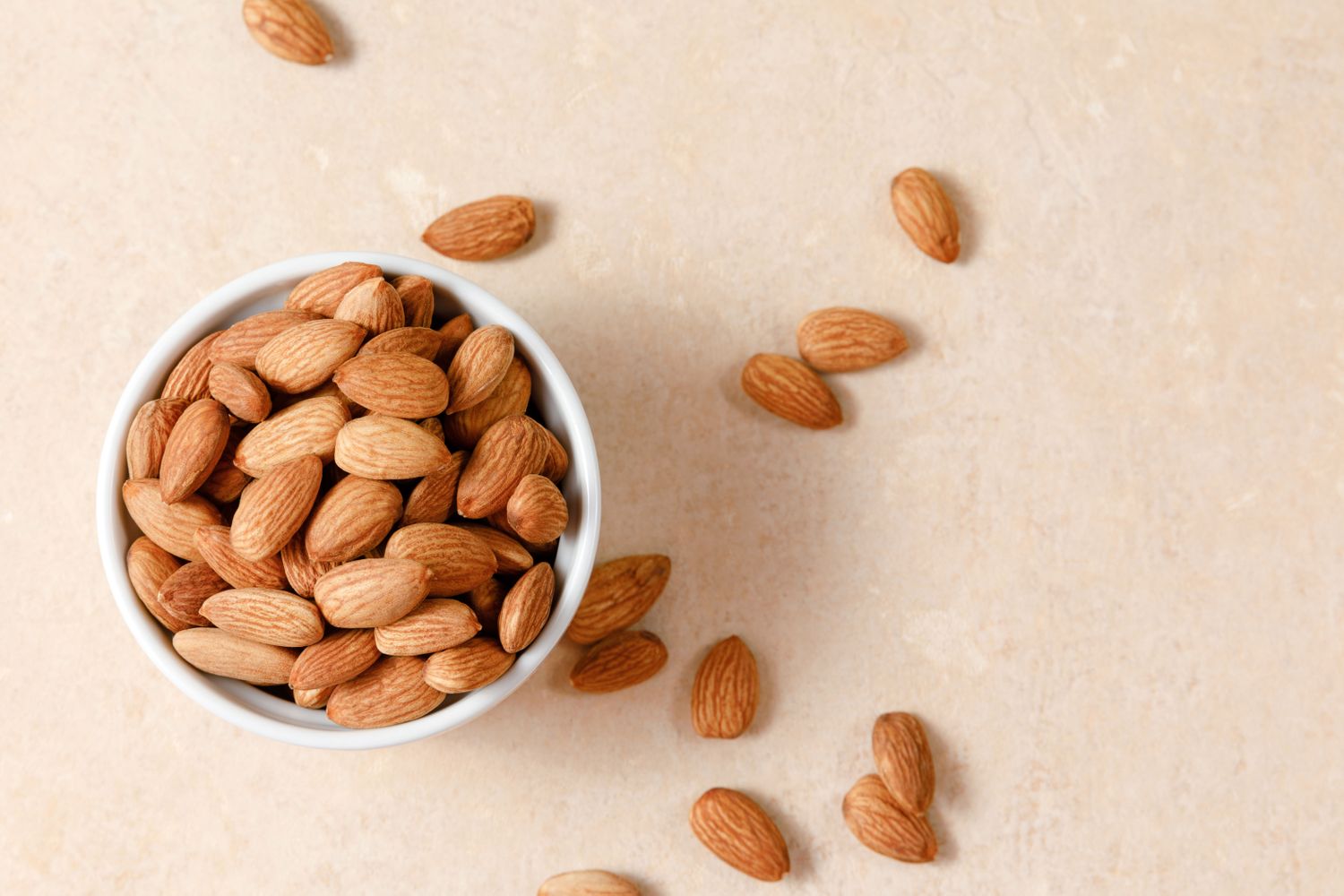
How many almonds should you eat in a serving? “I usually recommend one ounce, which is about 23 almonds or a generous handful,” Pelletier says. “However, much of the recent clinical research, particularly on gut health and metabolic benefits, has examined a slightly higher intake of about two ounces (around 45–50 grams) per day.” While that may seem like a lot, it’s more manageable when you spread it out throughout the day.
According to USDA data, each ounce of almonds provides the following nutrients:
Calories: 164
Carbohydrates: 6.12 grams (g)
Fiber: 3.54 g
Fat: 14.1 g
Protein: 6.01 g
Magnesium: 76.5 milligrams (mg)
Vitamin B2 (riboflavin): 0.323 mg
Vitamin E: 7.26 mg
Though some people pause at the mention of “fat,” almonds are rich in unsaturated fat (aka the good kind). “Some people worry about the calories or fat in nuts, but the science is clear: almonds are a healthy, nutrient-rich choice that supports weight management rather than hindering it,” Pelletier says. And she’s right about the evidence—almonds are associated with lower body mass and fat mass, as well as lower cholesterol, blood pressure, and heart disease risk, according to a comprehensive review.
Almonds are also supportive of gut health, Pelletier notes. “Almonds provide the fuel— fiber and polyphenols—that beneficial gut bacteria need to thrive,” she explains. Just be sure to stay hydrated when increasing your intake of fiber-rich foods. “Water and fiber work together to keep things moving smoothly,” Pelletier adds.
What Happens When You Eat Almonds Every Day?
The verdict is in: RDs approve of eating almonds every day with next to no caveats. They keep you feeling satiated, which can help with weight control, and support heart and gut health.
“When you incorporate almonds daily, you’re essentially feeding your gut microbiome,” Pelletier says. All that fiber feeds the good bacteria in your gut, fostering a more diverse gut microbiome. Pelletier also points to recent research on the prebiotic effect of almonds. “This daily habit can increase the production of butyrate, a short-chain fatty acid that helps strengthen the gut lining and reduce inflammation,” she explains.
As for downsides, there really aren’t any. People with tree nut allergies should steer clear of almonds, of course. But for everyone else, almonds are generally well tolerated, Pelletier notes.
“Replacing a highly processed, low-nutrient snack with a handful of almonds is such an easy win for your gut and your heart,” Pelletier says. “I always have a little tin of them in my bag for those busy on-the-go days!”