

Listen to this article
Estimated 4 minutes
The audio version of this article is generated by AI-based technology. Mispronunciations can occur. We are working with our partners to continually review and improve the results.
City of Winnipeg crews have cleared people out of 17 encampments since new restrictions on where camps can be set up took effect last November, according to a new update from Winnipeg officials.
In total, 51 sites have been cleaned up, including sites that had been abandoned, with crews removing garbage and debris left behind, the city says. Crews have also carried out 108 inspections of sites where tents or shelters were reported.
Greg MacPherson, the city’s manager of community development, said activity has slowed somewhat during the winter months, but the city has still been “very busy” responding to encampments.
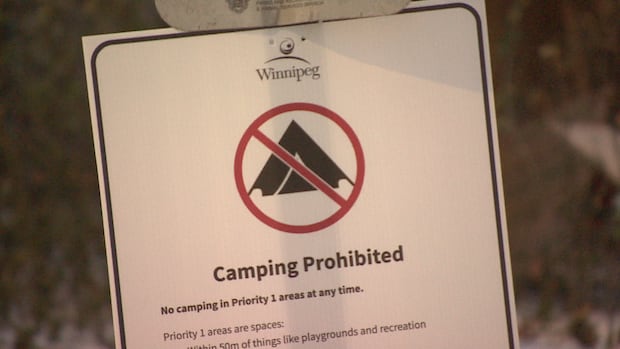
The bylaws that came into effect in November limit where encampments can be located.
They’re not allowed within 50 metres of schools, playgrounds, daycares and skating rinks, or within 30 metres of transit shelters, bridges and similar public facilities.
Camping is also prohibited on public property, including in public parks, according to the city’s bylaws.
Under the city’s approach, staff work with outreach teams to offer shelter or housing options before enforcement takes place.
Community services committee chair Coun. Vivian Santos said the goal is to avoid simply pushing people from one location to another.
“We’re not moving people along and displacing them,” she said. “We want to ensure that there are spaces for them to move into.”
But the city cannot force people to accept available shelter options, MacPherson noted.
The city can’t say how many people have moved into housing after leaving encampments, because that work is tracked by the province under its homelessness strategy.
MacPherson said provincial figures show 186 people accessed housing over the past year through the province’s Your Way Home program.
Cold weather can make clearing encampments more complicated, he said.
“People’s life safety is paramount,”said MacPherson. “Hypothermia is a reality.”
Downtown washroom use growing
Meanwhile, as as the city continues to evaluate how best to expand access to washrooms in public spaces, a new report says the city’s core area public washroom saw nearly 48,000 visits last year.
A report to councillors says the Amoowigamig washroom at Main Street and Henry Avenue saw roughly 4,000 more visits last year than the year before.
City officials say the facility is playing an important role for people in the area.
“The numbers are still significantly high,” said Santos. “There is still a lot of usage for that washroom.”
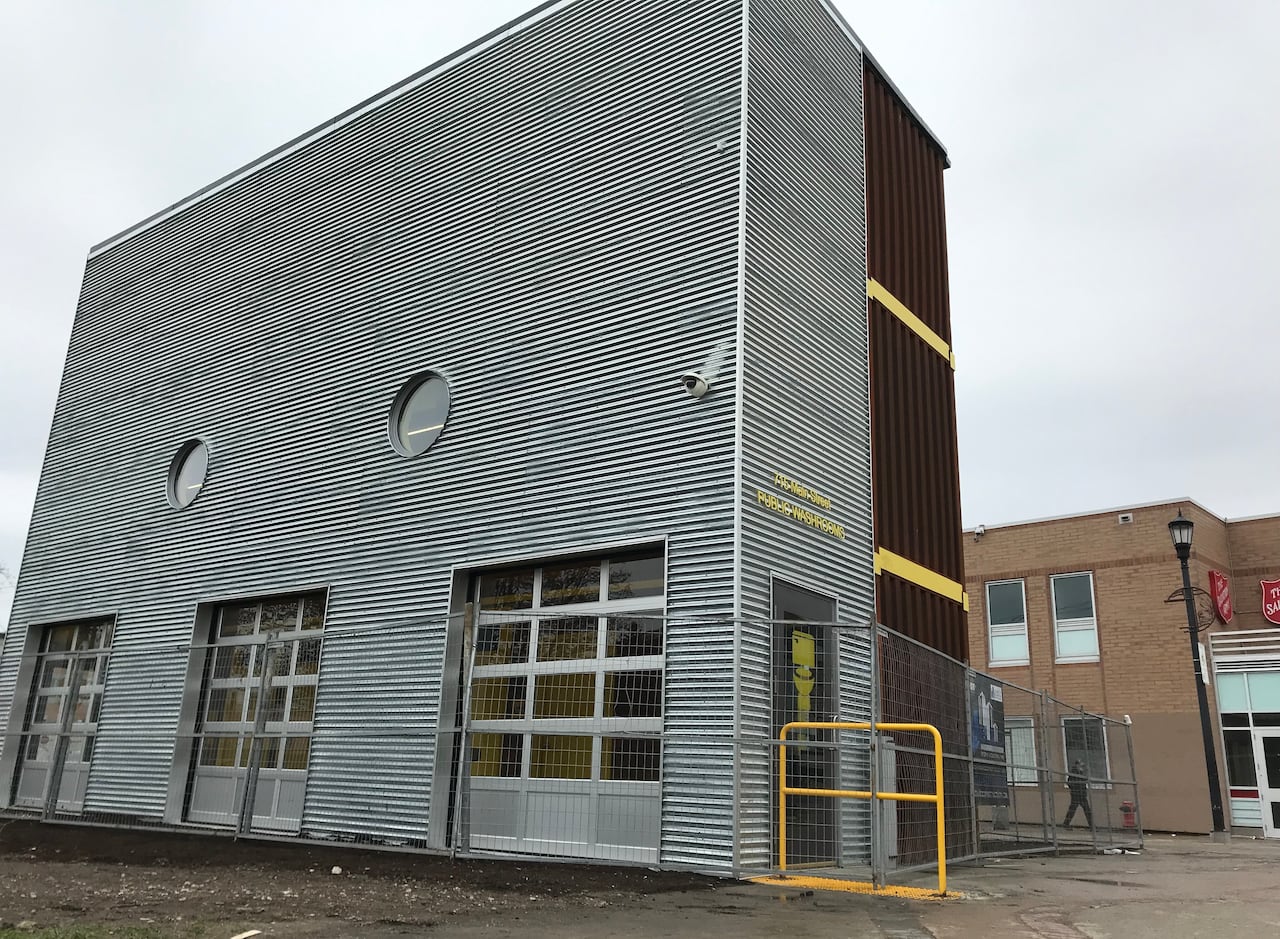 The City of Winnipeg says concerns about safety for staff at the Amoowigamig public washroom on Main Street led to changes in how the facility operates, including limits on the number of people allowed in at a time. (Thomas-Asselin/Radio-Canada)
Staff have also made operational changes at the facility in response to safety concerns. The washroom is no longer fully open for walk-in access at all times. Instead, entry is controlled and the number of people inside is limited, so peer support workers can safely monitor the space and assist visitors.
Santos said the goal is to balance access to an important public service with the safety of the staff working there.
“We want to ensure that the staff that are in that facility are safe,” the Point Douglas councillor said.
The facility is staffed by workers from the Ma Mawi Wi Chi Itata Centre and is open 16 hours a day, from 7 a.m. to 11 p.m.
It was originally intended to operate 24 hours a day, but Santos said the city does not currently have the funding to extend its hours.
City staff say several upgrades have been made at the site, including improved lighting, landscaping and the installation of sharps disposal boxes.
At the same time, the city is reconsidering its program of portable public washrooms placed in some inner-city locations.
Those units were introduced during COVID-19 restrictions, when many indoor washrooms were closed to the public.
But city officials say the units have faced repeated problems, including vandalism, fires and theft of components.
Maintaining the facilities has become increasingly difficult, and the contractor responsible for servicing them has expressed interest in ending the program.
According to the report, the city currently provides two porta-potties — at the Broadway Neighbourhood Centre on Young Street and at 400 Cumberland Ave.
Santos said she hopes the remaining units can stay in place for now.