
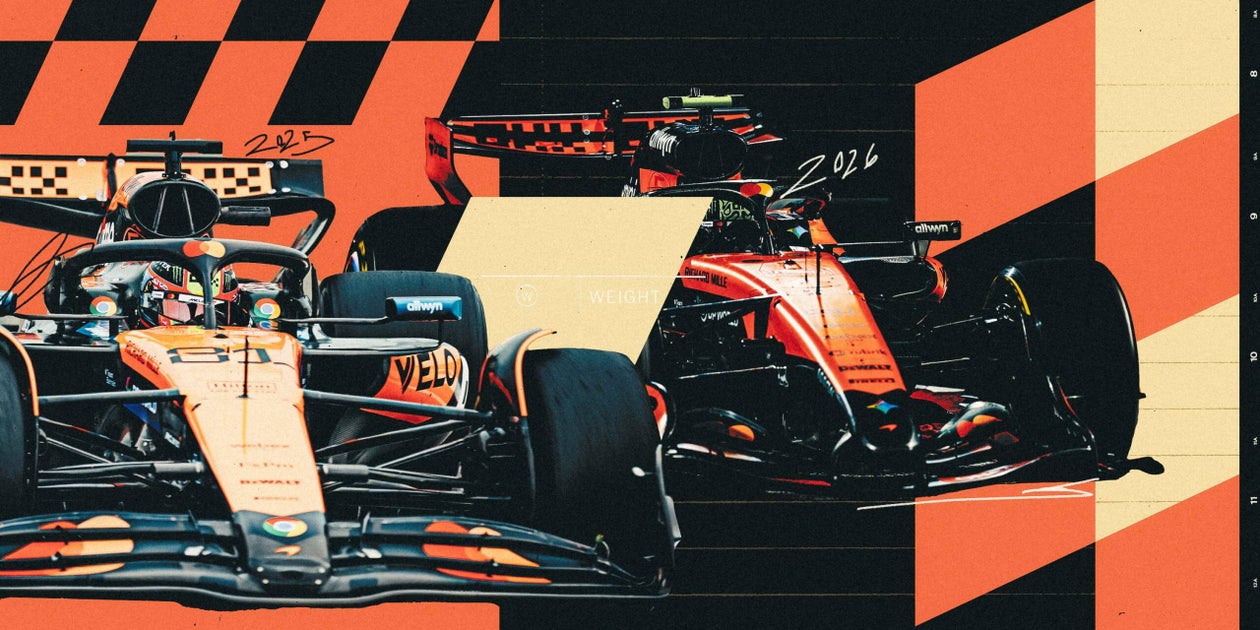
One of the greatest complaints that drivers voiced about the previous generation of Formula 1 cars concerned their size and bulk. The 2022-2025 machines were the heaviest in the sport’s history.
At 800kg — including the driver — the 2025 models continued a trend of rising weight over the past two decades, with around 200kg added to the cars since 2000. Last year’s cars were among the fastest ever, but they still felt sluggish through slow-speed corners.
The cars had also grown bigger over time, reaching two meters wide. The big wings of the previous era were effective at generating downforce and making the cars so fast, but they also made for a tight squeeze on some street circuits, most notably Monaco.
Through F1’s rewrite of the car design rulebook for 2026, which covers both aerodynamic designs and new engines, things have changed. The cars are now slightly lighter and smaller — and safer — making them more agile for the drivers.
F1 hopes they will also provide better racing, thanks to the improved driver feel. The move has already won praise from some of them.
“(With) everything being narrower, that weight is more centralized,” explained Mercedes’ George Russell. “It doesn’t feel like such a big bus.”
Why are the cars downsizing?
Two veterans of the F1 grid, Fernando Alonso and Lewis Hamilton, have experienced a significant increase in car weight over the course of their long careers.
When Alonso made his debut in 2001, his Minardi car weighed around 600kg. By the time Hamilton joined the grid in 2007, a mere 5kg had been added. But by last year, their cars were around one-third heavier. This inevitably affected how the cars felt on the track.
“I don’t understand why we’re going heavier,” Hamilton said in 2021. “The lighter cars were more nimble, nowhere near as big, naturally, and so racing (and) maneuvering the car was better.”
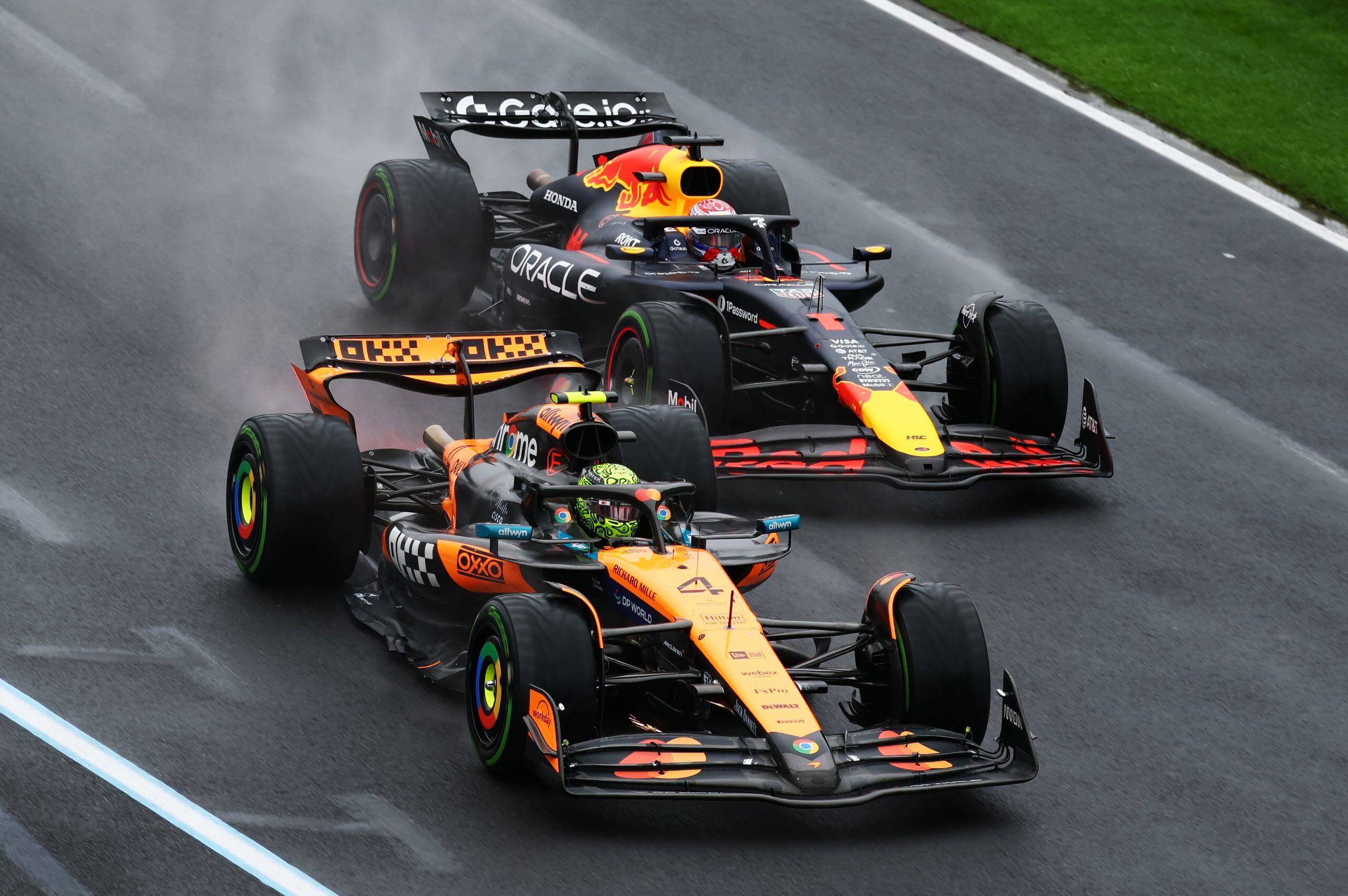
Over the years, F1 cars got bigger and bigger (Clive Rose / Getty Images)
The weight increases were initially gradual, but they accumulated. Improved safety standards, with heavier bodywork parts that better protected drivers, were a particular focus in the late 2010s, but F1’s switch to turbo-hybrid engines from 2014 added 50kg in one go.
After this, any time a classic F1 car — now considered anything from the mid-2000s or earlier — conducted a show run on a grand prix weekend, it sparked nostalgic conversations in the paddock about their small size. Even if the cars were actually slower than the more recent, beefier models, they just looked quicker thanks to their greater agility.
So when F1’s governing body, the FIA, had a clean slate to write the 2026 rules, it decided that reducing car weight and listening to the drivers’ feedback were key aims.
For 2026, the minimum weight has dropped from 800kg to 768kg, still including the driver, representing a four percent drop.
Four percent may not sound like much. But it paired with a reduction in car dimensions. The minimum wheelbase — a car’s length — has fallen from 3.6m to 3.4m, while width has dropped by 10cm to 1.90m. The tires are also slightly narrower, which, while reducing grip (and speed through corners), contributes to the overall weight reduction.
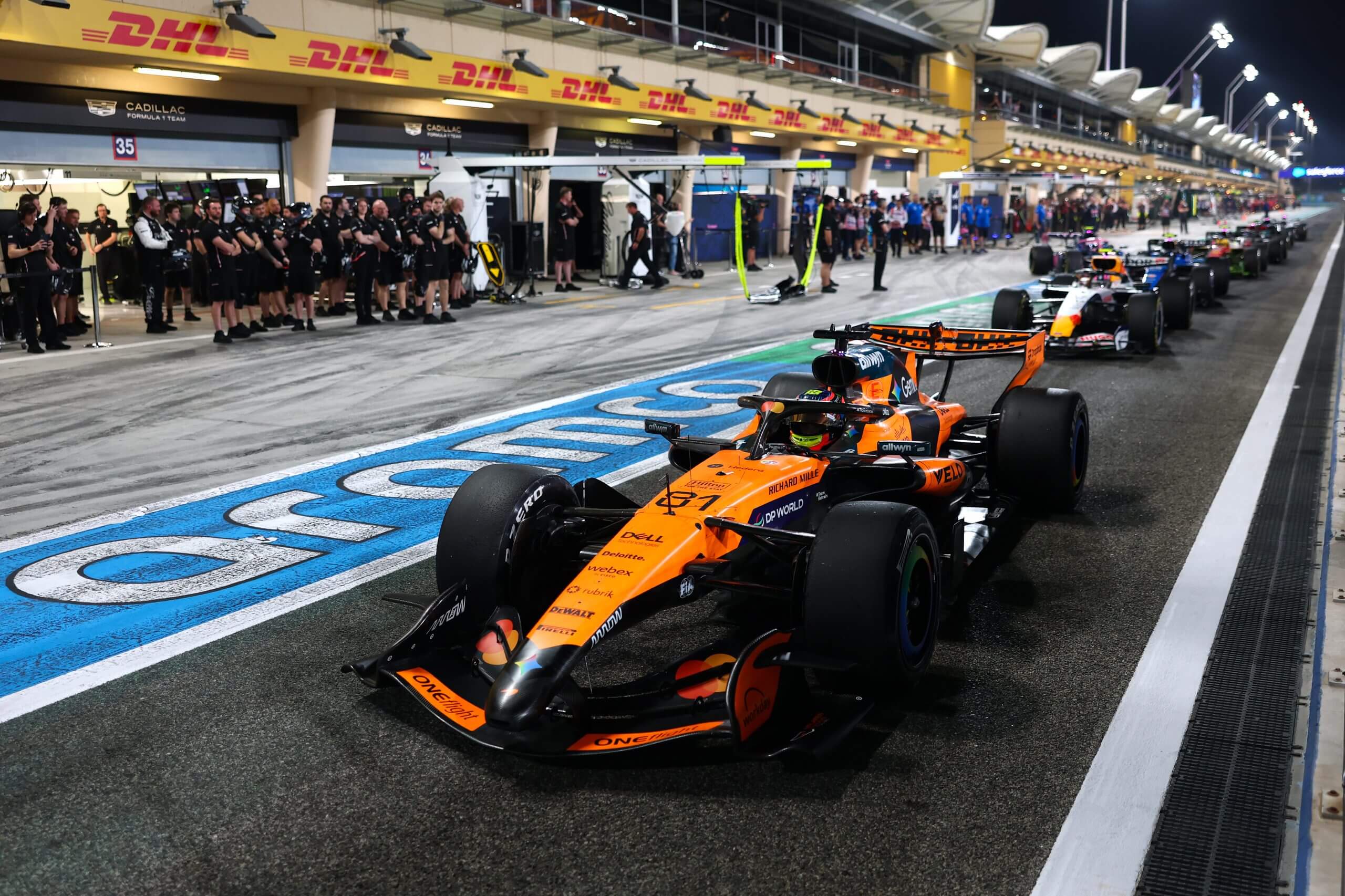
Drivers line up during testing in Bahrain (Mark Thompson / Getty Images)
The weight drop also aids the electrical efficiency of the new engines, which rely much more on battery power than the previous generation. Less mass to propel forward means less power is needed from the hybrid systems to reach the same speed.
These weight cuts were made to improve chassis safety, which is always the FIA’s priority when drafting new rules. The survival cell — the center of the car around the cockpit area — now faces more rigorous testing, while the roll hoop at the top of the car has also been strengthened.
“A big part of this weight increase over the last 20 years has been because of safety: the halo (cockpit protection structure), stronger nose, stronger sides, everything on the car is much more robust,” said Nikolas Tombazis, the FIA’s single-seater director.
“That is why we have drivers feeling a lot safer. But yes, that has had the negative of increasing the weight. That is what we’re trying to claw back, but never compromising safety.”
But will it make racing better?
To Hamilton’s point, having cars that are easier to maneuver should contribute to better racing. The FIA tries to keep that in mind when writing regulations. As well as trying to reduce the amount of dirty air with the new aero rules — the wake coming off a car that causes one following to lose downforce — the lighter chassis should help.
The fact that Russell’s Mercedes car no longer felt like such a “big bus” during 2026 preseason testing was a positive early sign. Although the lighter cars feel very different to drive in places, particularly with the reduction in downforce and with the unusual requirements of the new engines for the drivers, it’s not a bad thing.
“You feel the weight reduction, which is quite good,” said Haas driver Esteban Ocon. “You feel how much smaller the cars are as well.” He added that some corners now had more notable direction changes for the drivers, thanks to the cars feeling sharper and easier to handle.
Even when watching the cars, be it through F1’s trackside TV coverage, onboard cameras, or in person, the greater agility is noticeable. They slide and snap around more. Although these cars will be slower through the high-speed corners due to the drop in downforce, the improved overall agility is especially clear when the cars navigate tighter turns.
Tombazis said the FIA wanted to make further progress in reducing the weight in the future. “Even in this first step, the initial comment from drivers is that they feel it,” he said. “They do feel the cars are more nimble.”
More responsive cars should allow drivers to race better than before when engaging in wheel-to-wheel battles. Diving overtakes, or late swoops for position, should be increased thanks to the weight reduction, even if questions remain about the impact of the energy-starved engines and the need to recharge the battery obsessively during passing moves.
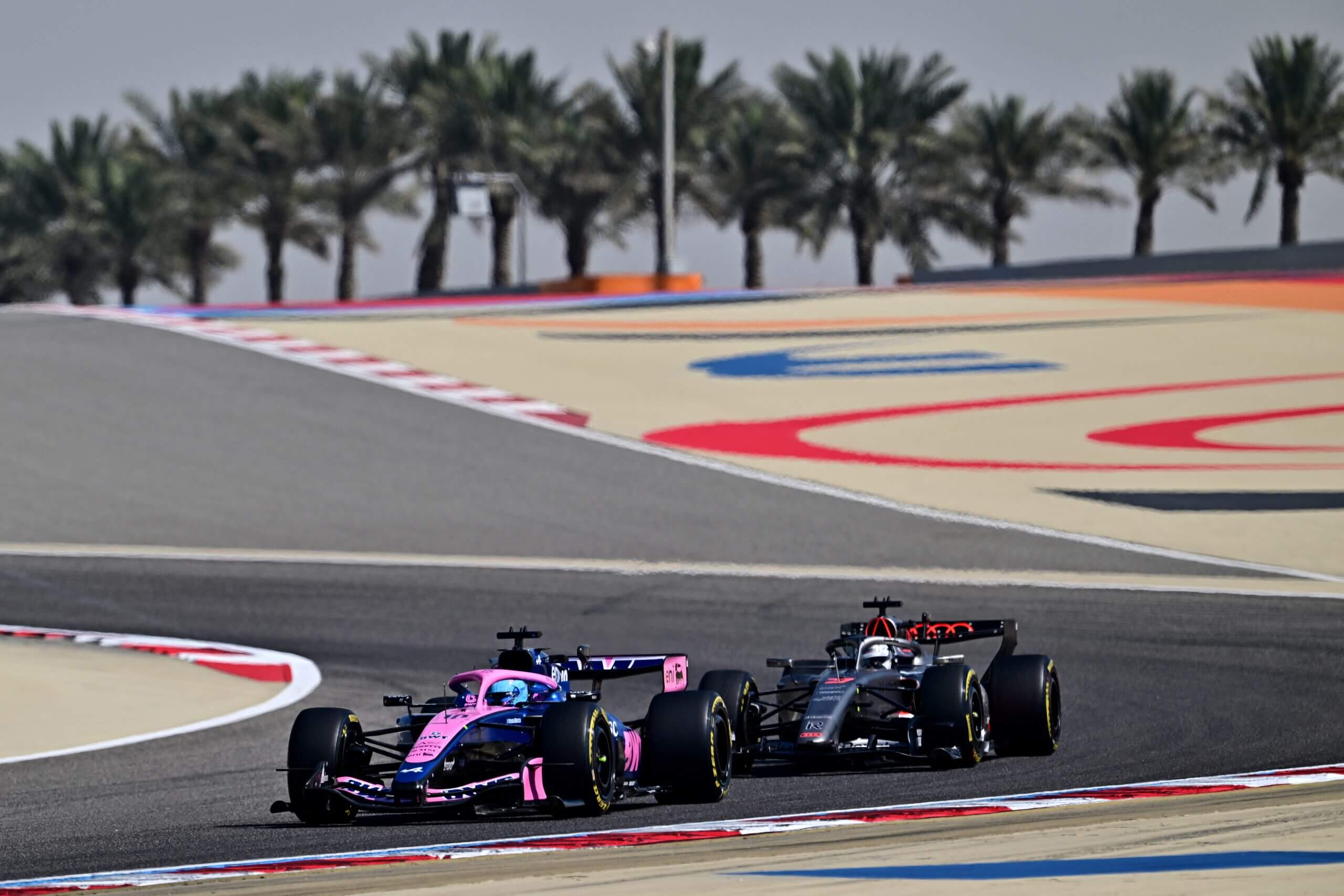
Not every track will benefit from the size changes (Giuseppe CACACE / AFP via Getty Images)
Smaller cars will leave more room on the track, which will be clearest on some of F1’s tighter street circuits. These include Baku, which has a very narrow section around the city’s castle. Singapore, another technical circuit, should benefit from the car size reduction and offer drivers a bit more space, though overtaking has always been hard there.
But the track that has faced the most criticism regarding the scale of modern cars is Monaco. F1’s most iconic race has come under fire for its lack of overtaking opportunities and underwhelming race action, with those problems only becoming more pronounced as the cars became more bloated, given that the track itself – narrow in a densely-packed small city — cannot get any wider.
Last year, the FIA introduced a now-scrapped rule mandating two pit stops to improve the Monaco spectacle. (It didn’t quite work.) Although the weight and size cuts for this year could help a little bit, few believe it will finally fix Monaco.
James Vowles, the Williams team principal, said that would require a “larger change” to be effective, but that F1 had to accept it was “just one race out of 24” where the issue would be quite so noticeable.
“We’re probably directionally correct for the sport (with the weight drop),” Vowles told The Athletic. “But (we should) accept it won’t change a Monaco-type scenario.”
Car weight matters a lot for lap time
The FIA’s weight reduction target was always ambitious. Especially at the start of a new rules cycle, teams getting their new cars down to a new minimum weight is a big challenge. It’s one some are currently grappling with better than others.
Avoiding excess weight is effectively free lap time – as lighter cars go faster than heavier ones. This prompts teams to obsess over each extra gram being carried. Small saves, such as limiting the amount of paint on the car and instead leaving patches of bare black bodywork carbon fiber, are all valuable.
“Working on reducing the weight of the car is always a development item,” said McLaren team boss Andrea Stella. His team heads into the 2026 season still working to hit the new 768kg minimum weight.
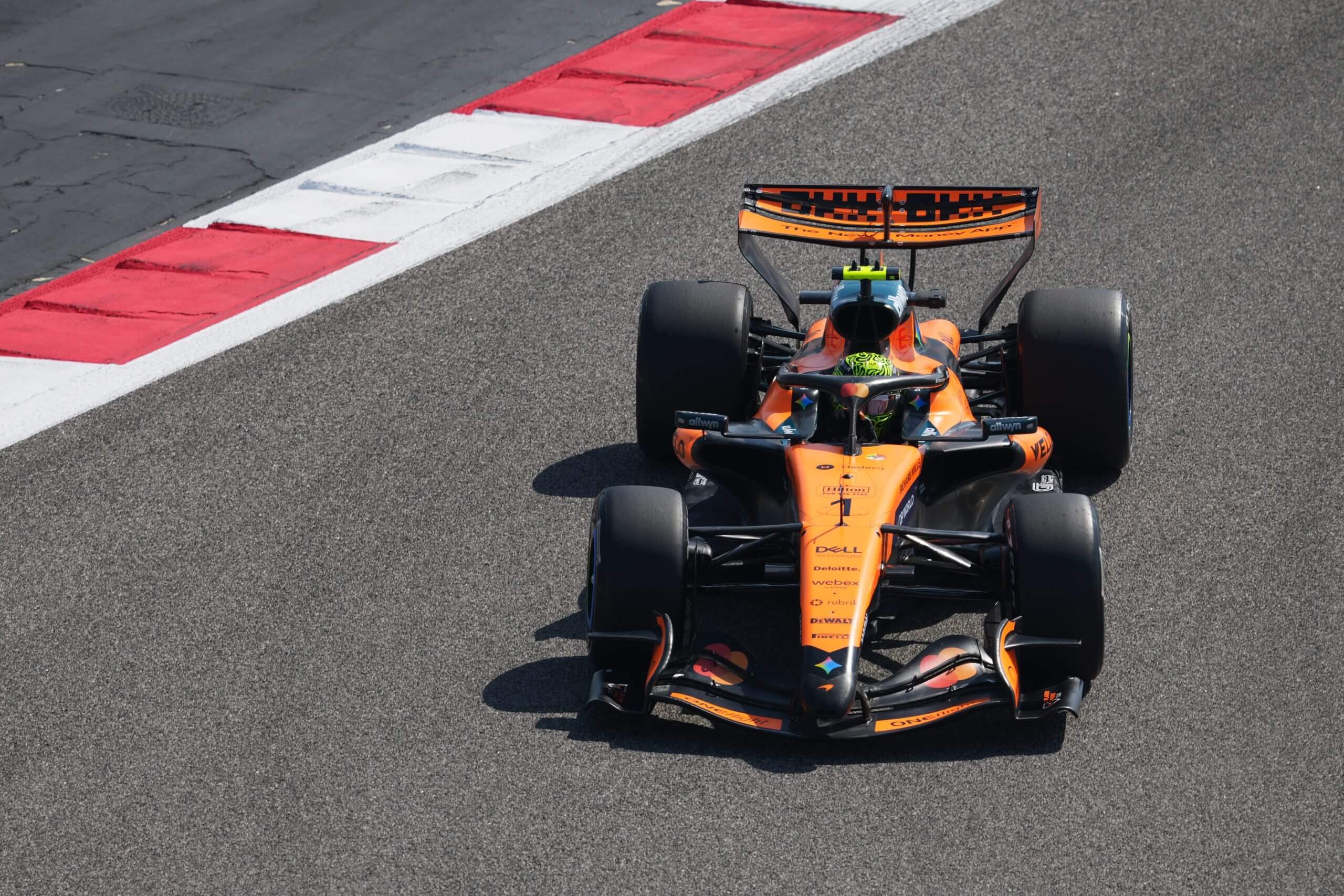
McLaren is one of a few teams still working on getting the weight right (Sona Maleterova/Getty Images)
Stella added: “Even if you are at the weight limit, you want to be actually under the weight limit, because then you can play with ballast (where making a car heavier in specific places can help handling for the drivers. This is something on which the teams will keep themselves busy for a long time until they are well under the weight limit.”
When F1’s car designs last changed in 2022, Alfa Romeo (now called Audi) was one of the few teams to get down to the minimum weight from the start of the season. It scored 50 of its 55 points that year in the opening nine races, after which point the rest of the midfield pack got their car weights down and caught up.
In 2026, Williams struggled with an overweight car during preseason testing. The team missed the first test in Barcelona in January due to production delays before its new car made its public debut in Bahrain. One solution to make parts faster is to build them first with heavier but easier-to-work metals, such as titanium, which could help explain any team’s weight struggles.
Overall, in 2026, every team has weight saving in mind, even those with thoughts of the world championship.
“We have some challenges on the weight (side),” said Red Bull technical director Pierre Wache. “Maybe some people did a better job than us.”
But saving weight is generally a second step after producing gains in new aero parts. “Our philosophy is to try to make the car quicker, not on the weight limit,” said Wache.
The new drop in car weight should benefit not only the efficiency and performance of the new cars for 2026, but also how drivers approach racing them. While it is just a first step in the FIA’s eyes, the fact that the step has already gained such positive feedback and been so noticeable immediately this year is encouraging.
Lighter cars alone won’t be enough to make for a good racing spectacle in 2026, but they can certainly play a part — and will have teams chasing all the gains they can find to get down to the new minimum weight limit.