

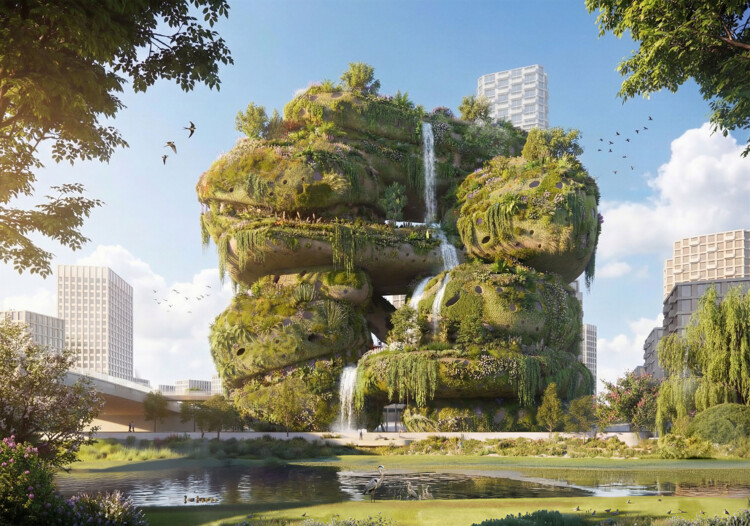
 MVRDV’s shortlisted design for the Shift Landmark competition, 2026. Image Courtesy of MVRDV
Share
Or
https://www.archdaily.com/1039284/mvrdv-heatherwick-studio-mecanoo-ecosistema-urbano-and-office-for-political-innovation-shortlisted-for-shift-sustainability-landmark-in-rotterdam
Shift, a company offering digital programs to reduce carbon emissions through individual behavior change, has announced the five finalist teams advancing to Stage Two of its international architecture competition. Launched in January 2025, the Shift International Architecture Competition called for proposals to design “the Shift Landmark”: a 25,000 to 30,000 m² building in Waterkant, a new waterfront district in southern Rotterdam. The project includes a hotel, a conference and meeting center, and a sustainable food court. Its objective is to set a new standard for a purpose-driven destination that turns circular living into “something individuals, companies, and organisations can feel, experience, and act on.” The five shortlisted design concepts reflect different visions of sustainability and climate action, developed by teams led by the European offices of MVRDV (Netherlands), Heatherwick Studio (United Kingdom), Office for Political Innovation (Spain), Mecanoo (Netherlands), and Ecosistema Urbano (Spain).


Around 1,500 architects from 50 countries downloaded the competition brief, and 80 teams submitted proposals. The five finalists have been refining their designs since November 2025. The project aims to connect circular choices to everyday life and business, aligning with the company’s ambition to create a new kind of 21st-century landmark that makes sustainable living “tangible, desirable, and achievable.” A permanent program curated by Shift would activate the building, encouraging behaviors through immersive experiences. Eleven months after launching the competition’s first stage, the company secured a riverside plot next to a new tidal park in Waterkant as the proposed site for the first Landmark. The Netherlands was selected for the inaugural project in part because 55 percent of the country’s land is vulnerable to flooding and approximately 90 percent of Rotterdam lies below sea level. Following this first project, the company intends to expand the concept into a global network of Landmarks across six continents.
The international jury, comprising Aric Chen, Director of the Nieuwe Instituut; Astrid Leyssens, Founder of We Are Impact Collective; Ben van Berkel, Founder of UNS; actor and activist Carice van Houten; Clemens Brenninkmeijer, Head of Sustainability at Redevco; Dr. Lewis Akenji, Executive Director of the Hot or Cool Institute; Géke Roelink, Director of the NEMO Science Museum; ambassador and presenter Lodewijk Hoekstra; Matthias Schuler, Founder of TRANSSOLAR; Mireia Luzárraga, Co-Founder of TAKK; and real estate investor and advisor Nicole Maarsen, will complete its evaluation to select a winning design, to be announced in Spring 2026. The winning team will then enter a participatory process incorporating input from local communities. Below are the five shortlisted finalists, with descriptions provided by the organization.
Related Article ArchDaily’s Readers Select Who Should Win the 2026 Pritzker Prize A Living Landmark / Ecosistema Urbano, Fabrications, ARUP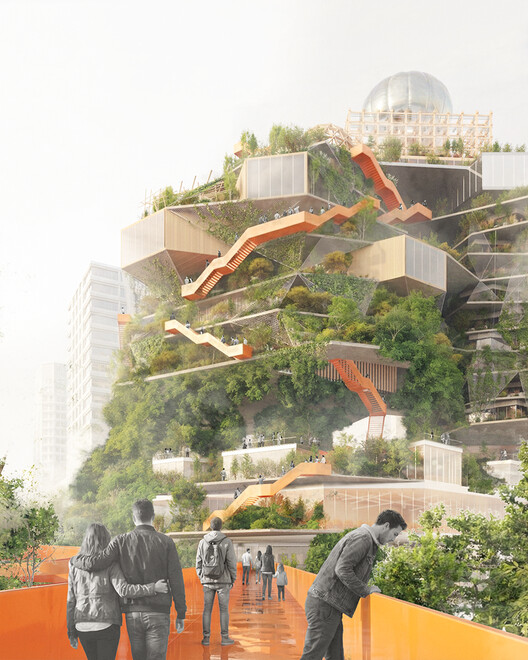 Ecosistema Urbanos’s shortlisted design for the Shift Landmark competition, 2026. Image © Ecosistema Urbano
Conceived as a regenerative living system, the building operates as a dynamic social organism that integrates public space, ecological performance, and civic life—actively fostering biodiversity and strengthening connections between local communities and wider ecological networks.
Urban Reef / Heatherwick Studio, Nudus, Ramboll, Oosterhoff, RAA, RLB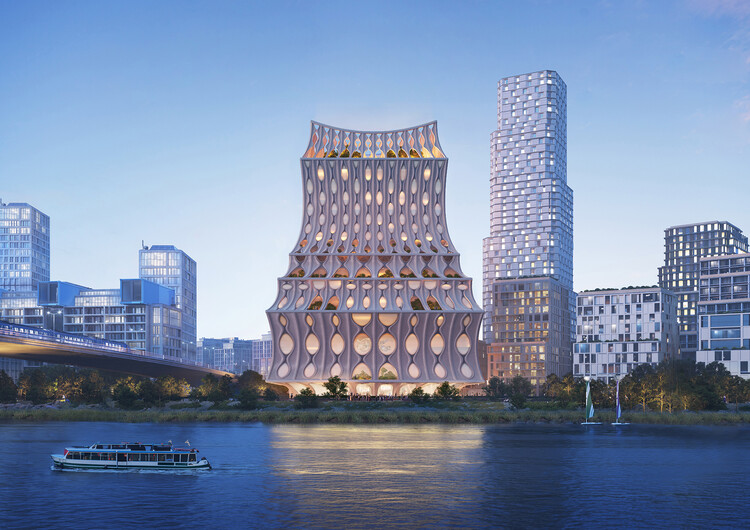 Heatherwick’s shortlisted design for the Shift Landmark competition, 2026. Image Courtesy of Heatherwick Studio
A new building for Rotterdam, built from six layers of activity that support one another like a reef‑inspired ecosystem. Influenced by natural flows of movement, these layers offer spaces that bring people together, build climate awareness, and show how a building can encourage lighter, more sustainable ways of living together.
The House of Shift / Mecanoo, ARUP, Tellart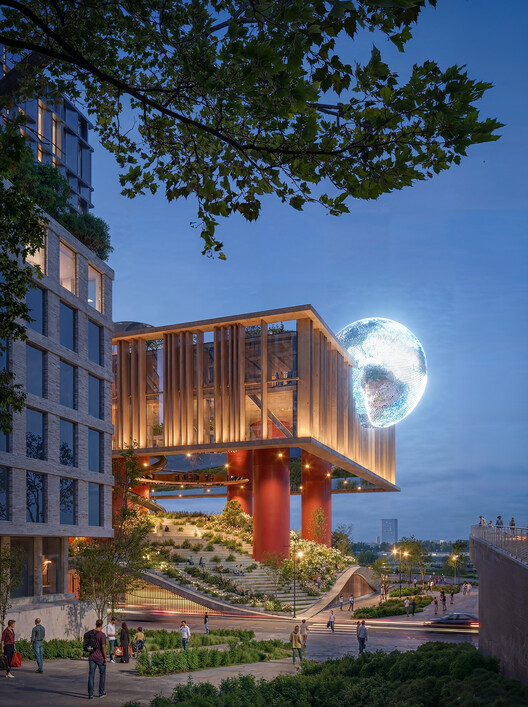 Mecanoo’s shortlisted design for the Shift Landmark competition, 2026. Image Courtesy of Mecanoo
An inspiring icon for sustainability that places bold upcycling, carbon storage, energy neutrality, and ecological integration at its core. Integrating spaces for imagination, exploration, action, play, and joy.
Rotterdam Rocks / MVRDV, dGmR, ARUP, Arcadis, Studio Bertels, Joris Laarman Lab MVRDV’s shortlisted design for the Shift Landmark competition, 2026. Image Courtesy of MVRDV
Rotterdam ROCKS! is a stacked landscape of living rocks that turns architecture into a regenerative, urban ecosystem and a new landmark for the city: rocks that breathe. Strengthening Rotterdam’s experimental character, it demonstrates that buildings of tomorrow can merge nature and public life.
Planetary Landmark for the Climate Age / Office for Political Innovation, Kaan Architecten, LOLA Landscape Architects, iart, Pieters Bouwtechniek, Stadium Consultancy, IGG Bouweconomie, WSP, Envirotecnics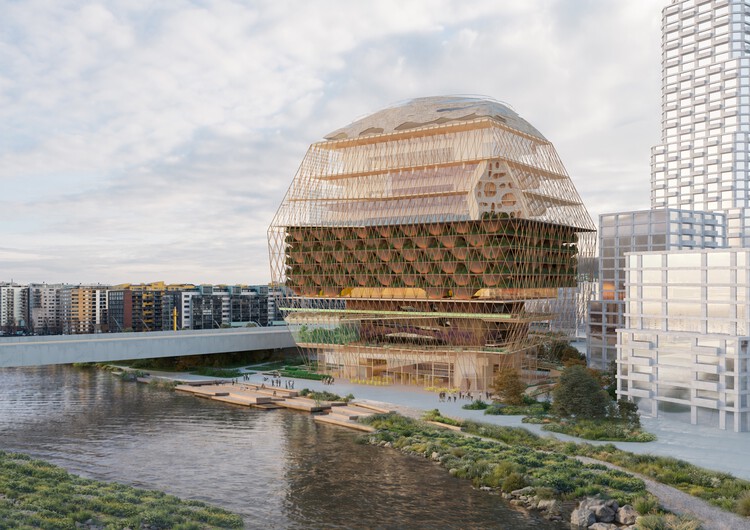 Office for Political Innovation’s shortlisted design for the Shift Landmark competition, 2026. Image © Office for Political Innovation
Climate Section proposes a new kind of landmark for the Climate Age: not a monument, but a working section through the world as it is becoming—a place where climate is sensed, understood, and actively reshaped, together.
Other recently announced landmark projects include Foster + Partners’ new renderings of Two World Trade Center, the final commercial tower planned for the World Trade Center campus in Lower Manhattan; a master plan by BDP, Cox Architecture, and Collage Design for a sports district surrounding the world’s largest stadium in Ahmedabad, India; and the appointment of Studio Egret West to lead the future phases of the regeneration of London’s Battersea Power Station site, widely recognized for its appearance on the cover of Pink Floyd’s 1977 studio album Animals. In addition, the final piece of Gaudí’s Sagrada Familia central tower was installed in Barcelona on Friday, February 20, completing the tower dedicated to Jesus Christ.